Central Albania
Bunk'Art
Bunk'Art 1 or Bunk'Art 2? How to do Tirana's Cold-War bunker museums: which one to choose, the cable-car pairing, ticket prices in lek and why you need a layer underground.
Where
Tirana, Albania
Opening hours
Both sites open daily from around 09:00 to 16:00, sometimes later in peak summer; Bunk'Art 1 is the more reliable to find open. Hours flex seasonally and the bunkers occasionally close for events, so confirm the day you plan to go. Tickets are cash in lek at the door — there is no need to pre-book.
Tickets
Around 600 lek (≈ £5) for Bunk'Art 1 and around 500 lek (≈ £4) for Bunk'Art 2, paid in cash at the entrance; carry lek, as the booths do not reliably take cards. A combined visit to both runs roughly 1,100 lek (≈ £10).
Time needed
Allow 1.5-2.5 hours for Bunk'Art 1's five floors and around an hour for Bunk'Art 2. Add a clear morning if you are pairing Bunk'Art 1 with the Dajti cable car next door.
In short
Visiting Bunk'Art
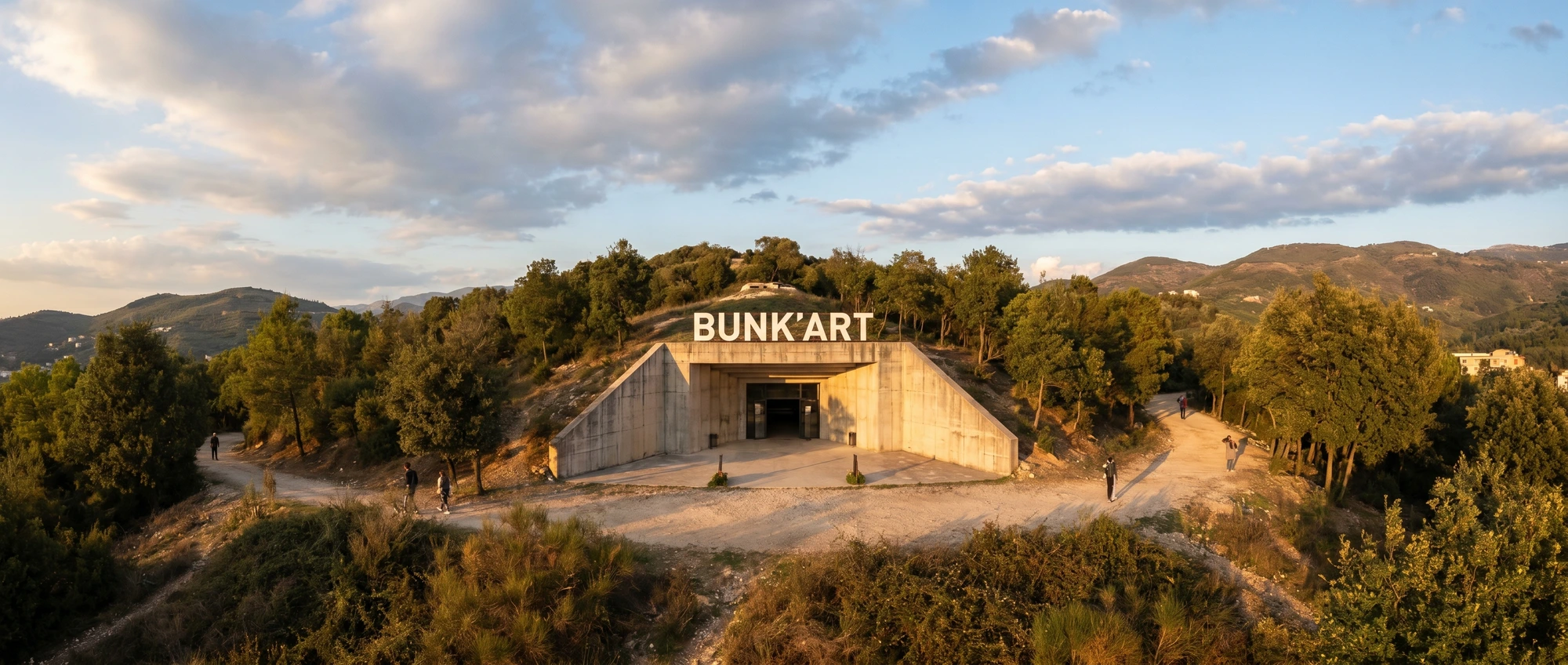
There are two Bunk'Arts and they are not the same trip. Bunk'Art 1 is the big one — a 106-room nuclear bunker built for the communist leadership at the foot of Mount Dajti on the city's eastern edge, telling the story of the Hoxha dictatorship across five floors; allow 1.5-2.5 hours and pair it with the Dajti Express cable car, whose base station sits right beside it. Bunk'Art 2, in the centre by Skanderbeg Square, is smaller and sharper, built into a bunker under the old Interior Ministry and focused on the Sigurimi secret police and political persecution — about an hour. Both cost around 500-600 lek (~£4-£5), are walk-up cash tickets, and stay cold underground year-round, so carry a layer.
Bunk’Art 1 or Bunk’Art 2?
The first thing to know is that there are two Bunk’Arts, and people regularly turn up at the wrong one. Bunk’Art 1 is the big draw: a 106-room nuclear bunker built for Enver Hoxha and the communist leadership, dug into the hillside at the foot of Mount Dajti on the eastern edge of the city. You walk down through five floors of cold concrete, room after room, half of it telling the story of the dictatorship and the Second World War, half of it given over to contemporary art installations. It’s the one to prioritise — budget 1.5 to 2.5 hours, because it’s far bigger than it looks from the blast door.
Bunk’Art 2 is the central, sharper sibling. It sits under the old Interior Ministry just off Skanderbeg Square, behind a bunker dome you can’t miss, and it’s narrowly focused on the Sigurimi — the secret police — and the surveillance, persecution and disappearances of the communist years. It’s smaller and heavier going, about an hour, and it’s the obvious add-on if you’re staying central and short on time. Both charge around 500-600 lek (~£4-£5) at the door, cash in lek, and there’s a combined ticket if you want both for roughly £10.
Getting there, the cold, and is it worth it?
Bunk’Art 2 is a five-minute walk from the main square, so that one’s easy. Bunk’Art 1 is the logistics one: it’s about 4-5 km east of the centre and not a walk. The simplest fix is a Bolt taxi — the app works well in Tirana and shows the fare up front, usually 300-500 lek each way — or the city bus heading out toward Linza/Porcelan. Time it for a clear morning and pair it with the Dajti Express cable car, whose lower station sits right next to the bunker, so you get the museum and the panorama back over the city in one trip up the hill.
Two practical warnings. It is genuinely cold underground, several degrees below the street whatever the season, so take a layer even in an Albanian August. And the labelling is patchy in places — strong on atmosphere, thinner on plain English explanation — so either join a guided tour or read a little about the Hoxha years first, or you’ll drift through some rooms without the context that makes them land.
Bunk’Art 1 is the best paid sight in Tirana and the single clearest way to grasp the 45 years of isolation that shaped modern Albania. The scale is the point — descending floor by floor through a leadership’s doomsday shelter does something no display case can. Do Bunk’Art 1 properly, add Bunk’Art 2 if you want the secret-police half of the story, and treat the cable car as the natural reward at the top of the trip.
Planning the rest of your trip? See the Tirana city guide.
More to see in Tirana
Book the essentials
Tours & tickets
Bunk'Art FAQs
Bunk'Art 1 or Bunk'Art 2 — which should you visit?
How do you get to Bunk'Art 1?
Is Bunk'Art worth it?
Ready to book?
Check tickets & tours