

In short
Is the Netherlands a good trip for UK travellers?
Yes — it's one of the easiest short breaks going: a ~1h15 flight (or a direct Eurostar) to Amsterdam, no visa for a holiday, near-universal English, and a train network so dense you barely plan transport. It works best as a city base with day trips rather than a road trip.
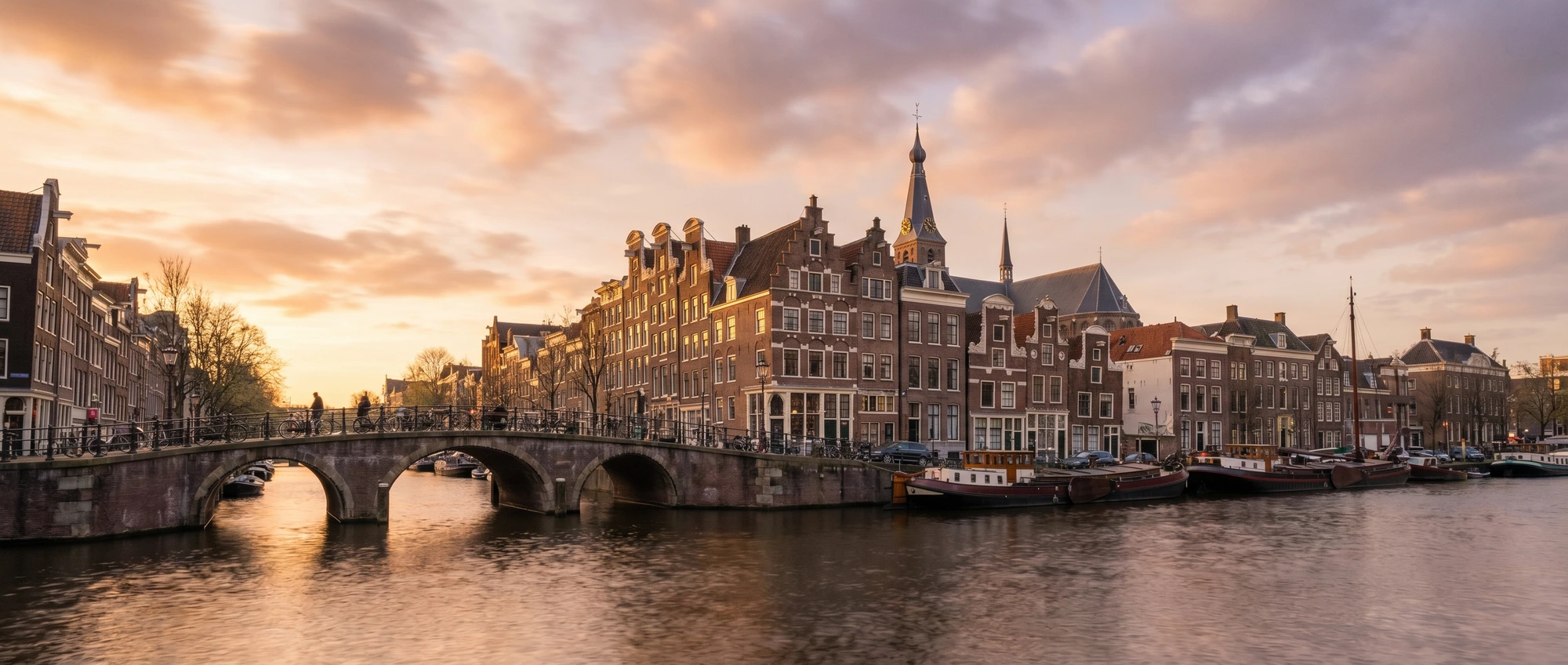
The Netherlands is the trip you can decide on a Thursday and take on a Friday. The flight from the UK is one of the shortest international hops there is, the train from London runs straight into the centre of Amsterdam, and once you’re there the whole country opens up from a single base — Haarlem, Utrecht, Rotterdam, Delft and The Hague are all under an hour from Amsterdam Centraal by train. The mistake UK travellers make is treating it like a touring country and renting a car; the Netherlands rewards the opposite. Below we set out, for a UK traveller spending their own money in 2026, what a long weekend really costs in pounds, how to get around without a ticket, and the entry rules straight from GOV.UK.
The short version
- Base yourself in one city and day-trip by train — the country is tiny and everything is under an hour from Amsterdam.
- Tap any contactless card or phone (OVpay) on and off trains and trams — no ticket or top-up card needed.
- Weigh the flight against the direct Eurostar: ~1h15 to fly, ~4 hours by train but city-centre to city-centre.
- Pre-book timed tickets for the Anne Frank House, Rijksmuseum and Van Gogh Museum — they sell out weeks ahead.
- Skip King's Day (27 April 2026) unless you want the party — it's Amsterdam's busiest, dearest day of the year.
Entry requirements for UK travellers
In short
Do UK citizens need a visa for the Netherlands?
No. British citizens can visit the Netherlands visa-free for up to 90 days in any 180-day period for tourism, family visits or business (GOV.UK). Your passport must be issued less than 10 years before you arrive and valid for at least 3 months after you leave the Schengen area. Rules can change — confirm on GOV.UK before you travel.
There’s very little paperwork for a Dutch holiday: no visa, and a passport that clears two Schengen checks. The one that catches UK travellers out is the issue date — your passport has to have been issued less than 10 years before you arrive, which an older “10-year-plus” passport can fail even when its expiry date still looks fine. Dutch border officers can also ask to see proof of onward travel, travel insurance, enough money for your stay and where you’re staying, so keep a booking confirmation handy. There’s one local rule worth knowing before you land: by law, anyone aged 14 or over must be able to show ID at all times, and failing to carry it is a €100 fine — so keep your passport or a copy on you. You must also declare cash of €10,000 or more (GOV.UK).
Key points before you book
- No visa for stays up to 90 days in any 180-day period (GOV.UK).
- Passport: issued under 10 years before arrival and valid 3+ months after you leave Schengen (GOV.UK).
- Carry a free UK GHIC for state healthcare plus travel insurance — the GHIC won't repatriate you (GOV.UK).
- Anyone 14+ must be able to show ID at all times or face a €100 fine (GOV.UK).
- Declare cash of €10,000 or more (GOV.UK).
- Cannabis is legal only in licensed coffeeshops; possession elsewhere is a criminal offence (GOV.UK).
- Emergency number across the Netherlands is 112 (GOV.UK).
Passport validity
Your passport must have been issued less than 10 years before the day you arrive, and be valid for at least 3 months after the day you plan to leave the Schengen area. Check the issue date, not just the expiry — an old passport with more than 10 years between the two dates can fail even if it still looks 'in date' (GOV.UK).
Visas
No visa for a holiday. You can travel visa-free to the Schengen area, including the Netherlands, for up to 90 days in any 180-day period for tourism, visiting family, business meetings or short courses. Overstaying can get you banned from Schengen for up to 3 years; working or staying longer than 90/180 needs separate permission (GOV.UK).
Health
A free UK GHIC (or valid EHIC) covers state-provided healthcare in the Netherlands on the same basis as a local, but GOV.UK is explicit it is not a substitute for travel insurance: it won't cover medical repatriation to the UK, treatment in a private clinic, non-urgent care, or changes to your travel and accommodation. Carry both. No vaccinations are required; check TravelHealthPro for recommendations.
Safety & security
The Netherlands is generally very safe and violent crime against tourists is rare. GOV.UK flags a high threat of terrorist attack globally and says terrorists are likely to try to carry out attacks in the Netherlands, which could be indiscriminate. The main day-to-day risk is pickpocketing, particularly in central Amsterdam and around Amsterdam Centraal station, plus thieves posing as police and drink spiking (GOV.UK cites young women and solo travellers as most at risk). GOV.UK also warns that people drown in Amsterdam's canals every year, especially after heavy drinking. Rules can change — confirm on GOV.UK before you travel.
Local laws & customs
Anyone aged 14 or over must be able to show ID at all times — failing to is a €100 fine, or €50 if you're 14 or 15, so carry your passport or a copy (GOV.UK). Cannabis is tolerated only in licensed coffeeshops in the major cities; buying or possessing drugs anywhere else is illegal and can mean prison. Swimming in Amsterdam's canals carries a €160 fine. Cyclists have right of way over cars and frequently ignore traffic rules and red lights — watch the cycle lanes as a pedestrian (GOV.UK).
GOV.UK is the official source for Netherlands entry rules — always check it before you book.
Read GOV.UK adviceGOV.UK updated 10 Apr 2026 · Departly checked 8 Jun 2026
EU entry rules for the Netherlands
Checked 6 Jun 2026The EU's biometric Entry/Exit System (EES) began a progressive rollout on 12 October 2025 and became fully operational on 10 April 2026: on your first trip since then you give fingerprints and a facial scan at the border (a one-off, valid 3 years), and the 90-days-in-180 limit is now counted automatically. Some countries may still ease or pause checks at busy crossings during the rollout-flexibility window, so queues vary. ETIAS — a separate €20 travel authorisation (free for under-18s and over-70s, valid 3 years) — is expected in late 2026 and is not required yet. Always confirm on GOV.UK before you book.
- 90/180 rule
- Visa-free stays of up to 90 days in any 180-day period across the Schengen area. Days spent in other Schengen countries count towards the total.
- Passport
- Issued less than 10 years before the day you arrive, and valid for at least 3 months after you plan to leave the Schengen area. Check the issue date, not just the expiry.
- GHIC
- Carry a free UK GHIC for state healthcare on the same basis as a local — but it is not a substitute for travel insurance, which you still need.
- Roaming
- Post-Brexit, EU roaming is no longer guaranteed free; many UK networks charge around £2.25/day. Check your tariff or use a travel eSIM.
On health, carry a free UK GHIC (or valid EHIC): it gets you state healthcare in the Netherlands on the same terms as a local. But GOV.UK is blunt that it is not a substitute for travel insurance — it won’t fly you home, won’t cover a private clinic, and won’t pay for cancellation or lost bags. Carry both, and never pay a third-party website for a GHIC; it’s free from the NHS. Rules can change — confirm on GOV.UK before you travel.
Flights and the Eurostar from the UK
In short
How long is the journey to Amsterdam from the UK?
The flight from London is only ~1h15 — one of the shortest international hops there is — with direct routes from at least a dozen UK airports on KLM, easyJet, BA and Jet2. The direct Eurostar from London St Pancras takes ~4 hours and runs straight into Amsterdam Centraal with no transfer.
Amsterdam is so close that flying there feels almost comically quick — the time in the air is shorter than the trip out to the airport for many people. Schiphol is one of Europe’s biggest hubs and is served direct from London, Manchester, Birmingham, Edinburgh, Glasgow, Bristol and more. If you’re starting in London, though, the direct Eurostar is the genuinely better option for a lot of people: ~4 hours from St Pancras with border checks done before you board, and you step off at Amsterdam Centraal in the heart of the city rather than 15 minutes out at an airport. The booking lever that matters most is when you go — September is usually cheapest, and the King’s Day weekend and school holidays carry the biggest premium.
Flights from the UK
Short-haulThe Netherlands is so close that the flight is barely longer than the journey to the airport. Schiphol is served direct from at least a dozen UK airports on KLM, easyJet, British Airways, Jet2 and TUI. London St Pancras also has a direct Eurostar to Amsterdam Centraal in ~4 hours, with no airport faff and a city-centre-to-city-centre finish.
Fly from
Main arrival airports
- AMS Amsterdam (Schiphol) — the only gateway most UK travellers use, and one of Europe's biggest hubs
- RTM Rotterdam The Hague — small, handy for the south and a Rotterdam-first trip
- EIN Eindhoven — budget-carrier base in the south, ~1h30 by train from Amsterdam
When to go
In short
When is the best time to visit the Netherlands?
April to June and September: mild weather, long days and manageable crowds. April is tulip season, with Keukenhof peaking mid-to-late April — go before the King's Day weekend (27 April 2026), Amsterdam's busiest day. Summer is warm but crowded and dear; winter is cheap, quiet and cold.
When to go
Sweet spot: April to June and September are the sweet spot: mild 13–22°C days, long daylight and the gardens at their best. April is tulip season — Keukenhof near Lisse is open roughly 19 March to 10 May 2026, with the bloom peaking mid-to-late April. For the flowers without the worst crowds, aim for mid-April and skip the King's Day weekend (27 April 2026), which is the single busiest day of the year in Amsterdam.
King's Day (27 April) turns Amsterdam into a city-wide orange street party — fun if that's what you want, chaos and sold-out hotels if it isn't. Summer is warm and lively but the centre is at its most crowded and dearest. Winter is quiet, cheap and atmospheric, with short days, cold North Sea wind and a real chance of frost; bring proper layers. Spring and early autumn give you the best balance of weather, daylight and manageable crowds.
Spring and early autumn are the sweet spot for almost any Netherlands trip — mild days, long daylight and crowds you can move through. The headline season is tulips: Keukenhof near Lisse is open roughly 19 March to 10 May in 2026, and the bloom peaks mid-to-late April, so for the flowers without the worst of the crush, aim for mid-April and steer clear of the King’s Day weekend (27 April 2026), which turns Amsterdam into a city-wide orange street party and the single busiest, priciest day of the year. Winter flips the logic: it’s quiet, cheap and atmospheric, but the days are short and the North Sea wind is cold, so pack proper layers.
What it costs
In short
How much does a long weekend in Amsterdam cost from the UK?
Roughly £600–£700 per person on a budget and around £900–£1,000 for a mid-range couple over three nights (~£450–£500pp), including flights. Accommodation is the big cost — central doubles average ~€225 (£190) a night plus 12.5% tourist tax. On the ground, budget on £60–£85 a day, mid-range £120–£180.
What it costs
UK return flights to Amsterdam run from about £30–£70 off-peak on a budget carrier booked ahead, £90–£180 in the school holidays or at short notice, and £200–£350 on KLM or BA at busy times. The flight is so short that fares are driven more by date than route; September is typically the cheapest month, with King's Day (late April) and the school holidays the dearest.
Daily budget per person
| Draught beer (0.5L) in a café | €6–€7.50 / £5–£6.50 |
|---|---|
| Eetcafé main course | €20–€35 / £17–£30 |
| Three-course dinner, mid-range, per person | ~€50 / £43 |
| Frites with mayo / herring from a stall | €4–€6 / £3.50–£5 |
| GVB 24-hour transport ticket (tram/metro/bus) | €10 / £8.60 |
| Schiphol → Amsterdam Centraal train (single) | ~€6.20 / £5.30 |
| Canal cruise (1 hour) | ~€21 / £18 |
| Hostel dorm bed per night | €40–€60 / £34–£52 |
Amsterdam accommodation is the single biggest cost and the main reason the city feels pricey — central doubles average around €225 (£190) a night and the city's tourist tax adds 12.5% on top. Everything else is manageable: an eetcafé meal is far cheaper than a sit-down restaurant, and street food (herring, frites, a stroopwafel) keeps lunch under a fiver.
The numbers above are honest mid-2026 figures converted at €1 = £0.86, and the headline for the Netherlands is that accommodation is the cost that bites — central Amsterdam doubles average around €225 (£190) a night, and the city’s tourist tax adds 12.5% on top. Everything else is manageable: a draught beer is €6–€7.50, an eetcafé main is far cheaper than a sit-down restaurant, and street food (a herring, a paper cone of frites with mayo, a fresh stroopwafel) keeps lunch under a fiver. Book the hotel early and out of high season and a long weekend stretches a long way.
A realistic first itinerary
The Netherlands is small enough that you don't tour it the way you'd tour Spain or Italy — you base yourself in one city and day-trip out by train. Amsterdam is the obvious base for a first trip, and the country's density is the whole point: Haarlem is 15 minutes away, Utrecht 30, Rotterdam 40 and Delft and The Hague under an hour. This is a 3-night Amsterdam-plus-day-trips skeleton; stretch it to a week by adding nights in Rotterdam or Utrecht and seeing more of the Randstad.- 1Day 1
Amsterdam — the centre
Pre-book a timed slot for the Anne Frank House (it sells out weeks ahead and there's no on-the-door entry), then walk the canal ring — the Jordaan, the Nine Streets — rather than queuing for a daytime canal cruise. Eat in an eetcafé, not on a tourist drag like Damrak.
- 2Day 2
Amsterdam — the Museum Quarter
The Rijksmuseum and the Van Gogh Museum sit side by side on Museumplein; both need pre-booked timed tickets. Do one properly rather than rushing both, then the Vondelpark and a quieter neighbourhood like De Pijp for the Albert Cuyp market.
- 3Day 3
Day trip by train
Pick one: Haarlem (15 min) for a smaller, prettier Amsterdam-in-miniature; Utrecht (30 min) for canals with cellar bars and fewer crowds; or Rotterdam (40 min) for bold modern architecture and the Markthal. Tap a contactless card in and out — no ticket needed.
- 4Days 4–7
Go deeper into the Randstad
With more time, add a night or two in Rotterdam or Utrecht and string together Delft (Vermeer and Royal Delft pottery), The Hague (the Mauritshuis and the seaside at Scheveningen) and — in spring only — Keukenhof's tulip gardens near Lisse.
The pattern to follow is one base, many day trips — not a hotel-hopping tour. For a first trip, stay in Amsterdam and pick one or two of Haarlem, Utrecht and Rotterdam by train; with a week, add a night or two in Rotterdam or Utrecht and string together Delft, The Hague and the Scheveningen seaside. The thing to resist is trying to “see the Netherlands” as a circuit — the country is small enough that you don’t need to move your bags to see it.
Where to base yourself
In short
Where should I stay in the Netherlands for a first trip?
Amsterdam's canal ring or Jordaan for the classic first trip, De Pijp or Oud-Zuid for a local feel near the museums, and Oost or Noord for better value. Rotterdam suits a second trip or an architecture-led one, and Utrecht is the calmer, cheaper alternative to Amsterdam.
Amsterdam — the canal ring & Jordaan
The postcard Amsterdam and the best first-trip base — gabled canal houses, brown cafés and walkable to almost everything. It's the priciest area and books out, so reserve early. Skip a hotel right on the Damrak or in the Red Light District unless you want noise and stag-party crowds.
Good for: First-timers who want the classic canal-house Amsterdam
Amsterdam — De Pijp & Oud-Zuid
A short tram south of the centre: the Albert Cuyp market, lively bars and quick walking access to the Museum Quarter, at slightly saner prices than the canal ring. Oud-Zuid is the leafier, more upmarket end near Vondelpark. The trade-off is a 10–15 minute tram into the historic core.
Good for: A local-feeling base near the museums
Amsterdam — Amsterdam-Oost & Noord
The value plays. Oost (east) is residential and well-connected; Noord, a free two-minute ferry across the IJ from behind Centraal, has the A'DAM Lookout and a creative, post-industrial scene. Cheaper rooms and a more local feel, with the centre still 10–15 minutes away.
Good for: Budget-minded travellers who don't mind a short hop in
Rotterdam
The anti-Amsterdam: rebuilt after WWII as a showcase of bold modern architecture — the Cube Houses, the Markthal, the Erasmus Bridge. A real working city rather than a tourist set-piece, cheaper than Amsterdam, and 40 minutes away by train. The best base if you've done Amsterdam before or want something different.
Good for: Architecture and a less touristy second-trip base
Utrecht
Amsterdam's smaller, calmer cousin: a medieval centre with unique two-tier wharf canals lined with cellar cafés, far fewer crowds and lower prices. Dead central — it's the country's rail hub — so day trips fan out easily. A genuine alternative base for anyone who finds Amsterdam too busy.
Good for: Canals and atmosphere without the Amsterdam crush
These are country-level bases — the neighbourhood-by-neighbourhood detail (which canal, which tram stop) belongs on the individual city guides. The pattern that works: stay central enough to walk Amsterdam’s core, or accept a 10–15 minute tram or ferry from a cheaper, more local area like De Pijp, Oost or Noord. Avoid basing yourself right on the Damrak or in the Red Light District unless noise and stag-party crowds are what you’re after — you pay more for less sleep.
Getting around
In short
What's the best way to get around the Netherlands?
The train. NS intercity trains link every city you'd want, two to four times an hour, with the longest Randstad journey under an hour. Since 2023 you can tap any contactless bank card or phone (OVpay) on and off trains, trams, metro and buses — no ticket needed. Don't hire a car for a city trip; Amsterdam parking is among Europe's most expensive.
Getting around Netherlands
The Netherlands is the easiest country in Europe to get around without a car. The intercity train network is dense, fast and frequent — trains run by NS connect every city you'd want, usually two to four times an hour, and the longest journey between the big Randstad cities is under an hour. Since 2023 you don't even need a ticket: OVpay lets you tap any contactless Visa or Mastercard (or Apple/Google Pay) onto the reader at the start and end of every NS train, GVB tram, metro and bus, and it charges the right fare automatically. Within Amsterdam, trams and the metro are quick and a 24-hour GVB ticket is €10, but the city is compact and flat enough to walk much of it. Renting a car is pointless and actively unhelpful — parking in Amsterdam is among the most expensive in Europe and the city is built for bikes, not cars.
- Tap any contactless bank card or phone (OVpay) on and off trains and trams — no ticket or top-up card needed.
- Schiphol → Amsterdam Centraal is a ~15-minute train, every 10–15 minutes, for ~€6.20 (£5.30).
- Day trips by NS train: Haarlem 15 min, Utrecht 30 min, Rotterdam 40 min, The Hague ~50 min.
- A 24-hour GVB ticket is €10 (£8.60); 72 hours is €21.50 (£18.50) — but central Amsterdam is very walkable.
- Don't hire a car for a city trip: Amsterdam parking is brutal and the train beats driving everywhere.
- Eurostar runs direct from London St Pancras to Amsterdam Centraal in ~4 hours, ~5 times a day.
Trains & rail passes
Book intercity trains and work out whether a rail pass actually pays off for your route before you go.
Staying connected & covered
For a long weekend the data cost is small — most UK networks now bill around £2.25 a day to use your allowance in the Netherlands, so a three-night trip is roughly £7–£9 — but a travel eSIM is usually cheaper still and switches on the moment you land. Check your tariff first; some Three, iD and Smarty plans still roam free in the EU. The other thing to sort is cover: your GHIC and travel insurance do different jobs, and you need both.
Stay connected in Netherlands
Post-Brexit, free EU roaming is no longer guaranteed — most UK networks now charge around £2.25/day to use your allowance in the Netherlands (about £7–9 for a long weekend, £15–16 for a week). For a short trip the daily charge is small, but a travel eSIM is usually cheaper and gives you data the moment you land.
- Check your UK tariff first — some Three, iD and Smarty plans still include EU roaming free.
- A typical 5GB Netherlands eSIM costs about £6–£10, beating a week of daily roaming charges.
- eSIMs install before you fly via a QR code on any eSIM-capable phone.
Travel insurance for Netherlands
A free UK GHIC gets you state healthcare in the Netherlands, but it won't fly you home, won't cover a private clinic, and won't pay for cancellation or lost baggage. GOV.UK and the NHS both say to carry travel insurance on top.
- Single-trip European cover starts at roughly £3–£10 for a healthy younger traveller on a short trip.
- Annual multi-trip cover pays off if you travel abroad twice or more a year.
- Pair it with your GHIC — they cover different things, and you need both.
Money
The Netherlands is one of the most card-first countries in Europe — contactless, Apple Pay and Google Pay work virtually everywhere, including on public transport via OVpay, and you can comfortably do a whole trip without touching cash. A few small bars, markets and the odd snack stall are card-only the other way (they don't take cash at all), so you rarely need notes — but carrying €20–30 for the occasional cash-only spot does no harm. The rule that saves UK travellers real money: when an ATM or card machine asks whether to charge in pounds or euros, always choose euros. Choosing pounds triggers Dynamic Currency Conversion — a hidden markup of up to ~5% — and your own UK card or a fee-free travel card always beats it. Tipping is modest: round up or leave 5–10% in a restaurant for good service.Fee-free travel money
Skip the airport exchange desk — a fee-free travel card gives you the real exchange rate abroad.
Before you fly
The two Netherlands-specific moves that smooth the trip are pre-booking timed museum tickets (the Anne Frank House, Rijksmuseum and Van Gogh Museum all sell out weeks ahead) and setting up a contactless card or Apple/Google Pay — it’s your train and tram ticket via OVpay, so you never queue for a ticket machine. Pre-book your UK airport parking too — it’s almost always cheaper booked ahead than on the day — and set up your Netherlands eSIM so you land already connected.
Airport parking & lounges
Pre-book your UK airport parking or a lounge — it's almost always cheaper booked ahead than on the day.
How we know this
How we know this
- GOV.UK foreign travel advice — Netherlands — entry, passport, visa, health, safety and local laws (print page)
- NHS — Global Health Insurance Card (GHIC) — the GHIC is free and is not a substitute for insurance
- NS & Seat61 — intercity rail, Eurostar times and OVpay contactless travel
- GVB & Schiphol — official Amsterdam transport and airport-transfer fares
GOV.UK last updated 10 Apr 2026.