In short
What do UK travellers most need to know before booking Morocco?
UK passport holders can visit visa-free for up to 90 days (no advance application), Marrakech is only ~3h30 from London, and there's no GHIC cover so comprehensive insurance is essential. The dirham is a closed currency, so you can't buy any before you fly — you sort cash on arrival.
Morocco is the most exotic-feeling trip you can reach in under four hours from the UK, and the one most first-timers slightly mis-plan by treating it as a beach holiday rather than a touring one. Marrakech is the obvious base, but the country opens up the moment you leave it — a Sahara loop through the Atlas, the older medina of Fez, the blue lanes of Chefchaouen. This guide is built around that one honest call, plus the two decisions that actually move the needle before you book — your health cover and how you’ll get dirham — and the UK-specific details competitor pages gloss over: the airport you fly into, the plug in the wall, the card in your pocket and the price in pounds.
The short version
- Treat Morocco as a touring trip — pair Marrakech with a Sahara loop or the Fez run, don't expect a single-base beach week.
- The dirham is a closed currency: you can't buy it in the UK, so draw cash from an ATM on arrival and skip the exchange kiosks.
- Your GHIC is worthless in Morocco — buy comprehensive insurance with medical and repatriation cover.
- Go in spring or autumn (20–30°C); July and August hit 40–45°C in Marrakech and the desert.
- Agree taxi fares before you get in, and treat 'your riad is closed today' as a tout's opening line.
Entry requirements for UK travellers
Morocco is simple to enter on a UK passport: visa-free for up to 90 days for tourism, with no application before you fly. Two things matter more than the visa. Your passport must be valid for at least three months from the day you arrive — not the date you leave — so check it now if it’s getting on. And make sure the border officer actually stamps you in: travellers have been held up leaving the country because they couldn’t prove a legal entry. Everything below is taken from the GOV.UK foreign travel advice for Morocco; rules can change, so confirm on GOV.UK before you travel.
The pre-departure work that genuinely matters isn’t paperwork — it’s two things. First, your GHIC does nothing here (more below), so insurance is essential rather than a tick-box. Second, Morocco is a conservative Muslim country: dress modestly, drink only in licensed venues, be discreet if you’re an LGBT+ traveller, and during Ramadan don’t eat, drink or smoke in public during daylight.
Key points before you book
- Visa-free for up to 90 days for UK tourists — no pre-application needed (GOV.UK).
- Passport must be valid for at least 3 months from your arrival date (GOV.UK).
- No GHIC cover — private clinics expect payment up front, so comprehensive insurance is essential (GOV.UK).
- The terrorism threat is rated high and methanol-poisoning deaths have occurred from fake alcohol (GOV.UK).
- Same-sex relations are illegal and drug penalties are severe (GOV.UK).
- Dress modestly and, during Ramadan, don't eat, drink or smoke in public during daylight (GOV.UK).
- Rules can change — confirm on GOV.UK before you travel.
Passport validity
Your passport must have an expiry date at least 3 months after the day you arrive in Morocco (GOV.UK). A damaged passport can get you turned away at the border, so check the cover and pages before you fly. Make sure you get an entry stamp on arrival — travellers have had trouble leaving the country without one.
Visas
UK passport holders can visit Morocco visa-free for tourism for up to 90 days, with no application before you travel (GOV.UK). To stay longer you must apply for an extension in person at a Moroccan police station. You can bring in up to 2,000 dirham in local currency, and must declare foreign currency worth 100,000 dirham (around £8,000) or more.
Health
Medical care is variable and there is no GHIC/EHIC cover — public hospitals are basic, private clinics are good but expensive and will expect payment or insurance confirmation up front (GOV.UK). Carry comprehensive travel insurance with medical and repatriation cover, and keep enough on the card for an emergency. Pharmacies are widespread and many open 24/7, but bring your own prescription medicines with a copy of the prescription, as Moroccan equivalents differ. Check vaccine recommendations on TravelHealthPro at least 8 weeks before you travel; tap water is best avoided for drinking — stick to bottled.
Safety & security
Morocco is broadly safe for tourists, but petty crime is the everyday risk: pickpocketing and bag-snatching in the busy medinas and souks of Marrakech and Fez, and on crowded transport (GOV.UK). The common hassles are 'bogus guide' and tout scams — someone insisting your riad is closed and steering you elsewhere for commission — and credit-card fraud. GOV.UK rates the terrorism threat as high (attacks can't be ruled out) and warns of deaths from methanol poisoning in counterfeit alcohol. Avoid quiet areas after dark, and don't follow unofficial guides into the back lanes.
Local laws & customs
Morocco is a Muslim country and the law reflects it: same-sex relations are illegal, so LGBT+ travellers should be discreet and avoid public displays of affection (GOV.UK). Drug penalties are severe — possession can mean a long prison sentence. Drinking alcohol is legal only in licensed venues (bars, hotels, restaurants); drinking in public can get you arrested. During Ramadan, don't eat, drink or smoke in public during daylight hours out of respect. Dress modestly, especially women and especially away from the resorts — cover shoulders and knees. Don't photograph military or sensitive sites, and ask before photographing people.
GOV.UK is the official source for Morocco entry rules — always check it before you book.
Read GOV.UK adviceGOV.UK updated 17 Feb 2026 · Departly checked 8 Jun 2026
Why insurance, not your GHIC, is the one to get right
Your GHIC does nothing in Morocco
There is no UK–Morocco reciprocal healthcare agreement, so the GHIC you’d use in Europe is worthless here. Public hospitals are basic, and the private clinics you’d actually want — which expect payment or insurance confirmation up front — are good but expensive. Comprehensive travel insurance with emergency medical, hospital and repatriation cover is essential, not optional, for Morocco.
Buy it the same day you book the flights, before the dates blur into the holiday. If you’re doing a desert tour, a camel ride or quad-biking in the dunes, check those activities are actually covered and not buried in an “adventure sports” exclusion — and don’t skimp on the repatriation limit, because getting airlifted out of a remote Saharan region is the genuinely expensive scenario.
Travel insurance for Morocco
This is the one to get right. There is no UK–Morocco reciprocal healthcare deal, so your GHIC does nothing and you pay for any treatment — GOV.UK is explicit that private clinics, which are where you'd want to be treated, expect payment or insurance confirmation up front.
- Buy comprehensive cover with emergency medical, hospital and repatriation — from ~£20pp for a single trip.
- If you're doing a desert tour, camel ride or quad-biking, check those activities are included and not excluded as 'adventure'.
- Older travellers and anyone with pre-existing conditions must declare them; repatriation from a remote desert region is expensive without cover.
Flights from the UK
Marrakech is the workhorse: easyJet, Ryanair, TUI and Jet2 fly nonstop from Gatwick, Stansted, Manchester, Birmingham, Edinburgh, Bristol and Glasgow, with London–Marrakech around 3h30 and Manchester around 3h45. Casablanca, Tangier and Rabat are a quarter-hour shorter from the north and put you on the high-speed rail line. Fez has barely any direct UK service, so if Fez is your goal you’ll usually fly into Marrakech or Casablanca and take the train in. Fares are short-haul cheap — roughly £80–£250 return — and lowest in November, January and March.
Flights from the UK
Short-haulMarrakech is the workhorse route: easyJet, Ryanair, TUI and Jet2 fly nonstop from Gatwick, Stansted, Luton, Manchester, Birmingham, Edinburgh, Bristol and Glasgow, with London–Marrakech around 3h30 and Manchester around 3h45. Casablanca, Tangier and Rabat are 15–25 minutes shorter from the north. Fez has very few direct UK flights, so you'll usually fly into Marrakech or Casablanca and reach Fez by train.
Fly from
Main arrival airports
- RAK Marrakech Menara — the busiest UK route and most first-timers' arrival, ~15 min and ~£8–12 by petit taxi to the medina
- CMN Casablanca Mohammed V — the national hub, on the Al Boraq rail line and handy for a Casablanca/Rabat-first trip
- FEZ Fez Saïss — the second imperial city, but with very few direct UK flights, so most reach Fez by train
- AGA Agadir Al Massira — for the beach-resort south, not the cities
When to go
Morocco’s seasons are mostly about heat, not rain. Spring (March–May) and autumn (September–November) are the sweet spot — 20–30°C, comfortable for the medinas, the Atlas and the desert alike — and consequently the busiest and priciest. Steer clear of July and August, when Marrakech and the desert hit 40–45°C and sightseeing turns into a slog (riads drop their prices 30–60% to compensate, which tells you everything). Winter is mild and sunny in the cities but cold at night in the desert and snowy in the High Atlas.
When to go
Sweet spot: Spring (March–May) and autumn (September–November) are the sweet spot — 20–30°C, comfortable for the medinas, the Atlas and the desert alike. Avoid high summer: July and August hit 40–45°C in Marrakech and the desert, which makes sightseeing punishing (though riads and beach resorts drop their prices 30–60% to compensate). Winter is mild and pleasant in the cities but cold at night in the desert and snowy in the High Atlas.
Spring is the prettiest season — the Atlas still snow-capped, the valleys green, temperatures in the 20s — and along with autumn it's the busiest and priciest. Summer is brutal inland (40°C+) and only really comfortable on the Atlantic coast at Essaouira and Agadir, where the wind takes the edge off; riad prices fall steeply. Autumn cools the desert back to ideal touring temperatures with almost no rain. Winter brings mild, sunny city days but genuinely cold desert nights and snow in the mountains, and is the cheapest time to fly. Ramadan (its dates shift earlier each year) changes the rhythm — daytime is quieter and some cafés close, evenings come alive — so check whether your trip overlaps and travel respectfully if it does.
What it costs
Everything here is priced in pounds at roughly 12.3 dirham to £1 (June 2026). Return flights from the UK run about £80–£250, and a mid-range 7-night trip for two — Marrakech plus a 3-day Sahara loop, including flights — comes to around £1,400–£1,600, or roughly £700–£800 each before you start haggling in the souks. The day-to-day cost of being in Morocco is low: a tagine dinner is a few pounds, a mint tea about a quid, and a local hammam under £16.
What it costs
Return economy from the UK runs roughly £80–£250 on easyJet, Ryanair, TUI and Jet2, dipping under £80 on cheap off-season dates and topping £250+ in school holidays and around Easter. November, January and March are the cheapest months; book 6–8 weeks ahead for the best fares and avoid peak weeks (Christmas, Easter and the spring/autumn sweet spots when demand is highest).
Daily budget per person
| Petit taxi across Marrakech (metered/agreed) | ~£1.20–2.50 |
|---|---|
| Tagine or street-food dinner | ~£3–6 |
| Mint tea in a café | ~£0.80–1.50 |
| Riad room, per night (mid-range) | ~£35–70 |
| Hammam and scrub (local) | ~£8–16 |
| 3-day shared Sahara tour-loop, per person | ~£100–150 |
All dirham figures here use £1 ≈ 12.3 MAD (June 2026). Morocco is still mostly a cash economy outside the smart hotels and riads — carry small notes for taxis, tips, the souk and medina cafés.
A realistic first-trip itinerary
Morocco rewards a touring trip more than a single-base one. Marrakech is the natural start — it's the cheapest, most-served gateway from the UK — but the country's best comes from pairing it with one loop: the classic Sahara tour through the High Atlas, or the imperial-city run up to Fez. The mistake first-timers make is trying to do both city and desert in four days, then spending most of the time in a minibus. This is a 7-day skeleton: Marrakech, a 3-day desert loop, and a soft landing. Stretch it to 10–14 by adding Fez, Chefchaouen and the Atlantic coast at Essaouira.
- 1Days 1–2
Marrakech medina
Base yourself in a riad inside the medina walls. Lose a morning in the souks, see the Bahia Palace, the Saadian Tombs and the Jardin Majorelle (book the Majorelle/YSL ticket ahead — the on-the-day queue is long), and end at Jemaa el-Fnaa as the food stalls fire up at dusk. Agree taxi fares before you get in, and treat anyone who tells you a sight is 'closed today' as a tout.
- 2Days 3–5
Sahara tour-loop via the Atlas
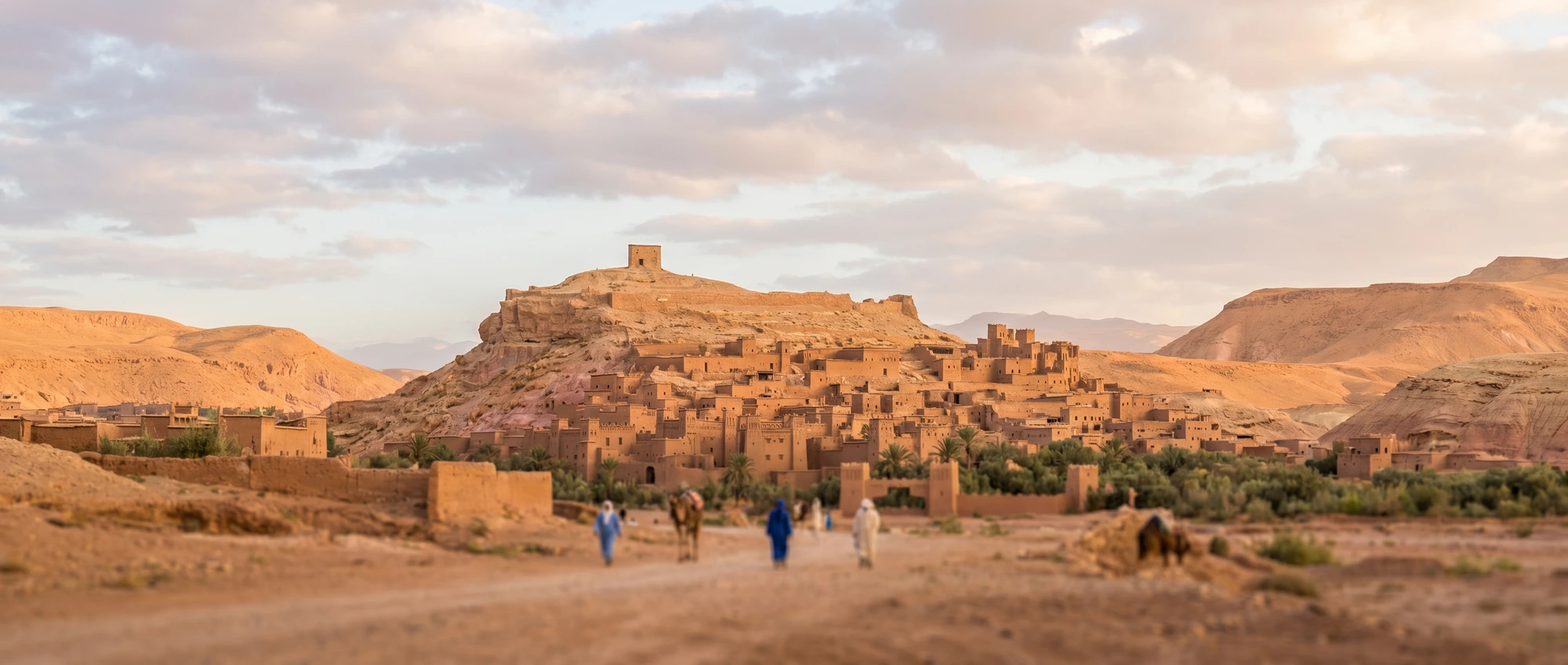
Take a 3-day Merzouga desert tour from Marrakech: over the Tizi n'Tichka pass to Aït Benhaddou (the mud-brick kasbah you've seen in a hundred films), through the Dades or Todra gorges, then a camel ride into the Erg Chebbi dunes and a night in a desert camp. It's a lot of driving — 8–9 hours on day one — but the dunes at sunrise are the trip's highlight. Book a small-group or private tour, not the cheapest 60-person convoy.
- 3Day 6
Back to Marrakech — hammam and souks
You'll roll back into Marrakech tired and dusty after the long return drive. Book a hammam and scrub, do the souk shopping you scoped on day one (now you know the going rate), and have a proper rooftop dinner. This is the day to buy the rug or lantern, having haggled down from the first-quoted price — start at roughly a third.
- 4Day 7
Day trip or wind-down
Either a day trip to the Ourika Valley in the foothills for waterfalls and a cooler change of air, or the train to Essaouira-adjacent coast — or just a slow last day with breakfast on the riad roof before your afternoon flight. Keep ~150 DH back for the airport taxi and a coffee, since you can't take dirham home.
Where to base yourself
In Marrakech the choice is character versus convenience. A riad inside the medina walls is the whole point — courtyard calm, rooftop breakfasts, a step from Jemaa el-Fnaa — but cars can’t reach most riad doors, so you arrive at a square and a porter wheels your bag through the lanes. Gueliz, the French-built new town, is the calmer, taxi-to-the-door alternative if the medina sounds like too much. Beyond Marrakech, Fez offers a deeper, less-polished medina (hire an official guide for your first walk, or you will get lost), Chefchaouen a cooler blue-washed mountain town, and Essaouira sea air three hours west.
Marrakech medina (riad)
Staying in a riad — a courtyard house — inside the old walls is the whole point of Marrakech: rooftop breakfasts, tiled calm a step off the chaos, and walking distance to Jemaa el-Fnaa. The trade-off is that cars can't reach most riad doors, so you arrive at a square and a porter wheels your bag through the lanes. Book one with good directions and a pickup.
Good for: First-timers who want the atmosphere
Gueliz (Marrakech new town)
The modern, French-built quarter with wide streets, normal hotels, wine bars and chain shops. Calmer and easier to navigate than the medina, with taxis that pull up to the door, but you trade the old-city magic for somewhere that could be any warm city. Good for a quieter or business-leaning stay.
Good for: Calm, modern convenience
Fez medina
The largest car-free old city in the world and a more authentic, less touristy maze than Marrakech — overwhelming and wonderful in equal measure. Stay in a restored riad/dar and hire an official guide for your first walk, because you will get lost otherwise. The pace and the tanneries are the draw.
Good for: Deeper, less-polished medina immersion
Chefchaouen
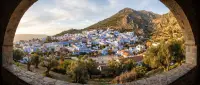
The blue-washed mountain town in the north, a few hours from Fez or Tangier. Small, walkable, far cooler than the desert cities and made for slow days and photographs. A great add-on if you're doing the northern loop, less so on a Marrakech-only trip given the distance.
Good for: Cooler, photogenic downtime
Essaouira (coast)
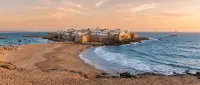
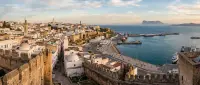
The breezy Atlantic port three hours west of Marrakech: fortified medina, fresh fish, surf and wind, and noticeably cooler than inland in summer. A relaxed counterpoint to Marrakech's intensity and the easiest beach add-on by bus or grand taxi.
Good for: Sea air and a slower finish
Getting around — trains, and why the desert needs a tour
Getting around Morocco
Morocco's national rail network (ONCF) is good and cheap, and it's how you connect the northern cities: the Al Boraq high-speed line links Tangier, Rabat and Casablanca, and conventional Al Atlas trains run on to Marrakech, Meknes and Fez. Casablanca to Marrakech is around 3 hours; Casablanca to Fez around 3h25. Book on the ONCF site (oncf-voyages.ma), where tickets open about three months ahead — first class is only a little dearer and worth it in summer. One thing to know: the high-speed line does not yet reach Marrakech (the extension is due around 2029), so Marrakech–Tangier means changing in Casablanca and a solid 6 hours. For the desert and the Atlas there is no train — you take an organised tour-loop or hire a driver, because self-driving the mountain passes isn't most people's idea of a holiday. Within cities, petit taxis are cheap but often un-metered for tourists, so agree the fare before you get in; grand taxis (shared older Mercedes) cover intercity routes. Marrakech also has a proper airport bus (Line 19) into the centre for 30 DH.
- ONCF trains connect the cities cheaply — book on oncf-voyages.ma (first class is worth it in summer).
- Al Boraq high-speed serves Tangier–Rabat–Casablanca; Marrakech is on the classic line (no high-speed yet).
- Casablanca–Marrakech is ~3h by train; Casablanca–Fez ~3h25.
- The Sahara and Atlas have no railway — take an organised tour-loop or hire a driver.
- Agree petit-taxi fares before you get in; they're rarely metered for tourists.
- From Marrakech airport, the Line 19 bus is 30 DH (~£2.40); a petit taxi to the medina is ~£8–12.
The thing to understand is that Morocco splits into two transport worlds. The northern cities — Tangier, Rabat, Casablanca, Fez, Meknes and Marrakech — are linked by the cheap, reliable ONCF rail network, with the Al Boraq high-speed line up north and classic Al Atlas trains reaching Marrakech. The Sahara and the High Atlas have no railway at all. That’s why the standard first trip pairs a rail-or-fly city base with an organised desert tour-loop: a small-group or private 3-day run over the Tizi n’Tichka pass to Aït Benhaddou, through the gorges, and into the Erg Chebbi dunes for a night under canvas. Book the smaller, pricier tour over the cheapest 60-person convoy — it’s the difference between a trip and an endurance test.
Staying connected
UK roaming to Morocco is expensive — it sits outside the inclusive EU-style zones, so the networks charge around £5–£6 a day, far more than the ~£2.25 you’re used to in Europe. Over a week that’s £35–£42. A travel eSIM at £5–£15 for the whole trip is the obvious value move; install it before you fly and activate on landing. Download offline maps too — the Marrakech and Fez medinas are a GPS-defeating tangle of unnamed lanes.
Stay connected in Morocco
Morocco sits outside the EU-style inclusive roaming zones, so UK networks charge daily roaming here — Vodafone, EE and Three bill roughly £5–£6 a day, far more than the ~£2.25/day you're used to in Europe. Over a week that's £35–£42.
- A travel eSIM is typically £5–£15 for 5–10GB for the whole trip — well under the daily-roaming cost.
- Or buy a local Maroc Telecom, Orange or inwi SIM on arrival; coverage is strong in the cities and patchy in the deep desert.
- Download offline maps before you go — the Fez and Marrakech medinas are a GPS-defeating maze of unnamed lanes.
Money: the closed-currency catch
Morocco is still largely a cash country, and the dirham is the catch UK travellers don't expect: it's a closed currency, so you legally can't bring it in or out and you won't find it in any UK bureau de change. You sort cash on arrival. The cleanest way is an ATM in the airport arrivals hall or in town — withdraw 500–1,000 DH to start and skip the airport exchange kiosks, which take a 4–5% markup. A fee-free travel card (Wise, Revolut, Chase or similar) gets you close to the real rate; always choose to be charged in dirham, not pounds, when a terminal or ATM offers (dynamic currency conversion costs you 3–5%). Cards work in smart hotels, riads and Gueliz restaurants, but the souk, taxis, medina cafés and tips are all cash, so keep a stock of small notes and 1–10 DH coins. Spend down or keep only a little dirham for your last day — you can't take it home.
Fee-free travel money
Skip the airport exchange desk — a fee-free travel card gives you the real exchange rate abroad.
Before you fly
Two small UK-specific jobs round out the trip: pre-book your airport parking, which is almost always cheaper booked ahead than on the day, and double-check the essentials before you fly — insurance, your cash plan, your eSIM.
Airport parking & lounges
Pre-book your UK airport parking or a lounge — it's almost always cheaper booked ahead than on the day.
How we know this
How we know this
- GOV.UK foreign travel advice — Morocco — entry, passport validity, visa, health, safety and local laws
- NHS Fit for Travel / TravelHealthPro — vaccine recommendations and travel-health advice
- ONCF (oncf-voyages.ma) & seat61.com — Al Boraq high-speed and classic train times and tickets
- Bank of England / XE — the £1 ≈ 12.3 MAD rate used for all pound figures (June 2026)
GOV.UK last updated 17 Feb 2026.