Souss-Massa
Agadir Beach and the corniche
Agadir's 6km of flat, clean Atlantic sand and its cafe-lined promenade — what the beach is actually like, the cooler ocean swimming, and how to make the most of the corniche.
Where
Agadir, Morocco
Opening hours
Check current local access restrictions and posted lifeguard dates/hours before visiting. Do not assume the beach is supervised outside those hours or safe after dark.
Tickets
Free — no ticket needed to use the beach or walk the corniche. You only pay if you hire a sun lounger and parasol or eat and drink at the promenade cafes and beach clubs.
Time needed
A half-day to laze and swim, or an hour for an evening stroll along the corniche with a coffee or dinner.
In short
Visiting Agadir Beach and the corniche
Agadir Beach is a 6 km sweep of flat, clean sand backed by a paved promenade lined with cafes and restaurants. The Atlantic can have strong currents and unexpected waves, and the water runs cooler than the Med, so it is more a sunbathe-and-stroll beach than a warm-swimming one. Free to use, a popular evening promenade; avoid quiet areas after dark and protect valuables, and the corniche is where the city goes out after dark.
The beach itself
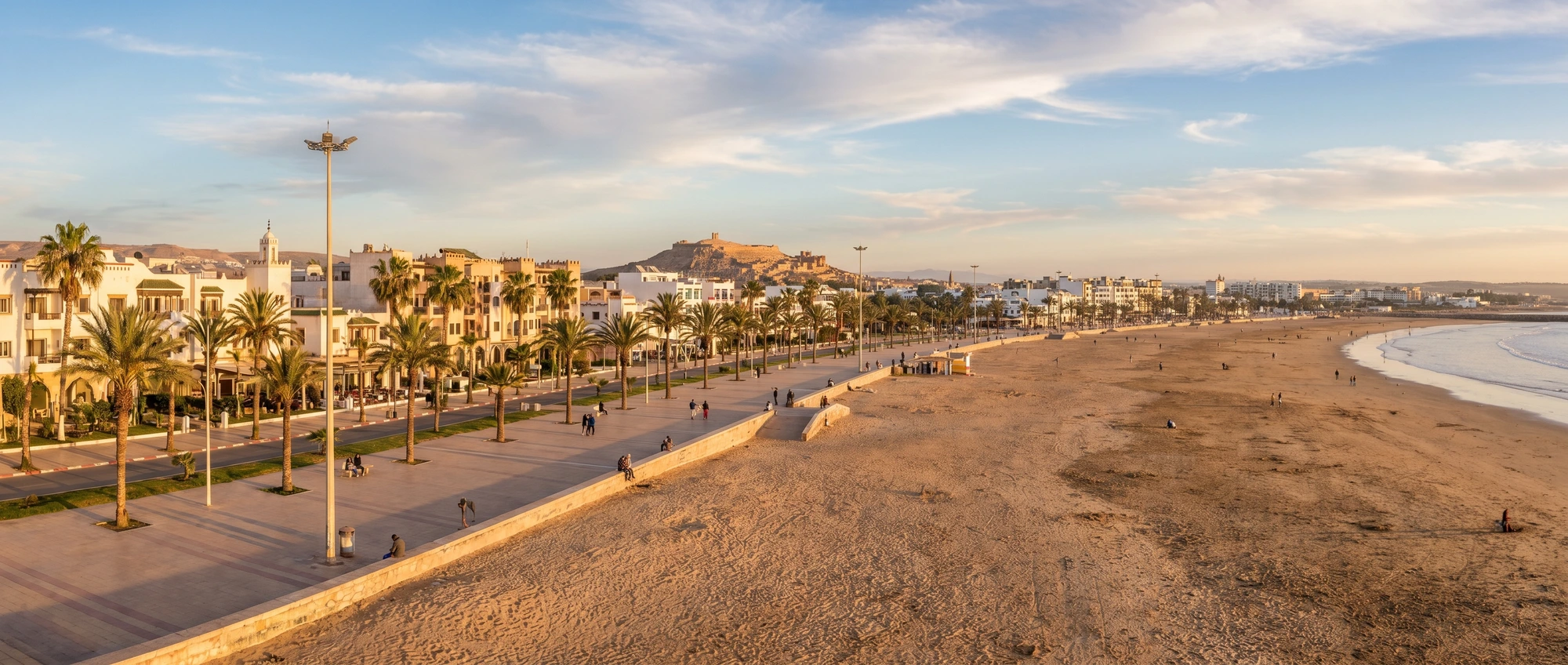
Agadir’s headline draw is its beach, and it earns the billing: a 6km crescent of flat, clean, golden sand that curves gently round the bay below the city. It is unusually broad and even, so there is always room to spread out, and the broad sand is part of the appeal, while swimming suitability depends on current conditions. The catch — and it is worth knowing before you book a swimming holiday — is that this is the open Atlantic, not the Med. The water runs noticeably cooler year-round, and conditions can change quickly, so this is often treated as a sunbathe, walk and dip beach than a warm-swimming one. Surf schools and lessons cluster at the quieter ends.
Using the sand is free. You only spend if you hire a sun lounger and parasol for the day or settle in at one of the beach clubs. Check current posted lifeguard dates/hours, flags and local conditions. Many Moroccan beaches have limited or no patrols or signs; strong currents and unexpected waves can occur. Keep valuables secure.
The corniche after dark
Backing the beach is the corniche, a long paved promenade lined with cafes, ice-cream stalls, seafood restaurants and bars. This is where Agadir comes out in the evening — families strolling, the sunset over the Atlantic, dinner with your feet more or less in the sand. It is well lit and pleasant to walk after dark, which is part of the appeal of a city largely rebuilt after the 1960 earthquake: it is modern, open and relaxed rather than a maze of old lanes.
Treat it as a half-day on the sand and an evening on the promenade. Go in late spring through summer for the warmest air and the liveliest corniche, accept that the sea will be brisk, and you have an easy, low-cost Atlantic beach day. If you want old-Morocco bustle as well, pair it with a morning at Souk El Had a short taxi ride inland.
Check current local flags, currents and posted lifeguard hours before swimming. Avoid quiet areas after dark and keep valuables secure; neither the bay nor the promenade guarantees safety.
Planning the rest of your trip? See the Agadir city guide.