
In short
Is Poland a good holiday for UK travellers?
Yes — it's the best-value short-haul city break going: flights are ~2h20 from a dozen-plus UK airports, there's no visa for a holiday, a mid-range week costs around £450–£550 per person, and Kraków alone delivers a near-intact medieval old town, the Auschwitz day-trip and a pint for £3. Just remember it's the złoty, not the euro.
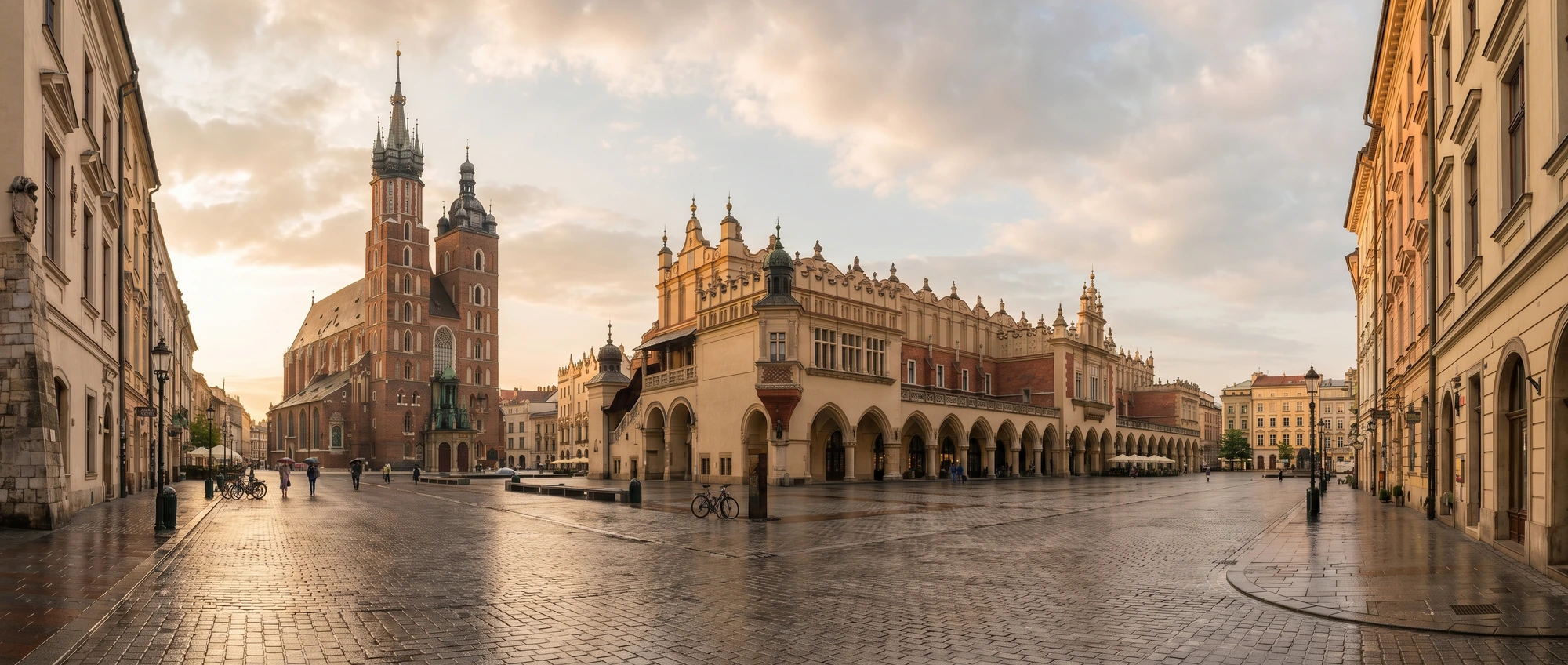
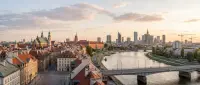
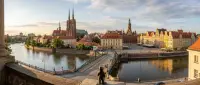
Poland is the city-break country UK travellers keep rediscovering. Kraków is the headline act — Europe’s largest medieval market square, Wawel Castle, the Kazimierz bar scene and the sobering Auschwitz day-trip an hour west. Warsaw is the rebuilt capital, lighter on looks but heavy with world-class museums. Gdańsk gives you the Baltic and the prettiest waterfront in the country, and Wrocław its canals, bridges and bronze dwarves. The common thread is value: this is Western-European quality at prices that haven’t caught up. Below we set out, for a UK traveller spending their own money in 2026, exactly what each part suits, what it costs in pounds, and the entry rules straight from GOV.UK.
The short version
- Kraków first: it fills a long weekend and puts Auschwitz and the Wieliczka salt mine within a day-trip.
- It's the złoty, not the euro — Poland is in the EU but outside the eurozone, so don't pack euros.
- For Kraków–Warsaw, take the Express InterCity Premium train — ~2h20 city centre to city centre, from ~£10 booked ahead.
- Eat at a bar mleczny (milk bar): a soup-and-pierogi lunch for £3–£5 is the cheapest hot meal in any European capital.
- Always pay in złoty, never pounds, at card machines and ATMs — and skip standalone Euronet machines.
Entry requirements for UK travellers
In short
Do UK citizens need a visa for Poland?
No. British citizens can visit Poland visa-free for up to 90 days in any 180-day period for tourism, family visits or business (GOV.UK). Your passport must have a date of issue less than 10 years before you arrive and be valid for at least 3 months after you leave the Schengen area. Rules can change — confirm on GOV.UK before you travel.
The paperwork for a Polish holiday is minimal: no visa, and a passport that clears two Schengen checks. The one that catches UK travellers out is the date of issue — your passport has to have been issued less than 10 years before you arrive, which an older passport renewed before October 2018 can fail even when its expiry still looks fine. One Poland-specific point: British-Polish dual nationals must enter and leave the country on a Polish passport or Polish ID card. You must also declare cash of €10,000 or more when leaving (GOV.UK).
Key points before you book
- No visa for stays up to 90 days in any 180-day period (GOV.UK).
- Passport: date of issue under 10 years before arrival and valid 3+ months after you leave Schengen (GOV.UK).
- British-Polish dual nationals must use a Polish passport or ID card to enter and leave (GOV.UK).
- Carry a free UK GHIC for state healthcare plus travel insurance — the GHIC won't repatriate you (GOV.UK).
- Declare cash of €10,000 or more when leaving (GOV.UK).
- Carry ID; public drinking and jaywalking are fined, and drug penalties are severe (GOV.UK).
- Avoid the immediate Poland–Ukraine border zone; emergency numbers are 112 (general), 999 ambulance, 998 fire, 997 police (GOV.UK).
Passport validity
Your passport must have a date of issue less than 10 years before the day you arrive, and an expiry date at least 3 months after the day you plan to leave the Schengen area. Check the issue date, not just the expiry — an old passport renewed before 1 October 2018 can have more than 10 years between the two dates and be refused even though it still looks 'in date' (GOV.UK).
Visas
No visa for a holiday. You can travel visa-free to the Schengen area, including Poland, for up to 90 days in any 180-day period for tourism, visiting family, business or short-term study. Overstaying the 90/180 limit risks a 3-year Schengen entry ban; working or staying longer needs separate permission (GOV.UK).
Health
A free UK GHIC (or valid EHIC) covers state-provided healthcare in Poland on the same basis as a local, but GOV.UK is explicit it is not a substitute for travel insurance: it won't cover medical repatriation to the UK, treatment in a private clinic, non-urgent care, or changes to your travel and accommodation. Carry both. No vaccinations are required for a normal trip; check TravelHealthPro for recommendations.
Safety & security
Poland is a safe, low-crime destination for tourists. GOV.UK says terrorist attacks cannot be ruled out and could target crowded public places, in line with most of Europe. The country-specific points are about the east: because of the war in Ukraine, GOV.UK warns that Russian military strikes have hit Ukraine within 20km of the Polish border, and access to within 15m of the Poland–Ukraine border itself is restricted — this is the far east of the country, well away from Kraków, Warsaw and the tourist trail. Day-to-day, the main practical risk is unofficial taxis that overcharge: use only marked, official taxis or an app. Rules can change — confirm on GOV.UK before you travel.
Local laws & customs
Always carry ID — a photocopy of your passport is acceptable. Drinking alcohol in public places (parks, streets) is illegal and fined. Jaywalking is a finable offence, so cross at marked crossings. Drug possession carries severe penalties including long prison sentences. Photographing military or security installations is prohibited (GOV.UK).
GOV.UK is the official source for Poland entry rules — always check it before you book.
Read GOV.UK adviceGOV.UK updated 10 Apr 2026 · Departly checked 9 Jun 2026
EU entry rules for Poland
Checked 6 Jun 2026The EU's biometric Entry/Exit System (EES) began a progressive rollout on 12 October 2025 and became fully operational on 10 April 2026: on your first trip since then you give fingerprints and a facial scan at the border (a one-off, valid 3 years), and the 90-days-in-180 limit is now counted automatically. Some countries may still ease or pause checks at busy crossings during the rollout-flexibility window, so queues vary. ETIAS — a separate €20 travel authorisation (free for under-18s and over-70s, valid 3 years) — is expected in late 2026 and is not required yet. Always confirm on GOV.UK before you book.
- 90/180 rule
- Visa-free stays of up to 90 days in any 180-day period across the Schengen area. Days spent in other Schengen countries count towards the total.
- Passport
- Issued less than 10 years before the day you arrive, and valid for at least 3 months after you plan to leave the Schengen area. Check the issue date, not just the expiry.
- GHIC
- Carry a free UK GHIC for state healthcare on the same basis as a local — but it is not a substitute for travel insurance, which you still need.
- Roaming
- Post-Brexit, EU roaming is no longer guaranteed free; many UK networks charge around £2.25/day. Check your tariff or use a travel eSIM.
On health, carry a free UK GHIC (or valid EHIC): it gets you state healthcare in Poland on the same terms as a local. But GOV.UK is blunt that it is not a substitute for travel insurance — it won’t fly you home, won’t cover a private clinic, and won’t pay for cancellation or lost bags. Carry both, and never pay a third-party website for a GHIC; it’s free from the NHS. Rules can change — confirm on GOV.UK before you travel.
Flights from the UK
In short
How long is the flight to Poland from the UK?
About 2h20 to Kraków, 2h25–2h35 to Warsaw and around 2 hours to Gdańsk from London, and roughly 2h15–2h30 from northern UK airports. Direct flights run from a dozen-plus UK airports on Ryanair, Wizz Air, easyJet, Jet2 and LOT.
Because of the large Polish community in the UK, the routes are dense and the fares are some of the lowest in Europe — and they don’t all leave from London. Manchester, Birmingham, Edinburgh, Bristol and Belfast all run direct routes that are often as cheap as the capital. November is the cheapest month to fly, while July, August and the Christmas-market fortnight in December carry the biggest premium, so the booking lever that matters most is when you go. Note Warsaw has two airports — Chopin (WAW) is the main one near the centre, while Modlin (WMI) is the further-out Ryanair base.
Flights from the UK
Short-haulPoland is one of the UK's biggest low-cost markets thanks to the large Polish community here, so frequency is high and fares are low — Ryanair, Wizz Air, easyJet, Jet2 and LOT all fly it. Direct routes run from a dozen-plus UK airports, not just London, and regional departures like Manchester, Birmingham and Edinburgh are often as cheap as the capital.
Fly from
Main arrival airports
- KRK Kraków (John Paul II / Balice)
- WAW Warsaw (Chopin)
- WMI Warsaw (Modlin — Ryanair)
- GDN Gdańsk (Lech Wałęsa)
- WRO Wrocław
- POZ Poznań
- KTW Katowice (for Kraków/Auschwitz)
When to go
In short
When is the best time to visit Poland?
Late April–June and September–October: mild 14–22°C, fewer crowds and cheaper than the summer peak. July and August are warmest but busiest. December is cold but brilliant for the Christmas markets in Kraków, Warsaw and Wrocław. January–February are the cheapest months and the ski season in the Tatras, but short, dark and cold.
When to go
Sweet spot: Late April to June and September to October. You get mild 14–22°C days, manageable crowds, and lower prices than the July–August peak. Late spring and early autumn are the sweet spot — warm enough for the squares and beer gardens, with shorter queues at Wawel and easier Auschwitz slots.
Summer (July–August) is warmest at mid-20s°C but busiest, with Kraków's old town packed and Auschwitz tickets hard to get. December is cold (often below freezing) but magical for the Christmas markets in Kraków, Warsaw and Wrocław — pack properly for it. January and February are the cheapest for flights and the quietest, though days are short and cold; this is also ski season in Zakopane and the Tatras.
The shoulder seasons suit almost every kind of Poland trip — warm enough for the squares and beer gardens, with shorter queues at Wawel and easier Auschwitz slots. High summer is warmest but brings the crowds, and Kraków’s old town gets genuinely busy in July and August. The two seasons worth choosing on purpose sit at the cold end: December trades freezing days for the best Christmas markets in this part of Europe, and January–February deliver the cheapest flights plus skiing in the Tatras, as long as you pack for sub-zero temperatures and short daylight.
What it costs
In short
How much does a week in Poland cost from the UK?
Roughly £550–£600 per person on a budget and around £900–£1,100 mid-range for a week. UK return flights run ~£25–£60 off-peak. On the ground, budget on £30–£45 a day, mid-range £70–£100 — and a milk-bar lunch keeps a hot meal to about £3–£5.
What it costs
UK return flights to Poland run from about £25–£60 off-peak on Ryanair or Wizz Air booked ahead, £90–£180 in the school holidays or at short notice, and £200–£400 on LOT or BA at busy times. November is the cheapest month; July, August and the Christmas-market fortnight in December carry the biggest premium.
Daily budget per person
| Pierogi or pork cutlet main in a milk bar / cheap diner | 15–22 zł / £3–£4.50 |
|---|---|
| 0.5L domestic beer (bar) | 10–15 zł / £2–£3 |
| Craft pint in a Kazimierz pub, Kraków | 15–25 zł / £3–£5 |
| Coffee + cake | 15–25 zł / £3–£5 |
| Kraków / Warsaw tram or bus single | 4–6 zł / £0.80–£1.20 |
| Kraków airport train to the centre (17 min) | 20 zł / £4 |
| Kraków–Warsaw Express InterCity (booked ~30 days ahead) | from 49 zł / £10 |
Poland's biggest day-to-day saver is the bar mleczny (milk bar) — a subsidised, canteen-style throwback where a bowl of soup and a plate of pierogi costs 15–25 zł (£3–£5). They're the cheapest hot lunch you'll find in any European capital, and they're a genuine local institution rather than a tourist trap.
The figures above are honest mid-2026 numbers converted at PLN 1 = £0.20 (£1 ≈ 4.91 zł), so a 0.5L beer really is about £2–£3 and a tram single under £1.20. The single biggest day-to-day saving is the bar mleczny — the subsidised, canteen-style milk bar where a bowl of soup and a plate of pierogi runs 15–25 zł (£3–£5). It’s the cheapest hot lunch in any European capital, and a genuine local institution rather than a tourist trap. Do that and a Kraków week stretches a remarkably long way.
A realistic first itinerary
Poland is bigger than UK travellers expect, and the classic mistake is treating Kraków and Gdańsk as a single trip — they sit at opposite ends of the country, a 5–6 hour train apart. For a first visit, Kraków alone fills a long weekend with room to spare, and Kraków plus Warsaw makes a comfortable week linked by a single fast train. Gdańsk and the Baltic coast are a separate trip, not a bolt-on. The itinerary below is the week-long Kraków-and-Warsaw version; for a short break, stop after the Kraków days.- 1Days 1–2
Kraków old town
Europe's largest medieval market square (Rynek Główny), the Cloth Hall, St Mary's Basilica and the bugle call, then Wawel Castle and cathedral on the hill. Stay inside or just outside the Planty ring, not out by the airport.
- 2Day 3
Auschwitz-Birkenau day-trip
A sobering, essential half-day ~1h15 west of Kraków. Entry is free but you must pre-book a timed ticket weeks ahead; in peak season an authorised guide is compulsory. Pair it with a return to Kraków for the evening.
- 3Day 4
Kazimierz & Wieliczka
The old Jewish quarter Kazimierz for its synagogues, milk bars and craft-beer bars, plus an afternoon at the Wieliczka Salt Mine (~30 min out) — an underground cathedral carved from rock salt.
- 4Day 5
Train to Warsaw (~2h20)
Swap the medieval south for the rebuilt capital by Express InterCity Premium — book ahead for fares from ~49 zł.
- 5Days 5–7
Warsaw
The painstakingly reconstructed Old Town (a UNESCO site precisely because it was rebuilt from ruins), the POLIN Museum of Polish Jews, the Warsaw Rising Museum, and the Palace of Culture viewing deck. Łazienki Park if the weather's good.
The short-break cut is to stop after the Kraków days — two days in the old town, plus the Auschwitz and Wieliczka day-trips, comfortably fills a long weekend. The thing to resist is trying to staple Gdańsk onto a Kraków trip; they’re at opposite ends of the country and the train between them eats most of a day. If you have a full week, the Kraków-plus-Warsaw split above, joined by a single fast train, is the sweet spot.
Where to base yourself
In short
Where should I stay in Poland for a first trip?
Kraków for a first visit — the medieval old town, Wawel and the Auschwitz and Wieliczka day-trips. Warsaw for museums and the rebuilt capital, Gdańsk for the Baltic waterfront, Wrocław for canals and quiet, and Zakopane for the Tatra mountains. Match the base to the trip you actually want.
Kraków
The default first trip and the best base in Poland: a near-intact medieval old town, Wawel Castle, the Kazimierz bar scene, and the Auschwitz and Wieliczka day-trips on the doorstep. Stay inside or just outside the Planty (the green ring round the old town) or in Kazimierz — both are walkable; skip cheap hotels stranded out near the airport.
Good for: First-timers and long weekends
Warsaw
The capital is bigger, more modern and more about museums than looks — the POLIN and Warsaw Rising museums are world-class, and the reconstructed Old Town is genuinely moving once you know it was rebuilt from rubble. Base yourself in Śródmieście (the centre) or the Old Town. It's the most expensive Polish city, but still cheap by Western European standards.
Good for: Museum-led trips and business travellers
Gdańsk & the Baltic coast
The prettiest waterfront in Poland — a Hanseatic merchant city of tall, colourful façades on the Motława river, with the WWII history of Westerplatte and the European Solidarity Centre. Sopot's beach and pier are a tram ride away. Treat it as its own trip, not a Kraków add-on: it's a 5–6 hour train from the south.
Good for: A second visit or a summer coast break
Wrocław
Poland's most underrated city — a market square to rival Kraków's, a dozen islands and 100-plus bridges over the Odra, and a fun hunt for the hundreds of tiny bronze dwarf statues dotted around town. Far quieter than Kraków, and a short hop from the Wrocław airport that Wizz Air and Ryanair serve.
Good for: Repeat visitors who've done Kraków
Zakopane & the Tatras
Poland's mountain resort, ~2h south of Kraków at the foot of the Tatra Mountains — wooden highlander architecture, hiking in summer and skiing in winter. It's a domestic-holiday hotspot, so it's busy and not as cheap as it looks in peak weeks. Best as a 1–2 night add-on from Kraków rather than a standalone UK trip.
Good for: Hikers and skiers extending a Kraków trip
These are country-level bases — the street-by-street detail (which corner of the Planty ring, which part of Kazimierz) belongs on the individual city guides. The pattern to follow in Kraków: stay inside or just outside the Planty, or in Kazimierz, so you can walk everywhere, rather than booking a cheap hotel stranded out by the airport. It costs little more and saves you a daily commute into the old town.
Getting around
In short
What's the best way to get around Poland?
Between cities, the PKP Intercity rail network: Kraków–Warsaw is about 2h20 on the fast Express InterCity Premium, city centre to city centre, with advance fares from around 49 zł (£10) booked ~30 days ahead. Within cities, cheap trams and buses (4–6 zł a ride). You don't need a car for a city trip. Drive on the right.
Getting around Poland
Between cities, PKP Intercity runs a fast, cheap rail network and it's the way to travel: Kraków–Warsaw takes about 2h20 on the top Express InterCity Premium (Pendolino) trains, city centre to city centre, with promotional advance fares from around 49 zł (£10). Fares behave like budget airlines — cheapest released ~30 days out, far dearer at the station — so book ahead on intercity.pl. Slower IC and TLK trains cost less and take 3–4.5 hours. Inside cities, trams and buses are excellent and cheap (a single is 4–6 zł / under £1.20), bought from machines or an app. You don't need a car for a city trip; rent one only for the Tatras or a rural loop, and remember Poland drives on the right.
- Kraków–Warsaw by Express InterCity Premium is ~2h20 and beats flying once you count airport time.
- Book PKP Intercity ~30 days ahead on intercity.pl: Kraków–Warsaw from ~49 zł (£10), versus ~199 zł last-minute.
- Kraków airport: the SKA1 train runs to Kraków Główny in ~17 minutes for 20 zł (£4) — far better value than a taxi.
- A Kraków airport taxi or app is 90–120 zł (£18–£24); avoid unmarked drivers touting inside the terminal (GOV.UK).
- City trams and buses are 4–6 zł a single (under £1.20); buy from the yellow machines or the Jakdojade / mobiBilet apps.
Trains & rail passes
Book intercity trains and work out whether a rail pass actually pays off for your route before you go.
Staying connected & covered
Most UK networks now bill around £2.25 a day to use your data in Poland — roughly £15–£16 for a week, £32 for a fortnight — because post-Brexit EU roaming is no longer guaranteed free. Check your tariff first, and if the daily charge adds up, buy a Poland eSIM that switches on the moment you land. The other thing to sort is cover: your GHIC and travel insurance do different jobs, and you need both.
Stay connected in Poland
Post-Brexit, free EU roaming is no longer guaranteed — most UK networks now charge around £2.25/day to use your allowance in Poland (about £15–16 for a week, £32 for a fortnight). A travel eSIM is usually cheaper and gives you data the moment you land.
- Check your UK tariff first — some Three, iD and Smarty plans still include EU roaming free.
- A typical 5–10GB Poland eSIM costs about £6–£10, beating a week of daily roaming charges.
- eSIMs install before you fly via a QR code on any eSIM-capable phone.
Travel insurance for Poland
A free UK GHIC gets you state healthcare in Poland, but it won't fly you home, won't cover a private clinic, and won't pay for cancellation or lost baggage. GOV.UK and the NHS both say to carry travel insurance on top.
- Single-trip European cover starts at roughly £3–£10 for a healthy younger traveller on a short trip.
- Annual multi-trip cover pays off if you travel abroad twice or more a year.
- Pair it with your GHIC — they cover different things, and you need both.
Money
Poland is heavily card-friendly — contactless, Apple Pay and Google Pay work almost everywhere in cities — but the currency is the złoty, not the euro, and that catches UK travellers out. Don't bring euros expecting to spend them: most places only take złoty, and the few that accept euros use a poor rate. Withdraw złoty from bank-branded ATMs (PKO BP, Santander, ING) and avoid the standalone Euronet machines in tourist areas, which push high fees and aggressive Dynamic Currency Conversion. The one rule that saves real money: when an ATM or card machine asks whether to charge in pounds or złoty, always choose złoty. Choosing pounds triggers DCC — a hidden markup of up to ~5% — and your own UK card or a fee-free travel card always beats it. Tipping is modest: round up or leave about 10% in cash for good restaurant service, and note that 'service' (obsługa) is occasionally added in tourist spots.Fee-free travel money
Skip the airport exchange desk — a fee-free travel card gives you the real exchange rate abroad.
Before you fly
The Poland-specific moves that save real money are booking PKP Intercity trains ~30 days ahead (advance Kraków–Warsaw fares from ~49 zł, far dearer at the station) and pre-booking your Auschwitz-Birkenau slot weeks out, since the free timed tickets sell out. Pre-book UK airport parking too — it’s almost always cheaper booked ahead than on the day — and sort your Poland eSIM before you fly so you land connected.
Airport parking & lounges
Pre-book your UK airport parking or a lounge — it's almost always cheaper booked ahead than on the day.
How we know this
How we know this
- GOV.UK foreign travel advice — Poland — entry, passport, visa, health, safety and local laws (print page)
- NHS — Global Health Insurance Card (GHIC) — the GHIC is free and is not a substitute for insurance
- PKP Intercity — Express InterCity Premium fares, routes and journey times
- Kraków Airport — official SKA1 airport-train cost and times
GOV.UK last updated 10 Apr 2026.