Pomerania
European Solidarity Centre
How to visit the European Solidarity Centre in Gdańsk: what the 40 zł ticket covers, which day it closes, how long the seven-hall route really takes, and the free rooftop and shipyard-gate monument most visitors miss.
Where
Gdańsk, Poland
Opening hours
October–April exhibitions Monday/Wednesday–Friday 10:00–17:00, weekend 10:00–18:00; Tuesday closed. May–September exhibitions weekdays 10:00–19:00, weekend 10:00–20:00. Building hours differ; terrace weather-dependent. 2026 closures:1/6 January,5/6 April,1 November,24–26 December;4 June 2026 was an explicit open exception. https://ecs.gda.pl/zaplanuj-wizyte/godziny-otwarcia/
Tickets
Permanent exhibition 40 zł regular/35 zł reduced, audio guide included; family 2+1=100 zł and 2+2/2+3=115 zł with stated child/proof conditions. Under 7 free; reduced senior category is over 65 with ID. Stocznia exhibition 15/10 zł separately. Check full eligibility at https://bilety.ecs.gda.pl/index/cennik.html (actual operator tariff read 25 October 2026).
Time needed
Allow 2–3 hours for the seven-hall exhibition, plus time for the terrace if it is open and the monument outside.
In short
Visiting European Solidarity Centre
The European Solidarity Centre’s permanent exhibition follows the shipyard strikes and Solidarity movement. Allow 2–3 hours for its seven halls. Admission includes an audio guide; the Stocznia exhibition has a separate product. The building is free to enter, while the rooftop depends on weather and its opening window.
Planning your visit
The European Solidarity Centre’s permanent exhibition follows the shipyard strikes and Solidarity movement. Allow 2–3 hours for its seven halls. Admission includes an audio guide; the Stocznia exhibition has a separate product. The building is free to enter, while the rooftop depends on weather and its opening window.
Tickets and opening
Permanent exhibition 40 zł regular/35 zł reduced, audio guide included; family 2+1=100 zł and 2+2/2+3=115 zł with stated child/proof conditions. Under 7 free; reduced senior category is over 65 with ID. Stocznia exhibition 15/10 zł separately. Check full eligibility at https://bilety.ecs.gda.pl/index/cennik.html (actual operator tariff read 25 October 2026).
October–April exhibitions Monday/Wednesday–Friday 10:00–17:00, weekend 10:00–18:00; Tuesday closed. May–September exhibitions weekdays 10:00–19:00, weekend 10:00–20:00. Building hours differ; terrace weather-dependent. 2026 closures:1/6 January,5/6 April,1 November,24–26 December;4 June 2026 was an explicit open exception. https://ecs.gda.pl/zaplanuj-wizyte/godziny-otwarcia/
Do you need to book European Solidarity Centre tickets in advance?
The permanent exhibition uses timed capacity. Buy online or check remaining desk places; online advance purchase is recommended, not a guarantee of no waiting. Tuesday exhibition closure applies October–April, not the published May–September schedule.
Is the European Solidarity Centre worth it?
Yes, if you give it the time. The permanent exhibition is one of the best modern history museums in Poland: seven halls trace the Solidarity movement from the August 1980 shipyard strike to the fall of communism, anchored by real objects like the plywood board listing the 21 Demands. It is long and text-heavy rather than a quick photo stop, so it earns its 2–3 hours; if you only want the building and the story in outline, the rooftop terrace (within its opening window and weather permitting) and the gate monument outside give you a sense of the place for nothing.
What is the best time of day to visit?
Select a slot that leaves 2–3 hours for the exhibition. The October–April weekday window finishes 17:00 and Tuesday exhibitions close; summer has longer hours. Check the separate terrace/weather window before relying on the rooftop.
How do you get to the European Solidarity Centre from Gdańsk Main Town?
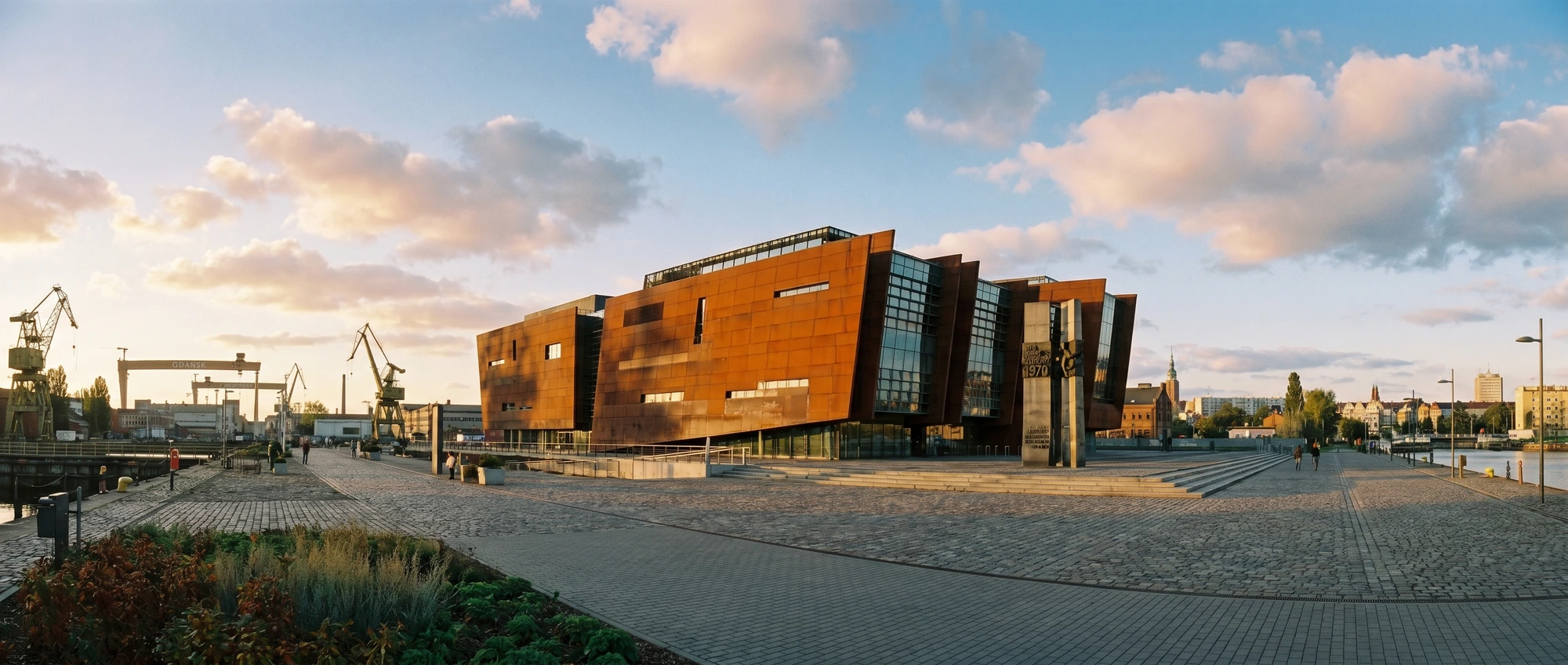
It is about a 15–20 minute walk north from Długi Targ to Solidarity Square (plac Solidarności), or a short SKM hop to Gdańsk Stocznia station, which sits right by the shipyard gates. The rust-coloured weathering-steel building is unmistakable, with the three-cross Monument to the Fallen Shipyard Workers in front of it.
Planning the rest of your trip? See the Gdańsk city guide.
More to see in Gdańsk

Book the essentials
Tours & tickets
European Solidarity Centre FAQs
Do you need to book European Solidarity Centre tickets in advance?
Is the European Solidarity Centre worth it?
What is the best time of day to visit?
How do you get to the European Solidarity Centre from Gdańsk Main Town?
Ready to book?
Check tickets & tours