

In short
What do UK travellers most need to know before booking Japan?
UK passport holders get a visa on arrival for up to 90 days (no advance application), flights are ~14 hours nonstop from Heathrow, and there's no GHIC cover so comprehensive insurance is essential. Do two cities well — Tokyo and Kyoto — and skip the JR Pass on that route.
Japan is the long-haul trip most UK travellers slightly over-plan. The instinct is to cram Tokyo, Kyoto, Osaka and Hiroshima into a week; the reality is that two of those cities, done properly, beat four done from a train window. This guide is built around that one honest call, plus the two decisions that actually move the needle before you book — your health cover and your rail tickets — and the UK-specific details that competitor pages gloss over: the airport you fly from, the plug in the wall, the card in your pocket and the price in pounds.
The short version
- Fly open-jaw — into Tokyo, out of Osaka Kansai — so you never backtrack to your arrival airport.
- Skip the ¥50,000 (~£233) JR Pass for Tokyo–Kyoto–Osaka; point-to-point tickets save you ~£100.
- Your GHIC is worthless in Japan — buy comprehensive insurance with medical and repatriation cover.
- Choose Haneda flights over Narita: ~£3 and 25 minutes to the centre, against ~£15 and 1h30.
- Cut Hiroshima on anything under 10 days, and do Osaka and Nara as day trips, not separate stops.
Entry requirements for UK travellers
Japan is refreshingly simple to enter on a UK passport: a visa on arrival for up to 90 days for tourism, with no application before you fly, and no extra passport-validity period required — your passport just needs to be valid for the trip with one blank page for the stamp. Everything below is taken from the GOV.UK foreign travel advice for Japan; rules can change, so confirm on GOV.UK before you travel.
The pre-departure work that genuinely matters here isn’t paperwork — it’s two things travellers underestimate. First, several everyday UK pharmacy items are illegal under Japan’s strictly enforced anti-stimulant law (Vicks inhalers, Sudafed-style pseudoephedrine remedies, some codeine painkillers), and people have been detained and deported for carrying them. Second, you must carry your passport at all times — the police can arrest you if you can’t show your status.
Key points before you book
- Visa on arrival for up to 90 days for UK tourists — no pre-application needed (GOV.UK).
- Passport valid for your stay plus one blank page; no extra validity months required (GOV.UK).
- No GHIC cover — treatment is paid in full, so comprehensive insurance is essential (GOV.UK).
- Common UK medicines (Vicks inhalers, Sudafed, some codeine painkillers) can be illegal — check before packing (GOV.UK).
- Carry your passport at all times; police can arrest you if you can't show your status (GOV.UK).
- Tattoos may bar you from onsen, pools and gyms — pack covers if you want a hot-spring soak (GOV.UK).
- Rules can change — confirm on GOV.UK before you travel.
Passport validity
Your passport must be valid for the length of your stay — no additional period of validity is required (GOV.UK). There is no months-beyond-departure rule to worry about: as long as it covers your trip dates, you're fine. You also need one blank page for the entry stamp.
Visas
UK tourists get a visa on arrival for up to 90 days for tourism or business, with no application before you travel (GOV.UK). You must declare anything prohibited or subject to tax or duty at customs.
Health
Medical care is high quality but expensive, and there is no GHIC/EHIC cover — expect to pay the whole cost of any treatment (GOV.UK). Carry comprehensive travel insurance with medical and repatriation cover. Some everyday UK medicines are illegal under Japan's strictly enforced anti-stimulant law — including Vicks inhalers, pseudoephedrine cold and flu remedies (Sudafed), some allergy and sinus medicines, and some codeine painkillers; travellers have been detained and deported, so check before you pack (GOV.UK). Check vaccine recommendations at least 8 weeks before you travel.
Safety & security
Japan is one of the safest countries you can visit; violent crime against tourists is very rare and GOV.UK does not flag pickpocketing as a common risk. The real risks are nightlife scams in Tokyo's entertainment districts — drink spiking, card fraud and disputed bar bills, with British visitors most often targeted in Kabukicho, Roppongi, Shibuya and Ikebukuro — and natural hazards: Japan is in a major earthquake zone, and typhoon season runs June to December, peaking July to September (GOV.UK). Do not follow street touts into bars.
Local laws & customs
You must carry your passport at all times — police can arrest you if you can't show your status (GOV.UK). Drug laws carry zero tolerance and severe penalties; you can be charged for an illegal substance found in your bloodstream regardless of where you took it. The drink-drive limit is about a third of the UK's, so don't drive after any alcohol. Many onsen, pools, beaches and gyms refuse entry to people with visible tattoos or ask you to cover them, and smoking on the street is banned in Tokyo and other cities outside designated areas (GOV.UK).
GOV.UK is the official source for Japan entry rules — always check it before you book.
Read GOV.UK adviceGOV.UK updated 4 Jun 2026 · Departly checked 7 Jun 2026
Why insurance, not your GHIC, is the one to get right
Your GHIC does nothing in Japan
There is no UK–Japan reciprocal healthcare agreement, so the GHIC you’d use in Europe is worthless here. GOV.UK is explicit that you should expect to pay the full cost of any treatment — a single doctor’s visit can run around £250 and a hospital stay into the thousands. Comprehensive travel insurance with emergency medical, hospital and repatriation cover is essential, not optional, for Japan.
Buy it the same day you book the flights, before the dates blur into the holiday. Beyond the headline medical cover, look for a policy that includes medical interpretation or hospital-referral support: in Japan, where English is thin on the ground outside the big cities, the language barrier in a real emergency is as much of a problem as the bill, and the better Japan policies build that in.
Travel insurance for Japan
This is the one to get right. There is no UK–Japan reciprocal healthcare deal, so your GHIC does nothing and you pay the full cost of any treatment — GOV.UK is explicit that you should expect to pay it all. A single doctor's visit can run ~£250 and a hospital stay into the thousands.
- Buy comprehensive cover with emergency medical, hospital and repatriation — from ~£23pp for a single trip.
- Look for cover that includes medical interpretation or hospital referral; language is a real barrier in an emergency.
- Older travellers and anyone with pre-existing conditions must declare them — and given a Japanese hospital stay runs into the thousands with no GHIC fallback, don't skimp on the medical limit.
Flights from the UK
Only Heathrow flies nonstop to Tokyo — British Airways, Japan Airlines and ANA — and the honest block time is roughly 14 hours eastbound, not the 11–12 you’ll often see quoted. From Manchester, Edinburgh and other regional airports you connect through a Gulf or European hub, which adds a few hours but often costs less. Wherever you can, pick a flight into Haneda rather than Narita: it’s far closer to the city, at about £3 and 25 minutes versus £15 and an hour and a half.
Flights from the UK
Long-haulOnly Heathrow flies nonstop to Tokyo (British Airways, Japan Airlines and ANA). Despite the popular '11–12 hours' figure, the honest eastbound block time is roughly 13h40–14h against the jet stream; westbound is a touch quicker. From Manchester, Edinburgh and other UK airports you connect through a hub such as Doha, Dubai, Helsinki or Istanbul.
Fly from
Main arrival airports
- HND Tokyo Haneda — closest to the city, ~25 min and ~£3 to the centre
- NRT Tokyo Narita — further out, ~1h30 and ~£15 to Shinjuku
- KIX Osaka Kansai — the second gateway, handy for a Kyoto/Osaka-first trip
When to go
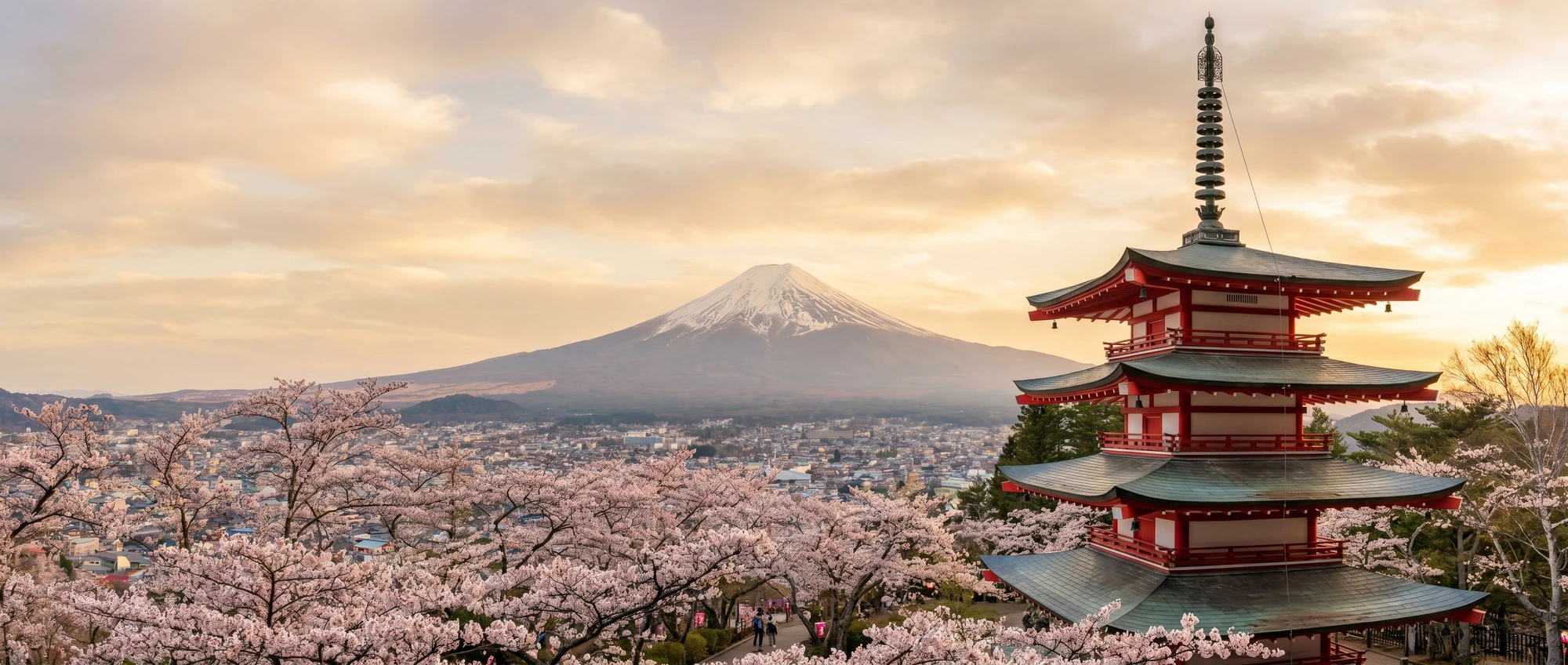
The two showstopper seasons — cherry blossom in late March and early April, and autumn colour in November — also bring the biggest crowds and prices, and bloom windows last barely a week. For the best balance of weather, value and breathing room, target May or October instead, and avoid Golden Week (29 April to 6 May 2026) and the humid June–July rainy season.
When to go
Sweet spot: May and October are the best-balanced months — good weather, manageable crowds and better value than the headline seasons. The showstoppers, late-March/early-April cherry blossom and November autumn colour, mean peak prices and crowds; book months ahead and avoid Golden Week (29 April–6 May 2026) entirely.
January (after the first week) to February is the cheapest, clear and quiet with snow and onsen. Spring builds to the cherry-blossom peak in early April — premium prices and short, ~7–10-day bloom windows — then Golden Week shuts the country to travel. June to mid-July is tsuyu, the humid rainy season; July–August is hot, sticky and the start of typhoon risk, which peaks in September. October is the relaxed all-rounder, and November is the autumn-foliage peak (Kyoto's best is the last week of the month) with prices and crowds to match.
What it costs
Everything here is priced in pounds at roughly ¥215 to £1 (June 2026). Direct return flights from Heathrow run about £600–£900, and a mid-range 10-night trip for two — flights, hotels, food, transit and the Tokyo–Kyoto bullet train — comes to around £4,000–£4,200, or about £2,000 each before shopping. The day-to-day cost of being in Japan is lower than most people expect: a bowl of ramen is under a fiver and a convenience-store breakfast a couple of pounds.
What it costs
Direct return economy from Heathrow runs roughly £600–£900, dipping to ~£550 on cheap dates and topping £900+ in peak. The cheapest months are January, November and parts of June and September — avoid the late-March/early-April cherry-blossom peak and Golden Week (late April to early May).
Daily budget per person
| Tokyo subway single ride | ~£0.85–1.00 |
|---|---|
| Conbini meal (onigiri + drink) | ~£2.30–3.70 |
| Bowl of ramen / set lunch | ~£4.20–5.60 |
| Hostel dorm bed, per night | ~£14–23 |
| Shinkansen Tokyo → Kyoto, one way | ~£65 |
| 7-day JR Pass (usually skip it) | ~£233 |
All yen figures here use £1 ≈ ¥215 (June 2026). Japan is no longer cash-only, but it isn't cashless either — carry ¥15,000–20,000 (~£70–95) as backup.
A realistic first-trip itinerary
The first-timer's 'Golden Route' is Tokyo, then Kyoto, with Osaka and Nara as close-by day trips rather than separate stops. The mistake almost everyone makes is over-packing the map: cutting Hiroshima on anything under 10 days, and treating travel days as sightseeing days. Do two cities well, not four badly. This is a 7-day skeleton — stretch it to 10 by adding a Hakone night and a couple of Osaka/Nara days.
- 1Day 1
Land in Tokyo — go easy
You'll arrive wrecked after ~14 hours and an 8-hour time jump, so don't schedule a packed day. Drop your bags near Shinjuku or Shibuya, eat ramen, walk one neighbourhood, and sleep. Fly into Haneda if you can — it's ~25 minutes and ~£3 to the centre, against ~1h30 and ~£15 from Narita.
- 2Days 2–4
Tokyo proper
Senso-ji and old-Tokyo Asakusa, the Shibuya Crossing, teamLab digital art, the Tsukiji outer market for breakfast, and an evening in a quieter bar district like Shimokitazawa or Koenji rather than the tourist-priced Golden Gai. Skip the Robot Restaurant — it's gimmicky and expensive.
- 3Day 5
Shinkansen to Kyoto
Take a morning bullet train (Tokyo to Kyoto is ~2h15, ~£65 one way). Base yourself near Kyoto Station or central Karasuma, not up in the northern hills — Kyoto's sights are spread out and bus-heavy, and a 'central-sounding' hillside hotel can cost you an hour each way.
- 4Days 6–7
Kyoto, then Osaka or Nara
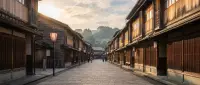
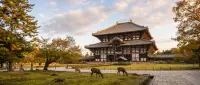
Do Fushimi Inari's torii gates before 8am or after dark (by mid-morning the lower gates are shoulder-to-shoulder), plus Kiyomizu-dera and a temple garden. Treat Arashiyama's bamboo grove as a 10-minute first-light stop, not a half-day. Day-trip to Nara for the deer and the Great Buddha, or Osaka for Dotonbori street food, instead of a separate multi-night Osaka leg.
Where to base yourself
In Tokyo, the neighbourhood matters more than the city — each ward is the size of a town. Shinjuku and Shibuya are the best all-round first-timer bases for transit and atmosphere you’ll actually use; skip Roppongi for a first trip. In Kyoto, stay near the station or central Karasuma rather than the picturesque-but-slow northern hills, where a “central-sounding” hotel can cost you an hour each way on bus-heavy transit. Osaka works best as a one-or-two-night add-on near Kansai airport, not a separate multi-day leg.
Shinjuku or Shibuya (Tokyo)
The two best all-round first-timer bases: huge transit hubs with food, nightlife and easy day-trip launchpads on the doorstep. Skip basing yourself in Roppongi for a first trip — it skews expat-bar nightlife and sits off the main sightseeing axis.
Good for: First-timers who want everything within reach
Asakusa (Tokyo)
Old-Tokyo temples, ryokan-style stays and cheaper, quieter pockets, at the cost of being further from the modern action. The trade-off most people are happy with if atmosphere and budget matter more than late nights.
Good for: Traditional atmosphere on a budget
Kyoto Station / central Karasuma
Practical, on the Shinkansen and well placed for Osaka and Nara day trips. Don't book up in the Arashiyama or northern hills thinking it's central — Kyoto's transit is slow and bus-heavy, and you'll lose real time each day.
Good for: Efficiency and onward day trips
Gion / Higashiyama (Kyoto)
Traditional machiya streets within walking distance of the big eastern temples, at a premium price. Worth it if atmosphere is the whole point of your Kyoto stay.
Good for: Atmosphere-first travellers
Namba / Dotonbori (Osaka)
The food-and-neon heart, walkable to Kuromon Market and on the Midosuji line — the consensus best Osaka base. Best as a one-to-two-night add-on or a final night near Kansai airport, not a separate multi-day leg on a short trip.
Good for: Food, nightlife and a Kansai-airport finish
Getting around — and why you should skip the JR Pass
Getting around Japan
Trains run Japan, and they run it brilliantly — you almost never want a hire car. The single most useful purchase is an IC card (Suica, Pasmo or ICOCA): you tap it onto every train, subway and bus nationwide, and pay with it in convenience stores, vending machines and coin lockers. The visitor Welcome Suica and the new Tourist Pasmo (launched May 2026) need no deposit and last 28 days. Between cities the Shinkansen is fast and frequent: Tokyo to Kyoto is ~2h15 for ~£65 one way. The big money decision is the JR Pass — and for the standard Tokyo–Kyoto–Osaka trip, the answer is usually no. Since the 2023 price hike the 7-day pass costs ¥50,000 (~£233), but that loop in individual tickets is only about ¥29,000 (~£135), so the pass loses you roughly £100. It only pays off if you're covering serious long-haul distance in a week, such as adding a Tokyo–Hiroshima round trip. For most first-timers, buy point-to-point tickets via the SmartEX app or at the machines.
- Get an IC card (Suica/Pasmo/ICOCA) on day one — it works on every train, bus and in conbini.
- Top up IC cards with cash, or add Suica to Apple Pay to top up with a foreign card.
- Shinkansen Tokyo–Kyoto: ~2h15, ~£65 one way; book via SmartEX or at machines.
- Skip the ¥50,000 (~£233) JR Pass for Tokyo–Kyoto–Osaka — it loses you ~£100 vs single tickets.
- Choose Haneda flights over Narita: ~£3 and 25 min to the centre, vs ~£15 and 1h30.
- You won't need a hire car; the rail network beats driving for almost every itinerary.
The JR Pass is the single most expensive first-timer mistake. Since the 2023 price rise the 7-day pass is ¥50,000 (£233), but the Tokyo–Kyoto–Osaka loop in individual tickets is only about ¥29,000 (£135) — so “buying it because everyone says to” loses you roughly £100. It only pays off if you’re covering serious distance in a week, such as adding a Tokyo–Hiroshima round trip. For most first trips, buy point-to-point Shinkansen tickets and tap an IC card for everything local.
Trains & rail passes
Book intercity trains and work out whether a rail pass actually pays off for your route before you go.
Staying connected
UK roaming to Japan is expensive — Japan sits outside the inclusive EU-style zones, so the networks charge around £5–£7.50 a day, far more than the ~£2.25 you’re used to in Europe. Over a fortnight that’s £50–£100+. A travel eSIM at £5–£15 for the whole trip is the obvious value move; install it before you fly and activate on landing onto Japan’s excellent 4G and 5G.
Stay connected in Japan
UK roaming to Japan is expensive — Japan sits outside the EU-style inclusive zones, so Vodafone, EE and Three charge roughly £5–£7.50 a day, far more than the ~£2.25/day you're used to in Europe. Over a 10–14 day trip that's £50–£100+.
- A travel eSIM is typically £5–£15 for 5–10GB for the whole trip — a 60–80% saving on daily roaming.
- Activate on landing — there's no free airport-wide wifi at Haneda or Narita arrivals to fall back on, and Japan's 4G/5G is excellent once you're connected.
- Pair it with offline Google Maps and a translation app — many menus and signs are Japanese-only.
Money: cash, cards and the yen rule
Japan is no longer cash-only, but it isn't cashless either — roughly 40% of retail spending is cashless, and in Tokyo, Kyoto and Osaka a contactless card plus an IC card covers about 85–90% of a trip. The gaps are small restaurants, shrines, some ramen shops and markets, which are still cash-only. The practical kit: one Visa or Mastercard, a Suica/Pasmo set up on day one, and ¥15,000–20,000 (~£70–95) cash as backup — together that handles almost everything. Withdraw cash from 7-Eleven (Seven Bank) or Japan Post ATMs, which reliably take foreign cards. Two rules that save you money: don't tip — it isn't expected and can cause confusion, and the price shown is what you pay; and when a card terminal or ATM asks whether to charge in GBP or yen, always choose yen, because choosing pounds (dynamic currency conversion) hands the merchant a poor rate and costs you 3–5%.
Fee-free travel money
Skip the airport exchange desk — a fee-free travel card gives you the real exchange rate abroad.
Before you fly
Two small UK-specific jobs round out the trip: pre-book your airport parking (almost always cheaper booked ahead than on the day) and double-check the essentials before you fly — insurance, medicines, your IC card.
Airport parking & lounges
Pre-book your UK airport parking or a lounge — it's almost always cheaper booked ahead than on the day.
How we know this
How we know this
- GOV.UK foreign travel advice — Japan — entry, passport validity, visa, health, safety and local laws
- NHS Fit for Travel / TravelHealthPro — vaccine recommendations and travel-health advice
- japan-guide.com & JR-EAST — IC cards, Shinkansen times and airport transfers
- Embassy of Japan in the UK — the recommendation to hold comprehensive travel insurance
GOV.UK last updated 4 Jun 2026.