Chugoku
Miyajima
Miyajima for UK travellers: the floating torii at Itsukushima, the climb up Mount Misen, the case for staying the night, and exactly what it costs to get there from Hiroshima.
In short
Miyajima at a glance
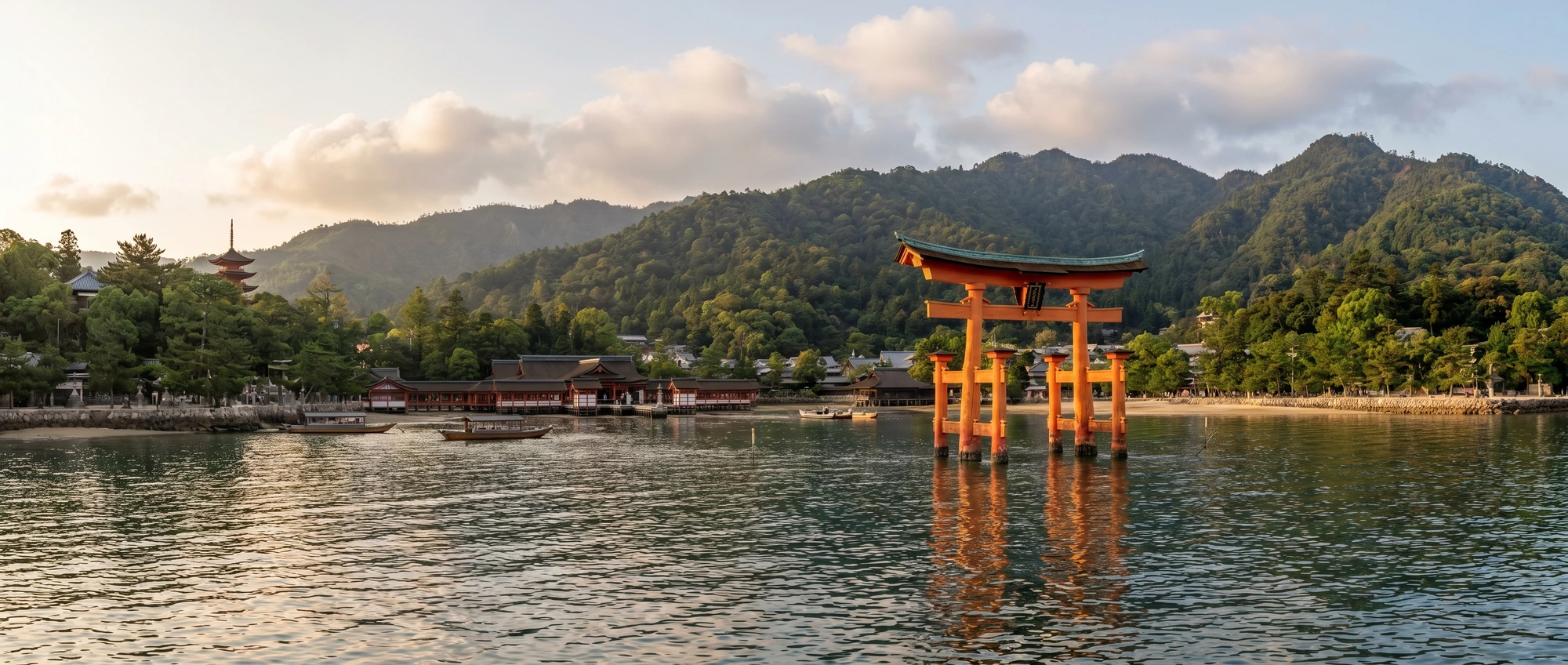
Miyajima is the small sacred island off Hiroshima with the vermilion torii gate that appears to float at high tide. Most people do it as a half-day trip from Hiroshima — a 30-minute train to Miyajimaguchi (¥420) then a 10-minute ferry — and that gets you the shrine, the town and the deer. But the island changes completely once the last ferry of day-trippers leaves: stay one night and you get the lantern-lit shrine and the torii almost to yourself. Build in time for Mount Misen, which is the other half of the island most people skip.
Miyajima — officially Itsukushima — is the small wooded island in the Seto Inland Sea where the vermilion torii gate stands out in the water and appears to float when the tide is high. It sits a 10-minute ferry off the coast near Hiroshima, and the two go together: most people see the Peace Memorial Park in the morning and cross to the island in the afternoon. The shrine itself is built on stilts over the sea, which is why the tide matters so much — turn up at low water and the whole effect collapses into mudflats you can walk across, so check a tide chart before you fix your timings.
The mistake is treating Miyajima as a one-hour photo stop. The island has two halves: the shrine and town at sea level, and Mount Misen rising behind them, reached by a ropeway (¥2,000 return) or a 1.5–2 hour walk up the Daisho-in trail past the temple of the same name. On a clear day the summit looks out over the whole inland sea. Tame sika deer wander the lanes — keep your maps and food out of reach, they will help themselves — and the local treats are grilled Hiroshima oysters and momiji manju, the little maple-leaf cakes that were invented on the island in 1906.
The real decision is day trip versus overnight. By day Miyajima can be busy, but it transforms the moment the last ferry of visitors leaves: the crowds vanish, the shrine lanterns and the torii are lit, and you can stand at the water’s edge almost alone. That, plus a kaiseki dinner at a historic ryokan like Iwaso (going since 1854), is the whole argument for staying the night — and the reason the island’s limited rooms book out early, especially for the November maples. One practical note for now: the five-storey pagoda beside the shrine is wrapped for restoration until late December 2026, so it won’t feature in your photos.
The route
Miyajima is an island you measure in hours, not days. Here is how the time actually splits, whether you stay for an afternoon or a night. The five-storey pagoda beside the shrine is wrapped for restoration until late December 2026, so don't plan a shot of it.
-
Morning
Arrive & the shrine front
Take the JR San'yo Line from Hiroshima to Miyajimaguchi (under 30 minutes, ¥420), walk to the ferry pier and cross in 10 minutes. Between roughly 09:10 and 16:10 the JR ferry swings past the torii on the 'Great Torii route' for free — sit on the right going out. Walk the shrine front first while the tide is in.
-
Midday
Itsukushima Shrine & the town
Itsukushima Shrine is ¥300 (combined with the Treasure Hall, ¥500). It's built on stilts over the water, so it only works at high tide — at low tide you walk out to the torii on the sand instead, which is its own thing. Eat lunch in town: grilled Hiroshima oysters and a freshly baked momiji manju, the maple-leaf cake invented on the island in 1906.
-
Afternoon
Mount Misen
The island's other half. Ride the ropeway (¥1,100 one-way, ¥2,000 return) to near the summit, or walk up the Daisho-in trail (1.5–2 hours, the most scenic route, passing Daisho-in temple) and ride down. On a clear day the summit looks out over the whole Seto Inland Sea. A full walk up and down is 3–4 hours, so ropeway at least one way if you're time-limited.
-
Evening (if you stay)
The island after dark
Once the day ferries stop, the crowds vanish and the torii and shrine lanterns are lit. You can stand at the water's edge with the gate almost to yourself. Ryokan like the historic Iwaso (open since 1854) serve a multi-course kaiseki dinner and have onsen baths — this is the whole argument for staying over.
Where to base yourself
Pick one or two bases rather than moving every night.
Miyajima island (near Itsukushima / Momijidani)
£££ premiumStaying on the island is the point: you get the empty evening and early morning, the lit torii and the deer wandering quiet lanes. The historic ryokan (Iwaso and others) cluster near the shrine and the Momijidani river. It's pricier than mainland Hiroshima and rooms are limited, so book well ahead — especially for autumn.
Best for: The lit torii at night, ryokan dinner, beating the day crowds
Miyajimaguchi (mainland ferry side)
££ mid-rangeThe mainland village right by the ferry pier. Cheaper than the island and useful if you want a first ferry across before the day-trippers, but you don't get the evening magic — once you've crossed back, the island is closed to you for the night.
Best for: Budget, an early start, a base without ryokan prices
Hiroshima city
££ mid-rangeMost people base in Hiroshima and treat Miyajima as a half-day trip — sensible if you're also doing the Peace Memorial Park. You lose the quiet island evening, but you gain a full city with far more choice of hotels and restaurants, 30 minutes away by train.
Best for: Combining Miyajima with the Peace Park, more hotel choice
Getting around Miyajima
From Hiroshima, the JR San'yo Line runs to Miyajimaguchi in under 30 minutes for ¥420, covered by the JR Pass; the slower tram (Hiroden) is cheaper but takes about an hour. From Miyajimaguchi pier the crossing is 10 minutes on either the JR ferry (free with a JR Pass) or the rival Matsudai ferry (same ¥200 fare). Everyone pays the ¥100 island visitor tax on top, introduced in October 2023. The island itself is tiny and walkable — the shrine, town and ropeway base are all on foot; only Mount Misen needs the ropeway or a hike. Coming from further afield, the Sanyo Shinkansen reaches Hiroshima from Shin-Osaka in about 1h20 and from Tokyo in roughly 4 hours on the Nozomi.
Book the essentials
Where to stay
Tours & tickets
Airport transfers
Stay connected
Trains & rail passes
Miyajima FAQs
Is Miyajima worth staying overnight or is a day trip enough?
How do you get to Miyajima from Hiroshima?
When does the torii gate actually float?
What is the best time of year to visit Miyajima?
Ready to book?
Book experiences