In short
Is Switzerland a good holiday for UK travellers?
Yes, if you come for the mountains and the trains rather than to save money. Flights are under two hours from a dozen UK airports, there's no visa for a holiday, and Switzerland has arguably the best public transport on earth. The catch is cost: it's genuinely expensive, so the rail-pass and money decisions below matter more here than almost anywhere in Europe.
Switzerland is a slow-travel country pretending to be a quick one. It’s small enough to cross by train in a few hours, which tempts first-timers into a five-cities-in-a-week sprint — but the point of the place is the mountains, the lakes and the journeys between them, taken slowly. Lucerne and Interlaken are the classic Alps; Zermatt and the Jungfrau region are the big-mountain headliners; Geneva and Lausanne hold the lake; and Zurich is both a proper city break and the rail hub everything connects through. Below we set out, for a UK traveller spending their own money in 2026, what each part suits, what it really costs in pounds, which rail pass pays off, and the entry rules straight from GOV.UK.
The short version
- Don't hire a car — the train, boat and cableway network reaches everywhere and a car just means vignette fees and parking.
- Decide your rail product before you fly: the Swiss Travel Pass for moving around, the cheaper Half Fare Card for staying put.
- Switzerland uses the franc, not the euro — and paying in euros gives you a poor rate, so use francs.
- Eat supermarket meals (Coop, Migros) on mountain days and drink the free tap water — it's the single biggest saving.
- Always pay in francs, never pounds, at card machines and ATMs to dodge the ~5% DCC markup.
Entry requirements for UK travellers
In short
Do UK citizens need a visa for Switzerland?
No. Switzerland is in the Schengen area, so British citizens can visit visa-free for up to 90 days in any 180-day period for tourism, family visits or business (GOV.UK). Your passport must be issued less than 10 years before you arrive and valid for at least 3 months after you leave the Schengen area. Rules can change — confirm on GOV.UK before you travel.
Switzerland sits outside the EU but inside the Schengen area, so for a holiday the paperwork is the same as for France or Italy: no visa, and a passport that clears two Schengen checks. The one that catches UK travellers out is the issue date — your passport has to have been issued less than 10 years before you arrive, which an older “10-year-plus” passport can fail even when its expiry date still looks fine. Swiss border officers can also ask to see proof of onward travel, accommodation, travel insurance and enough money — GOV.UK puts the figure at around CHF 100 a day — so keep a booking confirmation to hand.
Key points before you book
- No visa for stays up to 90 days in any 180-day period — Switzerland is in Schengen (GOV.UK).
- Passport: issued under 10 years before arrival and valid 3+ months after you leave Schengen (GOV.UK).
- Border officers can ask for proof of onward travel, accommodation, insurance and funds — about CHF 100 a day (GOV.UK).
- Carry a free UK GHIC for state healthcare plus travel insurance — the GHIC won't repatriate you (GOV.UK).
- Driving on motorways requires a vignette sticker; alpine roads can require winter tyres and chains (GOV.UK).
- Ticino and St Gallen ban face coverings in public, with fines from CHF 100 (GOV.UK).
- Emergency numbers: 112 (general) and 144 (ambulance) (GOV.UK).
Passport validity
Your passport must have been issued less than 10 years before the day you arrive, and be valid for at least 3 months after the day you plan to leave the Schengen area. Check the issue date, not just the expiry — an old passport with more than 10 years between the two dates can fail even if it still looks 'in date' (GOV.UK).
Visas
No visa for a holiday. Switzerland is in the Schengen area, so you can travel visa-free for up to 90 days in any 180-day period for tourism, visiting family, business meetings or short courses. Working or staying longer than 90/180 needs separate permission (GOV.UK).
Health
A free UK GHIC (or valid EHIC) covers medically necessary state healthcare in Switzerland, but GOV.UK is explicit it is not a substitute for travel insurance: it won't cover medical repatriation to the UK, treatment in a private clinic, non-urgent care, or changes to your travel and accommodation. Swiss medical and mountain-rescue costs are high, so good insurance with winter-sports or hiking cover matters here. No vaccinations are required; GOV.UK flags tick-borne encephalitis from biting ticks (April–October) and altitude sickness in high-alpine areas — check TravelHealthPro at least 8 weeks before you travel.
Safety & security
Switzerland has a low rate of serious crime and is one of the safest countries in Europe. GOV.UK flags a high global terrorist threat and says attacks cannot be ruled out, but the realistic day-to-day risks are petty theft (with increased reports at Geneva airport and on trains) and, far more importantly, the mountains: avalanches in heavy snow and off-piste, altitude sickness, rockfalls and fast-changing weather. Check avalanche and weather conditions before any off-piste or high-alpine outing, and heed summer wildfire bans. Rules can change — confirm on GOV.UK before you travel.
Local laws & customs
If you drive, you must buy and display a motorway vignette (sticker) before using Swiss motorways, or face a large fine — buy it at the border, a petrol station, post office or online. Winter tyres and snow chains are needed in alpine conditions. Drug penalties are severe. In the cantons of Ticino and St Gallen it is illegal for anyone, including tourists, to cover their face in public, with fines from CHF 100 to CHF 10,000. Police strictly enforce speed and drink-driving limits (GOV.UK).
GOV.UK is the official source for Switzerland entry rules — always check it before you book.
Read GOV.UK adviceGOV.UK updated 10 Apr 2026 · Departly checked 9 Jun 2026
EU entry rules for Switzerland
Checked 6 Jun 2026The EU's biometric Entry/Exit System (EES) began a progressive rollout on 12 October 2025 and became fully operational on 10 April 2026: on your first trip since then you give fingerprints and a facial scan at the border (a one-off, valid 3 years), and the 90-days-in-180 limit is now counted automatically. Some countries may still ease or pause checks at busy crossings during the rollout-flexibility window, so queues vary. ETIAS — a separate €20 travel authorisation (free for under-18s and over-70s, valid 3 years) — is expected in late 2026 and is not required yet. Always confirm on GOV.UK before you book.
- 90/180 rule
- Visa-free stays of up to 90 days in any 180-day period across the Schengen area. Days spent in other Schengen countries count towards the total.
- Passport
- Issued less than 10 years before the day you arrive, and valid for at least 3 months after you plan to leave the Schengen area. Check the issue date, not just the expiry.
- GHIC
- Carry a free UK GHIC for state healthcare on the same basis as a local — but it is not a substitute for travel insurance, which you still need.
- Roaming
- Post-Brexit, EU roaming is no longer guaranteed free; many UK networks charge around £2.25/day. Check your tariff or use a travel eSIM.
On health, carry a free UK GHIC (or valid EHIC): it covers medically necessary state healthcare in Switzerland. But GOV.UK is blunt that it is not a substitute for travel insurance — it won’t fly you home, won’t cover a private clinic, and won’t pay for cancellation or lost bags. That matters more in Switzerland than most places, because Alpine mountain-rescue and medical costs are among the highest in Europe, so make sure your policy covers your actual activity (skiing, or high-altitude hiking and rescue). Carry both, and never pay a third-party website for a GHIC; it’s free from the NHS. Rules can change — confirm on GOV.UK before you travel.
Flights from the UK
In short
How long is the flight to Switzerland from the UK?
About 1h35–1h55 to Zurich or Geneva from London, and roughly 2 hours from Manchester and other regional airports. BA flies Zurich and Geneva from Heathrow, Gatwick and London City; easyJet runs frequent Gatwick and Luton services; SWISS and Jet2 add regional routes, with Geneva busiest in the ski season.
Switzerland is short-haul and well served from the UK, and the one geography decision that matters is which airport: Geneva is the gateway for Lake Geneva and the western Alps (Verbier, Chamonix), while Zurich is the hub for Lucerne, Interlaken, the Bernese Oberland and Zermatt. November is typically the cheapest month into Zurich; February half-term and the Christmas–New Year ski fortnight are the dearest, especially the Saturday-changeover flights into Geneva. Book those ski-season weekends early.
Flights from the UK
Short-haulSwitzerland is well served from the UK: British Airways flies Zurich and Geneva from Heathrow, Gatwick and London City; easyJet runs frequent Gatwick and Luton services; SWISS, Jet2 and others add routes from Manchester, Birmingham, Edinburgh and elsewhere, especially into Geneva for the ski season. Geneva is the airport for the western Alps and Verbier; Zurich for Lucerne, Interlaken and the Bernese Oberland.
Fly from
Main arrival airports
- ZRH Zurich (north and central Switzerland)
- GVA Geneva (Lake Geneva, the French Alps and Verbier)
- BSL Basel-Mulhouse (the EuroAirport, north-west)
- BRN Bern (limited routes)
When to go
In short
When is the best time to visit Switzerland?
Late May–June and September to mid-October for hiking and sightseeing, or December–February for skiing. The summer shoulder months give you snow-free high trails, mild weather and fewer crowds than the July–August peak, with September the cheapest and clearest. Avoid November if you want mountain lifts running — many close between seasons.
When to go
Sweet spot: Late May to June and September to mid-October for sightseeing and hiking, or December to February for skiing. The summer shoulder months give you snow-free high trails, mild weather (around 15–24°C in the cities and valleys), fewer crowds and lower prices than the July–August peak. September is the sweet spot: warm, clear and the cheapest of the green-season months. For skiing, December–February has the most reliable snow, with February half-term the busiest and dearest.
July and August are peak season — the high trails are all open and the weather is warmest, but Interlaken, the Jungfrau region and Lucerne get genuinely crowded and prices rise. Late April to early June is 'shoulder', cheaper and quieter, but the very highest trails and some cable cars may still be closed by snow, so check before you book a high-altitude itinerary. November is the quietest and cheapest month overall but also the dreariest — many mountain lifts shut between the summer and ski seasons. Winter splits in two: the resorts boom while many lower-altitude attractions wind down.
Switzerland has two high seasons and two quiet ones, and the trap is the gap between them. July and August give you every high trail open and the warmest weather, but Interlaken, the Jungfrau region and Lucerne get genuinely crowded and prices climb. September is the sweet spot for a green-season trip — warm, clear and the cheapest of the summer months. For skiing, December–February has the most reliable snow, with February half-term busiest. The month to be wary of is November: it’s the quietest and cheapest, but many mountain lifts shut between the summer and ski seasons, so a high-altitude itinerary can find half the cable cars closed.
What it costs
In short
Is Switzerland really that expensive?
Yes — it's one of the most expensive countries in Europe, because of the strong franc and high local wages. A restaurant main is typically CHF 25–40 (around £22–£35) and a coffee CHF 4.50–6. Budget on £120–£180 a day mid-range. The big savers are eating supermarket meals on mountain days, drinking the free tap water, and buying the right rail pass.
What it costs
UK return flights to Zurich or Geneva run from about £50–£90 off-peak on easyJet or BA booked ahead, £120–£250 in the school holidays or at short notice, and more during the ski-season Saturday rush into Geneva. November is typically the cheapest month into Zurich; February half-term and the Christmas–New Year ski fortnight carry the steepest premium, especially for Geneva.
Daily budget per person
| Restaurant main course | CHF 25–40 / £22–£35 |
|---|---|
| Coop/Migros supermarket meal-deal or sandwich | CHF 6–12 / £5–£11 |
| Coffee in a café | CHF 4.50–6 / £4–£5.30 |
| Half-litre of beer in a bar | CHF 7–9 / £6–£8 |
| Zurich airport → city centre train (single) | CHF 6.80 / £6 |
| 6-day Swiss Travel Pass (2nd class, adult) | from ~CHF 419 / ~£369 |
| Hostel dorm bed per night | CHF 45–60 / £40–£53 |
The biggest day-to-day saver is eating like a local on mountain days: a Coop or Migros supermarket meal-deal, picnic or hot counter costs a fraction of a CHF 30+ restaurant main, and Switzerland's tap water (including the fountains in most towns) is famously drinkable. Save sit-down restaurant meals for the valley evenings.
The numbers above are honest mid-2026 figures converted at CHF 1 = £0.88, so a café coffee really is about £4–£5 and a restaurant main £22–£35. There’s no pretending Switzerland is cheap, but the spend is controllable. The single biggest day-to-day saving is eating like a local on mountain days: a Coop or Migros supermarket meal-deal, picnic or hot counter costs a fraction of a sit-down main, and the tap water — including most town fountains — is famously drinkable, so you never need to buy a bottle. Save the restaurant meals for valley evenings, and do the maths on a rail pass rather than buying tickets one at a time.
A realistic first itinerary
Switzerland is small enough to cross in a few hours by train, but the classic first-trip mistake is treating it like a city-hopping tour. The point of the country is the mountains and the journeys between them, so the best plan is a slow rail loop with two or three bases, not five one-night stops. This is emphatically the rail trip, not the road trip — the trains are the attraction. A week is comfortable; five days works if you keep the bases to three.- 1Days 1–2
Lucerne
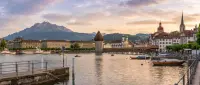
Fly into Zurich and train straight to Lucerne (~50 min) — the most photogenic lakeside city, with the Chapel Bridge, the old town and the Mount Pilatus or Rigi cogwheel-railway day-trip. A gentle introduction before the high Alps.
- 2Days 3–4
Interlaken & the Jungfrau region
Train to Interlaken (~2h via the scenic Brünig line) and base there or up in Grindelwald/Lauterbrunnen. This is the Bernese Oberland: Lauterbrunnen's waterfall valley, the Schilthorn, and the splurge trip up to Jungfraujoch, the 'Top of Europe'.
- 3Day 5
Scenic transfer to Zermatt
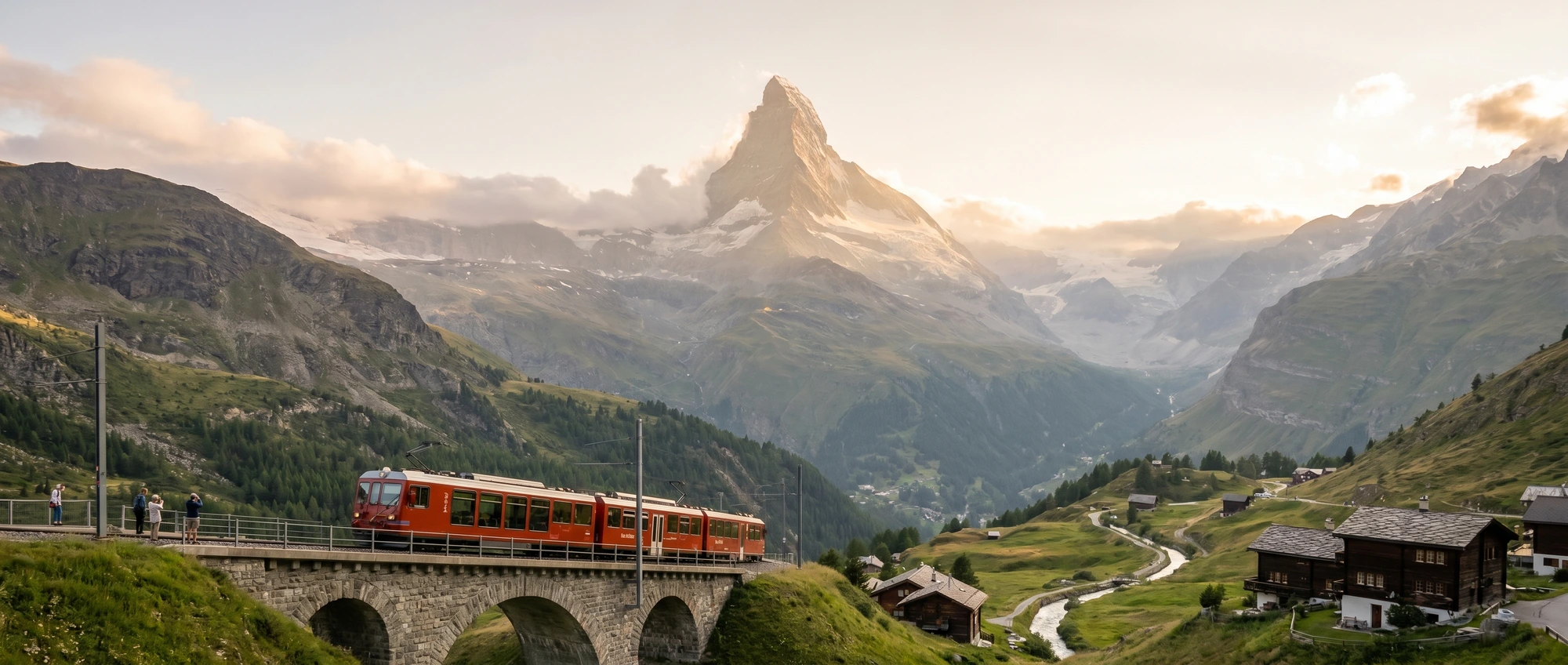
Spend the day on the train itself — the route towards Zermatt threads the deepest Alpine scenery. Zermatt is car-free; you change to the cog railway at Täsch.
- 4Days 6–7
Zermatt & the Matterhorn
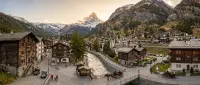
The Matterhorn from Gornergrat (a cogwheel railway, not a hike), high trails in summer or skiing in winter, and a car-free village to wind down in before training back to Geneva or Zurich for the flight home.
The honest cut for a shorter trip is to drop Zermatt and run Lucerne plus the Jungfrau region, which keeps you to two bases and one big-mountain splurge. The thing to resist is treating Switzerland like a city tour — one night each in five places. On this network the journeys are the holiday, so fewer bases and more train time is the better trade.
Where to base yourself
In short
Where should I stay in Switzerland for a first trip?
Lucerne for an easy lake-and-mountain first base, Interlaken or the Jungfrau valleys for hiking and the big Alps, Zermatt for the Matterhorn, Zurich for a city break, and Geneva for the lake and the western Alps. Pick two or three and link them by train — don't try to base everywhere.
Lucerne
The easiest first base from Zurich airport (~50 minutes by direct train) and the prettiest lakeside city — Chapel Bridge, a compact old town, and lake steamers and cogwheel railways (Pilatus, Rigi) on the doorstep. Good for travellers who want the classic Switzerland without committing to a high-altitude resort.
Good for: First-timers wanting lake-and-mountain scenery with city comforts
Interlaken & the Jungfrau region
The adventure-sports and big-mountain hub between Lake Thun and Lake Brienz, where the trains up to Grindelwald, Lauterbrunnen and Jungfraujoch start. Interlaken itself is a transit town — for atmosphere, sleep up the valley in Lauterbrunnen or Wengen rather than on Interlaken's main strip. The trade-off is honest: this is the most-visited and most-photographed corner, so July–August is busy and dear.
Good for: Hikers, adventure travellers and the postcard Alps
Zermatt
The car-free village under the Matterhorn — Switzerland's most iconic mountain, reached by cogwheel railway not by hiking. Top-tier for both summer trails and winter skiing, with the trade-off being top-tier prices and a long, scenic rail approach (you change to the cog train at Täsch, the last point cars can reach).
Good for: Skiers, serious hikers and Matterhorn views
Zurich
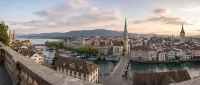
Switzerland's biggest city and rail hub, 10 minutes from its airport by train. A real city break — lakefront, the Old Town, world-class museums and a serious food and bar scene — and the most practical base for a short trip or a winter weekend. Less obviously 'Alpine' than the mountain bases, but the rail connections out are unmatched.
Good for: City-break travellers and short weekends
Geneva & Lake Geneva
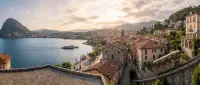
The French-speaking west, on a vast lake ringed by Lausanne, Montreux and the vineyard terraces of Lavaux, with Verbier and the French Alps within reach. Geneva is the airport for the western Alps and the most international city. The lake here is milder and lower than the high Alpine bases — better for spring and autumn than for snow.
Good for: Lakeside trips, the western Alps and ski transfers to Verbier
These are country-level bases — the resort-by-resort detail (which valley below Interlaken, which side of the lake in Geneva) belongs on the individual city and region guides. The pattern that works: pick two or three bases, sleep up in the mountain villages rather than the transit towns for atmosphere, and let the train do the rest. A car would only get in the way.
Getting around
In short
Should I hire a car in Switzerland, or is the train better?
Take the train. Switzerland's public-transport network — trains, postbuses, boats and cableways — is arguably the best on earth and reaches villages with no road. A hire car means paying for the motorway vignette, expensive parking and mountain-pass stress, and it can't take you up the cogwheel railways. Car-free resorts like Zermatt can't be driven into anyway. Buy a rail pass instead.
Getting around Switzerland
Switzerland has, by most measures, the best public-transport network on earth — trains, postbuses, lake steamers and mountain cableways run to the minute and connect almost everywhere, including villages with no road. For a UK traveller this means one clear rule: don't hire a car. A car costs you the motorway vignette, expensive parking and the stress of mountain passes, and it can't take you up the cogwheel railways that are half the point. The headline decision is which rail product to buy. The Swiss Travel Pass gives unlimited train, bus and boat travel plus free or discounted mountain excursions for 3–15 consecutive days; the Swiss Half Fare Card (CHF 150 for a month) just halves the price of every ticket and excursion. As a rough rule, the full pass wins if you're moving cities and riding panoramic routes most days; the Half Fare Card wins if you're basing yourself in one or two places and taking the odd big trip. Big scenic and mountain trains (the Glacier Express, Bernina Express, Jungfraujoch) carry extra fees or seat reservations even with a pass.
- Don't hire a car — the train network reaches everywhere and a car just means vignette fees, parking and passes you can't drive up.
- Swiss Travel Pass: unlimited train/bus/boat for 3–15 days, from ~CHF 254 for 3 days (2nd class), plus free or discounted mountain excursions.
- Swiss Half Fare Card: CHF 150 for a month, halves every fare — better value if you stay put and take the occasional big trip.
- Zurich airport to the main station is a 10–15 minute train, CHF 6.80, running every 5–10 minutes.
- Geneva airport has a short free transit ticket from the arrivals machine valid in the city; hotel guests get a free transport card for their stay.
- Reserve seats and budget extra for the Glacier Express, Bernina Express and Jungfraujoch even if you hold a pass.
Trains & rail passes
Book intercity trains and work out whether a rail pass actually pays off for your route before you go.
The rail-pass decision is the one worth getting right. As a rule of thumb, the Swiss Travel Pass (unlimited train, bus and boat for 3–15 days, from about CHF 254 for 3 days, plus free or discounted mountain excursions) wins if you’re moving between bases and riding scenic routes most days. The Swiss Half Fare Card (CHF 150 for a month, halving every fare) wins if you’re staying put in one or two places and taking the odd big trip. Either way, budget extra for the headline trains — the Glacier Express, Bernina Express and the cog railway up to Jungfraujoch all carry seat reservations or supplements even when you hold a pass.
Staying connected & covered
Switzerland is not in the EU, so it’s often left out of UK networks’ free or cheap “EU roaming” zones — or charged at a higher daily rate than EU countries. This is a common bill shock, so check your specific tariff before you fly; if Switzerland is excluded or pricey, a Switzerland or Europe-wide eSIM that switches on the moment you land is cheaper. The other thing to sort is cover: your GHIC and travel insurance do different jobs, and in a country with very expensive mountain rescue you want a policy that matches your activity.
Stay connected in Switzerland
Switzerland is not in the EU, so it is often excluded from UK networks' free or cheap 'EU roaming' zones — and where it isn't, daily roaming charges can be higher than for EU countries. Check your specific tariff before you fly, because a surprise Switzerland surcharge is a common bill shock.
- Confirm whether your UK plan covers Switzerland at all — some bundle it with the EU, many charge a separate, higher daily rate.
- A typical 5–10GB Switzerland (or Europe-wide) eSIM costs about £8–£15 and avoids per-day roaming fees.
- eSIMs install before you fly via a QR code on any eSIM-capable phone, so you land already online for train times and maps.
Travel insurance for Switzerland
A free UK GHIC gets you medically necessary state healthcare in Switzerland, but it won't fly you home, won't cover a private clinic, and won't pay for cancellation or lost baggage. Swiss treatment and Alpine mountain-rescue costs are among the highest in Europe, so GOV.UK and the NHS both say to carry travel insurance on top — and to check it covers your activity.
- Make sure the policy covers winter sports if you're skiing, or high-altitude hiking and mountain rescue if you're walking the high trails.
- Annual multi-trip cover pays off if you travel abroad twice or more a year.
- Pair it with your GHIC — they cover different things, and you need both.
Money
Switzerland uses the Swiss franc, not the euro, and it is an expensive country, so the money decisions add up fast. It's heavily card- and contactless-friendly — Apple Pay, Google Pay and cards work almost everywhere — but carry CHF 30–50 in coins and small notes for mountain huts, small cafés and ticket machines. Many tourist spots will take euros, but they set their own (poor) exchange rate and give change in francs, so you lose money paying in euros: use francs. The rule that saves UK travellers real money: when an ATM or card machine asks whether to charge in pounds or francs, always choose francs. Choosing pounds triggers Dynamic Currency Conversion — a hidden markup of up to ~5% — and your own UK card or a fee-free travel card always beats it. Service is included by law, so tipping is modest: round up the bill or leave small change for good service, nothing more.Fee-free travel money
Skip the airport exchange desk — a fee-free travel card gives you the real exchange rate abroad.
Before you fly
The two Switzerland-specific moves that save real money are choosing the right rail product before you go (the full pass versus the Half Fare Card, sized to your actual itinerary) and ordering a free GHIC. Pre-book UK airport parking too — it’s almost always cheaper booked ahead than on the day — and sort a Switzerland or Europe-wide eSIM so you’re connected the moment you land.
Airport parking & lounges
Pre-book your UK airport parking or a lounge — it's almost always cheaper booked ahead than on the day.
How we know this
How we know this
- GOV.UK foreign travel advice — Switzerland — entry, passport, visa, health, safety and local laws (print page)
- NHS — Global Health Insurance Card (GHIC) — the GHIC is free and is not a substitute for insurance
- Swiss Travel System & Seat61 — Swiss Travel Pass and Half Fare Card prices, scenic-train rules and journey times
- Zurich Airport & Genève Aéroport — official airport-to-city transfer costs and times
GOV.UK last updated 10 Apr 2026.