Valais
Gornergrat Railway
How to ride the Gornergrat railway above Zermatt: which return ticket actually saves money, the morning departure that beats the cloud on the Matterhorn, and an honest worth-it verdict.
Where
Zermatt, Switzerland
Opening hours
No trains and no alternative transport 2–14 November 2026 because of construction. Published intervals: every 24 minutes from 08:00 through 1 November; every 48 minutes from 08:24 on 15–27 November; back to 24 minutes from 28 November. First and last trains and weekday exceptions require the dated timetable. Checked 25 October 2026: https://www.gornergrat.ch/fr/pages/horaire-gornergrat-bahn.
Tickets
Zermatt–Gornergrat adult full fare: CHF 132 return / CHF 66 one way for May–October 2026; CHF 102 return / CHF 51 one way for November 2026–April 2027 (operator tariff, June 2026 edition; checked 25 October 2026). Check your pass and child category in the official fare selector; there is no verified blanket 20% online saving. If walking between stations, buy the remaining train sections too. https://www.gornergrat.ch/en/pages/prices-gornergrat-bahn
Time needed
Allow about 3 hours all in for the up-and-down with time on the summit terrace, including the 33-minute ride each way. If you walk one stage down — Rotenboden to Riffelberg past the Riffelsee, the lake that mirrors the Matterhorn — budget a half day.
In short
Visiting Gornergrat Railway
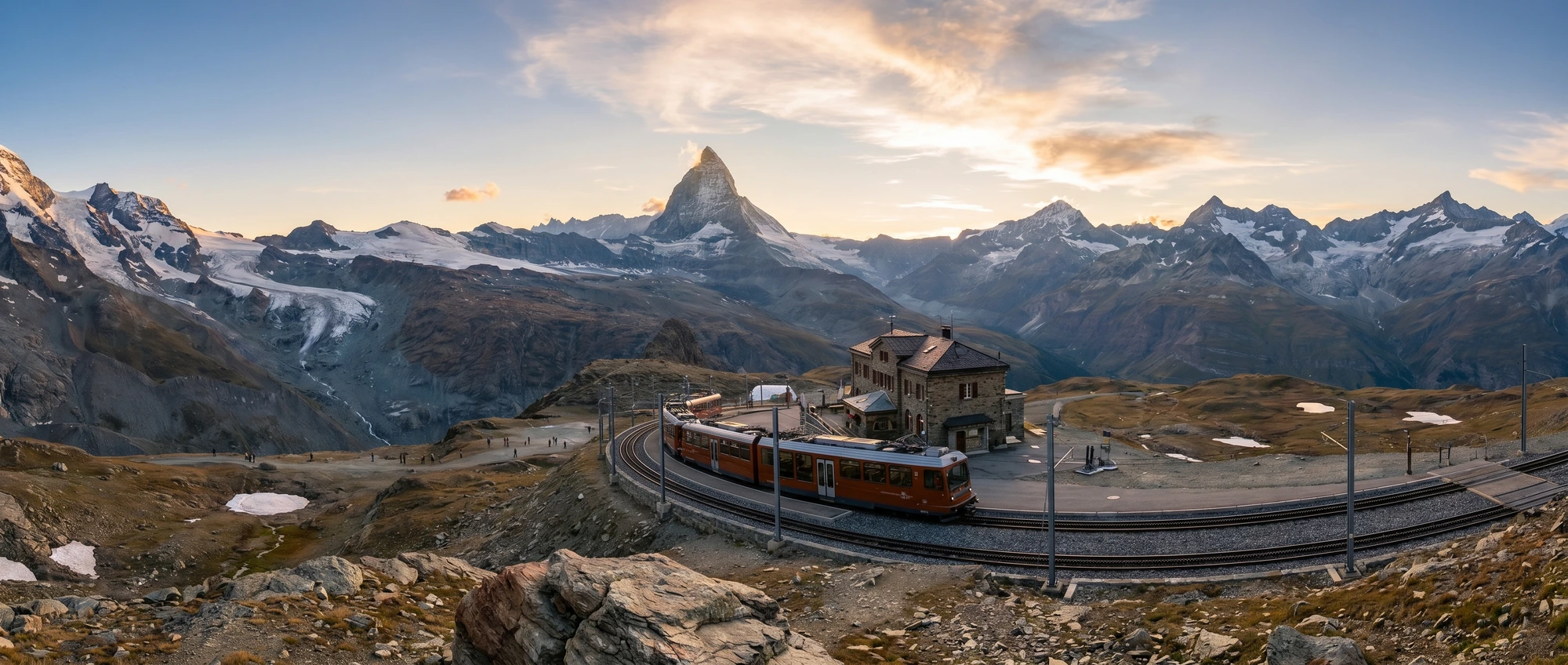
The Gornergrat railway is the Zermatt excursion to build a clear morning around. The open-air cog railway climbs from the village station to a ridge with Matterhorn, glacier and Monte Rosa views. The adult return is CHF 132 for May–October 2026 and CHF 102 for November 2026–April 2027. Check the summit webcam and dated timetable before committing: no railway or alternative transport operates 2–14 November 2026.
How to ride it without overpaying
The Gornergrat railway is the Zermatt trip to plan a clear morning around, not to squeeze in on a grey afternoon. The open-air cog train leaves from the Gornergrat Bahn station opposite Zermatt’s main railway station and climbs from 1,604 m to a 3,089 m ridge in about 33 minutes, stopping at Findelbach, Riffelalp, Riffelberg and Rotenboden on the way up. Check the dated operator timetable: no trains or alternative transport run 2–14 November 2026, and the interval is 48 minutes on 15–27 November rather than the usual 24 minutes.
The operator tariff, June 2026 edition checked 25 October 2026, lists a full-fare adult Zermatt–Gornergrat return at CHF 132 for May–October 2026 and CHF 102 for November 2026–April 2027. Singles are CHF 66 and CHF 51 respectively. Select the exact pass and child categories before comparing products; a blanket 20% online saving has not been established.
Go on the first trains of the day. The Matterhorn clears in the early morning and tends to cloud over by late morning in summer, so a 07:00–08:00 departure is the one most likely to give you the front-on peak. Keep the day flexible: if the summit webcam shows cloud, swap to a valley walk and ride the next clear morning instead.
What you actually get up there
The summit terrace at 3,089 m opens a front-on Matterhorn with the Gorner glacier curling below and the Monte Rosa massif behind — its Dufourspitze is Switzerland’s highest point at 4,634 m. From the ridge you can pick out 29 peaks over 4,000 m, more big summits in one view than anywhere else reachable by train in the Alps. The Kulmhotel Gornergrat, Europe’s highest hotel, and the twin observatory domes sit right at the top station, a two-minute walk from the platform.
Dress for genuine cold whatever the date. It can sit near freezing on the ridge in August once the wind picks up, and the glare off the glacier is fierce, so bring a proper jacket, sunglasses and sun cream. Allow about three hours for the up-and-down with time on the terrace, including the 33-minute ride each way.
The best-value way to do it in summer is to ride up and walk one stage down. Buy tickets for the train sections you will actually ride, then walk Rotenboden to Riffelberg — roughly an hour — past the Riffelsee, the small tarn that mirrors the Matterhorn on a still morning for the classic reflection shot, and buy a Riffelberg–Zermatt ticket if you intend to re-board there. The full descent all the way to Zermatt is a long, steep three to four hours and only for confident walkers in proper boots.
Worth it? And how it compares
On a clear morning the Gornergrat is the best single thing you can do in Zermatt, and it photographs as well as it looks in person. On a cloudy day the excursion can become a ride into a white-out, which is why the weather, not the price, decides the day. Do not lock in a fixed date if your trip is short and the forecast is unsettled.
If you are weighing it against the Matterhorn Glacier Paradise cable car, the Gornergrat wins for the postcard view: the open-air train gives the front-on Matterhorn with the glacier below, while the Glacier Paradise climbs higher (3,883 m) for altitude, a glacier palace and the summer ski slope but a more side-on peak. Most people pick one rather than paying both fares. Pair the Gornergrat with a gentler half-day on the Sunnegga funicular and the Five Lakes Walk rather than stacking two high excursions into one tired day.
Planning the rest of your trip? See the Zermatt city guide.
More to see in Zermatt
Book the essentials
Tours & tickets
Gornergrat Railway FAQs
Do you need to book Gornergrat railway tickets in advance?
Is the Gornergrat railway worth it?
Gornergrat or the Matterhorn Glacier Paradise — which should I pick?
Can you walk down from Gornergrat instead of taking the train both ways?
Ready to book?
Check tickets & tours