


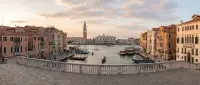




In short
Is Italy a good holiday for UK travellers?
Yes — flights are short (~2h25 to Milan, ~2h40 to Rome from a dozen-plus UK airports), British citizen tourists have visa-free access within Schengen’s 90/180-day limit, a mid-range week costs about £700–£800 per person, and the Frecciarossa rail spine links Rome, Florence, Venice and Milan centre to centre so you never need a hire car.
Italy is really several holidays wearing one flag, and the first-trip trap is trying to do them all in a week. Rome is the ancient-world set-piece; Florence is Renaissance art at walking pace; Venice is a one-off you do once; Milan is design, fashion and aperitivo; and Naples is the best pizza in the country with Pompeii and the Amalfi Coast on its doorstep. The country is also longer than people expect — Milan to Sicily is roughly London to Marrakesh — so the trick is to pick one or two cities, link them by train, and go deep. Below we set out, for a UK traveller spending their own money in 2026, exactly what each part suits, what it costs in pounds, and the entry rules straight from GOV.UK.
The short version
- Pick one or two cities, not the whole country: Rome–Florence–Venice is a full week on its own.
- Take the Frecciarossa, not a hire car: historic centres are ringed by camera-enforced ZTL zones that fine foreign cars.
- Book an open-jaw flight for a multi-city trip: in to Venice, home from Rome, no backtracking.
- Eat like an Italian — bar-standing coffee and pizza al taglio by day, one proper trattoria dinner — and watch out for the coperto cover charge.
- Always pay in euros, never pounds, at card machines and ATMs to dodge the ~5% DCC markup.
Entry requirements for UK travellers
In short
Do UK citizens need a visa for Italy?
No. British citizens can visit Italy visa-free for up to 90 days in any 180-day period for tourism, family visits or business meetings, counting previous Schengen visits (GOV.UK). Your passport must be issued less than 10 years before you arrive and valid for at least 3 months after you leave the Schengen area. Rules can change — confirm on GOV.UK before you travel.
For a full British citizen passport: issued less than ten years before arrival, and expiry at least three months after planned departure from Schengen. These are separate tests: expiry can be more than ten years after issue. A passport reported lost or stolen cannot be used. This advice concerns full British citizen passport holders travelling from the UK. Officers may request accommodation, insurance, funds and onward-travel evidence. Follow border instructions for EES and allow extra time; no advance EES application is required. Hotels register passport details: wait for them to finish and take your passport back. If arriving from another Schengen country without registered accommodation, declare presence to the questura within eight days. Under-18s need an accompanying adult for hotel check-in. Declare cash or travellers cheques worth €10,000 or more; check customs restrictions and food exceptions.
Key points before you book
- British citizen tourists can visit visa-free within the shared Schengen limit of 90 days in any 180 days; count earlier visits.
- Passport: issued less than ten years before arrival; expiry at least three months after leaving Schengen.
- Eligible GHIC/EHIC holders can access necessary state care, potentially with charges; carry suitable insurance as well.
- Border officers may request onward travel, accommodation, insurance and funds.
- Declare cash or travellers cheques worth €10,000 or more; check food/customs restrictions and exceptions.
- Carry photo ID; obey local public-space and ZTL rules.
- Emergency numbers: ambulance 118, fire 115, police 112.
Passport validity
For a full British citizen passport: issued less than ten years before arrival, and expiry at least three months after planned departure from Schengen. These are separate tests: expiry can be more than ten years after issue. A passport reported lost or stolen cannot be used.
Visas
British citizen tourists can visit visa-free for up to 90 days in any 180 across Schengen, counting previous visits. Working, residence and longer stays need separate checks. Italian authorities decide entry.
Health
An eligible GHIC or valid EHIC covers necessary state care on resident terms, with possible charges; it does not replace insurance or cover private treatment or repatriation. Check health/vaccine advice at least eight weeks ahead, including mosquito/tick and altitude risks. Check medicine rules: UK prescriptions are not accepted. Ambulance: 118.
Safety & security
As checked 25 October, FCDO warns of recent violent disorder in northern cities and increased security in Milan; a national strike planned for 30 October may affect transport. Avoid demonstrations and follow authorities. Protect valuables on transport and at busy sites, leave no luggage in parked cars and watch drinks. Terrorist attacks cannot be ruled out. Monitor weather and natural-hazard alerts, including floods, wildfires, earthquakes and volcanic activity.
Local laws & customs
Carry photo ID; police normally request a full passport when stopping drivers. Illegal drugs carry severe penalties. Validate kiosk/machine transport tickets as instructed. Check local rules on monuments, fountains, canals and restricted traffic zones (ZTL); enter only with valid authorisation. Do not remove coastal sand, shells or pebbles. Venice access-fee dates and exemptions must be checked on its official portal. Winter sports have helmet, liability-insurance and off-piste equipment requirements: read current FCDO guidance before a ski trip.
Read GOV.UK travel advice for Italy, including entry rules and safety warnings, before booking and travelling.
Read GOV.UK adviceGOV.UK updated 21 Oct 2026 · Departly checked 25 Oct 2026
EU entry rules for Italy
Checked 25 Oct 2026EES is the EU's digital border system for short stays in the Schengen area. You may be asked for fingerprints and a photo at entry, and biometric checks can recur on later crossings. The digital record lasts three years; registration is free and requires no application before travel. Allow extra time at the border. ETIAS is not operating and applications are not being accepted. The EU says it will announce the launch date several months beforehand. No application is needed now; check the official EU website and GOV.UK before travelling.
- 90/180 rule
- British citizens visiting as tourists can normally stay visa-free for up to 90 days in any 180-day period across the Schengen area. Days in other Schengen countries count towards that total; work and longer stays have different rules.
- Passport
- For a short Schengen visit, your passport must have been issued less than 10 years before arrival and expire at least 3 months after you plan to leave the Schengen area. Check both dates.
- Healthcare
- An eligible UK GHIC or EHIC provides access to medically necessary state healthcare on local terms in covered countries. Charges may apply, and the card does not replace travel insurance or cover medical repatriation.
- Where EES applies
- EES applies to the Schengen area, including Switzerland, Norway and Iceland. It does not apply to Ireland or Cyprus. Some travellers, including qualifying residents, are exempt; check the official exemption guidance.
An eligible GHIC or valid EHIC covers necessary state care on resident terms, with possible charges; it does not replace insurance or cover private treatment or repatriation. Check health/vaccine advice at least eight weeks ahead, including mosquito/tick and altitude risks. Check medicine rules: UK prescriptions are not accepted. Ambulance: 118.
As checked 25 October, FCDO warns of recent violent disorder in northern cities and increased security in Milan; a national strike planned for 30 October may affect transport. Avoid demonstrations and follow authorities. Protect valuables on transport and at busy sites, leave no luggage in parked cars and watch drinks. Terrorist attacks cannot be ruled out. Monitor weather and natural-hazard alerts, including floods, wildfires, earthquakes and volcanic activity.
Flights from the UK
In short
How long is the flight to Italy from the UK?
About 2h25 to Milan and ~2h35 to Venice from London, ~2h40 to Rome, ~3h to Naples and ~3h15 to Pisa for Florence. Sicily (Catania) is around 3h20. Direct flights run from well over a dozen UK airports on Ryanair, easyJet, Jet2, BA, Wizz Air and ITA Airways — and Milan Malpensa is usually the cheapest entry point.
Because Italy is one of the UK’s busiest leisure markets, flights are short, frequent and competitive — and they don’t all leave from London. Manchester, Birmingham, Edinburgh, Bristol and Belfast all run direct routes that are often as cheap as the capital. March, April and November are the cheapest months, while July, August and the Christmas fortnight carry the biggest premium, so the booking lever that matters most is when you go. The other quiet saving: Milan Malpensa and the southern airports (Naples, Bari, Catania) routinely show the lowest UK return fares, so it can pay to fly into one and take the train onward.
Flights from the UK
Short-haul (north); medium-haul to the deep south and SicilyITA Airways resumed Heathrow–Rome Fiumicino on 29 March 2026. Its current route page gives about 2h40; Heathrow's launch announcement gives about 2h35. Check the dated timetable for your chosen Italian airport, including regional departures, rather than assuming every UK airport has a year-round direct service. Compare the total including baggage and the airport transfer; no Italian gateway is reliably the cheapest. Official route/timetable: https://www.ita-airways.com/lhg/gb/en/o-d/cy-cy/london-rome For November 2026 travel, check the airport and airline before booking: Naples Airport has announced a runway-renovation closure. Confirm the affected dates, operating airport and onward transfer at https://www.aeroportodinapoli.it/en/w/airport-closed.
Fly from
Main arrival airports
- FCO Rome (Fiumicino)
- CIA Rome (Ciampino, low-cost)
- MXP Milan (Malpensa)
- BGY Milan (Bergamo, low-cost)
- VCE Venice (Marco Polo)
- NAP Naples (Capodichino)
- PSA Pisa (for Florence & Tuscany)
- BLQ Bologna
- CTA Catania (Sicily)
When to go
In short
When is the best time to visit Italy?
Late April–June and September to mid-October. You get roughly 18–27°C across most of the country, manageable crowds and prices below the July–August peak. Avoid Rome and Florence in high summer, when both hit 35°C+ and mid-August's Ferragosto shuts many shops. Winter is cheapest for flights and quietly great for the art cities.
When to go
Sweet spot: Late April to June and September to mid-October. You get roughly 18–27°C across most of the country, manageable crowds, and prices below the July–August peak. May and late September are the sweet spot — warm enough for long days outdoors but short of the punishing summer heat, with shorter queues at the Colosseum, Vatican and Uffizi.
Avoid Rome and Florence in July and August: both routinely hit 35°C+, the big sights grow multi-hour queues, and mid-August (Ferragosto, around the 15th) sees many shops and family-run restaurants shut while Italians take their own holidays. If you must travel then, build the day around early starts and late dinners, or head to the lakes or coast for the breeze. Winter is cheapest for flights and quietly excellent for the art cities — Florence's Uffizi even drops to a low-season ticket price — though Venice can flood (acqua alta) and the north turns cold and foggy.
The shoulder seasons are the sweet spot for almost every kind of Italy trip. The one season to be deliberate about is high summer: July and August in Rome and Florence are genuinely punishing — both routinely top 35°C, the Colosseum and Uffizi grow multi-hour queues, and mid-August’s Ferragosto (around the 15th) sees many shops and family-run restaurants shut while Italians take their own holidays. If you can only travel then, build the day around early starts and 9pm dinners, or head to the lakes and coast for the breeze. Winter flips the logic: it’s the cheapest time to fly and a fine time for the art cities — Florence’s Uffizi even drops to a low-season ticket price — though Venice can flood (acqua alta) and the north turns cold and foggy.
What it costs
In short
How much does a week in Italy cost from the UK?
Roughly £900–£1,000 per person on a budget and around £1,500–£1,800 mid-range for a week. UK return flights run ~£30–£150 off-peak. On the ground, budget on £50–£70 a day, mid-range £100–£155 — and Venice runs 20–40% dearer than the rest of the country.
What it costs
June 2026 planning allowance per adult in return economy: £30–£80, £120–£250. Requote the actual departure and arrival airports, dates, stops, baggage and ticket conditions; this allowance does not establish a current route or seasonal service. ITA Airways resumed Heathrow–Rome Fiumicino on 29 March 2026. Its current route page gives about 2h40; Heathrow's launch announcement gives about 2h35. Check the dated timetable for your chosen Italian airport, including regional departures, rather than assuming every UK airport has a year-round direct service. Compare the total including baggage and the airport transfer; no Italian gateway is reliably the cheapest. Official route/timetable: https://www.ita-airways.com/lhg/gb/en/o-d/cy-cy/london-rome For November 2026 travel, check the airport and airline before booking: Naples Airport has announced a runway-renovation closure. Confirm the affected dates, operating airport and onward transfer at https://www.aeroportodinapoli.it/en/w/airport-closed.
Daily budget per person
| Cappuccino + cornetto, standing at the bar | €2.20–€3 / £1.90–£2.60 |
|---|---|
| Espresso at the bar | €1–€1.30 / £0.85–£1.10 |
| Pizza al taglio (slice) for lunch | €4–€6 / £3.40–£5.20 |
| Margherita in a trattoria | €8–€12 / £7–£10 |
| Two-scoop gelato cone | €2.50–€3.50 / £2.15–£3 |
| Rome–Florence Frecciarossa/Italo (booked ~3 months ahead) | from €15–€20 / £13–£17 |
| Rome Fiumicino → Termini, Leonardo Express | €14 / £12 |
| Colosseum standard entry (timed slot) | €18 / £15 |
| Hostel dorm bed per night | €25–€45 / £21–£39 |
Daily budgets and sample-trip totals are June 2026 planning examples per adult, using shared accommodation where specified; they are not current bookable quotes. Reprice dates, occupancy, meals, sightseeing, transfers, baggage, taxes and optional extras. The single biggest day-to-day saver is eating like an Italian: a cappuccino and cornetto standing at the bar is ~€2.50, pizza al taglio (pizza by the slice, sold by weight) makes a €4–€6 lunch, and you save the sit-down trattoria for one proper dinner. Two rules that quietly cost UK tourists: a coperto (cover charge) of €1.50–€3 a head is normal and legal, and a cappuccino ordered after about 11am — or worse, sitting at an outdoor table — costs several times the standing-at-the-bar price.
The numbers above are honest mid-2026 figures converted at €1 = £0.86, so a bar-standing cappuccino and cornetto really is about £1.90–£2.60 and a trattoria margherita about £7–£10. The single biggest saving is eating like an Italian: coffee standing at the bar, pizza al taglio (sold by weight) for lunch, and one proper sit-down dinner. Two things quietly cost UK tourists — a coperto (cover charge) of €1.50–€3 a head is commonly charged; check the displayed menu, and the same cappuccino costs several times more sitting at an outdoor table than standing at the bar.
A realistic first itinerary
Italy is longer than UK travellers expect — Milan to Sicily is roughly London to Marrakesh — and the classic first-trip mistake is trying to bolt the Amalfi Coast or Sicily onto a Rome–Florence–Venice week. The trio alone is a full week, and you'll see it best as a rail trip, not a road trip: the Frecciarossa links all three centre to centre, while a hire car is dead weight you'd only pay to park and then fine through the historic-centre ZTL cameras. The money-saving move is an open-jaw flight — in to Venice, home from Rome — so you never double back.- 1Days 1–2
Venice
Do it first and do it once: St Mark's Basilica (pre-book), the Doge's Palace, get lost off the Rialto in Cannaregio and Dorsoduro, and ride the number 1 vaporetto down the Grand Canal at dusk instead of an overpriced gondola. Skip the restaurants right on St Mark's Square.
- 2Day 3
Frecciarossa to Florence (~2h05)
Swap the lagoon for the Renaissance by high-speed train — city centre to city centre, no airport faff and no car to garage.
- 3Days 3–4
Florence
Pre-book a timed Uffizi slot and the Accademia for the David, climb the Duomo's dome or Giotto's campanile, and cross the Arno into the Oltrarno for dinner away from the crowds. Florence is walkable end to end — you won't need a single bus.
- 4Day 5
Frecciarossa to Rome (~1h32)
Drop south to the capital, again by train rather than a hire car you don't need and couldn't park.
- 5Days 5–7
Rome
Pre-book the Colosseum and Forum on one combined timed ticket and the Vatican Museums early to beat the queue, then do the Pantheon, Trevi and Piazza Navona on foot. Base yourself in Monti or near the Pantheon, eat in Trastevere or Testaccio, and add a half-day to Pompeii or Ostia if you have it.
The honest cut for a shorter trip is to drop one corner of the triangle — Rome plus Florence (with the Uffizi pre-booked), or Venice plus Florence — rather than racing all three. The thing to resist is the “three cities in five days” sprint; on this geography, even with fast trains, that’s a transit blur, not a holiday. And whatever you do, leave Sicily and the Amalfi Coast for a separate trip — they’re a long way south of the art-city triangle.
Where to base yourself
In short
Where should I stay in Italy for a first trip?
Rome for the headline ancient history, Florence for Renaissance art and a Tuscan add-on, Venice for a one-off city break done properly, Milan for design and the lakes, and Naples for pizza, Pompeii and the Amalfi Coast. Match the base to the trip you actually want, and link two of them by train rather than trying to see everything.
Rome
The ancient-world set-piece and the obvious first-trip base — Colosseum, Forum, Vatican, Pantheon and Trevi in one walkable centre. Stay in Monti (next to the Colosseum, full of bars and trattorias) or near the Pantheon, and eat in Trastevere or Testaccio rather than the tourist traps around the big sights. Skip a hotel right on Termini station — it's convenient but charmless and pickpocket-heavy.
Good for: First-timers who want the headline history
Florence & Tuscany
Renaissance art at walking pace, and the obvious base for Tuscany. The whole historic centre is compact enough to cross on foot, so anywhere between Santa Maria Novella station and Santa Croce works; the Oltrarno across the river is quieter and more local for dinner. Pre-book the Uffizi and Accademia or you'll lose hours to queues. A brilliant base for day-trips to Siena, Pisa and the hill towns.
Good for: Art lovers and a Tuscan add-on
Venice
A one-off you do once — there is nowhere else like it. Stay actually on the islands (Cannaregio and Dorsoduro are quieter and better value than San Marco), not on the mainland at Mestre, so you get Venice at dawn and after the day-trippers leave. The honest catch: it's Italy's most expensive city for beds and food, and St Mark's is a crush by mid-morning, so go early and eat away from the square.
Good for: A once-in-a-lifetime city break done properly
Milan
Italy's design, fashion and aperitivo capital, and the cheapest city to fly into from the UK. The Duomo, The Last Supper (book weeks ahead), the Brera district and Navigli canals for evening drinks. It's more business-city than postcard Italy, so it suits a long weekend or a first stop before the lakes (Como is an hour by train) rather than a week on its own.
Good for: Design, shopping and the lakes
Naples & the south
The best pizza in Italy, a thrilling chaotic city, and Pompeii, Herculaneum, Vesuvius and the Amalfi Coast all within reach. It's grittier and more intense than the north — keep your wits and valuables close — but it's also cheaper and far less polished-for-tourists. Use it as a base for the Bay of Naples and as the springboard to Capri and the Amalfi Coast.
Good for: Pizza, Pompeii and the Amalfi Coast
These are country-level bases — the neighbourhood-by-neighbourhood detail (which street in Monti, which sestiere in Venice) belongs on the individual city guides. The pattern to follow: stay in the real historic centre and walk, rather than basing yourself out at a cheaper mainland station like Venice’s Mestre and commuting in. You get the city at dawn and after the day-trippers leave, which is when these places are at their best.
Getting around
In short
What's the best way to get around Italy?
Between cities, the Frecciarossa and Italo high-speed trains: Rome–Florence is about 1h30 and Florence–Venice about 2h05, city centre to city centre, with advance fares from €15–€20. Within cities, cheap metros and buses (~€1.50 a ride), and Florence and Venice are walked. Rent a car only for Tuscany, Puglia or the lakes — never the cities, where ZTL camera zones fine foreign hire cars. Drive on the right.
Getting around Italy
Between cities, Italy has one of Europe's best high-speed rail networks, and open competition between state-owned Trenitalia (Frecciarossa) and private Italo has driven fares down and quality up. Rome–Florence is about 1h30, Florence–Venice about 2h05 and Rome–Milan about 3h, all city centre to city centre with no check-in. Fares behave like budget airlines: cheapest released ~90–120 days out (Rome–Florence from €15–€20), far dearer at the station, so book ahead on Trenitalia, Italo or Trainline. Inside cities, metros and buses are cheap (~€1.50–€2 a ride), and Florence and Venice are walked rather than ridden. Rent a car only for Tuscany, Puglia or the lakes — never for the cities, where camera-enforced ZTL zones fine foreign hire cars and parking is a nightmare.
- Rome–Florence by Frecciarossa or Italo is ~1h30, centre to centre — far faster than flying once you count airports.
- Book trains ~3 months ahead: Rome–Florence from €15–€20 (£13–£17), versus €70–€80 walking up on the day.
- Rome Fiumicino: the Leonardo Express is €14 to Termini in 32 minutes, every 15 minutes.
- Milan Malpensa: the Malpensa Express is €15 to Milano Centrale in ~58 minutes (47 to Cadorna).
- Venice Marco Polo: the Alilaguna water bus is ~€18 to St Mark's; or the cheap ATVO bus to Piazzale Roma, then the vaporetto.
- Don't drive into historic centres — ZTL camera zones fine foreign hire cars, with the bill reaching you months later.
Trains & rail passes
Book intercity trains and work out whether a rail pass actually pays off for your route before you go.
Staying connected & covered
Most UK networks now bill around £2.25 a day to use your data in Italy — roughly £15–£16 for a week, £32 for a fortnight — because post-Brexit EU roaming is no longer guaranteed free. Check your tariff first, and if the daily charge adds up, buy an Italy eSIM that switches on the moment you land. The other thing to sort is cover: your GHIC and travel insurance do different jobs, so check eligibility and arrange suitable insurance.
Stay connected in Italy
Check your own UK mobile package’s destination coverage, roaming allowance and add-on price before choosing a travel eSIM. Compare the full trip cost and data validity; neither a standard daily charge nor an automatic saving applies to every plan.
- Check that your exact phone model supports the eSIM and is unlocked for another network; device and market exceptions apply.
- Compare the selected destination plan’s data, supported networks, validity, top-ups, hotspot allowance and calls/texts before purchase; download offline maps as a backup.
- Follow the purchased plan’s installation and activation instructions. Installation needs connectivity; some plans start validity on installation, while others start on a supported network. Keeping the UK line active can still incur its roaming charges.
Travel insurance for Italy
Choose appropriate cover for your health, itinerary, activities and emergency expenses. A GHIC/EHIC is not a replacement for travel insurance.
- Check medical treatment, repatriation, cancellation and belongings cover and exclusions.
- Compare single-trip and annual quotes for your own plans; savings and suitability vary.
- For skiing or adventure activities, check specialist cover and Italian legal requirements.
Money
Italy in 2026 is far more contactless than it once was — cards, Apple Pay and Google Pay work in city restaurants, shops and on transit — but a stubborn cash culture persists in small trattorias, bars, markets, taxis and at the coperto-charging end of the south, so carry €40–60 in small notes and coins. Withdraw from bank-branded ATMs (a Bancomat) and avoid standalone Euronet machines, which push high fees. The one rule that saves UK travellers real money: when an ATM or card machine asks whether to charge in pounds or euros, always choose euros. Choosing pounds triggers Dynamic Currency Conversion — a hidden markup of up to ~5% — and your own UK card or a fee-free travel card always beats it. Tipping is modest and not expected: the coperto already covers the table, so just round up or leave a euro or two for good service.Fee-free travel money
Skip the airport exchange desk — a fee-free travel card gives you the real exchange rate abroad.
Before you fly
The two Italy-specific moves that save real money are booking Frecciarossa or Italo trains ~3 months ahead (advance fares from €15–€20, versus €70–€80 at the station) and checking GHIC eligibility or carrying an existing valid EHIC. Pre-book UK airport parking too — it’s almost always cheaper booked ahead than on the day — and sort an Italy eSIM before you fly so you land connected.
Airport parking & lounges
Pre-book your UK airport parking or a lounge — it's almost always cheaper booked ahead than on the day.
How we know this
How we know this
- GOV.UK foreign travel advice — Italy — entry, passport, visa, health, safety and local laws (print page)
- NHS — Global Health Insurance Card (GHIC) — the GHIC is free and is not a substitute for insurance
- Trenitalia, Italo & Seat61 — Frecciarossa and Italo high-speed fares, routes and journey times
- Leonardo Express, Malpensa Express & Alilaguna — official airport-transfer costs and times
GOV.UK last updated 21 Oct 2026.
Italy FAQs
Do UK citizens need a visa for Italy?
Do I need a GHIC and travel insurance for Italy?
How much does a week in Italy cost from the UK?
When is the best time to visit Italy?
Is Italy safe for tourists?
Do I need a plug adapter for Italy?
What's the best way to get around Italy?
How long is the flight to Italy from the UK?
For November 2026 travel, check the airport and airline before booking: Naples Airport has announced a runway-renovation closure. Confirm the affected dates, operating airport and onward transfer at https://www.aeroportodinapoli.it/en/w/airport-closed.