Campania
Sorrento Cathedral (the Duomo)
How to visit Sorrento Cathedral (the Duomo) on Corso Italia: free opening hours, the local intarsio marquetry to look for, and whether it's worth a stop between Capri and the Amalfi boats.
Where
Sorrento, Italy
Opening hours
Generally 08:00–12:30 and 16:30–20:30 daily, closing over the early-afternoon riposo. Hours tighten around services and feast days, so don't time a special trip — fold it into a walk down Corso Italia.
Tickets
Free (£0). It's a working cathedral, not a ticketed sight; a small donation box is the only ask.
Time needed
15–20 minutes inside; longer if you sit with the marquetry choir stalls and the ceiling paintings.
In short
Visiting Sorrento Cathedral (the Duomo)
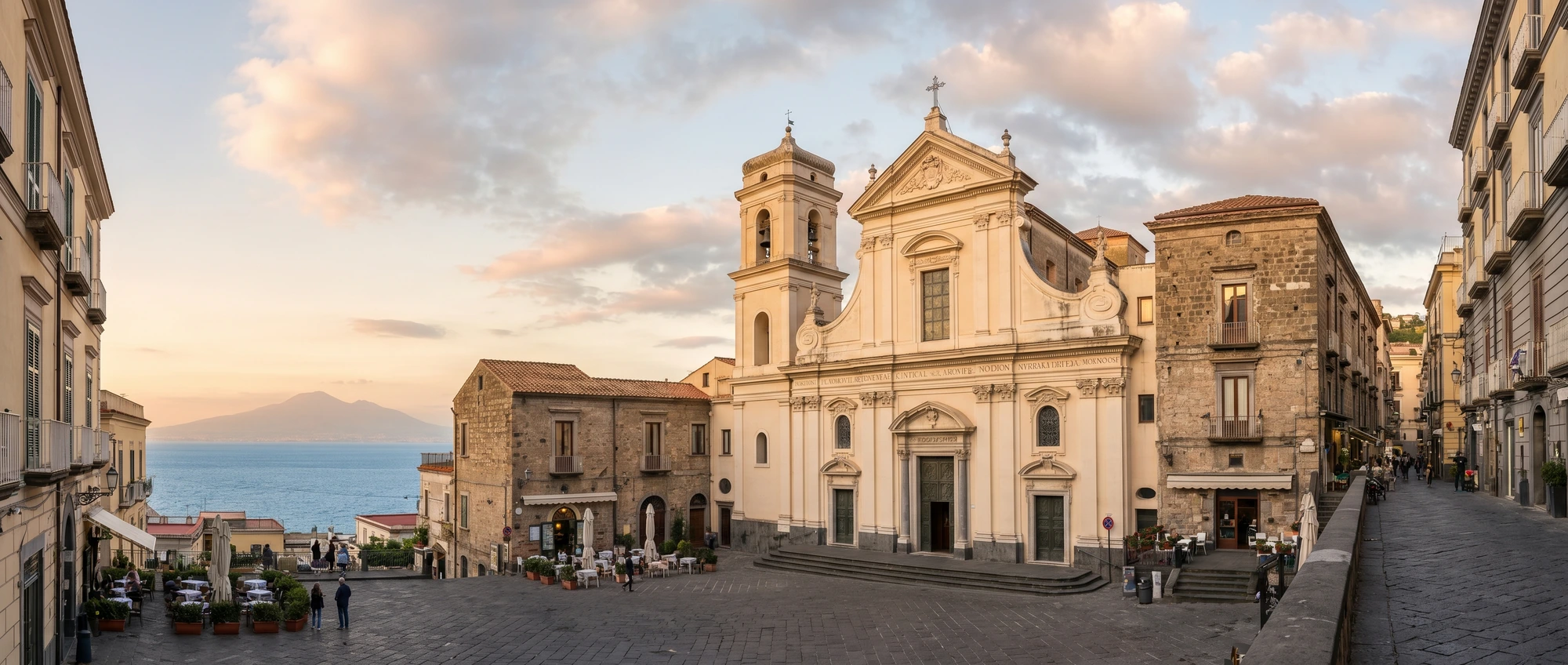
Sorrento's Duomo (the Cathedral of Saints Philip and James) sits right on Corso Italia, a two-minute walk from Piazza Tasso, and entry is free. The reason to go in is the local intarsio marquetry — inlaid-wood choir stalls and Stations of the Cross in the wood-craft style Sorrento is known for — plus a set of 11th-century bronze doors from Constantinople. Allow 15–20 minutes, and look up from the street for the separate three-tier bell tower, whose base is built on reused Roman columns.
How to visit
Sorrento Cathedral — the Duomo, dedicated to Saints Philip and James — sits right on Corso Italia, a two-minute stroll from Piazza Tasso, so you’ll pass it without trying on any walk through the old town. Entry is free, there’s no ticket and nothing to book, just a donation box by the door. The catch is the hours: it keeps the southern-Italian pattern of opening roughly 08:00–12:30 and 16:30–20:30, shutting over the early-afternoon riposo, and it tightens around Mass and feast days. Don’t build a special trip around it — fold it into an hour wandering Corso Italia between the Capri ferry and dinner.
What makes it worth the door is the woodwork. Sorrento is a town of intarsio (inlaid-wood marquetry), and the cathedral shows it off in the choir stalls and the Stations of the Cross, panels built up from slivers of different-coloured wood rather than painted. Look too for the 11th-century bronze doors brought from Constantinople, the ceiling paintings by Neapolitan artists, and — from the street — the detached three-tier bell tower across the way, whose base sits on reused Roman columns. The current building is a 15th-century Romanesque rebuild of an 11th-century church, with a façade that’s actually 1920s, so it reads older inside than out.
Is it worth it?
Honestly: yes as a free 15-to-20-minute stop, no as a destination. This isn’t the Amalfi Duomo with its grand staircase or anything you’d queue for — it’s a quietly handsome working cathedral whose one genuinely local feature is the marquetry, which ties straight into Sorrento’s wood-craft shops you’ll see along the same street. Step in, find the choir stalls, look at the doors, glance up at the ceiling, and move on. If you only have a day in Sorrento built around Capri or Pompeii, you don’t need to make time for it; if you’re staying a few nights and walking Corso Italia daily, there’s no reason not to put your head in.
Planning the rest of your trip? See the Sorrento city guide.