Apulia
Basilica di San Nicola
How to visit Bari's Basilica di San Nicola: free entry, the crypt where Saint Nicholas's relics lie, the €3 museum, and whether it's worth your time.
Where
Bari, Italy
Opening hours
The basilica is open daily with free entry: Mon–Sat 06:30–20:30, Sun 06:30–22:00. The separate Museo Nicolaiano runs roughly 11:00–18:00 and is closed on Wednesdays. Confirm on basilicasannicola.it.
Tickets
Basilica and crypt: free (a donation box is by the relics). Museo Nicolaiano: €3 full / €2.50 reduced (about £2.60 / £2.15). No timed ticket needed for the church.
Time needed
30–45 minutes for the basilica and crypt; add about 20 minutes for the Museo Nicolaiano if you go.
In short
Visiting Basilica di San Nicola
Entry to the basilica itself is free, so the headline question is timing, not tickets: go down to the crypt, where Saint Nicholas's relics have lain beneath the central altar since 1087, and that's the part that justifies the walk into Bari Vecchia. Allow 30–45 minutes for the church and crypt; add 20 minutes and €3 if you want the Museo Nicolaiano next door. Avoid Sunday mid-mornings when several Masses run back to back and the crypt fills with pilgrims.
How to visit without overthinking it
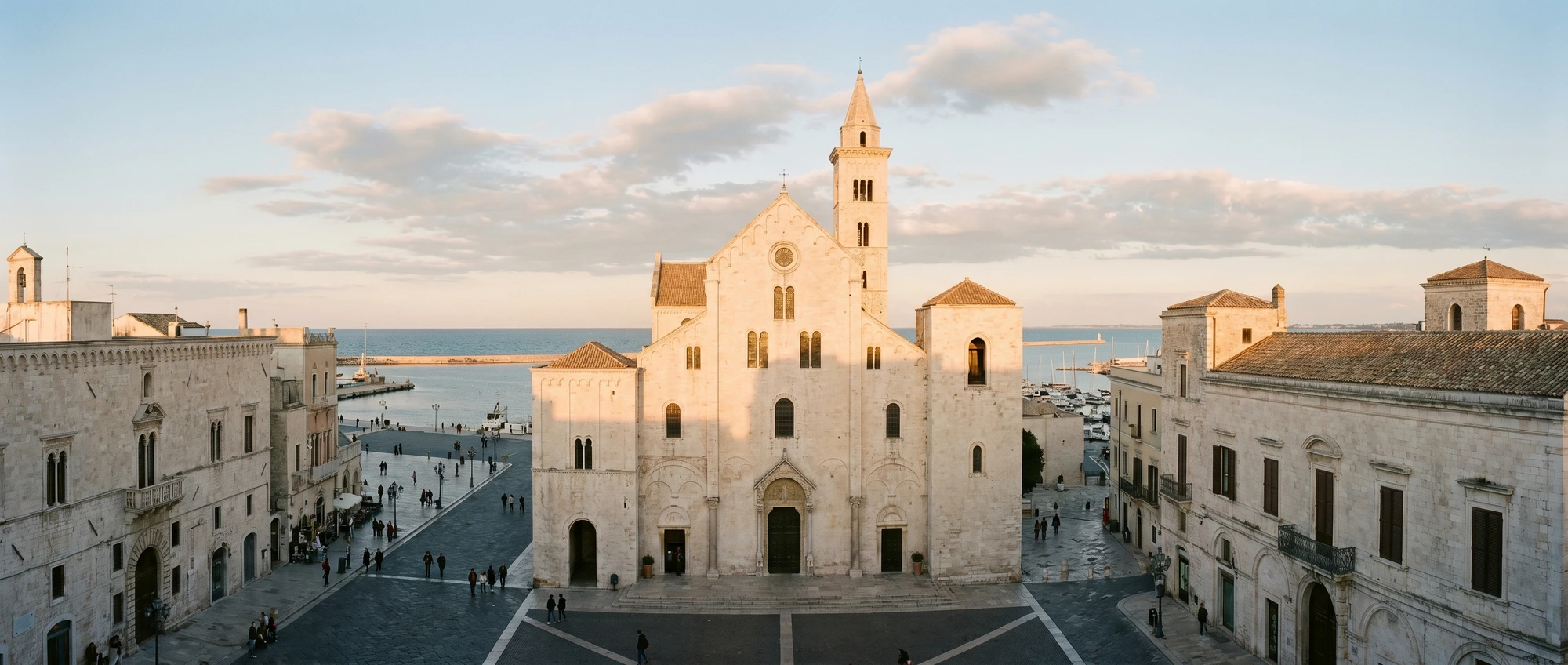
There’s no ticket to buy for the church itself, which catches a lot of people out — they hunt for a booking site that doesn’t exist. Entry to the basilica and the crypt is free (Mon–Sat 06:30–20:30, Sun until 22:00), with a donation box by the tomb. The building sits in Largo Abate Elia in the middle of Bari Vecchia, a flat 15–20 minute walk from Bari Centrale or a couple of minutes uphill from the Lungomare and the old port. Don’t judge it from the squat, fortress-plain Romanesque facade; the point is downstairs.
Head straight to the crypt, reached by the stairs at the end of either side nave. Saint Nicholas’s relics have rested beneath the central altar here since Bari sailors brought them from Myra in 1087, under a low ceiling held up by 26 columns with Byzantine and Romanesque capitals. There’s a working Orthodox altar down here too — the basilica is a rare shared pilgrimage site for Catholic and Orthodox Christians, so you may walk in on an Orthodox liturgy with chant and incense, which is the most memorable way to catch it.
What to skip, and is it worth it?
If you’ve got an extra twenty minutes, the Museo Nicolaiano next door (€3, about £2.60; closed Wednesdays, roughly 11:00–18:00) holds the church silver and the saint’s iconography — worth it for the curious, skippable if you’re just passing through. The thing to actually avoid is Sunday mid-morning, when several Masses run back to back and the crypt is packed with tour groups and pilgrims; an early weekday morning or late afternoon is calm and near-empty by comparison.
It won’t fill an afternoon, but as a free 30–45 minute stop it’s the strongest single sight in Bari, and it’s the reason the city is on the map at all. Pair it with a wander through Bari Vecchia’s lanes — past the women hand-rolling orecchiette on Strada delle Orecchiette — rather than building a whole day around it.
Planning the rest of your trip? See the Bari city guide.
More to see in Bari
Book the essentials
Tours & tickets
Basilica di San Nicola FAQs
Do you need a ticket for the Basilica di San Nicola?
Can you see Saint Nicholas's relics?
Is the Basilica di San Nicola worth visiting?
Ready to book?
Check tickets & tours