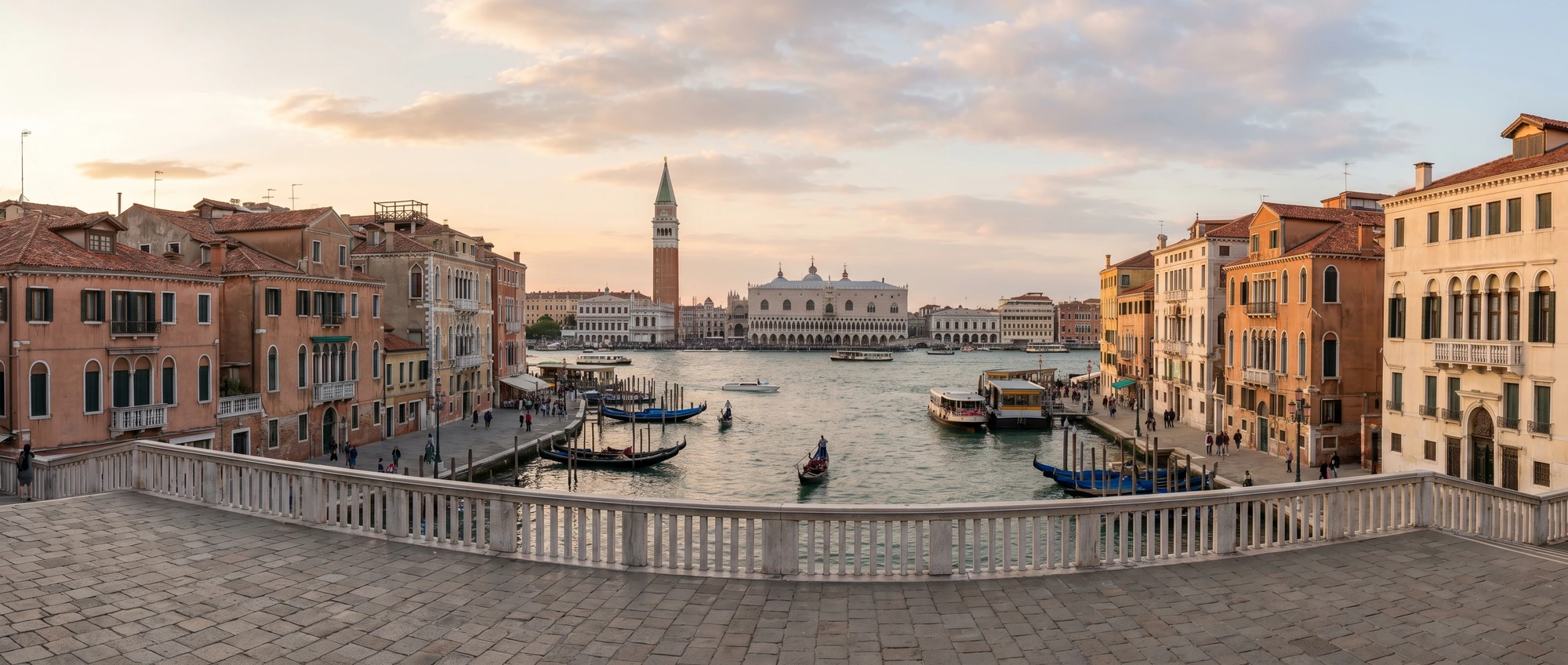
Veneto
Venice
Stay two or three nights to explore Venice beyond peak daytime crowds; check current city access rules before travelling.
Best length
2-3 nights
Airport
Venice Marco Polo (VCE), ~13km north on the mainland
Airport to centre
ATVO bus ~25 min to Piazzale Roma (about EUR12); Alilaguna water bus ~45-60 min to San Marco (about EUR18)
Best base
Cannaregio for value; Dorsoduro for art and evenings
In short
Venice at a glance
Venice is best as a 2- or 3-night stay where you actually sleep on the islands: base yourself in Cannaregio or Dorsoduro rather than San Marco, book the Doge's Palace and St Mark's ahead, and treat the gondola as one paid set-piece rather than your main transport.
The short version
- As checked 25 October 2026, Venice’s 2026 access-fee period has ended: no payment or exemption request is currently needed. The city says fees return in 2027; check cda.ve.it for your dates and applicable conditions.
- Base in Cannaregio for value and a local evening, or Dorsoduro for art and the best aperitivo; San Marco is central but the most crowded and expensive.
- Book the Doge's Palace and a St Mark's Basilica skip-the-line slot before you fly; both queues are brutal by mid-morning.
- Take the ATVO bus to Piazzale Roma if your hotel is near the canal's western end, or the Alilaguna water bus if you want to arrive by lagoon near San Marco.
- Two full days covers San Marco, the Rialto, a Dorsoduro art afternoon and a half-day to Burano and Murano; getting lost on purpose is part of the plan.
Venice is a small, car-free city built on islands, and the way it works is unlike anywhere else you’ll fly to from the UK. There are no roads, only canals and a dense web of lanes that no map quite captures, so you walk almost everywhere and take a water bus when you can’t. The headline sights — St Mark’s Basilica, the Doge’s Palace, the Rialto — are clustered in a tight core that fills with day-trippers and cruise passengers by mid-morning and empties by early evening. The trick to a good first trip is to sleep on the islands rather than in mainland Mestre, book the two sights that genuinely need booking, and base yourself a few lanes off San Marco so you can be out before the crowds and still there once they’ve gone.
Two full days is the practical minimum: one for San Marco, the Doge’s Palace and the Rialto market, and one split between Dorsoduro’s galleries and a half-day boat trip to Burano and Murano. A third night is what turns Venice from a tick-list into a place, because the city is at its quietest and most dreamlike at night and at dawn, exactly when the day visitors aren’t there.
As checked 25 October 2026, Venice’s 2026 access-fee period has ended: no payment or exemption request is currently needed. The city says fees return in 2027; check cda.ve.it for your dates and applicable conditions. Check local high-water warnings and obey any access restrictions.
Plan your Venice trip
Keep a first trip focused: book the big timed sights, then leave room for neighbourhoods and food.
Top things to do in Venice
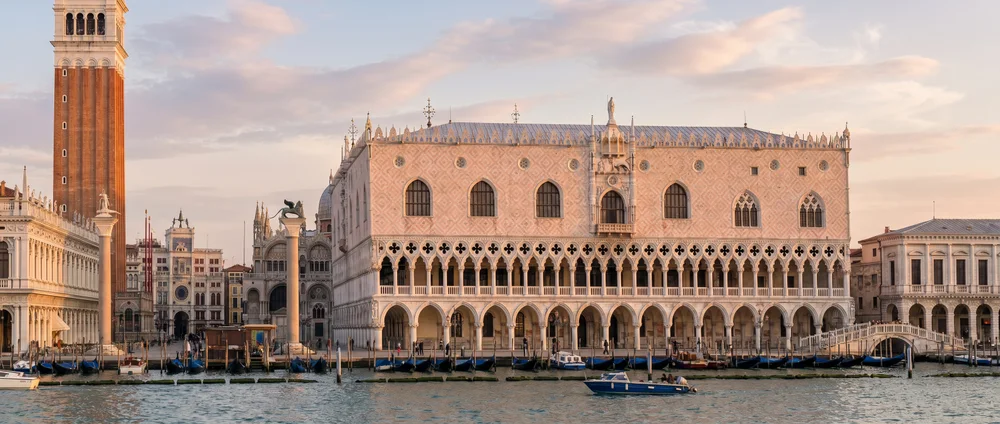
Doge's Palace
Book a timed slot before you fly: the security queue under the colonnade is the longest in Venice. The Bridge of Sighs is only reachable from inside the Palace, so don't pay for it separately. €35 adult (about £30) for the St Mark's Square Museums ticket, or €30 (about £26) bought online 30+ days ahead; €15 reduced. The Secret Itineraries guided tour is €40 (about £34) and includes Palace entry. Ages under 6 free.
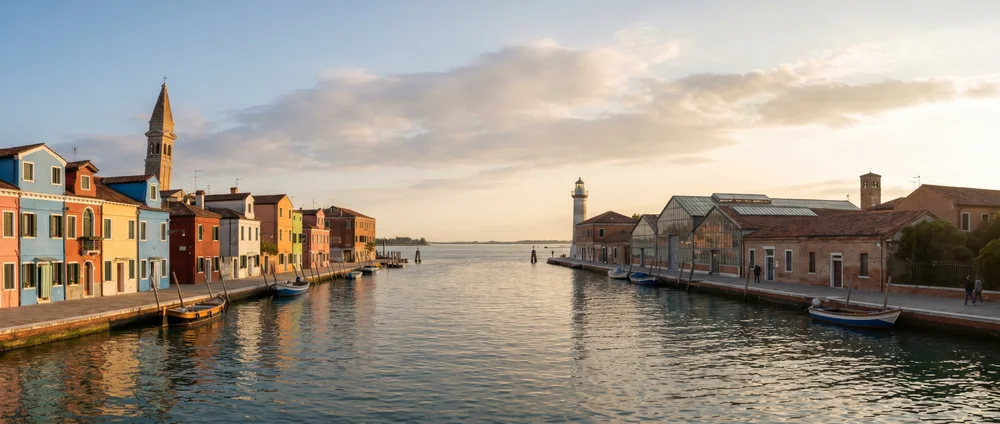
Murano and Burano Islands
Murano and Burano work well as a lagoon day if you plan the boat route and leave time for the return. ACTV ordinary Rete Unica €9.50/75 minutes or Venezia Daily Pass €25/24 hours; these exclude Marco Polo airport and Alilaguna unless an applicable separate supplement/product is bought. Murano Glass Museum €15 full/€7.50 eligible reduced; ages 0–5 and other eligible categories free. Its ticket includes the MUVE app audio guide. Check the selected fare and eligibility.
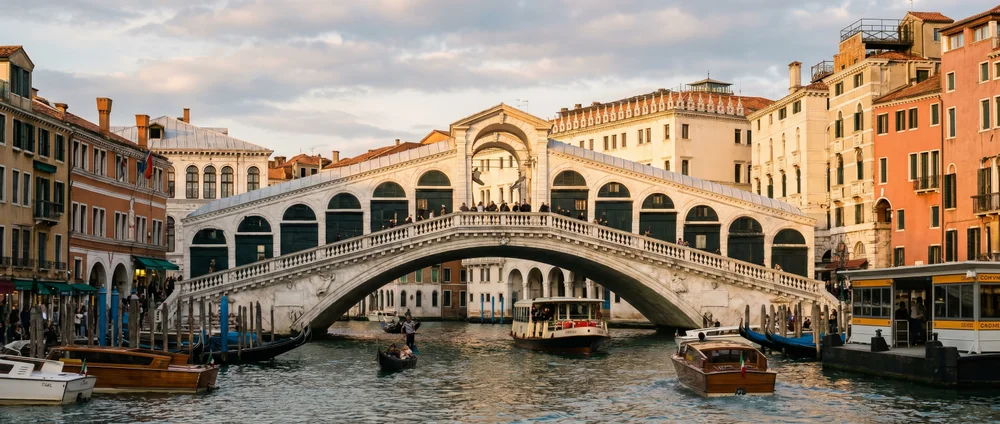
Rialto Bridge
There is no ticket: the Rialto Bridge is a public bridge over the Grand Canal, free to cross subject to local access restrictions. That changes the planning — go before about 09:00 or after 20:00, when the central staircase isn't shoulder-to-shoulder, and pair it with the Rialto food market on the San Polo side (fruit/vegetables Monday–Saturday, fish Tuesday–Saturday). The view from the top spans the busiest stretch of the canal; ten minutes there is plenty unless you're shopping the bridge's jewellery stalls.
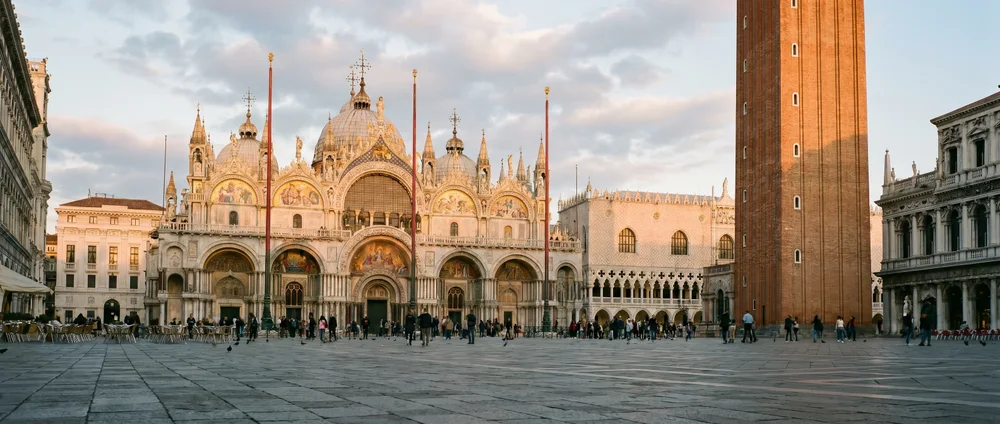
St Mark's Basilica
Book a timed entry slot online before you travel — since July 2025 there's no on-site ticket office, and popular morning slots sell out a week or more ahead in summer. Check the current official luggage rules before arrival; do not assume a free deposit is available. Allow 30–45 minutes inside, an hour if you add the Pala d'Oro and the terrace. The official individual tariff lists Basilica €10; Basilica plus Pala d’Oro or Museum/Loggia €20; full Basilica/Pala/Museum/Loggia €30; Campanile €15. The same page describes discounts and free categories, including under-11s, so check the actual private-visitor product and eligibility rather than assuming the headline tariff is every visitor’s final total. Evening and accredited-tour-operator products are separate.
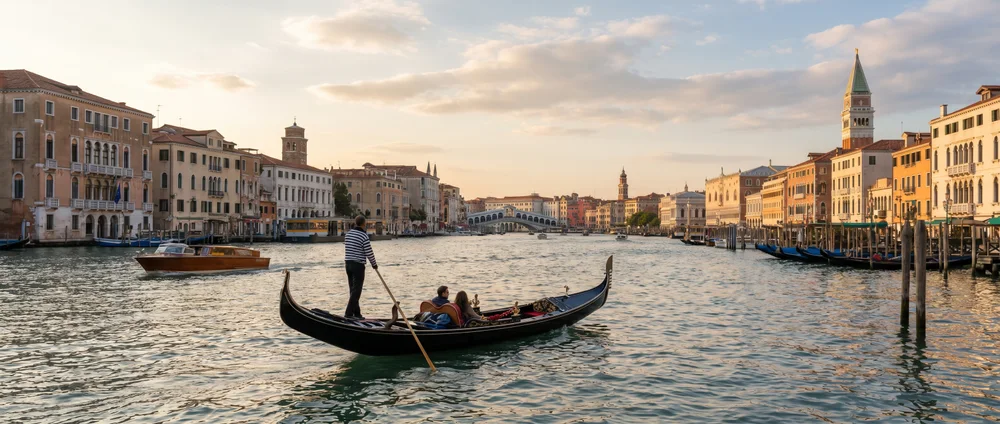
Grand Canal Gondola Ride
Up to five people share one boat, so going as a couple is dear but a group of four or five is reasonable. Bring cash, agree the route before you step in, and ask to dip off the Grand Canal into the quieter back canals. City-regulated hire per gondola, up to five passengers: €90 for 30 minutes between 09:00 and 19:00; €110 for 35 minutes between 19:00 and 04:00. Other durations are priced proportionally to time, not a fixed €40–50 supplement. Conditions, tide and traffic may alter duration by a few minutes. Shared reseller packages and the traghetto crossing are separate products.
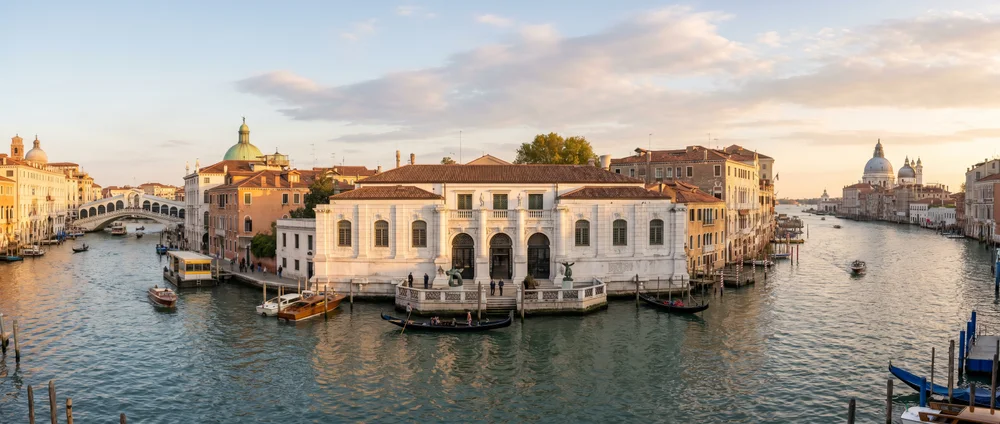
Peggy Guggenheim Collection
A compact modern-art museum in Peggy Guggenheim's own unfinished palazzo on the Grand Canal, in the quiet Dorsoduro district between the Accademia and Salute vaporetto stops. It's small enough to see properly in an hour or so, holds Pollock, Picasso, Ernst and Dalí, and has a sculpture garden and a canal-front terrace. Closed Tuesdays. Book a timed slot online in summer; off-season you can usually walk up.
Where to stay first
The areas that make a first visit easier — not an exhaustive directory.
Cannaregio
££ mid-rangeVenice's largest sestiere and the best-value place to actually sleep: quiet canals, the historic Jewish Ghetto, locals doing the shopping and a string of proper bacari for cicchetti. A short walk or one vaporetto stop from the train station, so easy arrivals with luggage.
Best for: Value, evenings, repeat visitors
Dorsoduro
££ mid-rangeThe art-and-aperitivo quarter, with the Accademia, the Guggenheim and a student crowd around Campo Santa Margherita. Calmer than San Marco, walkable, and the best base if you care more about evenings and galleries than ticking the headline square first.
Best for: Art lovers, couples, food-led trips
San Marco
£££ premiumCentral and grand, wrapped around the basilica and the palace, but the most crowded, most expensive and emptiest-feeling at night once the day-trippers leave. Choose it only if a square-side hotel is the point of the trip and you accept the premium.
Best for: First-timers who want to be in the middle, short stays
Castello
££ mid-rangeStretching east behind San Marco towards the Arsenale and the Biennale gardens, this is the most residential, least touristy quarter you can still walk into the centre from. Better value than San Marco and genuinely quiet, but fewer restaurants the further east you go.
Best for: Quiet stays, local atmosphere, Biennale visitors
Airport to city centre
| Option | Time | Cost | Book ahead? |
|---|---|---|---|
| ACTV 5 Aerobus: Marco Polo–Piazzale Roma | Check the dated departure; Santa Lucia station needs an onward walk | €10 single 75-minute airport road/tram ticket;€18 return. Aerobus+Rete Unica 90-minute product €18 also covers eligible waterbuses. Ordinary €9.50 waterbus ticket excludes the airport and Alilaguna. | Use the exact ACTV product and validate as required: https://actv.avmspa.it/en/content/venice-urban-services. ATVO is a separate operator/ticket. |
| Alilaguna water bus to San Marco / Rialto | Check your line and stop: these boats make intermediate calls, so there is no single airport–Venice journey time | Alilaguna airport–Venice €18 single/€32 return; one large bag and one hand bag included, extra bag €4. | Under 6 travels free with a ticketed adult and proof of age. A single is one continuous journey, not hop-on/hop-off. https://www.alilaguna.it/biglietti/tariffe |
| Private water taxi | ~30-35 min | June 2026 planning allowance per private boat one way:€120–150+. Obtain a current quote for the exact dock, party, luggage and access conditions. | Door-to-dock with luggage; split between a group |
| Treviso airport (Ryanair) by bus | ~70 min to Piazzale Roma | June 2026 planning allowance per adult one way: about €12. Check the actual Treviso coach ticket and departure. | Treviso is a separate, further-out airport; factor the longer transfer |
When to go
Sweet spot: Late April to early June and September to October are the sweet spot: warm enough for the canals, far lower flood risk than autumn, and lighter crowds than the July-August peak.
July and August are hot, humid, mobbed and dear, with mid-range hotels at EUR250-400 a night. Acqua alta high water is most frequent from October to January, peaking in November; most visits see none or one short event, but pack waterproof shoes if you come then. February's Carnival is spectacular but needs booking six months out, and winter otherwise brings the lowest prices and a quieter, atmospheric city.
What it costs
June 2026 planning allowance per adult in return economy: £40-£120. Requote the actual departure and arrival airports, dates, stops, baggage and ticket conditions; this allowance does not establish a current route or seasonal service. ITA Airways resumed Heathrow–Rome Fiumicino on 29 March 2026. Its current route page gives about 2h40; Heathrow's launch announcement gives about 2h35. Check the dated timetable for your chosen Italian airport, including regional departures, rather than assuming every UK airport has a year-round direct service. Compare the total including baggage and the airport transfer; no Italian gateway is reliably the cheapest. Official route/timetable: https://www.ita-airways.com/lhg/gb/en/o-d/cy-cy/london-rome For November 2026 travel, check the airport and airline before booking: Naples Airport has announced a runway-renovation closure. Confirm the affected dates, operating airport and onward transfer at https://www.aeroportodinapoli.it/en/w/airport-closed.
Daily budget per person
Daily budgets and sample-trip totals are June 2026 planning examples per adult, using shared accommodation where specified; they are not current bookable quotes. Reprice dates, occupancy, meals, sightseeing, transfers, baggage, taxes and optional extras. Venice is dearer than mainland Italy because everything arrives by boat. The fastest way to overspend is sitting down for a coffee on St Mark's Square (cover charge plus orchestra) and eating dinner at the foot of the Rialto. Drink your coffee standing al banco for under EUR 2, and eat cicchetti at a Cannaregio or Dorsoduro bacaro for a fraction of a tourist-strip menu.
Book the essentials
Where to stay
Tours & tickets
Airport transfers
Stay connected
Trains & rail passes
Also in Italy


Venice FAQs
How many days do you need in Venice?
Do I have to pay the Venice day-tripper fee?
Where should first-timers stay in Venice?
Is a gondola ride worth it in Venice?
Ready to book?
Find hotels in Venice