Campania
Amalfi Coast
An honest first trip to the Amalfi Coast for UK travellers: Positano, Amalfi and Ravello, why you should not hire a car, real ferry and SITA-bus costs, and where to actually base yourself.
In short
Amalfi Coast at a glance
The Amalfi Coast is a 50km string of cliff-clinging towns south of Naples — Positano, Amalfi and Ravello the headline three — and the single biggest mistake UK visitors make is hiring a car. The SS163 coast road is a one-lane hairpin where buses reverse to let each other past, and town parking runs to €10 an hour where you can find it at all. Base yourself in one town, move between the others by ferry and SITA bus, and treat it as a slow four-to-five-night trip, not a road trip you drive yourself.
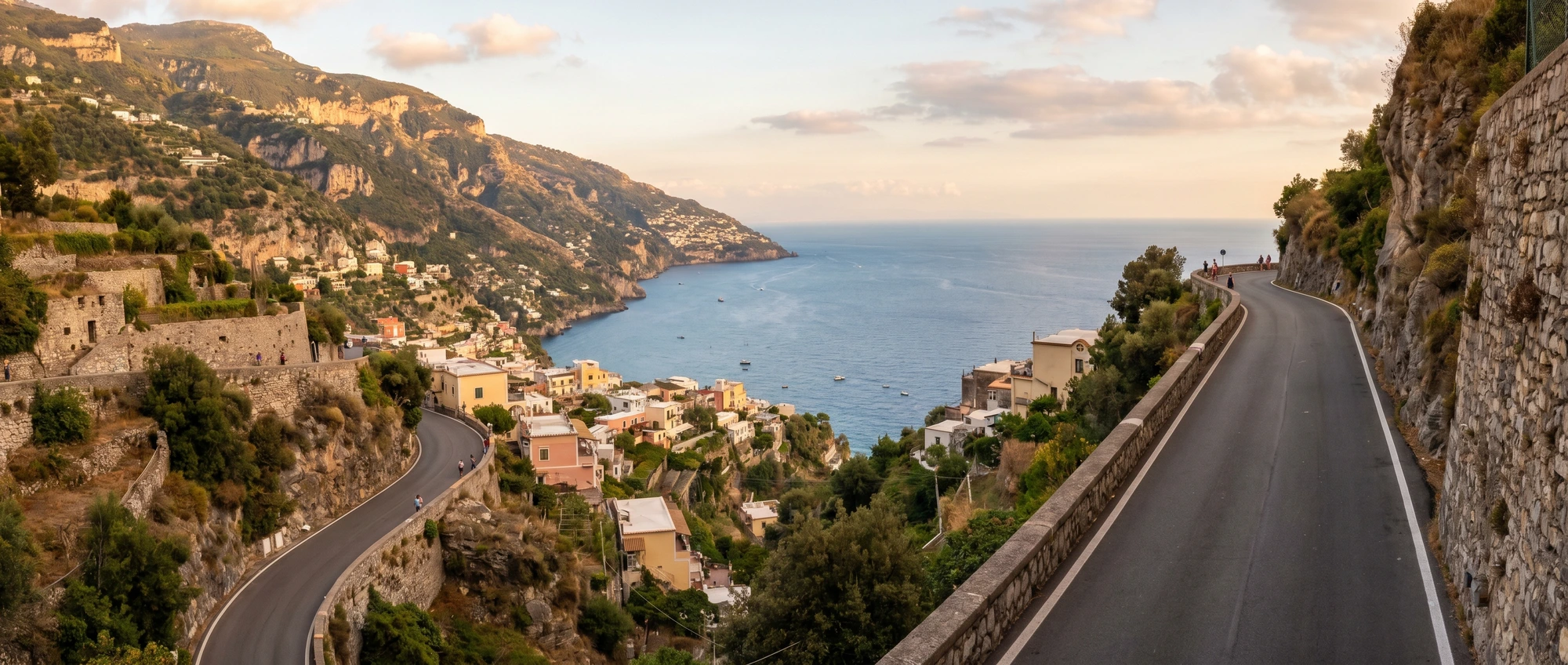
The Amalfi Coast is a 50km ribbon of towns hung off cliffs south of Naples, and the three names everyone knows — Positano, Amalfi and Ravello — sit within a short ferry or bus hop of each other. Positano is the postcard, a cascade of pastel houses down to a small beach; Amalfi town is flatter and more practical, the hub where the buses and boats meet; Ravello floats 365m above the sea with the best terrace views in Italy and no beach at all. You do not need to see beyond those three on a first trip, and you certainly should not try to do it as a road trip you drive yourself.
That’s the one thing worth getting right before you book anything. The SS163, the coast road, is a single demanding lane of hairpins where full-size buses have to reverse to let each other past, and parking in Positano and Amalfi is both scarce and €5–10 an hour. Hire a car and you’ll spend the holiday gripping the wheel and hunting for spaces. Instead, base yourself in one town and move by sea: the ferries (running roughly April to October) turn the journey between towns into the best views of the trip, and the SITA bus is the cheap, year-round fallback when the boats are weathered off. Arriving is the only leg worth paying for comfort on — fly into Naples and take a private transfer or the summer ferry rather than wrestling two buses with your luggage.
Go in May, early June, or from mid-September into early October. Those weeks give you warm water, running ferries and towns that are lively without the half-million summer crowd that descends between July and the second week of September, tripling hotel prices and turning the bus into a crawl. Statutory and safety facts here inherit our Italy country guide, which is anchored to the GOV.UK travel advice.
The route
A relaxed four-to-five-night trip built around one base, with the others reached by ferry and bus rather than your own car. Times below are public-transport estimates; ferries are seasonal (roughly April–October), the SITA bus runs all year.
-
Day 1
Arrive via Naples
Land at Naples (NAP), then transfer to the coast — the Curreri bus to Sorrento (about €10) plus the SITA bus on to Positano (about €2) takes at least 2 hours, or a private car runs €120–190 for up to eight. In summer the Naples–Positano ferry (about 1h30, €15–25) is the nicest arrival. Settle into your base and find dinner.
-
Day 2
Positano
Spend a slow day in Positano: the cascade of pastel houses down to Spiaggia Grande, the boutique-lined steps and an aperitivo above the beach. Arrive by ferry if you can — the view of the town from the water is the single best photo on the coast. If you are based here already, take a boat trip out instead.
-
Day 3
Amalfi & Ravello
Amalfi town is the flat, walkable transport hub: see the striped Duomo, then catch the local bus 25 minutes up the hill to Ravello. Villa Rufolo (about €8) and Villa Cimbrone gardens (about €10) hold the best terrace views in Italy — go in the afternoon when the day-trip coaches have gone.
-
Day 4
Path of the Gods
Walk the Sentiero degli Dei: a free, roughly 6km clifftop trail from Bomerano down towards Positano, ending in around 1,500 steps into the town. Take the early bus up to the start, wear real shoes, and carry water — there's no shade on the high stretch. A half-day with the best views you'll get on foot.
Where to base yourself
Pick one or two bases rather than moving every night.
Positano
£££ premiumThe postcard town and the one most people picture: pastel houses tumbling to a beach, boutique shopping and the liveliest evenings. You pay top whack for it — and the steep steps everywhere mean it's hard work with luggage or limited mobility. Best if the view and the buzz are the whole point of your trip.
Best for: First-timers, beach, romance, the photo
Amalfi town
££ mid-rangeThe practical base: flatter than Positano, walkable, and the hub where the main SITA bus lines and ferries intersect, so you reach everywhere else without long waits. Cheaper too. Less glamorous than Positano but far easier to actually live in for a few nights.
Best for: Easy transport, value, less hassle
Ravello
£££ premiumPerched 365m above the sea, quiet, sophisticated and home to the two great garden villas. The trade-off is no beach and a bus or taxi ride down to the water every time. Choose it for the views, the calm and the festival, not for a beach holiday.
Best for: Quiet, views, gardens, couples
Maiori & Minori
£ valueTwo of the flattest, most local-feeling towns on the coast, just east of Amalfi, with cheaper hotels and restaurants and proper sandy-ish beaches. The compromise is being a little off the headline circuit, but the SITA bus links them in easily. The value pick.
Best for: Budget, families, a quieter base
Getting around Amalfi Coast
Leave the car in Sorrento or Salerno — or don't hire one at all. The SS163 coast road is a single demanding lane of hairpins where buses reverse past each other, and town parking is scarce and runs to €5–10 an hour. The SITA bus is the cheap year-round workhorse (single hops €1.80–3, a 24-hour ticket around €10) that threads every town along the SS163. Ferries run roughly April to October and are the better way to move in season — Amalfi–Positano is about €10 by boat versus €2.50 and 45 minutes on the bus, and you skip the traffic. Book a private transfer only for the airport leg, where it genuinely saves stress.
Book the essentials
Where to stay
Tours & tickets
Airport transfers
Stay connected
Amalfi Coast FAQs
Should you hire a car for the Amalfi Coast?
Where should you stay on the Amalfi Coast?
When is the best time to visit the Amalfi Coast?
Ready to book?
Book experiences