Veneto
Castelvecchio
How to visit Verona's Castelvecchio: the €9 ticket, the Carlo Scarpa rooms worth slowing down for, and whether the red-brick castle on the Adige earns an hour of your city break.
Where
Verona, Italy
Opening hours
Tuesday to Sunday, 10:00–18:00, last entry 17:15. Closed Mondays, 25 December and 1 January (with occasional extra Monday openings on public holidays). Confirm your date on museodicastelvecchio.comune.verona.it.
Tickets
€9 full (about £8); €6 reduced for over-65s and groups of 15+; €2 for 18–25s; under-18s free. Included free with the VeronaCard.
Time needed
60–90 minutes for the highlights; closer to two hours if you want to read every Scarpa detail. No queue worth planning around.
In short
Visiting Castelvecchio
Castelvecchio is Verona's brick Scaliger fortress turned civic museum, and the reason to go inside is as much architect Carlo Scarpa's 1960s restoration as the medieval and Renaissance art it frames. Pay the €9 (about £8) at the door — it rarely sells out, so advance booking isn't essential the way it is for the Arena. Allow 60–90 minutes, walk the fortified Scaliger bridge over the Adige for free either way, and skip it if your VeronaCard time is tight and you'd rather spend it on the Arena.
How to visit without overthinking it
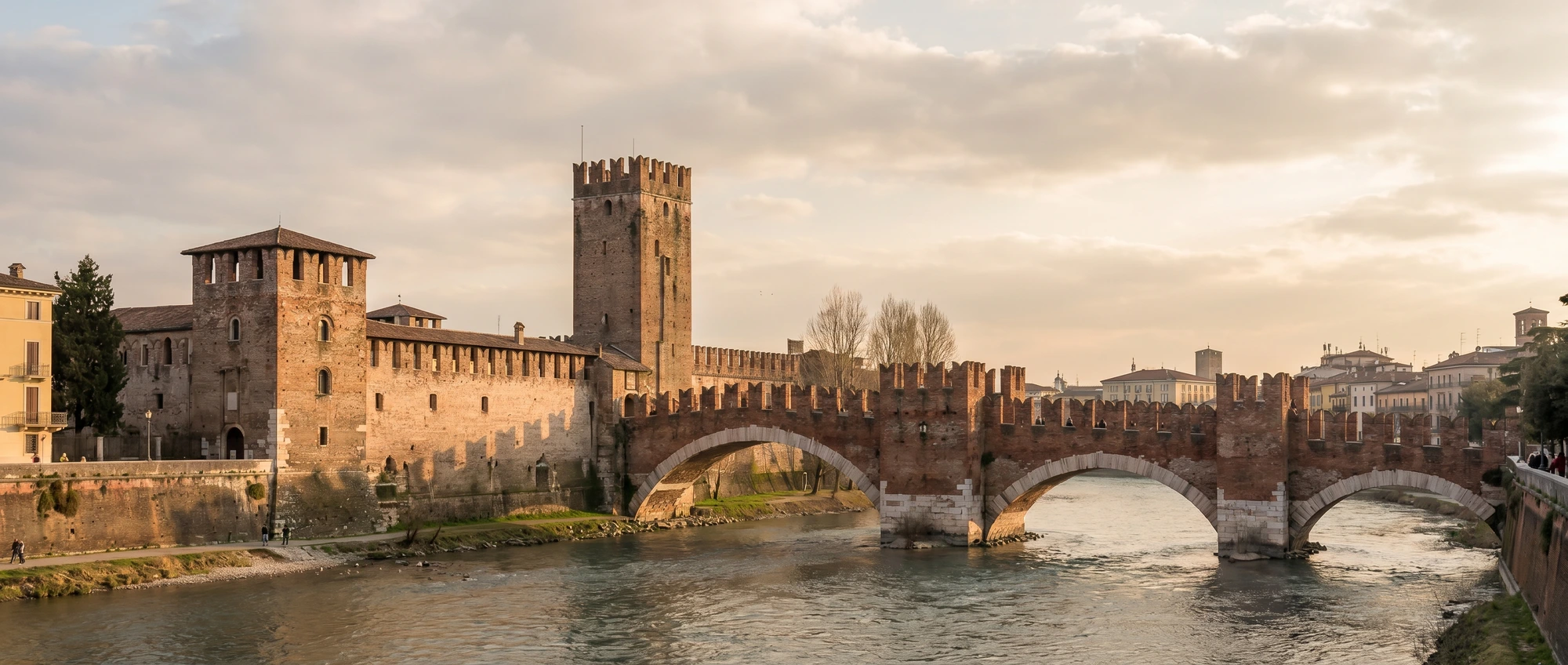
Castelvecchio is the low red-brick fortress the Scaliger lords threw up on the Adige in the 1350s, and the entrance is on the river side past the fortified Scaliger bridge — which you can walk across for free whether or not you go in. The museum itself costs €9 at the door (about £8), and unlike the Arena it almost never sells out, so there’s no advance-booking ritual to perform. If you’ve bought a VeronaCard for the Arena and the rest, entry here is already included, so you just walk in.
The thing people miss is that Castelvecchio is really two visits stacked together. There’s a strong collection of medieval and Renaissance art — Pisanello’s Madonna of the Quail, Mantegna’s Holy Family, rooms of Veronese painting and old weaponry — but the reason architects make a pilgrimage here is Carlo Scarpa’s restoration from the 1960s. He stripped back the fake-medieval additions and threaded concrete, steel and raw stone through the old fortress, most famously hoisting the Cangrande della Scala equestrian statue onto a cantilevered slab so you circle it at different heights. Slow down for the doorways, stairs and sightlines, not just the paintings.
A supporting act, or the headline?
Open Tuesday to Sunday, 10:00–18:00 with last entry at 17:15, and shut on Mondays — an easy trap if you’ve only got a Monday in Verona. Allow 60 to 90 minutes; there’s no queue to plan around. One honest caveat for 2026: the elevated walkways have been closed on and off for maintenance, so if the rampart walk is the thing you’re picturing, check the official site before you commit.
Our verdict: worth it, but as a supporting act rather than the headline. If you only do one ticketed Verona sight, make it the Arena. Castelvecchio earns its hour if you like quiet museums and twentieth-century design, or if you’re holding a VeronaCard that makes the €9 effectively free — at which point walking in to see the Cangrande statue and the river views is an easy yes. Pair it with a riverside stroll towards the Ponte Pietra rather than stacking it against another paid museum the same afternoon.
Planning the rest of your trip? See the Verona city guide.
More to see in Verona
Book the essentials
Tours & tickets
Castelvecchio FAQs
Do you need to book Castelvecchio tickets in advance?
Is Castelvecchio worth it?
How do you get to Castelvecchio from Verona Porta Nuova station?
Ready to book?
Check tickets & tours