Veneto
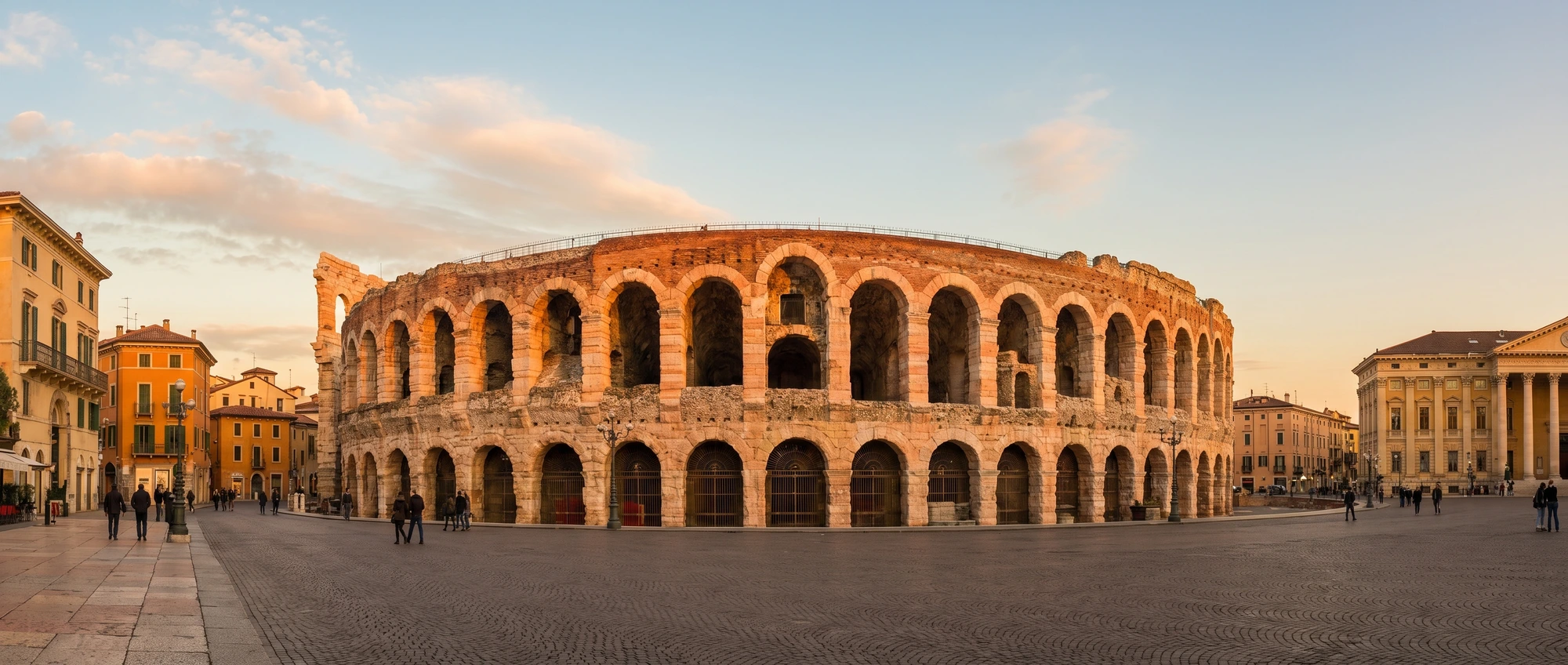
Verona Arena
How to visit Verona Arena: the cheap daytime-entry ticket versus an opera night, which seats to book and how far ahead, whether the Verona Card saves you money, and an honest worth-it verdict.
Where
Verona, Italy
Opening hours
Daytime visits October–May run Tuesday–Sunday 09:00–19:00 (last entry 18:30, closed Mondays). In the June–September festival season opening is shorter and tied to that night's show — often only mornings — so a daytime visit and an opera ticket are not the same thing. Always confirm your date on arena.it.
Tickets
Daytime full-price entry €10 (~£8.50); children up to 7 free, ages 8–14 pay just €1 with an adult. Opera: the cheapest numbered stone-step (gradinata) seats start at €30 (~£25.50), rising to about €165–€230 (~£140–£195) for numbered central stalls (poltronissime), with the 12 June premiere dearer still.
Time needed
About 45–60 minutes for the daytime visit; allow a full evening for opera — gates open well before the roughly 21:00 curtain and a production like Aida can run past midnight.
In short
Visiting Verona Arena
Decide first what you're buying: a quick daytime walk-around the Roman amphitheatre (full-price entry is just €10, about £8.50) or a summer opera night, which is the real reason to come. The 2026 Arena Opera Festival runs 12 June–12 September; the cheapest seats are numbered stone steps (gradinata) from €30 (~£25.50), and you'll want a cushion. If you only want the daytime visit, the Verona Card usually pays for itself once you add Juliet's house and a couple of museums.
Daytime ticket or an opera night?
The first thing to settle is which Arena you’re paying for. The daytime visit is cheap and quick — full-price entry is just €10 (about £8.50) to walk the arches and climb the worn stone tiers of a Roman amphitheatre that has stood since the first century, done comfortably in under an hour. Children up to 7 go free and 8–14s pay a token €1 with an adult. If you’re pairing it with Juliet’s house and a couple of museums the same day, buy a Verona Card instead — €27 for 24 hours — which includes fast-track Arena entry and usually pays for itself, though it won’t get you into the opera.
The opera is the reason the Arena is world-famous, and it’s a genuinely different night out from anything you’ll do at home. The 2026 Arena Opera Festival runs from 12 June to 12 September, opening with a new La Traviata and built around Zeffirelli’s Aida and Turandot. The cheap seats are the gradinata — numbered spots on the bare stone steps high in the bowl — from €30 (£25.50), with no chair, so bring or buy a cushion (vendors sell them outside for a few euros) and accept that your back will feel a three-hour Aida. Numbered poltronissime in the central stalls give you an upholstered seat and the best sightlines but run roughly €165–€230, dearer for the premiere.
When to book, how to get there, and is it worth it?
Book opera tickets three to four months ahead for a marquee title or the opening night — Aida and Turandot sell out. A midweek performance can sometimes be had a week or two out on the gradinata. From Verona Porta Nuova station the Arena is a flat 20-minute walk or a short bus hop to Piazza Bra; after a late opera the walk back is usually the simplest option, as buses thin out once a show finishing past midnight lets out.
The daytime visit is pleasant and, at €10, cheap enough to be worth the hour even if you’ve seen the Colosseum — but it’s a fine amphitheatre, not a revelation. The opera is the opposite. Sitting on 2,000-year-old stone while a full orchestra and a stage the size of a football pitch fill the night is one of the best things you can do in northern Italy in summer, and the gradinata steps deliver most of the magic for a fraction of the stalls price. If you can time your trip to a performance, do.
Planning the rest of your trip? See the Verona city guide.
More to see in Verona


Book the essentials
Tours & tickets
Verona Arena FAQs
Should I do the daytime visit or an opera night?
How far ahead should I book opera tickets?
Which opera seats should I book?
Is the Verona Card worth it for the Arena?
Ready to book?
Check tickets & tours