Kanto
Imperial Palace
How to visit Tokyo's Imperial Palace: why the free East Gardens beat the famous Nijubashi photo, how to book the free Household Agency tour, and whether it's worth a half-day.
Where
Tokyo, Japan
Opening hours
East Gardens 09:00, closing seasonally: 16:00 (Nov–Feb), 16:30 (Oct), 17:00 (Mar–14 Apr & Sep), 18:00 (15 Apr–Aug); last entry 30 min before. Closed Mondays and Fridays, and 28 Dec–3 Jan. The outer Kokyo Gaien plaza (Nijubashi view) is open any time.
Tickets
Free. No ticket for the East Gardens or the outer plaza; the Imperial Household Agency inner-grounds tour is also free.
Time needed
1–1.5 hours for the East Gardens; about 75 minutes for the free guided tour; 10 minutes for the Nijubashi photo. A relaxed half-day covers the lot.
In short
Visiting Imperial Palace
The Emperor's actual residence is closed to the public, so the visit is really three free things around it: the East Gardens (the old Edo Castle grounds), the Nijubashi bridge view from the outer plaza, and a free guided tour of the inner grounds run by the Imperial Household Agency. Nothing costs money. The East Gardens are the part worth your time — walk in without booking, but note they close every Monday and Friday. The Nijubashi photo takes ten minutes and the inner tour shows you building exteriors only.
How to visit, and what’s actually open
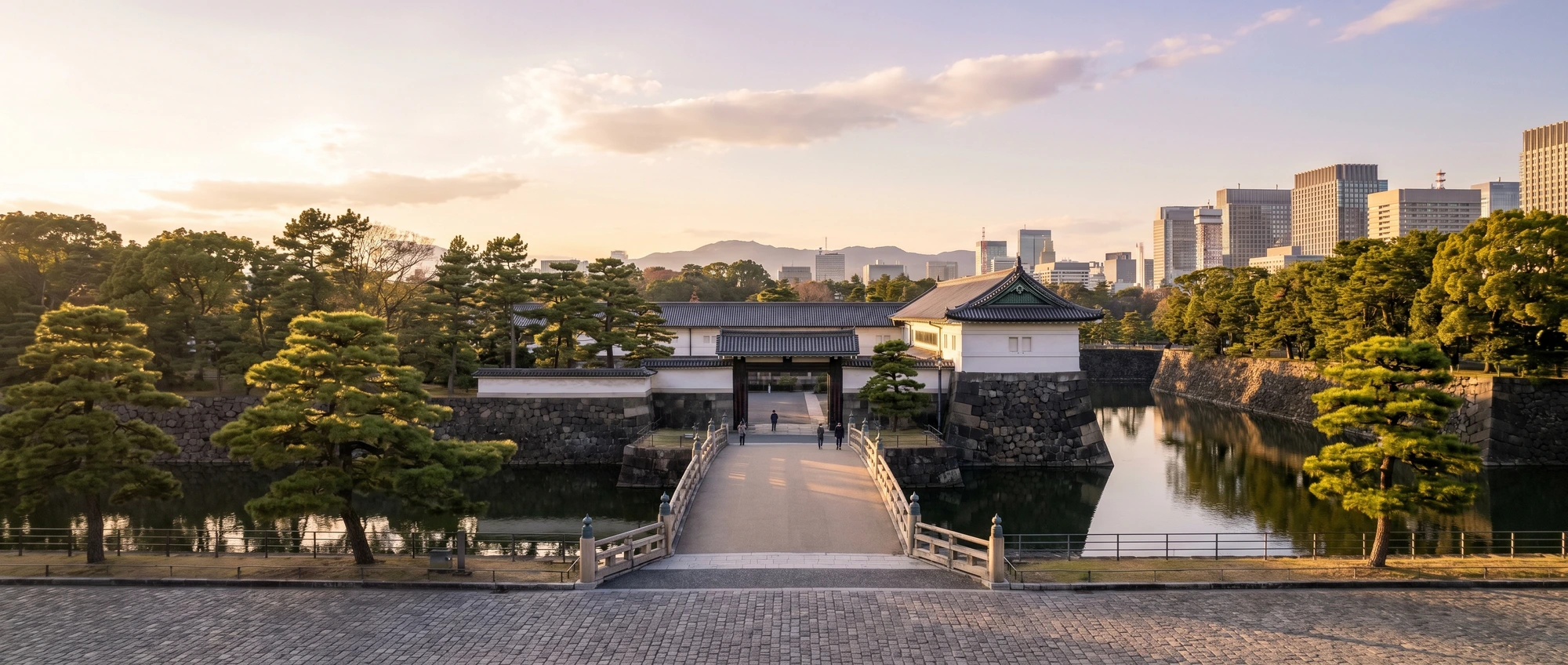
The thing to understand before you go is that you can’t visit the palace. The Emperor lives there and the residence is closed; what you’re really seeing is three separate free things clustered around it. The East Gardens are the old Edo Castle grounds — moats, stone gate ruins, a huge lawn where the keep once stood, and a tidy Japanese garden. The outer plaza (Kokyo Gaien) gives you the postcard view of the Nijubashi double bridge with a guard tower behind it. And the Imperial Household Agency runs a free 75-minute guided walk of the inner grounds, which loops about 2.2km past building exteriors you otherwise never see — but goes inside nothing.
None of it costs anything. For the East Gardens you simply walk in, but check the day first: they shut every Monday and Friday (and over New Year), open at 09:00, and close anywhere from 16:00 in winter to 18:00 in high summer, with last entry half an hour before. For the guided tour, either reserve online from the 1st of the month before your visit, or turn up at Kikyomon Gate and collect a same-day numbered ticket; the tour skips Sundays, Mondays and national holidays, and runs afternoons only from July to September. It’s a flat ten-minute walk from Tokyo Station’s Marunouchi side, so you can fold it into a morning before heading elsewhere.
Is it worth it?
The East Gardens are a genuinely pleasant free hour if you like castle ruins and a quiet garden in the middle of the city, and they’re the part to prioritise. The Nijubashi bridge is a quick photo, not a destination — give it ten minutes from the plaza and move on. The guided tour is interesting if you’re into the history and want the inner-grounds context, but seeing only exteriors disappoints people expecting palace rooms, so book it knowing that. If your Tokyo days are tight, this is the easiest thing to drop — the city’s paid sights hit harder. Treat it as a calm, central, no-cost half-morning rather than a headline, pair it with a wander through nearby Marunouchi or a walk to Kitanomaru Park, and it earns its slot.
Planning the rest of your trip? See the Tokyo city guide.