Kanto
Tokyo
Pick one big neighbourhood to sleep in, lock the must-book reservations before you fly, come in from Haneda not Narita if you can, and give Tokyo the days it actually needs.
Best length
4-5 nights as your Japan-trip first stop
Airports
Haneda (HND) ~15km south; Narita (NRT) ~60km east
Airport to centre
Haneda: Keikyu/Monorail to named hubs; Narita: N’EX or Skyliner. Compare the full hotel journey, not each service’s fastest station time.
Best base
Shinjuku or Shibuya for first-timers; Asakusa for old-Tokyo on a budget
In short
Tokyo at a glance
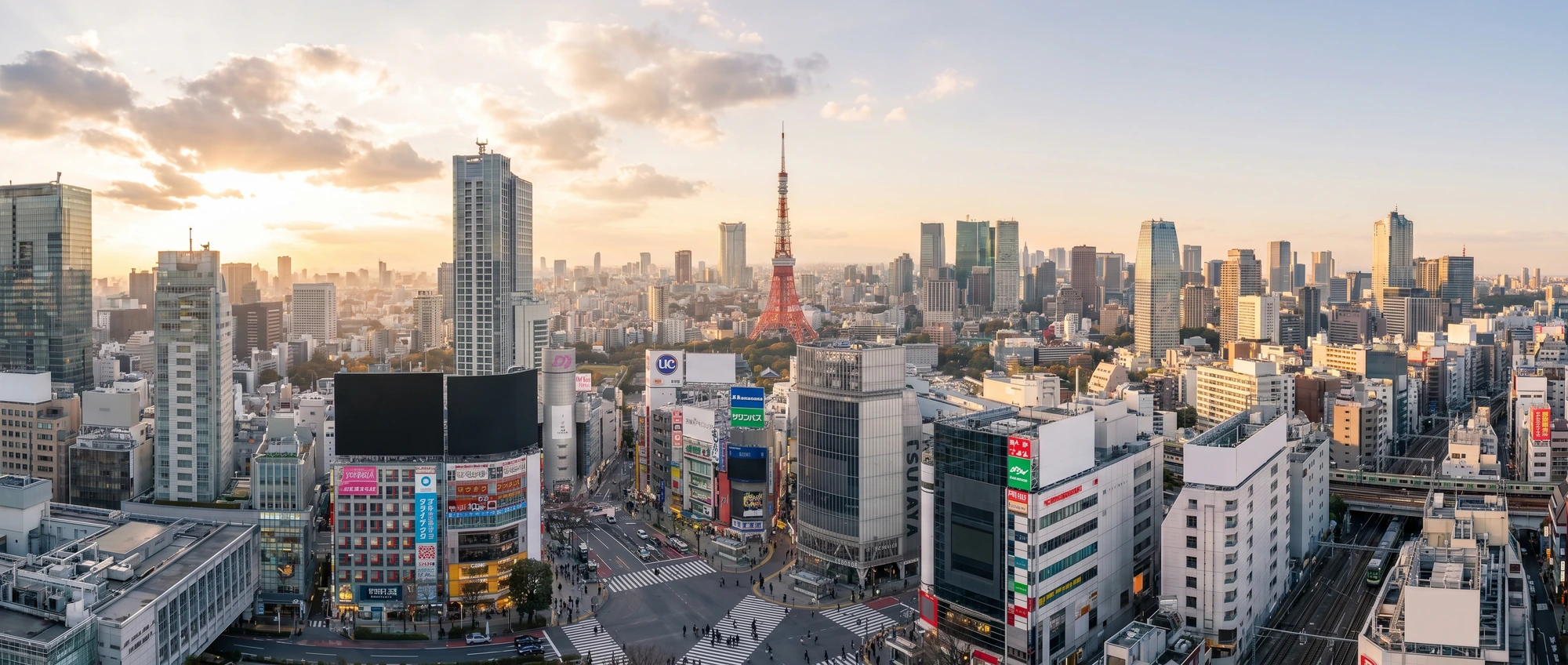
Tokyo is the natural first stop on a Japan trip and the one city worth your longest stay — give it four or five nights, not the two most people squeeze in before rushing to Kyoto. The city is really a chain of distinct neighbourhoods strung along the JR Yamanote loop, so where you sleep decides your whole trip: base in Shinjuku or Shibuya for the easiest first visit, fly into Haneda over Narita if you possibly can, get a Suica on day one rather than a subway pass, and book teamLab and any sumo or robot-bar plans before you fly. Treat the famous Shibuya Crossing as a five-minute photo and spend the saved time in a quieter district like Shimokitazawa or Yanaka.
The short version
- Give Tokyo four or five nights — it's the entry point and the city that rewards the longest stay, not a two-night warm-up for Kyoto.
- Stay in Shinjuku or Shibuya for the easiest first trip; both are Yamanote-loop hubs with food, nightlife and day-trip trains on the doorstep.
- Compare the full journey to your hotel: Haneda is closer to much of Tokyo; Narita has direct N’EX services to Tokyo, Shibuya and Shinjuku, with destination-specific fares.
- Get a Suica or Tourist Pasmo and tap on — only buy the 72-hour subway pass if you've checked it actually beats pay-as-you-go for your route.
- Choose a dated teamLab Planets pass in the official calendar and check the actual availability. Leave time for a quieter district such as Shimokitazawa rather than filling every evening with ticketed stops.
- Spring blossom (late March to early April) and November foliage are peak crowds and prices — May and October are the better-balanced months.
Tokyo isn’t really one city — it’s a dozen distinct neighbourhoods strung along the JR Yamanote loop, and which one you sleep in shapes the whole trip. Shinjuku is round-the-clock intensity and the busiest station on earth; Shibuya is younger and more central; Asakusa is old-Tokyo temples and cheaper rooms; Shimokitazawa is vintage shops and tiny live houses a few stops west. The first-timer mistake is treating Tokyo as a two-night warm-up before Kyoto. It’s the entry point to a Japan trip and the city that rewards the longest stay, so give it four or five nights and base yourself somewhere central on the loop — Shinjuku or Shibuya — so you save time every single day.
Choose the airport transfer for your actual hotel and date. JR East’s Narita Express tariff is ¥3,140 to Tokyo / ¥3,330 to Shibuya or Shinjuku, ordinary class one way; journey times depend on the service. Check planned disruption, including 6–8 November 2026, rather than assuming a universal 53-minute journey. For team Lab Planets, select the available timed pass in the official calendar; the published run through end 2027 is not an announced final closing day. A subway pass covers specified networks rather than every Tokyo railway.
The honest version of a good Tokyo trip is restraint. Treat the Shibuya Crossing as a five-minute photo, not a destination. Pick one tower — Skytree or Tokyo Tower — not both. Skip the tourist-priced bar tab in Golden Gai for a yokocho alley in Shibuya or a night out in Shimokitazawa. And build in one slow morning at Meiji Jingu and Shinjuku Gyoen when the crowds start to wear. Below, the structured planning — where to stay, what to book, the airport transfers in pounds, and a realistic daily budget — picks up from here. Entry, health and safety facts for your trip are covered on the Japan country guide, which is anchored to the latest GOV.UK travel advice.
Plan your Tokyo trip
Keep a first trip focused: book the big timed sights, then leave room for neighbourhoods and food.
Top things to do in Tokyo

Meiji Shrine
The main shrine is free and you don't book — just turn up. Time it to the gates, which open at sunrise and close at sunset (roughly 05:00–18:30 in June, 06:40–16:00 in December), because there's no entry once they shut. Go early to walk the forested gravel approach before the crowds, allow about an hour for the grounds, and only add the ¥500 Inner Garden if the irises are out in June.
Senso-ji Temple
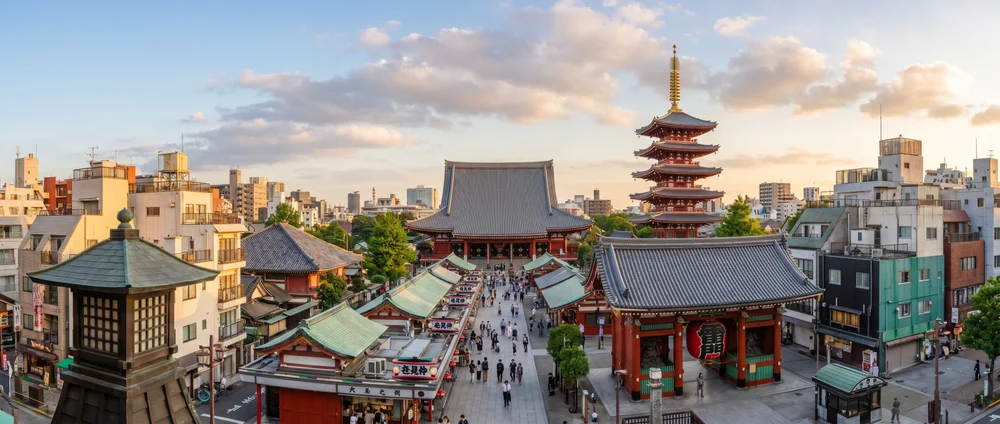
Senso-ji is free and needs no booking, so the only real decision is when to turn up. Go before 8am: the Kaminarimon lantern and the 250-metre Nakamise-dori shopping street are walkable and photographable then, but by 9:30 the gate is shoulder-to-shoulder and stays that way until late afternoon. Forty-five minutes to an hour covers the whole site at a relaxed pace; the kimono rental and rickshaw rides clustered around it are the bit you'd actually pay for.

Shibuya Sky
Shibuya Sky combines an indoor gallery with the open-air SKY STAGE. Book a dated slot within its two-week sales window, choosing the time band you want. Check the rooftop operating conditions before entry: an admission ticket does not guarantee outdoor access or a particular sunset view.

teamLab Planets
Book a timed teamLab Planets slot online before you fly — entry is in 15-minute windows that sell out days ahead, and there's no on-the-day queue. It's a barefoot museum: you wade through shin-to-knee-deep water in two rooms, so wear bottoms you can roll above the knee (skirts and long dresses don't work, though staff lend wrap shorts). Allow 90 minutes to two hours, get to Shin-Toyosu Station on the Yurikamome line, and book the first or last slot of the day to dodge the worst crowds.

Tokyo Disneyland
Choose Tokyo Disneyland or Tokyo DisneySea and the exact date when buying a standard 1-Day Passport. The advertised adult starting price is ¥8,900; dated prices can be higher. Tickets normally release at 14:00 Japan time for the same calendar date two months ahead. Check the actual admission calendar and any separately paid priority service.

Tokyo Skytree
Choose the 350 m Tembo Deck or the ticket including the 450 m Galleria. Prices vary by date and visitor category, with a separate counter issue fee. Book for the views and height you want, checking the dated operating calendar and visibility; a sunset slot does not guarantee a clear view of Mount Fuji or a short wait.
Every Tokyo attraction guide
Where to stay first
The areas that make a first visit easier — not an exhaustive directory.
Shinjuku
££ mid-rangeThe default first-timer base: Japan's busiest station, food and nightlife at every hour, and direct trains to Hakone, Kamakura and beyond. The trade-off is sheer intensity and proximity to Kabukicho's nightlife scams — pick a hotel a few streets back from the entertainment quarter.
Best for: First-timers who want everything and every train within reach
Shibuya
££ mid-rangeThe most central of the big hubs and the easiest for hopping between Harajuku, Daikanyama and Ebisu on foot or one stop. Younger, more polished and slightly pricier than Shinjuku, with the same brilliant transit. The strongest single base for a first Tokyo trip.
Best for: First-timers wanting centrality and walkable nightlife
Asakusa
£ valueOld-Tokyo temples, ryokan-style stays and noticeably cheaper rooms, traded against being a 25-30 minute ride from the Shibuya/Shinjuku action. The trade-off most atmosphere-first travellers are happy with — just expect quieter evenings.
Best for: Traditional atmosphere and better room rates
Ikebukuro
£ valueA practical value base on the northern Yamanote loop, with food and transport around the station. Check actual hotel prices and your airport route; do not assume a direct Narita Express service to Ikebukuro.
Best for: Value without leaving the central loop
Shimokitazawa
£ valueVintage shops, tiny live houses and the best cheap food per square metre in the city, a quick ride west of Shibuya. Not the place for a luggage-heavy first night near the station, but a great base if you want a non-corporate, local-feeling Tokyo.
Best for: Repeat visitors, food and a low-key local base
Airport to city centre
| Option | Time | Cost | Book ahead? |
|---|---|---|---|
| Haneda — Tokyo Monorail or Keikyu line | Keikyu’s published estimate to Shinagawa is 11 minutes from T3 / 14 minutes from T1・2; train, waiting, terminal walk and onward hotel journey differ. | Tokyo Monorail between any Haneda terminal and Hamamatsucho: adult printed ticket ¥520 / IC ¥519; child ¥260 / ¥259. Onward JR travel costs extra. Keikyu is a different fare: calculate the exact destination at https://www.haneda-tokyo-access.com/en/ride/fares.html. Monorail tariff: https://www.tokyo-monorail.co.jp/english/guidance/train_info.html. | Compare the actual terminal-to-hotel journey via Monorail Hamamatsucho or Keikyu Shinagawa/through services. Check the correct fare, connection and final departure; these are separate networks and destinations. |
| Narita — N'EX (Narita Express) to Tokyo/Shibuya/Shinjuku | ~53-80 min | Adult Ordinary Car: ¥3,140 one way to Tokyo; ¥3,330 to Shinagawa/Shibuya/Shinjuku. Separate eligible N’EX TOKYO return product ¥5,200 within 14 days. Checked 25 October 2026: https://www.jreast.co.jp/en/multi/nex/tickets/. | Reserve the correct destination/train; some Narita Express services are suspended 6–8 November 2026. Check https://www.jreast.co.jp/en/yokosuka-tunnel-koji/. |
| Narita — Keisei Skyliner to Ueno/Nippori | Use the dated station timetable; the operator quotes a 41-minute Ueno–Airport Terminal 2・3 example, not a universal door-to-hotel time. | Regular Skyliner to Nippori or Keisei-Ueno: adult ¥2,580 / child ¥1,290, including the basic and Skyliner fares; all seats reserved. Discount e-ticket products have separate terms. https://www.keisei.co.jp/keisei/tetudou/skyliner/us/skyliner/index.php | Reserve the correct train and change at Nippori for appropriate JR connections. Airport Terminal 3 uses the Terminal 2・3 station plus the terminal walk; check your flight terminal. |
| Narita — Airport Limousine Bus to the selected Shibuya or Shinjuku stop | Published estimates: Narita–Shibuya/Futakotamagawa 2–3 hours; Narita–Tokyu Kabukicho Tower about 2 hours. Traffic and the selected stop affect arrival. | Tokyu’s published Narita–Shibuya/Futakotamagawa and Tokyu Kabukicho Tower services: ¥3,600 adult / ¥1,800 child one way. These named routes do not establish every Tokyo hotel fare. A separate one-round-trip low-cost Shibuya product lists ¥2,500/¥1,250. https://www.tokyubus.co.jp/tourist/airport/ | Choose the exact route, terminal and stop. Tokyu lists six daily round trips for each of the named regular routes; airport-bound services require reservation, while services departing Narita use first-come seats. Check the current departure calendar. |
When to go
Sweet spot: May and October are the best-balanced months: comfortable 15-22°C walking weather, manageable crowds and hotel rates well below the spring peak. The headline seasons — late-March/early-April cherry blossom and mid-to-late November autumn foliage — are gorgeous but mean the heaviest crowds and rates 20-70% above baseline, so book months ahead.
High summer (July-August) is hot and humid at up to 35°C, with the rainy season running mid-June into July and typhoon risk building from September — fine for indoor sights and air-conditioned trains, harder for long walking days. Winter (December-February) is cold, dry and clear with daytime highs near 2-10°C, the cheapest and quietest stretch and good for crisp city views. Cherry-blossom season is the super-peak: usually a late-March/early-April planning window, but the 2026 forecast is historical and cannot predict a later trip. Check the travel-year forecast and actual room quotes before fixing dates.
What it costs
Illustrative June 2026 return-economy airfare allowance: £600-£900,; this is a historical planning range, not a dated quote. Compare complete UK itineraries to Tokyo Haneda (HND) or Narita (NRT), including connections, baggage, total travel time and onward travel. BA’s London–Tokyo page estimates 13h50 and its winter announcement lists Heathrow–Haneda. Check the selected dates, terminal and operating carrier. Use the checked country-route sources and the chosen operator’s dated calendar; a country route does not establish every UK origin or seasonal city service. See /destinations/japan/ and https://www.britishairways.com/content/flights/japan/tokyo.
Daily budget per person
| Subway single ride | ~£0.85-£1.55 (¥180-¥330) |
|---|---|
| Conbini meal (onigiri + drink) | ~£2.30-£3.70 |
| Bowl of ramen or gyudon set | ~£4.20-£6.50 |
| teamLab Planets adult ticket | Dynamic Entrance Pass: quote selected date at https://www.teamlab.art/e/planets/; displayed adult from ¥3,800 on 25 October 2026 |
| Hostel dorm bed, per night | ~£12-£19 |
| 72-hour Tokyo Subway Ticket | ~£9.30 (¥2,000) |
Illustrative historical June 2026 planning model, not a live quote. General daily, meal and accommodation allowances assume adult independent travel; confirm room occupancy and travel dates. Any item with its own dated operator tariff has that narrower scope. All yen figures use £1 ≈ ¥215 (June 2026). Tokyo is the easiest part of Japan to do cashlessly — a contactless card plus a Suica covers most of it — but carry ¥10,000-15,000 (~£45-£70) for small ramen counters, shrines and markets that are still cash-only.
Book the essentials
Where to stay
Tours & tickets
Airport transfers
Stay connected
Trains & rail passes
Also in Japan

Tokyo FAQs
How many days do you need in Tokyo?
Where should first-timers stay in Tokyo?
Should I fly into Haneda or Narita for Tokyo?
Do I need a car or a rail pass in Tokyo?
When is the best time to visit Tokyo?
Ready to book?
Find hotels in Tokyo