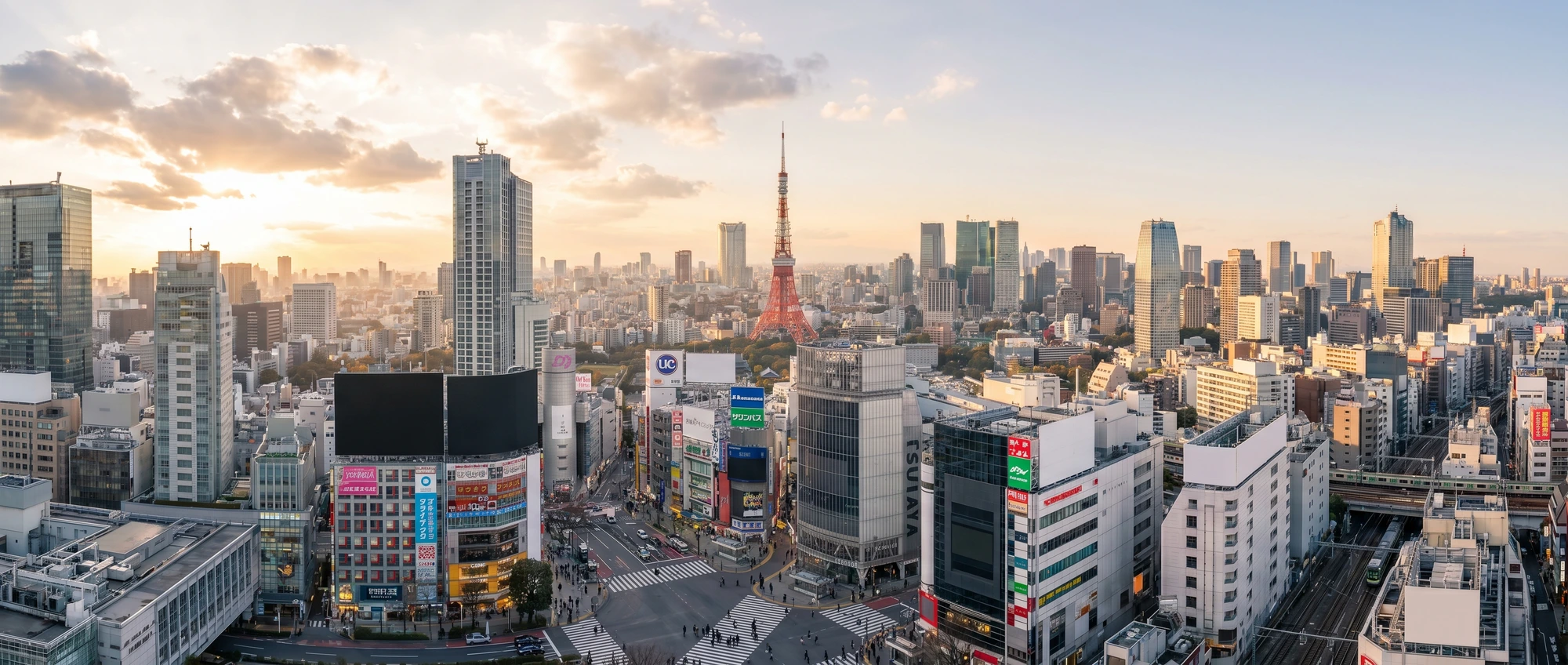
Where to stay in Tokyo
Stay on the Yamanote loop in Shibuya or Shinjuku for first trips, swap to Ikebukuro for value, Asakusa for old-Tokyo atmosphere, or Marunouchi for a clean Shinkansen exit to Kyoto.
Ad · affiliate link — at no extra cost to you.
In short
Where to stay in Tokyo
For a first Tokyo trip, stay in Shinjuku or Shibuya unless you have a clear reason not to. Both are JR Yamanote-loop hubs with food, late trains and day-trip lines on the doorstep, so you save time every single day. Choose Ikebukuro for the same loop access 20-30% cheaper, Asakusa for old-Tokyo atmosphere and ryokan-style rooms, and Marunouchi/Tokyo Station only if a smooth Shinkansen exit to Kyoto matters more than nightlife.
The short version
- Best all-rounder: Shibuya (or Shinjuku if you want the busiest transit and around-the-clock food).
- Best value: Ikebukuro — same Yamanote loop, roughly 20-30% cheaper rooms.
- Best atmosphere: Asakusa for old-Tokyo temples and ryokan-style stays.
- Best for a Shinkansen exit to Kyoto: Marunouchi / Tokyo Station, on the bullet-train platform.
- Avoid using Shibuya Crossing as your hotel filter; it is a five-minute photo, not a base strategy.
Best areas to book
Shinjuku
££ mid-rangeThe default first-timer base: Japan's busiest station, food and izakaya at every hour, and direct trains to Hakone (Odakyu Romancecar), Kamakura and the airports. The real trade-off is intensity and the touts off Kabukicho — book a hotel west of the station around Nishi-Shinjuku, or a few streets back from the entertainment quarter, and you keep the convenience without the 2am noise.
Best for: First-timers who want every train and food option on the doorstep
Shibuya
££ mid-rangeThe most central of the big hubs and the easiest for walking to Harajuku, Daikanyama and Ebisu or hopping one stop. Younger, more polished and slightly pricier than Shinjuku, with the same brilliant transit and the Narita N'EX stopping here. The single strongest base for a first Tokyo trip if you want centrality over rock-bottom price.
Best for: First-timers wanting centrality and walkable nightlife
Ikebukuro
£ valueThe value pick that doesn't leave the central loop: rooms run roughly 20-30% cheaper than Shibuya or Shinjuku for the same Yamanote access, with the N'EX stopping here and the Sunshine City complex for food and rain-day cover. Less photogenic and more workaday, but the best-connected budget base inside central Tokyo.
Best for: Value without sacrificing Yamanote-loop convenience
Asakusa
£ valueOld-Tokyo temples around Senso-ji, ryokan-style stays and noticeably cheaper rooms, traded against a 25-30 minute ride to the Shibuya/Shinjuku action and quieter evenings once the Nakamise shops shut. The atmosphere-first choice most travellers are happy with — and the Skyliner from Narita lands you nearby at Ueno.
Best for: Traditional atmosphere and better room rates
Marunouchi / Tokyo Station
£££ premiumThe polished, business-grade base with the Shinkansen platform underneath you — ideal if Tokyo is the first leg of a wider Japan trip and you want a clean exit to Kyoto with luggage. Refined hotels and the Imperial Palace gardens, but it goes quiet at night and dining skews corporate. A logistics pick, not a nightlife one.
Best for: A smooth bullet-train onward leg and refined, quiet nights
Shimokitazawa
£ valueVintage shops, tiny live houses and the best cheap food per square metre in the city, a 5-7 minute ride west of Shibuya on the Keio Inokashira line. Not the place for a luggage-heavy first night far from the JR loop, but a brilliant base for a repeat visitor who wants a non-corporate, local-feeling Tokyo.
Best for: Repeat visitors wanting a low-key, local base
The simple choice
If you are booking in a hurry, filter for Shibuya first, then check Shinjuku and Ikebukuro if prices look high. The one rule that matters in Tokyo is to stay on or one stop from the JR Yamanote loop — it circles nearly every district you'll visit (Shinjuku, Shibuya, Tokyo, Ueno, Ikebukuro) every few minutes, and basing off it to save a little quietly costs you an hour a day. Tokyo is the city worth your longest stay on a Japan trip, so the right base pays back over four or five nights.
Compare Tokyo hotelsSafety and noise
Japan is one of the safest places you can visit and GOV.UK does not flag pickpocketing as a common risk — the realistic concern for where you sleep is nightlife scams, not street crime. British visitors are most often targeted by touts in Kabukicho (Shinjuku), Roppongi, Shibuya and Ikebukuro, with disputed bar bills and card fraud the usual pattern, so never follow a street tout into a bar and pick a hotel a few streets back from the neon. For light sleepers, a room facing away from Kabukicho or Center Gai matters more than the exact district.
Book the essentials
Where to stay
Tours & tickets
Keep planning Tokyo
Where to stay in Tokyo FAQs
Is it better to stay in Shinjuku or Shibuya for a first trip?
Is Asakusa too far out for a first Tokyo trip?
Should I stay near Tokyo Station if I'm going on to Kyoto?
Ready to book?
Find hotels in Tokyo