Kansai
Nara Park
How to visit Nara Park: why it's free, how the bowing deer and ¥200 cracker bundles work, pairing it with Tōdai-ji, and an honest bite-warning verdict.
Where
Nara, Japan
Opening hours
The park itself is open 24 hours and never gated. The deer roam day and night but cluster where the food is. Cracker vendors run small wooden carts roughly 09:00–16:30 (a little shorter in winter); DyDo vending machines sell crackers around the clock if the carts have packed up.
Tickets
Free to enter. A paper-banded bundle of about ten shika senbei is ¥200 (around £0.90) from the licensed carts; the vending machines charge ¥500 (£2.30) for a box of ten, so buy from a cart if one's open. Tōdai-ji's Great Buddha Hall next door is separate at ¥800 adults / ¥400 children (about £3.70 / £1.85).
Time needed
Two to three hours covers the deer meadows, a feeding session and a slow walk up to Tōdai-ji. Just the deer and crackers is an easy hour; add the Great Buddha Hall and Kasuga Taisha shrine and it's a comfortable half-day.
In short
Visiting Nara Park
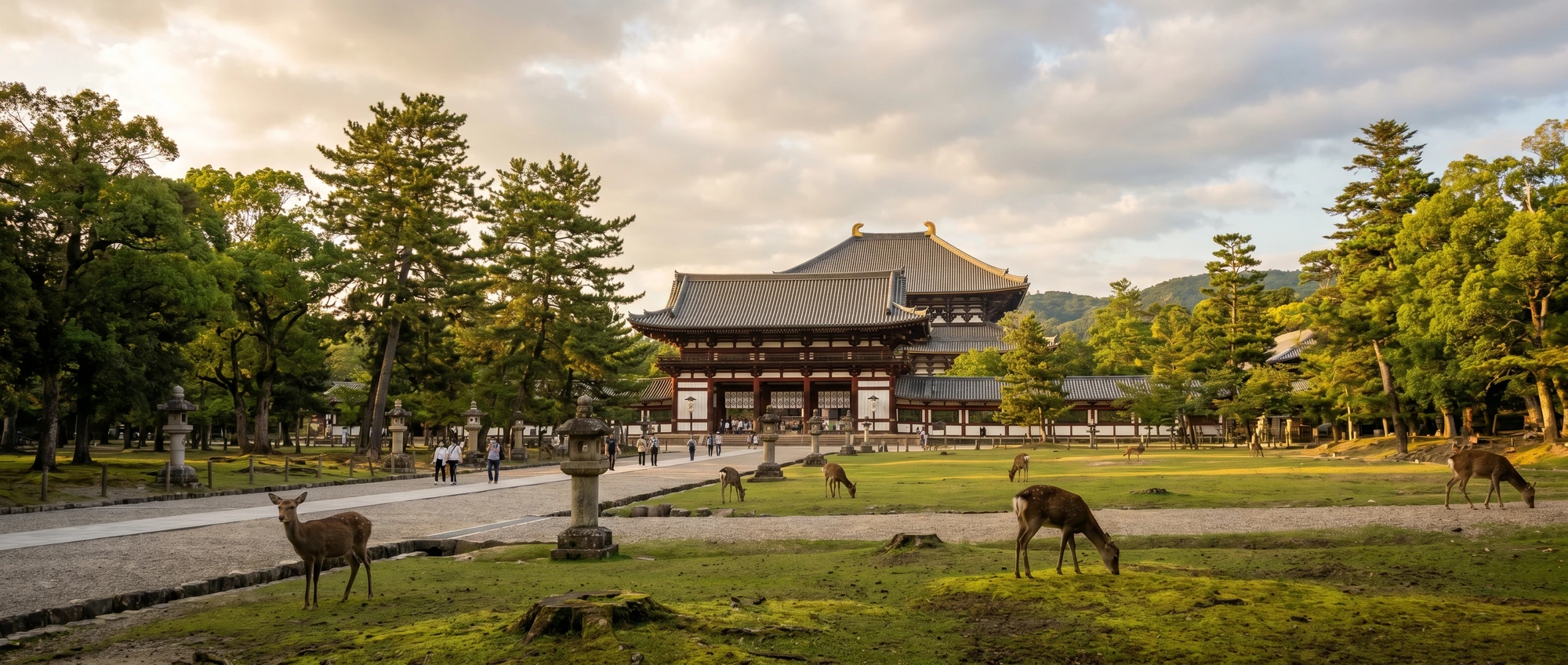
Nara Park is free, fenced by nothing and open around the clock, so the only thing you buy is a ¥200 bundle of deer crackers (shika senbei, about 90p) to feed the roughly 1,400 wild sika deer that roam it — a record number, and still rising. The bowing trick is real — show a cracker, bow, and most deer dip their heads back before they take it — but so are the bite, butt and head-tug warnings on the signs, especially in the October–November rut. Come between 7 and 9am before the Kyoto and Osaka coaches arrive, allow two to three hours, and pair it with paid entry to Tōdai-ji and its Great Buddha next door.
Free to enter, ¥200 to play
Nara Park costs nothing — it’s an ungated stretch of meadow and temple grounds that’s open around the clock, with roughly 1,400 wild sika deer wandering it as protected national treasures rather than zoo animals (the 2025 survey logged a record 1,465). The only thing you’ll spend money on is a paper-banded bundle of about ten shika senbei (deer crackers) for ¥200, around 90p, sold from licensed wooden carts dotted near the main paths. Buy from a cart rather than the DyDo vending machines, which charge ¥500 for the same box — handy when the carts shut around 4:30pm, but pricey otherwise.
The famous trick is real: hold a cracker above your head, bow, and a good number of deer will dip their heads back at you before you hand it over. Tuck the next one behind your back for a second bow if you want to milk it. But manage your expectations — not every deer has the etiquette, and the moment they smell a full bundle several will close in and start tugging at sleeves, bags and the cracker itself. Feed one cracker at a time, keep the rest out of sight, and never wave a cracker you don’t intend to surrender, because that’s exactly how you get nipped.
Take the bite warning seriously, then pair it with Tōdai-ji
Those cartoon signs showing a deer biting, kicking, butting and flattening a tourist aren’t decoration — reported injuries hit a record 159 in the 2024 fiscal year, mostly minor bites and bumps from over-eager feeding, and most of them to overseas visitors. The males get noticeably bolder during the October–November rut, when a buck with antlers will charge if it thinks you’re holding out. None of this should put you off; it just means feeding deliberately rather than turning your back on a crowd of them with a snack in your pocket.
Time it for between 7 and 9am, before the coaches roll in from Kyoto and Osaka around 9:30–10:30 and the deer get blasé from being fed all day. From Kintetsu Nara Station it’s a five-minute walk straight into the deer meadows; from JR Nara allow 20–25 minutes on foot or hop the city loop bus. This is a genuinely lovely, slightly chaotic hour that happens to be free, but on its own it’s a thin reason to ride out from Kyoto. Make the trip worth it by pairing the deer with paid entry to Tōdai-ji’s Great Buddha Hall (¥800, about £3.70) a short walk uphill — the bronze Daibutsu inside is one of Japan’s great sights, and together they fill a comfortable half-day.
Planning the rest of your trip? See the Nara city guide.