Kansai
Dotonbori
How to do Dotonbori, Osaka's neon canal-side food strip: it's free to wander, so this is when to go, the Glico-sign photo, the river cruise and whether a food tour is worth it.
Where
Osaka, Japan
Opening hours
The street itself is open-air and free 24 hours; the neon lights and the Glico sign come on a little after sunset until the early hours. The Tombori River Cruise runs daily 11:00–21:00, departing on the hour and half-hour from Tazaemonbashi Pier by the Don Quijote store.
Tickets
Walking Dotonbori is free. Tombori River Cruise: ¥2,000 adults (about £10.50), ¥1,000 students, ¥500 children, free for under-school-age and Osaka e-pass holders. A guided food tour is typically ¥5,000–¥7,000 (about £26–£37) including the food you eat.
Time needed
1.5–2 hours to wander, eat a couple of stalls and get your Glico-sign photo; add 20 minutes for the river cruise, or 2–3 hours if you book a guided food crawl.
In short
Visiting Dotonbori
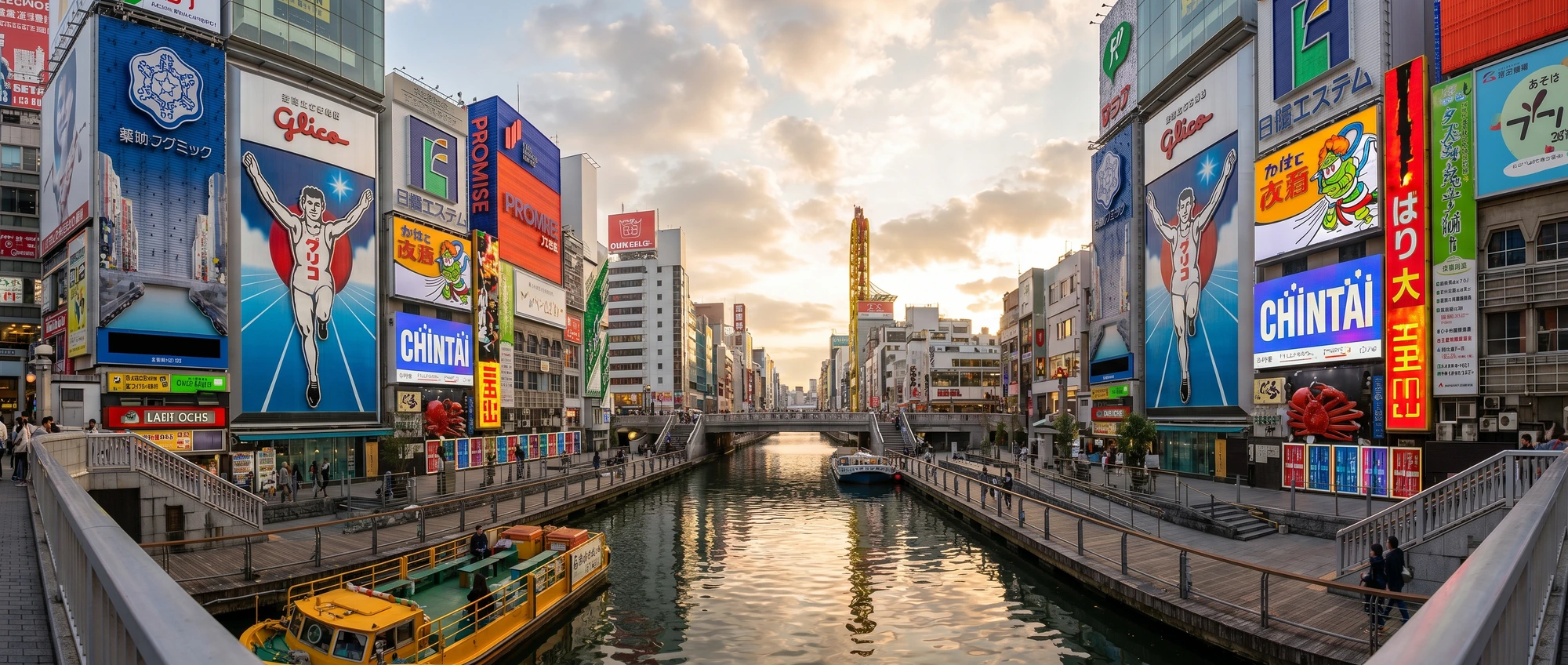
Dotonbori is free — there is no gate and no ticket to walk the strip, so don't pay for "entry". Come at dusk: arrive around 17:00–17:30 in daylight, then watch the neon switch on so you catch the Glico running-man sign from Ebisubashi bridge at its best. The two things actually worth money are the 20-minute Tombori River Cruise (¥2,000, about £10.50) and a guided food crawl if you want takoyaki, okonomiyaki and kushikatsu explained rather than guessed at.
It’s free — so spend your money on the right thing
Dotonbori has no gate and no ticket. It’s a public canal-side street, so walking it, gawping at the giant mechanical crab and the Glico running-man sign, and lining up a photo on Ebisubashi bridge all cost nothing. Ignore anything that tries to sell you “entry” — there isn’t any. What you actually pay for is what you do there, and the timing matters more than the money.
Come for dusk. Aim to arrive around 17:00–17:30 while there’s still daylight, find the bridge, then stay put as the neon flicks on after sunset — that twenty-minute switch from grey to electric is the version of Dotonbori everyone comes for, with the Glico sign blazing and the canal throwing back the reflections. For the cleanest photo, step off the heaving bridge and onto the riverside walkway on the far side; you get the same sign with fewer heads in shot and the LED tour boats sliding underneath.
The cruise, the food, and whether it lives up
Two things here are worth paying for. The Tombori River Cruise is a 20-minute guided boat under the nine bridges, running daily 11:00–21:00 every half hour from Tazaemonbashi Pier by the Don Quijote store — ¥2,000 (about £10.50), tickets sold same-day at the pier, so you can just turn up. It’s a gentle, slightly cheesy ride best done after dark when the lights are on; skip it in flat daylight. The other is a guided food crawl (roughly ¥5,000–¥7,000 including what you eat), which earns its keep if you’d rather have takoyaki, okonomiyaki and kushikatsu explained and ordered for you than queue blindly at the busiest stall.
Dotonbori is unmissable and free, so don’t overthink it — half the value is just being there at night. Do it under your own steam first, eat a couple of stalls (the takoyaki octopus balls and a kushikatsu skewer are the classics, and “no double-dipping” the communal sauce is a real rule), and only book the cruise or a tour if you want the extra. It’s a three-minute walk north from Namba station (Exit 14), so it slots into any Osaka evening without planning.
Planning the rest of your trip? See the Osaka city guide.
More to see in Osaka

Book the essentials
Tours & tickets
Dotonbori FAQs
Is Dotonbori free to visit?
Do you need to book the Tombori River Cruise in advance?
What is the best time to visit Dotonbori?
Where is the best Glico-sign photo spot?
Ready to book?
Check tickets & tours