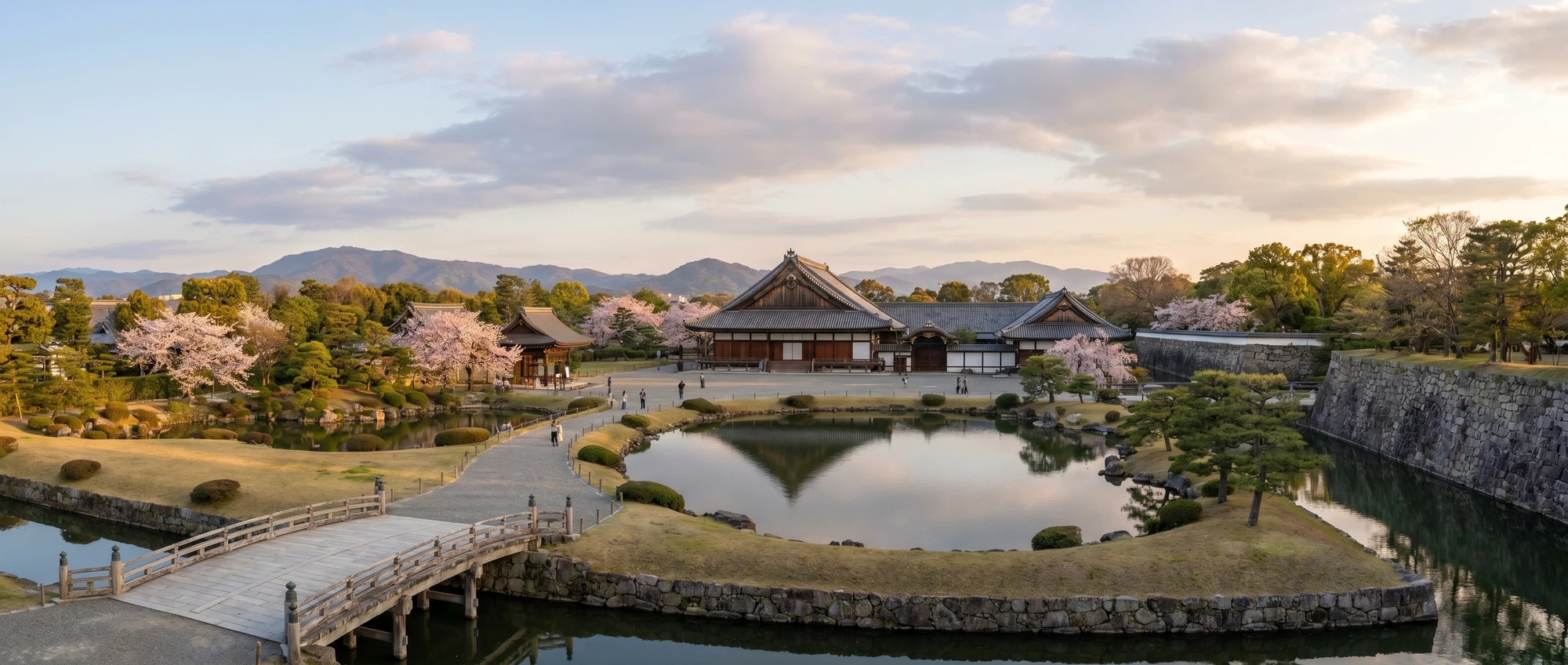
Kansai
Nijo Castle
How to visit Kyoto's Nijo Castle: which combined ticket to buy, the squeaking nightingale-floor walk through Ninomaru Palace, and whether it earns a slot on a packed Kyoto day.
Where
Kyoto, Japan
Opening hours
Castle grounds 08:45–16:00 (last entry; gates close 17:00). Ninomaru Palace 08:45–16:10. Castle closed 29–31 December; the Ninomaru Palace also closes every Tuesday in January, July, August and December, plus 26 Dec–3 Jan. Confirm your date on nijo-jocastle.city.kyoto.lg.jp.
Tickets
¥800 (about £3.75) for the grounds only; ¥1,300 (about £6) for the combined grounds + Ninomaru Palace ticket — buy the combined one. Pre-school children free; cash and cards accepted at the gate.
Time needed
About 1.5 hours: 30–40 minutes for the Ninomaru Palace walk-through and the rest for the moats, gates and Ninomaru garden.
In short
Visiting Nijo Castle
Buy the combined ¥1,300 ticket at the gate, not the ¥800 grounds-only one — the Ninomaru Palace interior, with its uguisubari 'nightingale' floors that chirp under your feet and the shogun's gold-leaf audience rooms, is the entire reason to come. Photography is banned inside the palace, so it's a put-the-phone-away, slow-walk experience. Allow 1.5 hours, go first thing at 08:45 to beat the coach groups, and check the day: the palace closes every Tuesday in January, July, August and December.
How to visit without wasting the trip
There are two tickets at the gate and most people pick wrong. The ¥800 grounds-only ticket gets you the moats, the gates and the garden — pleasant, but not worth crossing Kyoto for. The ¥1,300 combined ticket adds the Ninomaru Palace interior, and that is the entire reason Nijo Castle is on your list. Buy the combined one. You don’t need to book ahead for either; you walk up, pay (cash or card), and go in. The only thing that needs a separate advance reservation is the smaller restored Honmaru Palace, which you can comfortably skip.
Inside Ninomaru you take your shoes off and walk the uguisubari — the “nightingale floors”, boards built to chirp under your weight, supposedly to warn the shogun of anyone creeping up. The squeak is real and slightly absurd in the best way. The rooms themselves are the shogun’s audience chambers, lined with gold leaf and painted tiger-and-pine screens. Photography is banned inside the palace and staff enforce it, so this is a phone-away, slow-shuffle experience rather than a photo stop.
Worth it for the interior
Arrive at the 08:45 opening if you can. Nijo is a standard coach-tour stop, and by mid-morning the single shoes-off entrance and the narrow palace corridors get a slow shuffle. Check the day before you commit: the Ninomaru Palace closes every Tuesday in January, July, August and December (and the whole castle shuts 29–31 December), so a Tuesday in those months leaves you with the ¥800 grounds only. Allow about an hour and a half — thirty to forty minutes for the palace walk-through, the rest for the moats and the Ninomaru garden.
It’s worth it, specifically for the interior. The painted rooms and the squeaking floors give you something Kyoto’s temples don’t — the everyday theatre of shogun power, not religion. The grounds alone don’t justify a special trip. It sits well in a downtown morning paired with the Kyoto Imperial Palace or Nishiki Market, and the Tozai subway drops you right outside at Nijojo-mae, so don’t stack it against a Higashiyama temple day on the other side of the city.
Planning the rest of your trip? See the Kyoto city guide.
More to see in Kyoto




Book the essentials
Tours & tickets
Nijo Castle FAQs
Do you need to book Nijo Castle tickets in advance?
What are the nightingale floors at Nijo Castle?
Is Nijo Castle worth visiting?
Can you take photos inside Nijo Castle?
Ready to book?
Check tickets & tours