Lesser Poland, southern Poland (Slovak border)
Tatra Mountains
Poland's high mountains decoded for UK travellers: how to base in Zakopane, walk to Morskie Oko, ride the Kasprowy Wierch cable car and book the busy valleys — with real costs in pounds and złoty and whether you need a car.
In short
Tatra Mountains at a glance
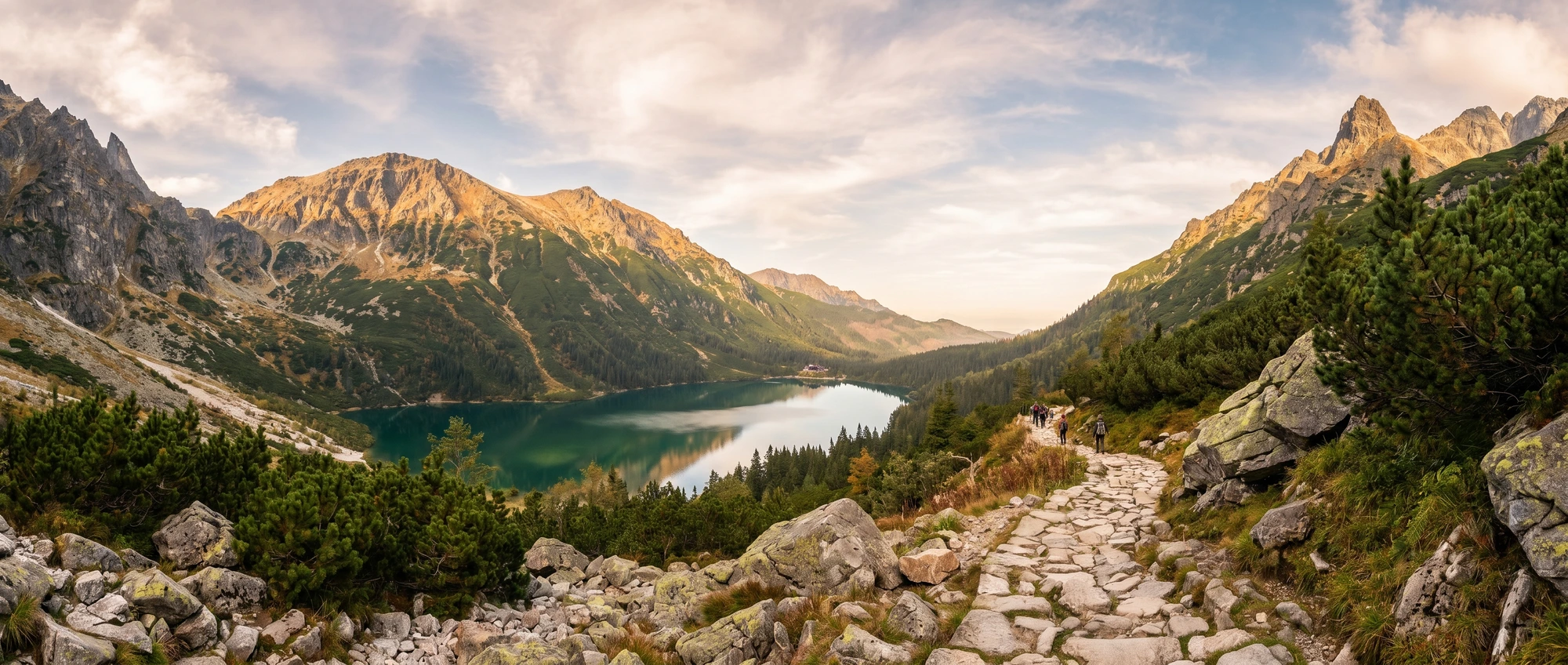
The Tatra Mountains are the only true high Alps Poland has — a short, sharp range on the Slovak border where the peaks pass 2,400m, and the country's busiest hiking ground. Almost everything sits in the Tatra National Park (Tatrzański Park Narodowy) and is reached from the resort town of Zakopane, about 2 hours by bus south of Kraków. The headline walks are the easy crowd-pleasers — the paved road-and-trail up to the glacial lake at Morskie Oko, and the Kasprowy Wierch cable car to 1,987m on the border ridge — plus the gentler Kościeliska and Chochołowska valleys for families. This is the Polish summer-holiday mountains, so the famous trails are busy from June to September and the resort fills again for skiing from December to March. Allow 2–4 days for the highlights from a Zakopane base; you don't need a car if you use the trailhead minibuses.
Poland is mostly flat, which is what makes the Tatras such a surprise: a sudden wall of granite peaks on the Slovak border, the only stretch of the country that breaks 2,400m, and the closest thing it has to the Alps. The catch is that almost everyone arrives at the same handful of places. Morskie Oko, the famous glacial lake, and the Kasprowy Wierch cable car carry the bulk of the crowds, and on a warm August Saturday the paved road up to the lake is a slow river of day-trippers. Start before nine and you walk it in peace; turn up at noon and you queue. The fix for both is the same — base in Zakopane, use the early minibuses, and treat the headline sights as morning jobs.
The other thing first-timers get wrong is assuming they need a car. They don’t. The trailheads — Kuźnice for the cable car, Palenica Białczańska for Morskie Oko — sit a few kilometres out of Zakopane, but shared minibuses leave when full from near the centre for a few złoty, and the Morskie Oko road is closed to private cars anyway. Save the hire car for a wider Lesser Poland loop. And if the high trails are too busy or still holding snow, the Kościeliska and Chochołowska valleys are nearly flat gravel tracks through limestone gorges — the locals’ choice for a gentle day, and gloriously purple with crocuses for a couple of weeks in early May.
The route
A 3-day plan from a Zakopane base that pairs the two famous high walks with an easy valley day, using the trailhead minibuses rather than a hire car. Times are walking estimates on park trails; the Morskie Oko road and the Kasprowy Wierch cable car both sell timed slots that cap numbers, so book ahead in summer. The high trails hold snow into May and the cable car runs reduced timetables in the shoulder season.
-
Day 1
Morskie Oko
Take a morning minibus from Zakopane to the Palenica Białczańska car park (about 40 minutes), then walk the 9km paved road up to the glacial lake — roughly 2 hours each way, with horse-drawn carts covering the lower section if you'd rather. Tatra National Park entry is about 9 zł (£1.85). It's the busiest walk in the range, so start early and you'll have the lake before the crowds arrive. Push 45 minutes higher to Czarny Staw for the bigger view.
-
Day 2
Kasprowy Wierch & the ridge
Catch a minibus to Kuźnice and ride the cable car to Kasprowy Wierch at 1,987m on the Slovak border — a summer return is about 119 zł (£24), booked to a timed slot. From the top, walk the open ridge towards Świnica or down through the Gąsienicowa valley back to Kuźnice (a full day on the legs). On a clear morning you look straight across into Slovakia's High Tatras.
-
Day 3
An easy valley & Zakopane
Swap the high ground for the gentle Dolina Kościeliska or Dolina Chochołowska — nearly flat gravel tracks through limestone gorges, good for families and tired legs, with horse carts and a mountain hut for lunch. Back in Zakopane, ride the Gubałówka funicular (about 38 zł / £7.75 return) for the front-on view of the Tatra wall and walk the wooden-fronted Krupówki street before the bus back to Kraków.
Where to base yourself
Pick one or two bases rather than moving every night.
Zakopane (near Krupówki)
££ mid-rangeThe natural base for the whole range: the trailhead minibuses to Kuźnice and Palenica Białczańska, the restaurants and the Gubałówka funicular are all within a short walk of the centre. It's the busiest and priciest part of town in peak weeks, but for a 2–4 night mountains trip the walkability and transport links win.
Best for: First-timers, car-free trips, easy trailhead access
Kościelisko
££ mid-rangeA quieter highlander village just west of Zakopane with wooden guesthouses and clear Tatra views, near the mouth of the Kościeliska valley. A calmer, slightly cheaper base for walkers who don't mind a short bus or drive into town for the high-mountain trailheads.
Best for: Couples, valley walks, a quieter base
Bukowina Tatrzańska
£ valueA spread-out highlander village east of Zakopane, handy for the Morskie Oko road and known for its large thermal baths (Terma Bukowina) — a good soak after a long day on the trails. Best with a car; bus links into Zakopane are slower than from the town itself.
Best for: Thermal baths, the eastern trailheads, a car base
Getting around Tatra Mountains
You reach the Tatras from Kraków (KRK), the nearest airport — frequent FlixBus and shared minibus services run from Kraków's MDA bus station to Zakopane in about 2 hours for roughly 25–35 zł (£5–£7), cheapest booked online. From a Zakopane base you don't need a hire car: the catch is that the trailheads — Kuźnice for the Kasprowy Wierch cable car, Palenica Białczańska for Morskie Oko — sit a few kilometres out of town, but frequent shared minibuses (busiki) leave when full from near the centre for a handful of złoty, alongside taxis and organised transfers. In peak season the trailhead car parks fill early and the Morskie Oko road is closed to private cars, so the minibuses and a Kraków-based driver are usually the easier choice. Within the Tatra National Park you walk; bikes are allowed only on a few marked tracks. Poland drives on the right.
Book the essentials
Where to stay
Tours & tickets
Airport transfers
Car hire
Stay connected
Trains & rail passes
Tatra Mountains FAQs
How do you get to the Tatra Mountains from the UK?
How hard is the walk to Morskie Oko?
Do you need a car for the Tatras?
When is the best time to hike in the Tatra Mountains?
Ready to book?
Compare car hire