Upper Thracian Plain (Plovdiv Province)
Old Town (Revival houses)
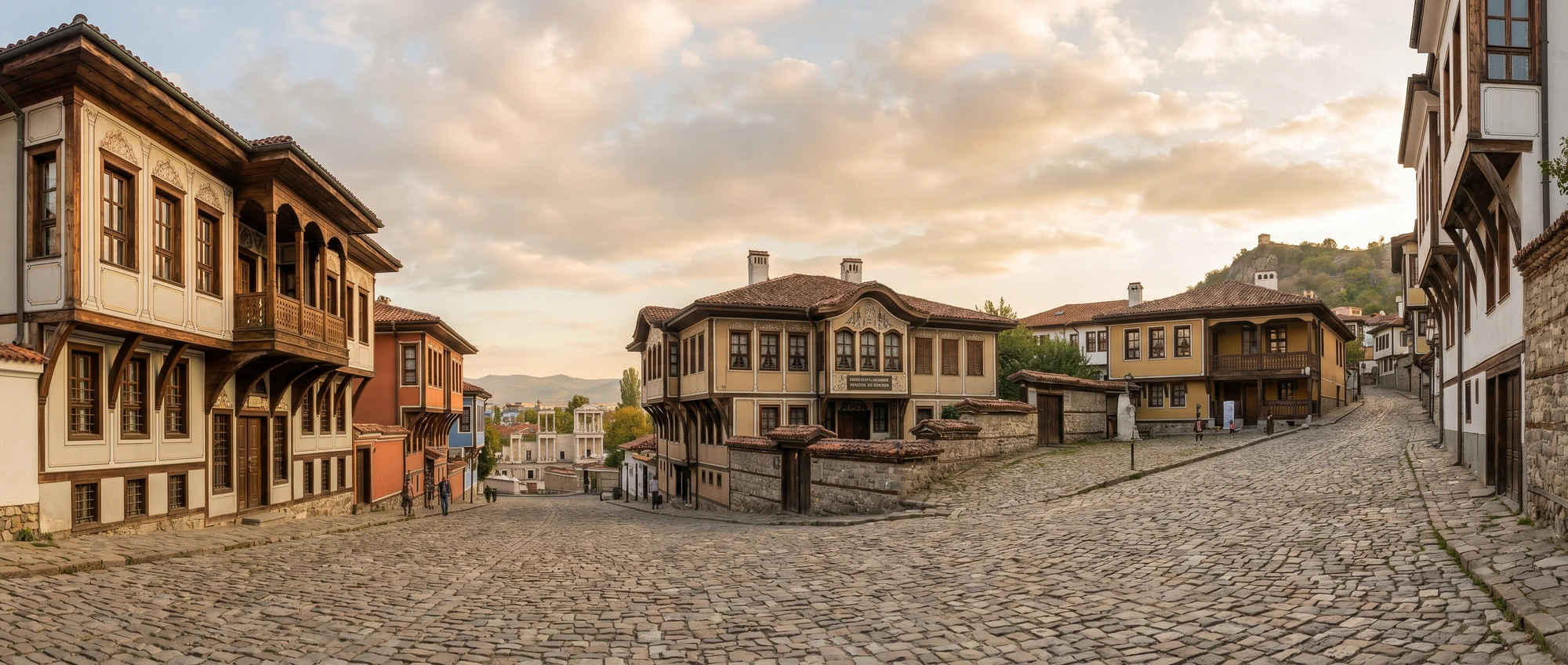
Plovdiv's cobbled upper hills, lined with painted timber Revival-era mansions — and the ones worth going inside, not just photographing, are Balabanov, Hindliyan and the Ethnographic Museum house.
Where
Plovdiv, Bulgaria
Opening hours
The Old Town streets are open access at all hours; the house museums keep daytime hours, broadly mid-morning to late afternoon, and some close one day a week (often Monday). Times vary by house and season, so confirm current hours and prices on the official site.
Tickets
Walking the Old Town and admiring the facades is free; entry to each house museum (Balabanov, Hindliyan, the Ethnographic Museum house and others) is a small ticket, around €3 each, sometimes a little more. There is no single combined pass at every site, so confirm current hours and prices on the official site.
Time needed
Two to three hours: time to wander the cobbled lanes and go inside two or three of the houses without rushing.
In short
Visiting Old Town (Revival houses)
Plovdiv's Old Town is the cobbled upper hills, lined with the painted timber Revival-era mansions that made the city famous. Wandering the lanes is free, but the houses worth going inside — rather than just photographing the facades — are the Balabanov House, the Hindliyan House and the Ethnographic Museum house, each charging a small entry of around €3. Allow a couple of hours, wear decent shoes for the cobbles, and combine it with the Roman theatre nearby.
The painted hills
Plovdiv’s Old Town is the cluster of cobbled lanes climbing the city’s upper hills, and its glory is the National Revival architecture: tall timber mansions from the nineteenth century, their upper floors jettied out over the street and their facades painted in ochre, blue and dusty pink. Merchants grew rich here and built to show it, and the result is one of the best-preserved ensembles of its kind in the Balkans. Simply wandering the lanes is free, and on a bright day the painted houses, the wrought-iron gates and the long views over the city are reason enough to come.
The catch is that from the street you only see the outside. The houses were built around courtyards, and the real craftsmanship — carved wooden ceilings, painted walls, period furniture — is indoors.
Which houses to go inside
You do not need to enter every mansion, and most are private anyway. The three worth the small ticket are the Balabanov House, the Hindliyan House and the Ethnographic Museum house (the Kuyumdzhioglu house), each charging in the region of €3. Between them you get the painted interiors, the carved ceilings and the sense of how a wealthy Revival-era family actually lived, which is more rewarding than photographing one more facade. Pick two or three rather than trying to do them all.
Allow two to three hours for the wander and a couple of interiors. Wear shoes that cope with worn, uneven cobbles, which are slippery in the wet and steep in places. The Old Town sits right above Plovdiv’s Roman theatre and amphitheatre, so it is easy to fold the whole upper town into one afternoon. House museums tend to keep daytime hours and some close one day a week, so confirm current hours and prices on the official site before you climb up.
Planning the rest of your trip? See the Plovdiv city guide.
More to see in Plovdiv
Book the essentials
Tours & tickets
Old Town (Revival houses) FAQs
Which Revival houses should I actually go inside?
Is Plovdiv Old Town free to visit?
How long do I need in the Old Town?
Ready to book?
Check tickets & tours