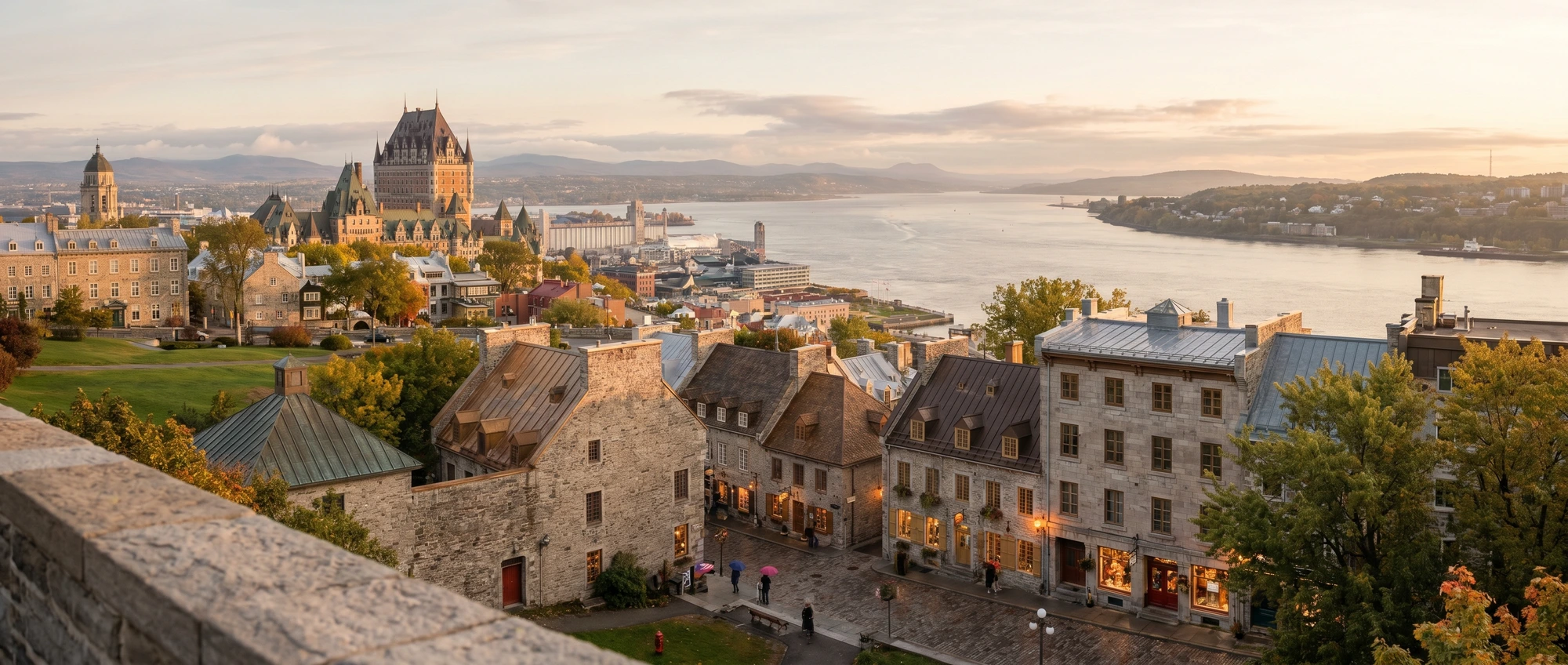
Quebec
Quebec City
No direct UK flight reaches Quebec, so fly into Montreal and arrive by VIA Rail or car, sleep inside the walls of Vieux-Québec, and walk the whole compact old town in two days without a hire car.
Best length
2-3 nights
Airport
Québec City Jean Lesage (YQB), ~16km west; most UK visitors arrive by train instead
Airport to centre
Fixed taxi fare ~CA$40 to Vieux-Québec; no airport train
Best base
Upper Town (Vieux-Québec) for first-timers; Petit-Champlain for the riverside lanes
In short
Quebec City at a glance
Quebec City is best as a 2- or 3-night add-on to a wider Eastern Canada trip: you fly into Montreal (there is no direct UK flight to Quebec) and arrive by VIA Rail or car, stay inside or just below the walls of Vieux-Québec, and treat the whole walled old town as a compact two-day walk rather than a place that needs a hire car.
The short version
- There is no nonstop UK flight to Quebec City — fly to Montreal, then take the VIA Rail train (~3h15) or a connecting flight to Jean Lesage (YQB).
- Stay inside the walls in Upper Town near the Château Frontenac, or just below in Petit-Champlain, so the cobbled core is on your doorstep.
- The Old Town splits into Upper Town (Haute-Ville) on the cliff and Lower Town (Basse-Ville) by the river, linked by the funicular or the Breakneck Stairs — get the geography clear before you book a hotel.
- It is the only walled city north of Mexico and service defaults to French; a 'bonjour' goes a long way, but English is widely understood in tourist areas.
- Two full days covers the walls, Petit-Champlain, the Plains of Abraham and a half-day at Montmorency Falls; three nights lets you add Île d'Orléans.
Quebec City is the closest thing North America has to a walled European town, and the mistake first-timers make is treating it like a standalone long-haul destination. It isn’t one — there’s no direct flight, so the trip really starts in Montreal, and the smart move is to arrive by the VIA Rail train into the central Gare du Palais rather than connecting onward to an airport 16km out. Once you’re here, the second thing to get straight is the geography: the Old Town stacks into Upper Town on the clifftop, where the Château Frontenac and the river views are, and Lower Town by the water, where the cobbled Petit-Champlain lanes are — linked by a funicular and a steep set of stairs. Pick your hotel knowing which half you want on your doorstep.
Two full days is the right length: one for the walls, the terrace and the Plains of Abraham, one for Petit-Champlain and a half-day out at Montmorency Falls, which are taller than Niagara. It rewards walking and a few words of French, and it punishes anyone who tries to eat every meal on the Dufferin Terrace. The structured planning below — where to stay inside or below the walls, how to come in from Montreal, and a realistic budget in pounds — picks up from here.
Plan your Quebec City trip
Keep a first trip focused: book the big timed sights, then leave room for neighbourhoods and food.
Top things to do in Quebec City
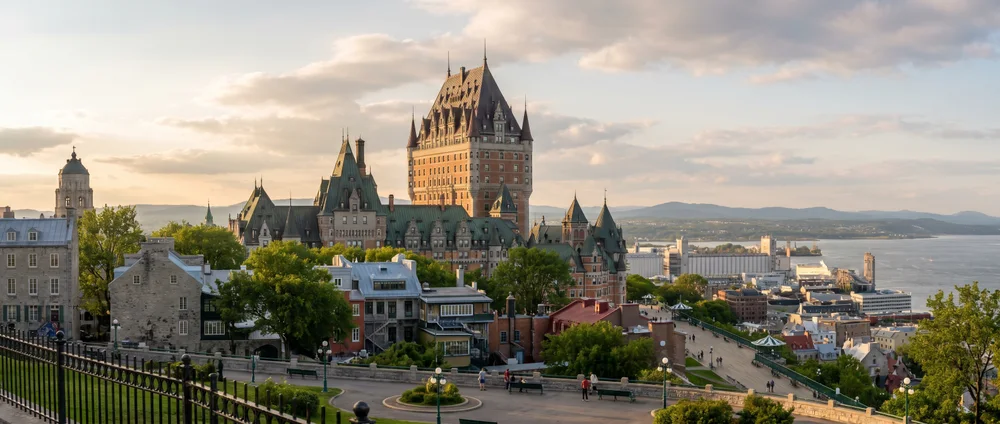
Château Frontenac
The Château Frontenac is a working Fairmont hotel, not a museum, so there is no general admission ticket — the lobby is open to anyone and the best free experience is the Dufferin Terrace boardwalk that wraps the cliff beside it, run by Parks Canada, with the widest St Lawrence views in the city. If the building's history grabs you, book the 50-minute guided tour run by Cicerone (Tours Voir Québec) for about CA$26.25 (around £14), which takes you through the public rooms with a costumed guide. Photographers get the classic shot not from the terrace but from the Lower Town across the river or from the Place d'Armes in front; for the most dramatic angle, ride the funicular down to Petit-Champlain and look back up at the turrets.
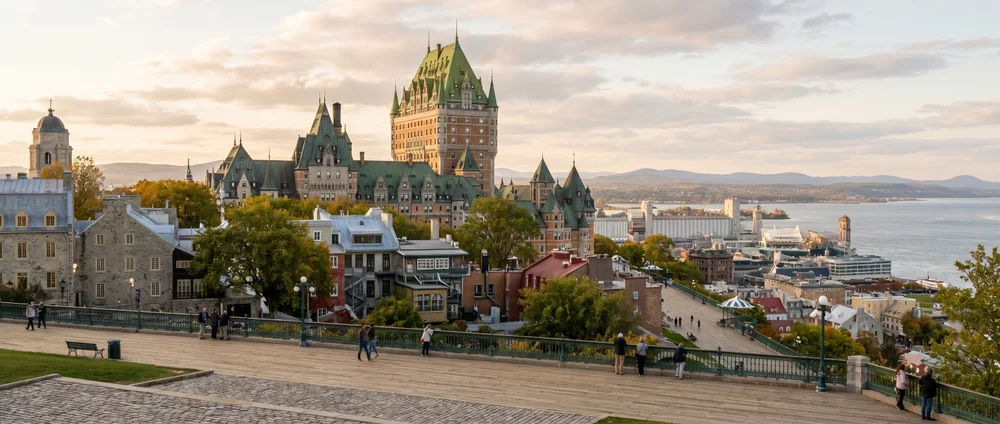
Château Frontenac & Dufferin Terrace
The Château Frontenac is the turreted railway hotel that defines Quebec City's skyline, and you don't need to stay or pay to enjoy it. The free Dufferin Terrace boardwalk wraps the cliff beside it with the best views over the St Lawrence. A 50-minute guided tour of the hotel's history costs about CA$26 if its story grabs you.
Where to stay first
The areas that make a first visit easier — not an exhaustive directory.
Upper Town / Vieux-Québec (Haute-Ville)
£££ premiumInside the walls on the cliff, around the Château Frontenac and the Dufferin Terrace. The easiest first-timer base: every headline sight is a walk away and the streets feel safe late. It is the priciest area and rooms in heritage buildings are small, but you save a transfer every day.
Best for: First-timers, couples, short stays
Petit-Champlain / Basse-Ville (Lower Town)
£££ premiumThe riverside lanes below the cliff, all cobbles and boutiques. Romantic and central, but you climb the funicular or the stairs to reach Upper Town, and it empties of locals once the cruise ships leave. Lovely for atmosphere, less practical with heavy luggage.
Best for: Atmosphere, photography, couples
Saint-Roch
££ mid-rangeThe reinvented downtown district below and west of the walls — independent restaurants, breweries and far better value than inside the old town. A 15-20 minute walk or short bus to the Château, and where you eat better for less.
Best for: Food, value, repeat visitors
Saint-Jean-Baptiste
££ mid-rangeJust outside the Saint-Jean Gate along buzzy Rue Saint-Jean, mixing bars and bakeries with quieter residential streets. Walkable to the old town, more local in feel, and a sensible middle ground on price.
Best for: Mid-range stays, nightlife within walking distance
Airport to city centre
| Option | Time | Cost | Book ahead? |
|---|---|---|---|
| Fixed-fare taxi to Vieux-Québec | ~20-25 min | flat CA$40.30 to the old town zone | Simplest with luggage; fixed price is set, not metered |
| RTC bus 80 + connection | ~45-60 min | about CA$3.75 single | Cheapest but involves a change; not ideal late or with bags |
| Pre-booked private transfer | ~20 min | from about CA$60 | Worth it for groups or late arrivals |
| VIA Rail from Montreal (instead of flying) | ~3h15 to Gare du Palais | from about CA$45 if booked ahead | How most UK visitors actually arrive — city-centre to city-centre |
When to go
Sweet spot: Late September and early October are the sweet spot: crisp air, thinning crowds, lower hotel prices and the autumn colour that frames the walls and Montmorency. June and early September are warm and pleasant without the July-August peak prices and cruise-ship surge.
Summer (June-August) is warm, lively and busiest, with terrace dining and the falls lit at night, but peak prices and heavy cruise traffic in the Lower Town. Autumn brings the leaf colour and the best value. Winter is brutally cold but is the city at its most magical — the Carnaval de Québec in late January/February, the toboggan slide on Dufferin Terrace and the nearby ice hotel — just pack serious layers for sub-zero days.
What it costs
There is no direct UK flight to Quebec City, so cost it as a Canada return to Montreal (roughly £400-£700 from London outside peak) plus either a VIA Rail train (from about CA$45 / ~£24 each way, booked ahead) or a short connecting Air Canada flight Montreal-Quebec (often CA$120-£200+). The train is usually the better value and lands you in the centre.
Daily budget per person
Eating on the Dufferin Terrace and the Petit-Champlain tourist core is where Quebec City feels dear. Walk ten minutes to Saint-Roch or Rue Saint-Jean and the same dinner costs noticeably less.
Book the essentials
Where to stay
Tours & tickets
Airport transfers
Stay connected
Trains & rail passes
Also in Canada




Quebec City FAQs
How do you get to Quebec City from the UK?
How many days do you need in Quebec City?
Do you need a car in Quebec City?
Ready to book?
Find hotels in Quebec City