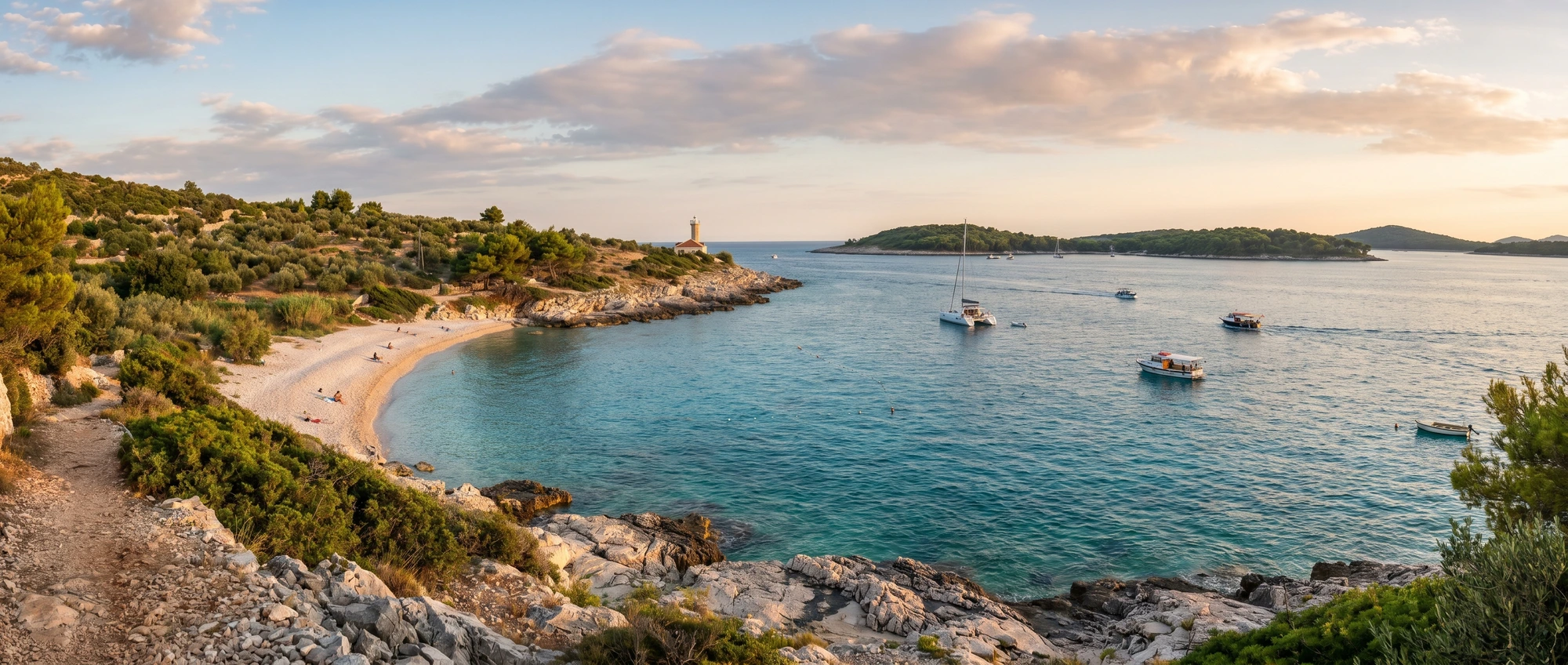
Dalmatian Islands
Hvar
Croatia's most glamorous island town earns two or three Dalmatian nights: take the foot-passenger catamaran from Split, skip the car you won't need, book a room near the Riva early, and taxi-boat out to the Pakleni Islands.
Best length
2-3 nights
Getting there
Catamaran from Split (~1h) to Hvar Town harbour
Nearest airport
Split (SPU), then airport bus to Split port
Best base
Hvar Town for nightlife; Stari Grad for quiet and value
In short
Hvar at a glance
Hvar is Croatia's most glamorous island town: a marble-paved harbour, a fortress view, beach clubs, and the Pakleni Islands a short taxi-boat away. Come for 2-3 nights as part of a Dalmatian trip, take the foot-passenger catamaran from Split rather than the car ferry, accept that you do not need a car, and book a room early because the good ones near the Riva go fast.
The short version
- Take the catamaran from Split direct to Hvar Town (about 1 hour); only use the car ferry to Stari Grad if you are genuinely bringing a car.
- Stay in or just above Hvar Town for the harbour and nightlife; stay in Stari Grad or Jelsa if you want a quieter, cheaper base.
- Skip a hire car entirely: Hvar Town is car-free in the core, parking is a nightmare and the Stari Grad bus covers the only journey you need.
- The Pakleni Islands are the real day-out, reached by cheap shuttle taxi-boats from the Riva, not an expensive booked tour.
- Two to three nights is plenty; Hvar is a high-summer party-and-beach town, not a week-long sightseeing city.
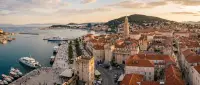
Hvar trades on glamour: a marble-paved harbour where yachts moor bow-to, a Venetian fortress on the hill above the rooftops, sunset beach clubs along the western shore, and the Pakleni Islands floating just offshore. That reputation is earned in July and August, when the harbour fills with day-trippers and the loungers at Hula Hula go before lunch. It also sets the trap — Hvar Town in peak season prices like the most expensive corners of the Mediterranean, and a lot of first-timers over-pay for an experience they could have for a third less in June or September.
The two planning calls that matter most are how you arrive and where you sleep. Take the foot-passenger catamaran from Split straight into Hvar Town’s harbour, roughly an hour, rather than the slower car ferry that lands at Stari Grad on the far side of the island; you almost certainly do not want a car here, because the old town is pedestrian-only and parking near the centre barely exists. For a base, the harbour core puts you next to the restaurants, the fortress climb and the taxi-boat jetties, but it is the priciest and noisiest; the slopes and coastal path just above town are a calmer, better-value compromise, and Stari Grad or Jelsa are where to go if you want the island rather than the party.
Give it two or three nights as part of a wider Dalmatian trip. The structured sections below — the ferry and bus costs, where to stay by area, the Pakleni Islands taxi-boats, and a realistic budget in pounds — pick up from here.
Plan your Hvar trip
Keep a first trip focused: book the big timed sights, then leave room for neighbourhoods and food.
Top things to do in Hvar
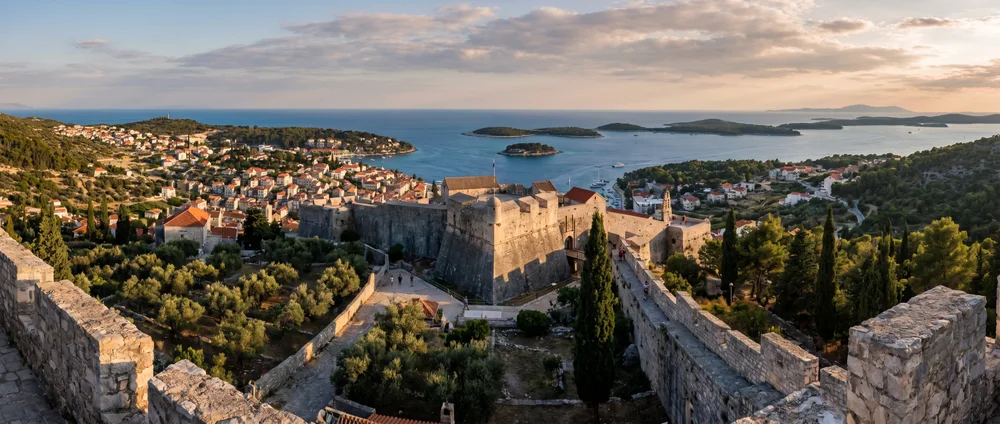
Fortica (Spanjola) fortress
Fortica, also known as Spanjola, is the hilltop fortress above Hvar's old town and the source of the island's postcard view over the red rooftops, the harbour and the Pakleni Islands. It is a roughly 10-minute climb up from the square, with entry around €10. Go about an hour before sunset rather than in the midday heat.
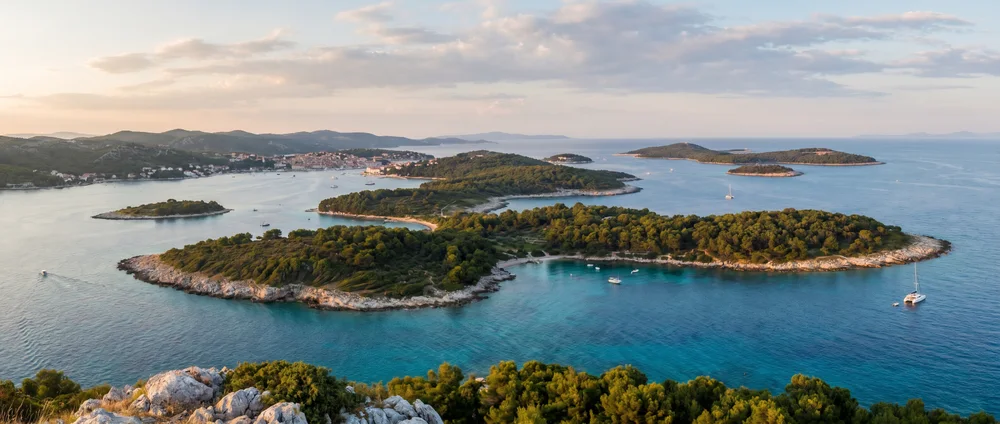
Pakleni Islands
The Pakleni Islands are a string of pine-covered islets just offshore from Hvar — the real reason to be here. They offer clear-water swimming spots and beach bars, reached in 5 to 15 minutes by taxi-boat from the Riva for around €8 return. Day trips and water taxis run frequently in season; bring cash and check the last return.
Where to stay first
The areas that make a first visit easier — not an exhaustive directory.
Hvar Town centre and the Riva
£££ premiumThe harbour core: closest to the catamaran dock, the restaurants, the fortress climb and the taxi-boat jetties. It is the most expensive and the noisiest in July-August, and most rooms are reached up old stone steps, so pack light.
Best for: First-timers, nightlife, no-car trips
Above the town / coastal path
££ mid-rangeThe slopes and the shoreline path west of the harbour: quieter, often with better views and a 5-20 minute walk down to the action. A good compromise if Riva prices and Riva noise both put you off.
Best for: Couples, quieter sleep, sunset views
Stari Grad
£ valueWhere the car ferry lands, on the other side of the island. Calmer, cheaper and more lived-in than Hvar Town, with a UNESCO-listed farming plain behind it. The 20-25 minute bus over the hill is no hardship.
Best for: Value, quiet, families with a car
Jelsa
£ valueA small working harbour town further east, good for slow days of swimming, vineyards and konoba lunches. Choose it if Hvar Town's glamour leaves you cold and you want the island, not the party.
Best for: Slow trips, repeat visitors, value
Airport to city centre
| Option | Time | Cost | Book ahead? |
|---|---|---|---|
| Split airport bus to Split port, then catamaran to Hvar Town | ~30 min bus + ~1h catamaran | about €8 bus + from about €25 catamaran | The standard, cheapest route; book the catamaran ahead in summer |
| Car ferry Split to Stari Grad, then bus to Hvar Town | ~2h ferry + ~20-25 min bus | from about €5.90 foot passenger; car from about €35.60 off-season / €47.60 peak | Only if you are bringing a car; reserve the vehicle slot |
| Taxi airport to Split port | ~20-30 min | about €35-€45 | Useful if you are tight on time for a ferry |
| Private speedboat transfer airport to Hvar Town | ~55 min | from about €370 per boat | Fast and direct but expensive; only for groups or late connections |
When to go
Sweet spot: Late May to mid-June and September are the sweet spot: warm sea, the beach clubs and ferries running, and prices a notable step below July-August. Peak July and August deliver the full party scene but the highest prices and the busiest harbour.
Hvar is a summer town. From late October to April many beach bars, clubs and some restaurants close, ferry frequency drops and the place goes quiet, so it is not an off-season city break. Book June and September rooms early because UK and yachting demand is heavy.
What it costs
There are no direct UK flights to Hvar; you fly to Split (SPU). UK return fares to Split are often £50-£140 outside school holidays when booked ahead, with summer Saturdays and late booking pushing fares well above that.
Daily budget per person
Hvar Town in August prices like the expensive Mediterranean: a konoba main is €20-€35 and a restaurant beer €4-€6. The cheapest way to make it feel reasonable is to eat one street back from the Riva and visit in June or September.
Book the essentials
Where to stay
Tours & tickets
Airport transfers
Stay connected
Also in Croatia

Hvar FAQs
Should you take the catamaran or the car ferry to Hvar?
Do you need a car on Hvar?
How much do the Pakleni Islands taxi-boats cost?
How many days do you need in Hvar?
Ready to book?
Find hotels in Hvar