French Riviera (Côte d'Azur)
French Riviera (Côte d'Azur)
How to do the French Riviera by train for UK travellers: base in Nice, hop the coastal line to Antibes, Cannes, Monaco and Menton, and time your trip to dodge the August prices.
In short
French Riviera (Côte d'Azur) at a glance
The Côte d'Azur is one coastline strung along one train line, which is the key to doing it well. Base in Nice, then ride the coastal TER/ZOU train — every 15 minutes or so — to Antibes, Cannes, Monaco and Menton without ever hiring a car. You only need wheels (or a ferry) for St-Tropez and the hilltop villages, which sit off the railway. Come in May, June or September: July and August bring the crowds, the yacht traffic and the peak hotel prices, and Nice's pebble beaches are punishing without water shoes.
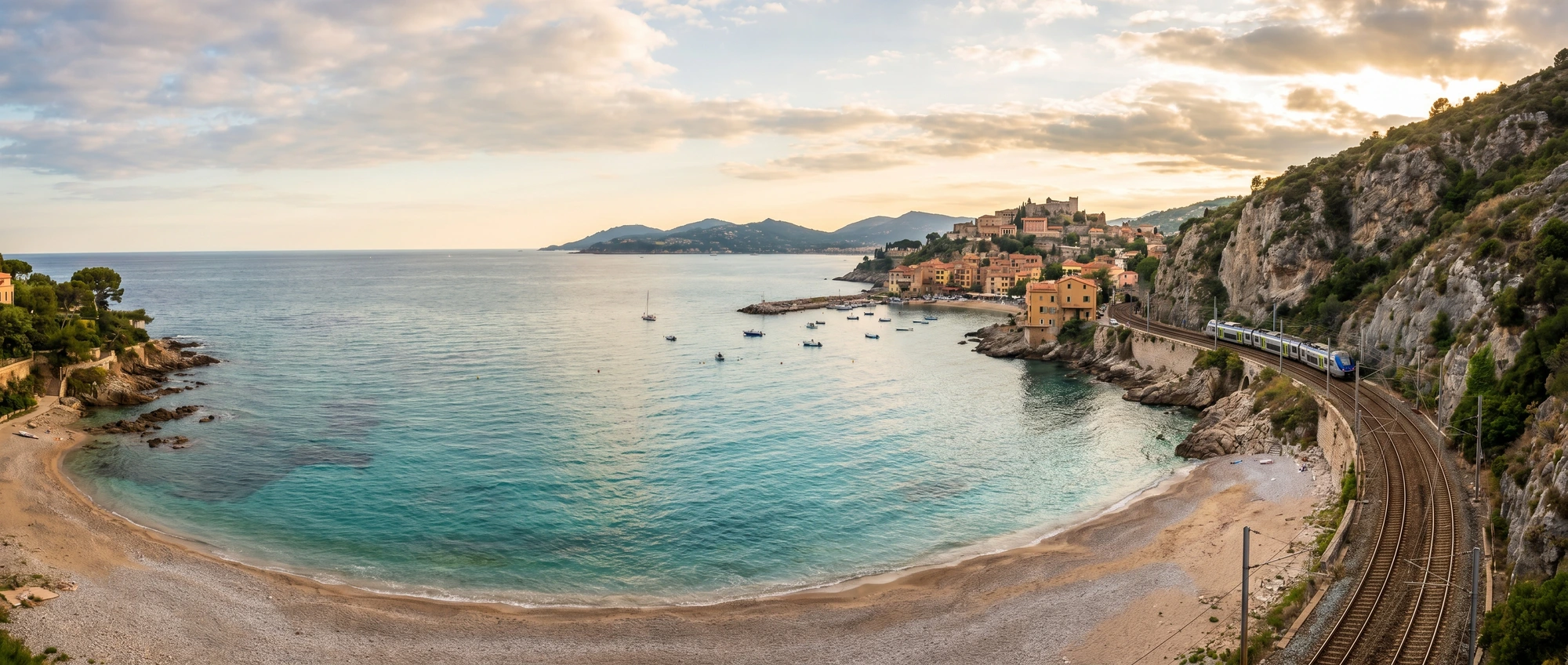
The trick to the Côte d’Azur is realising it’s one coastline strung along one train line. From Cannes in the west to Menton on the Italian border, the towns sit on the coastal TER/ZOU railway, which runs roughly every 15 minutes and lets a single ticket break the journey wherever you like. So you base yourself once — in Nice, for almost everyone — and let the train carry you to Monaco for the morning, Antibes for the afternoon swim and Menton when you want quiet. No hire car, no parking, no driving the corniche in August traffic.
The catch is what’s off the line. The postcard hilltop villages like Èze, and St-Tropez itself, aren’t on the railway: Èze means a bus up from the coast road, and St-Tropez means a drive or the seasonal ferry from St-Raphaël. Decide early whether either is worth the detour — for a lot of trips, the train towns are plenty.
Two honest warnings. First, Nice’s famous beaches are sharp grey pebble, not sand, and genuinely uncomfortable barefoot — pack water shoes, hire a sunbed, or base in Antibes or Villefranche where the entry is gentler. Second, the timing. Mid-July to mid-August is the most crowded and most expensive fortnight on the whole coast; come in May, June or September instead and you get the same warm sea for noticeably less money and far fewer people.
The route
A relaxed week using Nice as a single base, so you unpack once and let the coastal train do the work. Train times are typical TER/ZOU coastal services; the line runs roughly every 15 minutes in each direction, so you rarely wait long.
-
Days 1–2
Nice
Settle into your one base. Walk the Promenade des Anglais, climb Colline du Château for the bay view, and lose a morning in Vieux Nice and the Cours Saleya market. The beach is pebble and genuinely hard on bare feet — bring water shoes or hire a sunbed. Tram 2 from the airport drops you in the centre in under 30 minutes for €1.70 on a reloadable card (€2 for the card itself).
-
Day 3
Monaco & Èze
Train east to Monaco in about 20 minutes (around €4): the casino atrium and Monaco-Ville with the Prince's Palace are free to wander. In the afternoon take the 82 or 602 bus up to Èze village — it's not on the railway — for the cliff-top garden and the medieval lanes. Go to Èze earlier if you want it before the coach crowds.
-
Day 4
Antibes
About 25 minutes west by train. Antibes has what Nice doesn't — sand, at Plage de la Salis and Plage de la Garoupe — plus the walled old town, the Picasso museum in the Château Grimaldi and the millionaires' yachts in Port Vauban. The best swimming day of the trip.
-
Day 5
Cannes
Roughly 35 minutes west for about €10. The Croisette and the film-festival glamour are the draw, but the old quarter of Le Suquet and the boat across to the Île Sainte-Marguerite are the better half-day. Cannes is a day trip, not a base — it's pricier and less characterful than Nice.
-
Day 6
Menton or St-Tropez
Menton is the easy call: the last town before Italy, about 35 minutes east by train, lemon-yellow and far calmer than the rest of the coast. St-Tropez is the harder one — no train, so it's a 1.5-hour drive or a train to St-Raphaël then the seasonal ferry (mid-April to October). Pick Menton unless St-Tropez is the whole reason you came.
-
Day 7
Villefranche-sur-Mer
A 10-minute train east of Nice and the prettiest small stop on the line: a deep natural harbour, ochre houses and the Plage des Marinières, one of the few gentle pebble beaches around. A slow last day before the tram back to the airport.
Where to base yourself
Pick one or two bases rather than moving every night.
Nice (Vieux Nice / Carré d'Or)
££ mid-rangeThe only sensible first base: the coastal train and the airport tram both run from here, so the whole Riviera is a day trip. Vieux Nice is the atmospheric old-town option (lively, can be loud at night); the Carré d'Or near the Promenade is smarter and quieter. Best value-for-access on the coast.
Best for: First-timers, train access, no car
Villefranche-sur-Mer
££ mid-rangeTen minutes by train from Nice but a world calmer — a horseshoe harbour, a gentle pebble beach and a proper village feel. The trade-off is fewer restaurants and a steep walk from the station. A lovely base if you want quiet evenings and still want the train.
Best for: Couples, calm, a softer beach
Antibes
££ mid-rangeThe base for beach people: real sand at Plage de la Salis, a walled old town and an easy 25-minute train to Nice. More relaxed and family-friendly than Cannes, and better value than the Cap d'Antibes hotels. Park-free and walkable once you arrive.
Best for: Families, sandy beaches, walkability
Menton
£ valueThe quietest, gentlest and often cheapest of the coastal towns, right on the Italian border. Sub-tropical gardens, a pastel old town and far fewer crowds — but it's the end of the line, so factor a longer train ride to the western towns.
Best for: Quiet, gardens, lower prices
Getting around French Riviera (Côte d'Azur)
The coastal TER/ZOU train is the backbone of the Riviera and the reason you don't need a car: it runs Cannes–Antibes–Nice–Monaco–Menton–Ventimiglia roughly every 15 minutes, and a single ticket is valid all day on any train along the route, so you can break the journey. Nice–Cannes is about 35 minutes for roughly €10; Nice–Monaco around 20 minutes for about €4 each way; Villefranche-sur-Mer is barely 10 minutes from Nice. What the train doesn't reach is the hilltop villages and St-Tropez: Èze village needs the 82 or 602 bus from the coast road, and St-Tropez means either a 1.5-hour drive (the final stretch from Sainte-Maxime jams badly in summer) or a train to St-Raphaël and the seasonal ferry. Hire a car only if the hill villages or St-Tropez are central to your trip — in town it's a parking liability.
Book the essentials
Where to stay
Tours & tickets
Airport transfers
Car hire
Stay connected
French Riviera (Côte d'Azur) FAQs
Do you need a car on the French Riviera?
What is the best time to visit the French Riviera?
Where should you base yourself on the French Riviera?
How do you get from Nice to St-Tropez?
Ready to book?
Compare car hire