French Riviera (Cote d'Azur)
Vieux Nice and Cours Saleya market
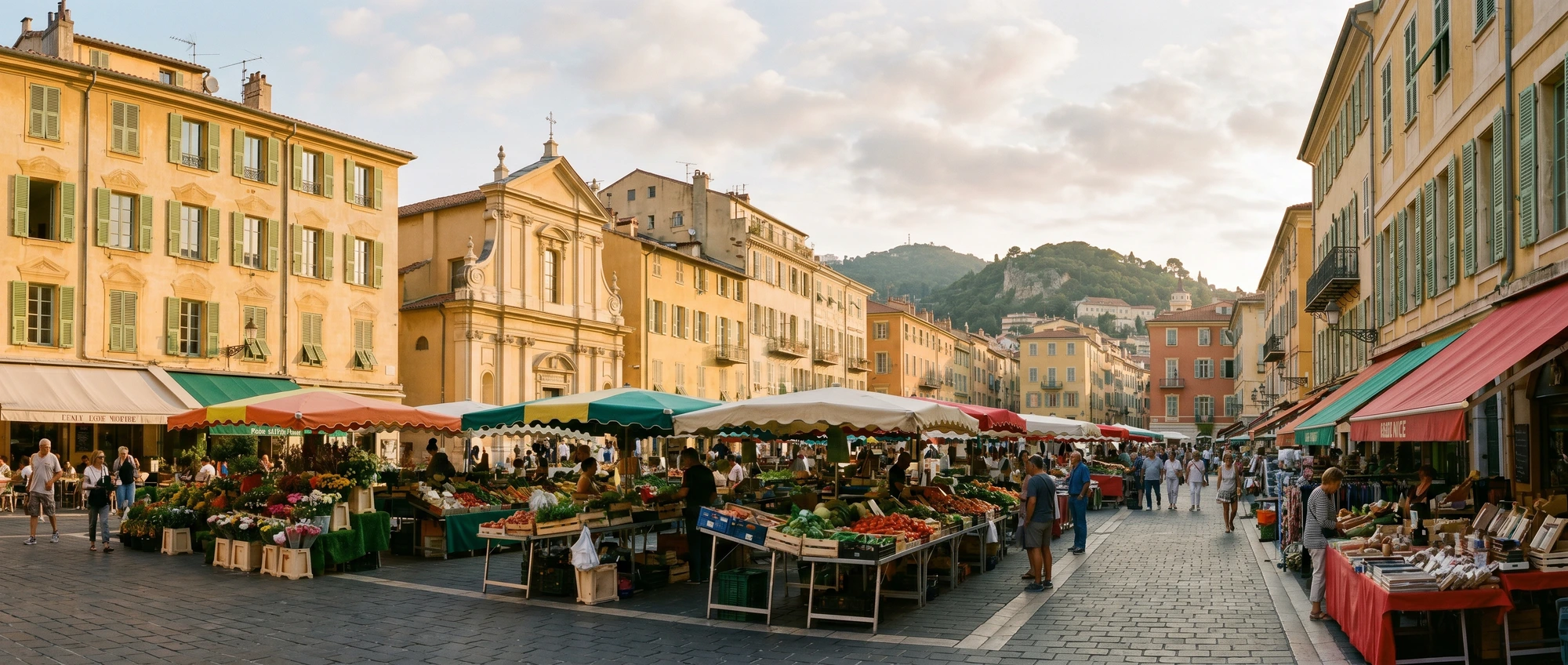
Nice's old town is the reason to come: tight ochre lanes, baroque churches and the Cours Saleya market — best done slowly with a socca stop, not as a tick-box.
Where
Nice, France
Opening hours
Open access (always open) for the lanes. The Cours Saleya flower-and-produce market runs Tuesday to Sunday mornings, roughly from early until early afternoon, with the antiques market on Monday. Stalls pack up by lunchtime, so go early.
Tickets
Free — no ticket needed; the old town and market are open public space you can wander any time. You only pay for what you buy or eat.
Time needed
A relaxed morning: a couple of hours for the market and lanes, longer if you stop for socca and a coffee.
In short
Visiting Vieux Nice and Cours Saleya market
There's nothing to book here — Vieux Nice and the Cours Saleya are open public space. Wander the narrow ochre lanes, duck into the baroque churches, and hit the Cours Saleya for flowers and produce on weekday mornings (antiques replace it on Mondays). Go before about 11am, eat socca standing up, and treat it as a slow morning rather than a checklist.
Walking the old town
You don’t book this and you don’t pay to enter — Vieux Nice is simply the old quarter, a grid of tight ochre lanes between the seafront and the Castle Hill that you walk into whenever you like. The pleasure is in drifting: laundry strung overhead, baroque facades, and cool, dim churches like the Cathedrale Sainte-Reparate that are worth stepping into off the heat. The honest trade-off is that the main thoroughfares are touristy and lined with average restaurants, so the trick is to keep turning down the smaller side lanes where the locals actually live.
The heart of it is the Cours Saleya, the long open square that hosts the famous flower-and-produce market. Stalls heap up tomatoes, olives, candied fruit, herbs and cut flowers; vendors sell glasses of olive oil and slabs of socca to passing shoppers. It runs Tuesday to Sunday mornings and switches to an antiques and brocante market on Mondays, so check the day before you build a morning around it.
When to go, and what to eat
Timing matters more than anything. The market is a morning thing — come before about 11am and it’s lively and full; arrive at lunch and you’ll find stallholders packing crates into vans. Early also means cooler lanes and softer light for photos before the cruise-day crowds thicken.
Eat as you go. Socca — a thin, blistered chickpea pancake cooked in huge copper pans — is the local ritual; buy it hot in paper and eat it standing up. Add a pan-bagnat (a tuna-and-egg sandwich) or a wedge of onion pissaladiere, and a small glass of chilled rose if it’s that kind of morning.
Is it worth your time? Genuinely, yes — but only if you slow down. Rushed, it’s just a busy lane of souvenir shops. Given a couple of unhurried hours, it’s the most characterful corner of Nice and the best free thing you’ll do here.
Planning the rest of your trip? See the Nice city guide.