Southern Germany
The Romantic Road
Driving Germany's Romantic Road for UK travellers: the Würzburg-to-Füssen route, where to sleep along the way, real drive times, and whether to self-drive or take the coach.
In short
The Romantic Road at a glance
The Romantic Road is a 350km signposted touring route through Bavaria and Baden-Württemberg, running south from Würzburg through medieval Rothenburg ob der Tauber and Augsburg to Füssen and Neuschwanstein Castle in the Alps. It's a self-drive route at heart: the whole thing is a relaxed three to four days, though you can blitz the highlights in a long day if you only want Rothenburg and the castle. There's no train along the route, so you either hire a car or take the seasonal Romantic Road Coach — and a car is far more flexible for the smaller walled towns in between.
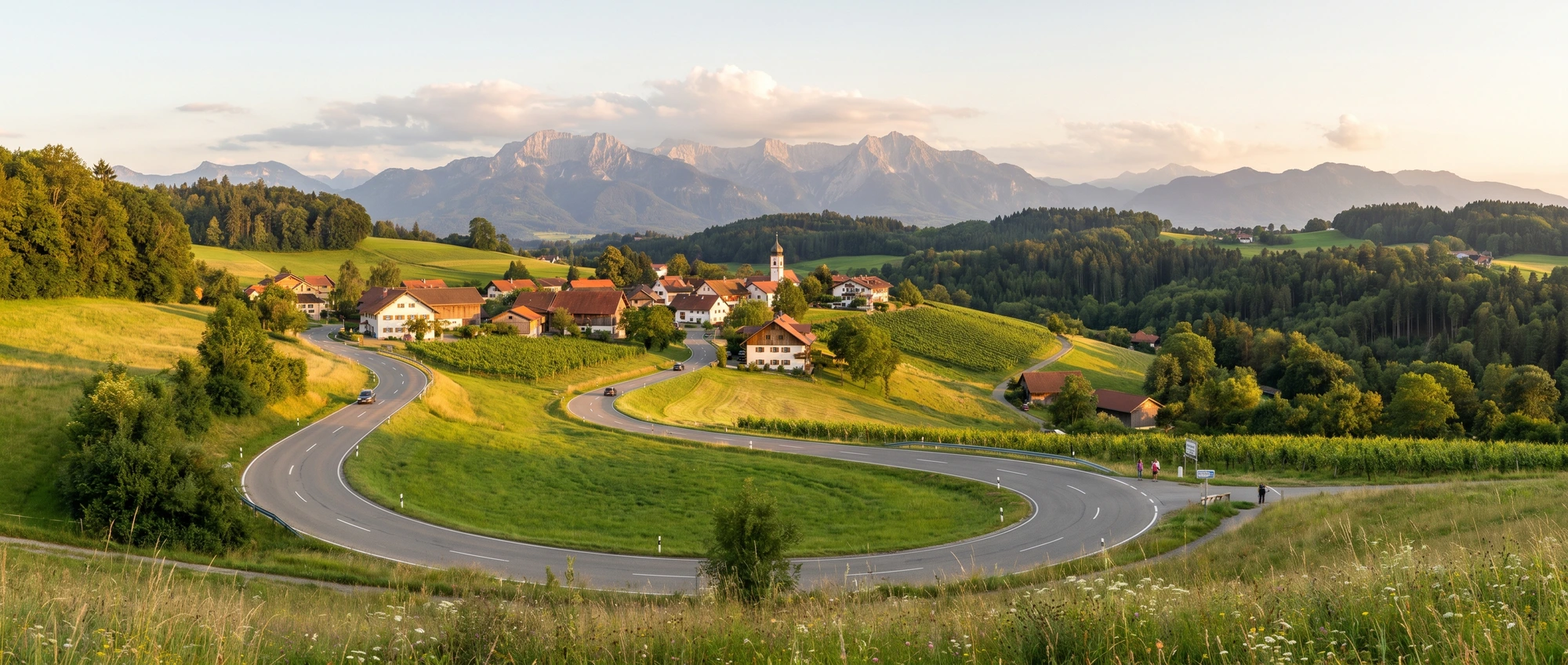
The Romantic Road isn’t a road in the everyday sense — it’s a 350km marketing route stitched together in the 1950s to link a string of walled medieval towns running south from the Franconian wine city of Würzburg down to Neuschwanstein and the Alps. What makes it worth doing is the cumulative effect: half-timbered Rothenburg, the perfectly round crater town of Nördlingen, the Fugger almshouses in Augsburg and the fairytale castle finale, all within a few hours’ driving of each other. Treat it as a relaxed three-to-four-day drive rather than a checklist and it earns the cliché in its name.
The mistake first-timers make is assuming they can do it by train, then trying to cram it into one day from Munich. There is no railway along the route, so it’s a hire car or the seasonal coach — and the coach, while real, runs once a day and rushes the lot. The other trap is treating Rothenburg as a midday photo stop: stay the night and you get the floodlit ramparts to yourself once the day-trip coaches pull out around five. Book the Neuschwanstein tour slot before you leave home, drive south at your own pace, and the road delivers exactly what the brochures promise.
The route
A relaxed three-to-four-day drive south from Würzburg to the Alps, picking up the headline walled towns without backtracking. Drive times are direct estimates on the route's B-roads and the parallel A7 motorway; the road itself is the slower, prettier option through the villages.
-
Day 1
Würzburg
Start in the wine city at the route's northern end: the UNESCO Residenz palace and its Tiepolo staircase fresco, then a Franconian wine on the old Alte Mainbrücke bridge. Pick the hire car up here or fly into Frankfurt (about 1h30 drive north) and start the same afternoon.
-
Day 2
Rothenburg ob der Tauber
About 1h15 south of Würzburg. The best-preserved walled medieval town in Germany and the single reason most people drive the route — walk the covered ramparts, climb the Rathaus tower and stay the night so you have the lanes to yourself once the coaches leave around 5pm.
-
Day 3
Augsburg & Nördlingen
Continue south through Dinkelsbühl and the perfectly round walled town of Nördlingen (built inside a meteorite crater), then on to Augsburg, one of Germany's oldest cities, with the Fuggerei almshouses. Roughly 2h of actual driving spread across a day of stops.
-
Day 4
Füssen & Neuschwanstein
The Alpine finale: Neuschwanstein and Hohenschwangau castles above Füssen, with the Tegelberg cable car and Forggensee lake. Book the Neuschwanstein slot in advance. From here it's about 1h30 to Munich to drop the car and fly home.
Where to base yourself
Pick one or two bases rather than moving every night.
Würzburg
££ mid-rangeThe natural first base at the northern end, and the easiest if you fly into Frankfurt. A proper Franconian wine city with the Residenz palace, riverside bars on the Main and good-value hotels well below Munich prices. Best for one night before you head south.
Best for: Route start, wine, flying via Frankfurt
Rothenburg ob der Tauber
££ mid-rangeThe one place worth staying inside the walls. Book a small hotel within the old town so you can wander the floodlit lanes and ramparts after the day-trippers have gone — the town empties dramatically each evening. Pricier and busier than the towns either side, but the atmosphere is the whole point.
Best for: The medieval highlight, evening atmosphere
Füssen
££ mid-rangeThe southern Alpine base for the castles, the obvious last night before Munich or the Austrian Tirol. Stay here rather than at the castle car park so you're first in the Neuschwanstein queue, and use the time for the Lechfall waterfall and Forggensee. Cheaper than the resort villages closer to the cable car.
Best for: Neuschwanstein, the Alps, route finish
Getting around The Romantic Road
There is no train along the Romantic Road, so this is a drive: a hire car runs from roughly €40–€55 a day and lets you stop in the smaller walled towns like Dinkelsbühl and Nördlingen that the coaches skip. Drive on the right, and note that Würzburg, Augsburg and the bigger towns are Umweltzone low-emission zones needing a green windscreen sticker — hire cars come with one fitted. If you don't want to drive, the seasonal Romantic Road Coach (Romantische Straße Bus) runs once daily in each direction from roughly mid-April to mid-October between Frankfurt/Würzburg and Füssen, but it only stops in the main towns and a single day on it covers the whole route too fast to see much. For Neuschwanstein, leave the car in Hohenschwangau and walk up (about 30–40 minutes) or take the shuttle bus or horse carriage — there is no public road to the castle gate.
Book the essentials
Where to stay
Tours & tickets
Airport transfers
Car hire
Stay connected
The Romantic Road FAQs
How many days do you need for the Romantic Road?
Do you need a car for the Romantic Road?
Do I need to book Neuschwanstein in advance?
Ready to book?
Compare car hire