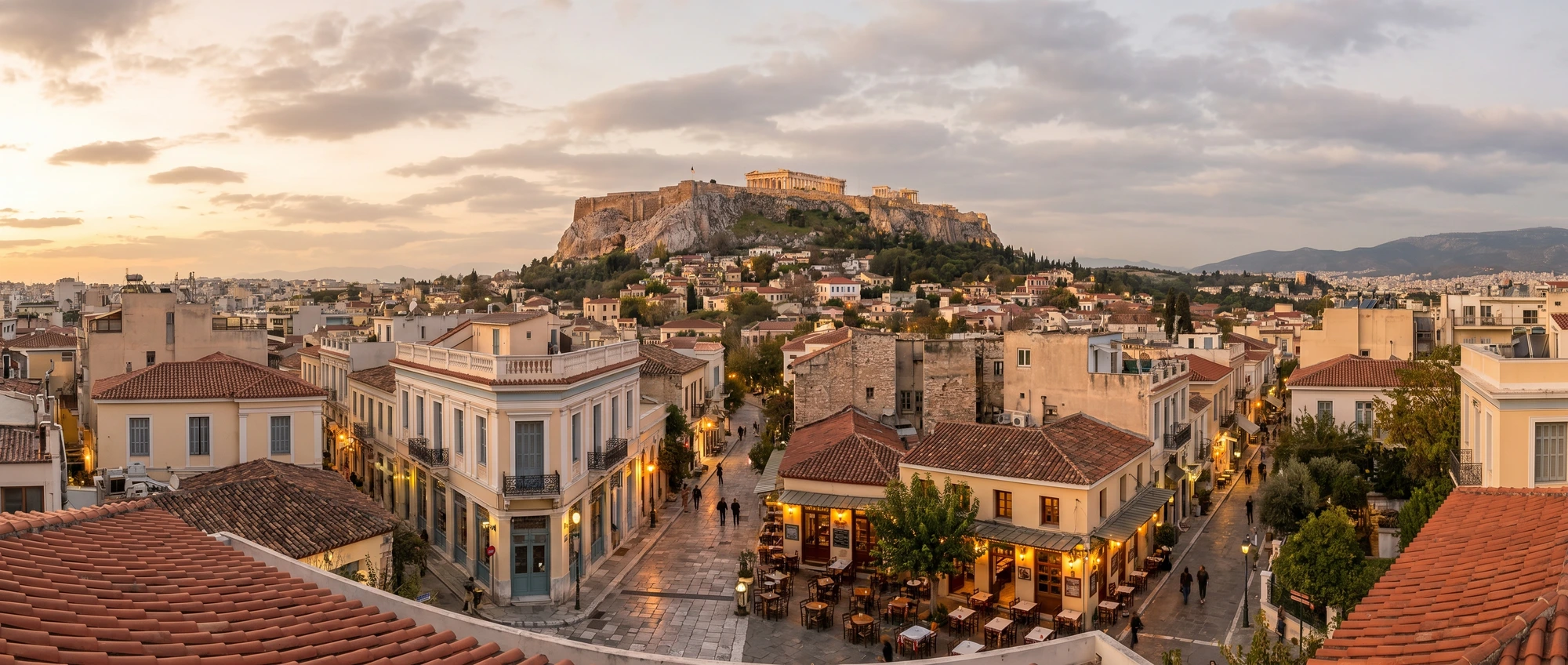
Attica
Athens
Two days cover the ancient core, so stay in Koukaki or Plaka below the Acropolis, take the first morning slot, and use a third day or the ferry port for the islands.
Best length
2-3 nights
Airport
Athens Eleftherios Venizelos (ATH), ~33km east
Airport to centre
Metro Line 3 ~40 min (€9); X95 bus ~60-90 min (€5.50, 24h)
Best base
Koukaki for calm, Plaka for charm, Monastiraki for nightlife
In short
Athens at a glance
Athens is a tight 2- or 3-night city break that doubles as your ferry launchpad to the islands: stay in Koukaki or Plaka within walking distance of the Acropolis, book the Acropolis slot for first thing in the morning, see the ancient core on foot, and use the metro rather than taxis. Two full days covers the headline sites; a third lets you slow down or take a day trip before you sail.
The short version
- Koukaki is the calmer first-time base, Plaka the pretty-but-touristy one, Monastiraki the loud, central, late-night one.
- Book the Acropolis for an 8am slot in summer: by 11am it is a sun-baked queue and the marble is genuinely hot underfoot.
- The Acropolis Museum (€20) is a better afternoon than a second ancient ruin, and it is air-conditioned.
- Take Metro Line 3 from the airport for €9 if your hotel is central; the X95 bus (€5.50, 24h) is the late-night fallback.
- Two full days covers the ancient core; add a third only for a slower pace or a day trip to Cape Sounion or Aegina before island ferries from Piraeus.
Athens rewards travellers who treat it as a sharp, focused stop rather than a week-long city. The ancient core — the Acropolis, the Ancient Agora, Plaka and the Acropolis Museum — sits in a tight, walkable cluster, and you can see the headline acts properly in two full days. The mistake first-timers make is either rushing through in an afternoon on the way to a ferry, or padding the trip out and frying in the July heat. The job of a good plan is to book the Acropolis for an 8am slot, do the outdoor ruins in the cool of the morning, and save the air-conditioned €20 museum and the rooftop bars for the afternoon. By 11am in summer the hill is a sun-baked queue and the marble is hot underfoot, so the early start is the single decision that changes the trip.
Where you sleep decides how the days feel. Koukaki is the calm, well-priced default, a ten-minute walk from the Acropolis Museum with proper neighbourhood bakeries and cafes. Plaka is prettier and right under the hill but busier and dearer, especially at dinner; Monastiraki trades quiet for the metro hub and rooftop bars but stays noisy past midnight; Pangrati, leafy and east of the centre, suits a slower or repeat stay. Book the Acropolis ticket itself rather than a guided extra — a daily 20,000-visitor cap means timed slots sell out days ahead in spring and summer. The Agora needs its own ticket now the combined pass is gone, so budget for the sites separately; the Temple of Olympian Zeus is a fair thing to skip if time is tight, but the dusk rooftop view is not.
On food, the tavernas directly under the Acropolis and on Plaka’s lanes are where Athens gets expensive fastest. Walk ten minutes into Koukaki or Pangrati and the same meal is cheaper and usually better. Get in from the airport on Metro Line 3 for €9 if your hotel is central, or the 24-hour X95 bus (€5.50) for late arrivals; skip a hire car, because the centre is a walking city and parking is grim. With a third night you can slow down or take a day trip to Cape Sounion or Aegina. When you are ready to sail, the metro and the X80 bus both run straight to Piraeus for the island ferries.
Plan your Athens trip
Keep a first trip focused: book the big timed sights, then leave room for neighbourhoods and food.
Top things to do in Athens
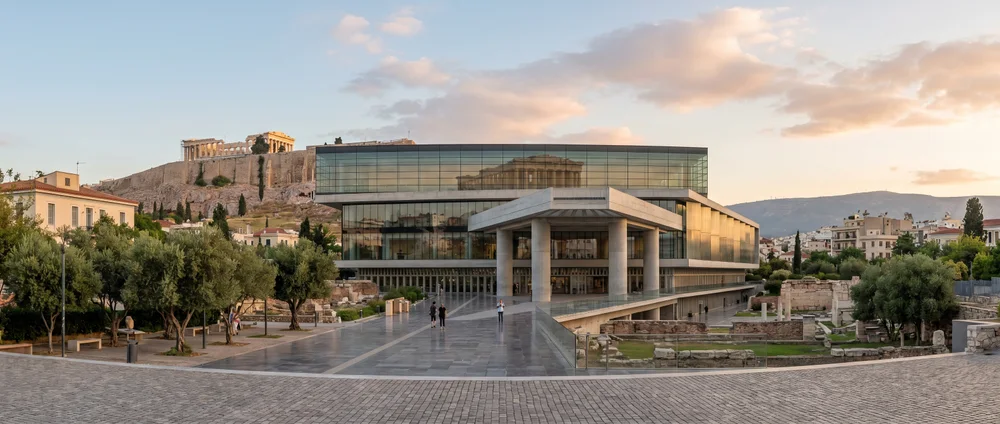
Acropolis Museum
Don't confuse this with the Acropolis hill itself — the Acropolis Museum is the modern building at the foot of the rock that holds the real marbles dug off the top, and it needs its own ticket. Pay the €20 (about £17) and go specifically for the glass-floor excavation you walk over on the way in and the top-floor Parthenon Gallery, which is laid out at the same angle as the temple with the actual Acropolis framed through the windows. Allow 1.5–2 hours, and unlike the Acropolis site it rarely sells out, so same-day entry is usually fine.
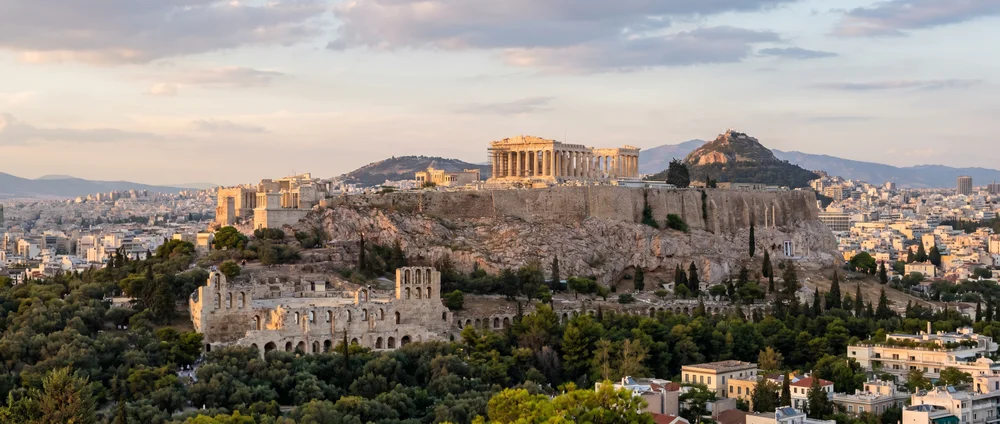
Acropolis of Athens
Book a timed-slot Acropolis ticket online before you fly — entry is capped at 20,000 a day and peak morning slots sell out roughly 5–7 days ahead. Take the earliest 08:00 slot you can: the cruise coaches arrive around 9–10am and the marble offers no shade by midday, when summer heat can climb past 40°C (the site has closed in the early afternoon during extreme heat). The single ticket covers the rock and the Parthenon; allow 1.5–2 hours up top.
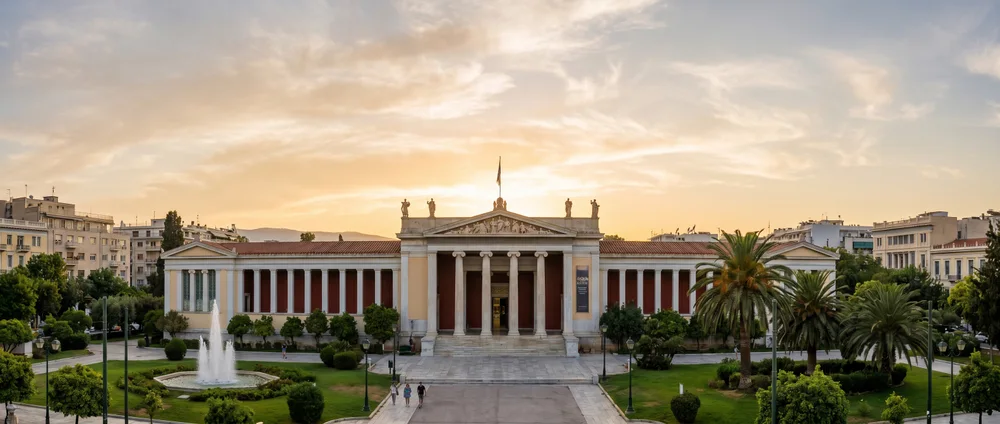
National Archaeological Museum
This is the Mycenae gold, the Antikythera mechanism and the bronze Artemision Zeus under one roof — the deepest single collection of Greek antiquity anywhere, and a useful counterpoint to the marble-only Acropolis Museum. It sits a 25-minute walk north of the Plaka tourist core in Exarcheia, so it's easy to skip; don't. Buy the €20 ticket at the door (it rarely queues like the Acropolis), allow two to three hours, and arrive at opening on a midweek morning if you want the building near-empty — note Tuesday is the one day it doesn't open until 13:00.
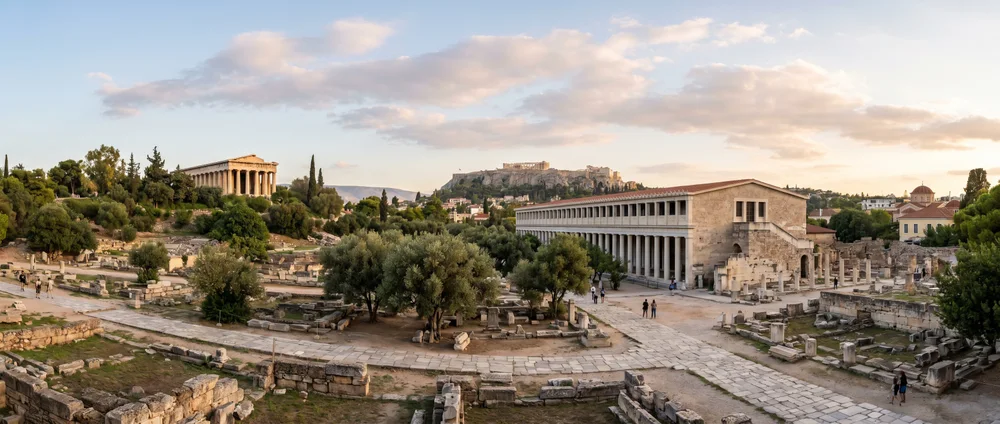
Ancient Agora of Athens
Come for the Temple of Hephaestus — the best-preserved Doric temple in Greece, roof and columns intact, free of the scaffolding that wraps the Acropolis. Entry is a flat €20 (about £17) all year: the old €30 government combo that bundled the Agora with the Acropolis was scrapped in April 2025, and the winter half-price rate went with it, so you now buy each site at full price separately. Allow 1.5–2 hours, more if you go inside the Stoa of Attalos museum, and walk in from Monastiraki metro rather than booking a separate timed slot.
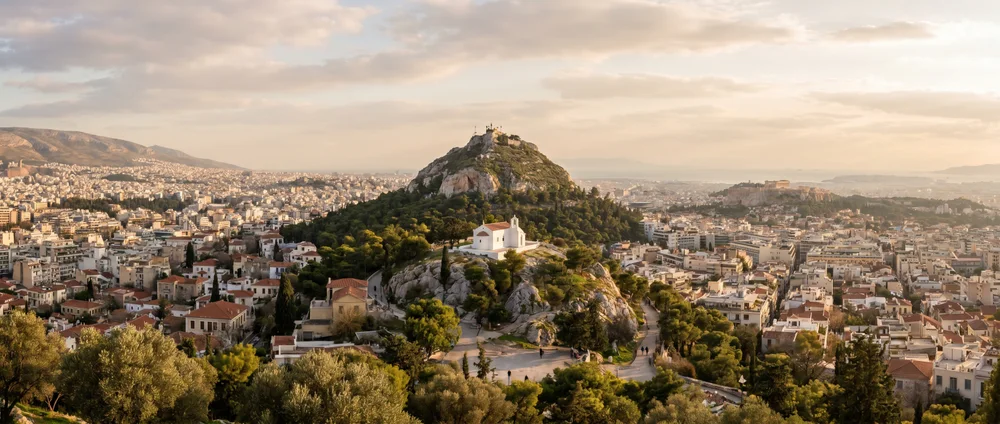
Mount Lycabettus
The 277m summit is the highest point in central Athens and gives you the Acropolis, the city sprawl and the sea in one sweep — the best wide view in town, and the hilltop itself is free. The catch is that the funicular runs entirely inside a tunnel, so you pay €13 return for five minutes in the dark and no view on the ride. If your knees allow it, walk up the free pine-shaded path (15–40 minutes) and the funicular is optional. Go for sunset, when the Acropolis lights up below you.
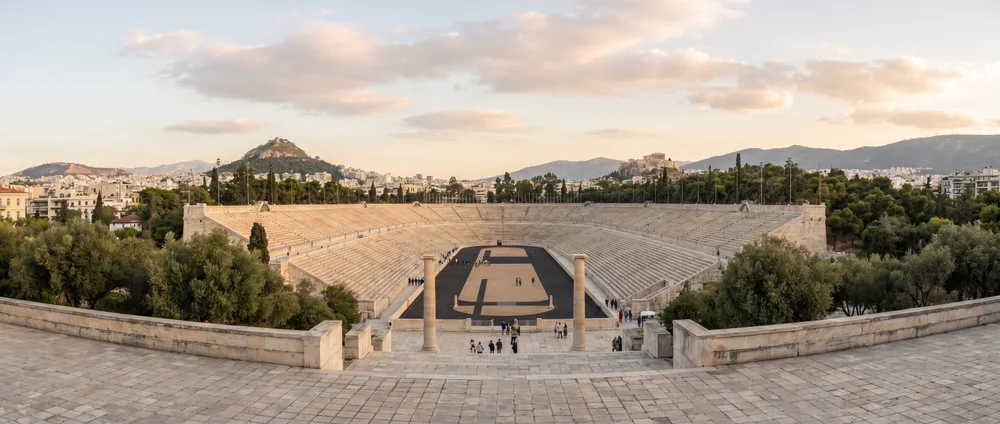
Panathenaic Stadium
The Panathenaic Stadium (Kallimarmaro, "beautiful marble") is the only stadium in the world built entirely of marble, and it hosted the first modern Olympics in 1896. You buy at the gate — there is no online ticket for individual visitors — and the price includes a 30-minute audio guide. Allow about an hour: walk a lap on the track, climb the steep marble tiers for the view back over the city, and look in at the small Olympics exhibition under the stands.
Every Athens attraction guide
Where to stay first
The areas that make a first visit easier — not an exhaustive directory.
Koukaki
££ mid-rangeThe calmer first-time base: a real residential neighbourhood with bakeries and cafes, a 10-minute walk to the Acropolis Museum and metro, and noticeably better-value dinners than Plaka. The best default if you want central but not chaotic.
Best for: First-timers, couples, value with a local feel
Plaka
£££ premiumThe postcard old town directly under the Acropolis: neoclassical lanes, bougainvillea and tavernas. Lovely to walk and unbeatable for location, but busy, touristy and priced for it, especially at dinner.
Best for: Charm, walkability, first trips happy to pay for location
Monastiraki
££ mid-rangeThe loud, central, late-night choice: flea market, rooftop bars, the metro hub and a lot of casual food. Brilliant for energy and transport, but pick your hotel carefully because the square is noisy well past midnight.
Best for: Nightlife, rooftop bars, easy transport
Pangrati
£ valueA leafy, lived-in district east of the centre with some of the city's best neighbourhood tavernas and almost no tour groups. A short walk or quick metro hop from the sights, and the pick for a second visit or a longer, slower stay.
Best for: Food-led trips, repeat visitors, quiet evenings
Airport to city centre
| Option | Time | Cost | Book ahead? |
|---|---|---|---|
| Metro Line 3 to Syntagma / Monastiraki | ~40 min | €9 single (€18 return) | Best for central hotels |
| X95 express bus to Syntagma | ~60-90 min | €5.50 single | Runs 24h, the late-night fallback |
| Taxi to the centre | ~35-45 min | about €40 daytime flat fare (~€55 at night) | Good with luggage or late arrivals |
| Pre-booked private transfer | ~35-45 min | usually €45-€60 | Worth it for groups or first arrivals |
When to go
Sweet spot: April to mid-June and September to October are the sweet spot: warm, walkable days for the ancient sites without the brutal midday heat, and lighter crowds than high summer. May and late September are the pick.
July and August are genuinely hard work in Athens: 35C-plus highs make the shadeless Acropolis miserable by late morning, and it is peak crowds and prices. Winter is cheap and quiet with museums to yourself, but cool and not a beach-island springboard. Book spring and autumn weekends early because UK demand is heavy.
What it costs
UK return flights to Athens are often £40-£130 outside school holidays when booked ahead, with daily direct easyJet routes from Gatwick, Luton, Bristol, Edinburgh and Manchester; midweek Tuesdays and Wednesdays are usually cheapest and summer weekends much dearer.
Daily budget per person
Athens gets expensive fastest at the tavernas right under the Acropolis and on Plaka's prettiest lanes. Walk 10 minutes into Koukaki, Pangrati or Exarchia and the same meal is cheaper and usually better.
Book the essentials
Where to stay
Tours & tickets
Airport transfers
Stay connected
Trains & rail passes
Also in Greece

Athens FAQs
How many days do you need in Athens?
Where should first-timers stay in Athens?
Do you need to book Acropolis tickets in advance?
Ready to book?
Find hotels in Athens