Crete
Palace of Knossos
How to visit the Palace of Knossos from Heraklion: the bus, the 2026 ticket, whether you need a guide, and an honest worth-it verdict.
Where
Heraklion, Greece
Opening hours
Summer (roughly April–October) about 08:00–20:00 daily; winter (November–March) about 08:00–17:00. Confirm your date before you go, and note free-entry days such as 18 May and 28 October draw bigger crowds.
Tickets
€20 (about £17) full entry in 2026, €10 (about £8.50) reduced — but the over-65 reduced rate only applies October–May. The old official combined ticket with the Heraklion Archaeological Museum has been discontinued, so budget roughly €20 again for the museum separately; any 'combo' you see online now is a tour operator's bundle, not the state ticket.
Time needed
About 1.5–2 hours on site; allow a full morning if you pair it with the Heraklion Archaeological Museum, which is now a separate ticket.
In short
Visiting Palace of Knossos
Knossos rewards reading about it first — the walls and 'frescoes' are largely Arthur Evans's 1900s reconstruction, so without context you're looking at painted concrete. Pair it with the Heraklion Archaeological Museum, where the real Minoan finds live; note the old official combined Knossos-and-museum ticket has been scrapped, so you now buy each (about €20 apiece) separately. Get there on the No. 2 bus from outside the museum and go before 10am to beat the cruise coaches and the open-site heat.
How to visit without misreading the place
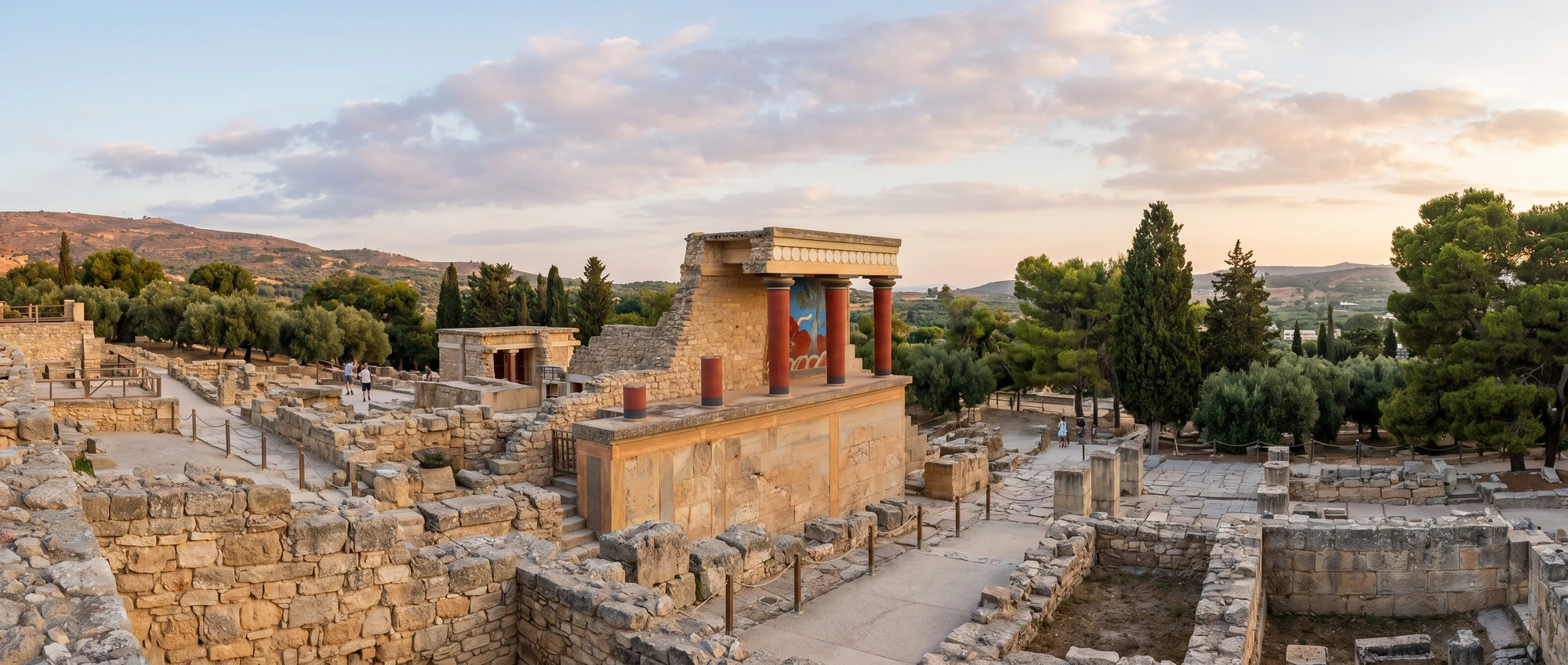
Knossos is Greece’s most-visited site after the Acropolis, and the thing first-timers don’t expect is how much of it is rebuilt. Arthur Evans, who excavated it from 1900, poured reinforced concrete, raised columns and commissioned repainted “frescoes” to show how he believed the Minoan palace looked. Walk in cold and you can come away underwhelmed — painted concrete with sparse signage. Walk in knowing that, and the Throne Room, the grand staircase and the storage magazines become genuinely gripping: the oldest known palace complex in Europe, and one man’s controversial attempt to bring it back.
Entry in 2026 is €20 full, €10 reduced (the over-65 reduced rate only runs October to May). One thing the guidebooks haven’t all caught up with: the official combined Knossos-and-museum ticket has been scrapped, so you now pay separately for the Heraklion Archaeological Museum — another €20 or so — where the real Minoan frescoes, the snake goddesses and the Phaistos Disc actually live. Any “combo” you spot on a booking site is a tour operator’s bundle, not the old state ticket. Pay it anyway: Knossos is the reconstruction, the museum is the originals, and seeing one without the other only tells half the story.
The bus, the heat, and is it worth it?
Skip the hire car for this one. The No. 2 city bus runs to Knossos every 15–20 minutes, stopping in front of the Archaeological Museum (not the KTEL inter-city station that confuses people), takes about 20 minutes, and costs about €1.50 from a machine or kiosk — €2 if you pay the driver, so buy ahead. Go before 10am: the site is almost entirely open with barely any shade, and the cruise coaches from Heraklion port and the day-trip groups land mid-morning. A hat, water and sunscreen are not optional in July.
Worth it, but only if you set it up properly. Read a little first or take a guide — on-site labelling is thin, and a guide matters more here than at most ruins because so much needs flagging as reconstruction. Give the site 1.5 to 2 hours, then carry on to the museum (its own ticket now) the same morning or a different day. Done that way it’s one of the best half-days on Crete; done as a cold wander past concrete walls, it’s the most over-hyped sight on the island.
Planning the rest of your trip? See the Heraklion city guide.
More to see in Heraklion

Book the essentials
Tours & tickets
Palace of Knossos FAQs
How do you get to Knossos from Heraklion?
Is the Palace of Knossos worth it?
Do you need a guide at Knossos?
What is the best time of day to visit Knossos?
Ready to book?
Check tickets & tours