Southeast Iceland
Diamond Beach
The black-sand beach where lagoon icebergs wash up and glitter on volcanic sand — what it is really like, and why you pair it with Jökulsárlón in one stop.
Where
Höfn, Iceland
Opening hours
Open access (always open). The beach and car parks on both sides of the river mouth are public and free at any hour. There are no facilities to speak of, so come prepared; confirm current conditions and access on the official site in winter.
Tickets
Free — no ticket needed; you can walk straight onto the beach from the car park. You only pay for parking at busy times if a charge applies, and for the optional Jökulsárlón boat trips across the road.
Time needed
Allow 20–40 minutes to walk the sand and photograph the ice, often combined with an hour at Jökulsárlón opposite.
In short
Visiting Diamond Beach
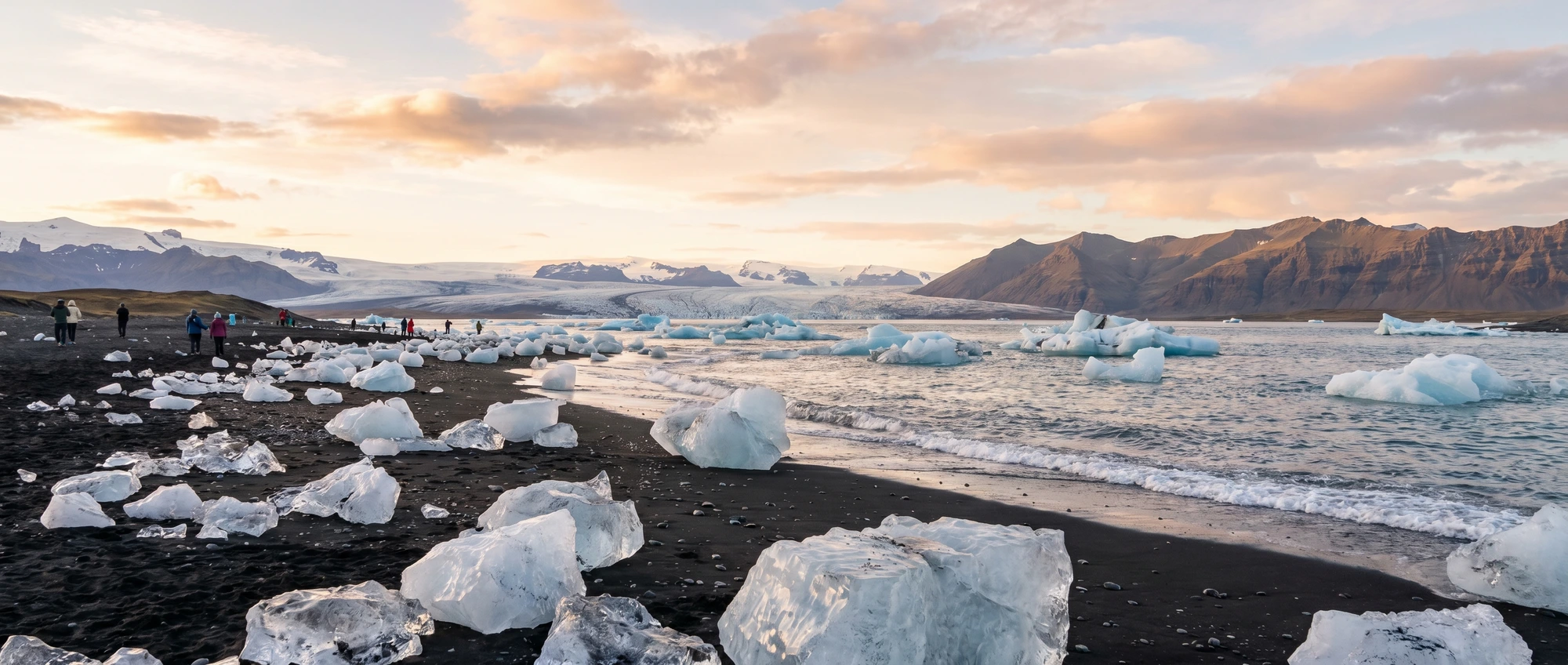
Diamond Beach is the black-sand stretch across Route 1 from Jökulsárlón, where ice chunks that have drifted out of the lagoon strand on volcanic sand and glitter like scattered gems. It is free and open at all hours. The amount of ice varies with the tide and the season, so what you find is luck of the draw. A five-minute drive from the lagoon, so do both in a single stop rather than treating them as separate days out.
Ice on black sand
Diamond Beach is the strip of black volcanic sand on the seaward side of Route 1, directly across the road from Jökulsárlón. Icebergs that have drifted out of the lagoon and through the river mouth get broken up by the surf and stranded on the sand, where they sit like scattered gems — clear, blue and ash-streaked lumps of ancient glacier ice glinting against the black grains. On a good day it is genuinely striking and one of the most photographed spots in Iceland.
The honest part: how much ice you get is luck of the draw. It depends on the tide, the wind and how much has recently calved upstream, so some visits deliver a beach littered with glittering chunks and others almost nothing. There is no entry fee and no opening time — the car parks on either side of the river mouth are open at any hour — but there are also essentially no facilities, so don’t plan a long stay.
Doing it properly, and a safety word
Because it sits a five-minute drive from Jökulsárlón, the sensible move is to do both in one stop: watch the bergs drift on the lagoon, then cross the bridge and see where they end up on the sand. Treating them as separate days out wastes Ring Road driving time.
One thing to take seriously is the sea. This is the open North Atlantic, and the beach is known for powerful, fast-moving sneaker waves that surge much further up the sand than you expect and have pulled visitors off their feet. Keep well back from the waterline, don’t turn your back on the water for a photo, and don’t climb onto the bigger ice chunks at the tide’s edge. Early morning or evening light makes the ice glow best and keeps you ahead of the tour buses.
Planning the rest of your trip? See the Höfn city guide.