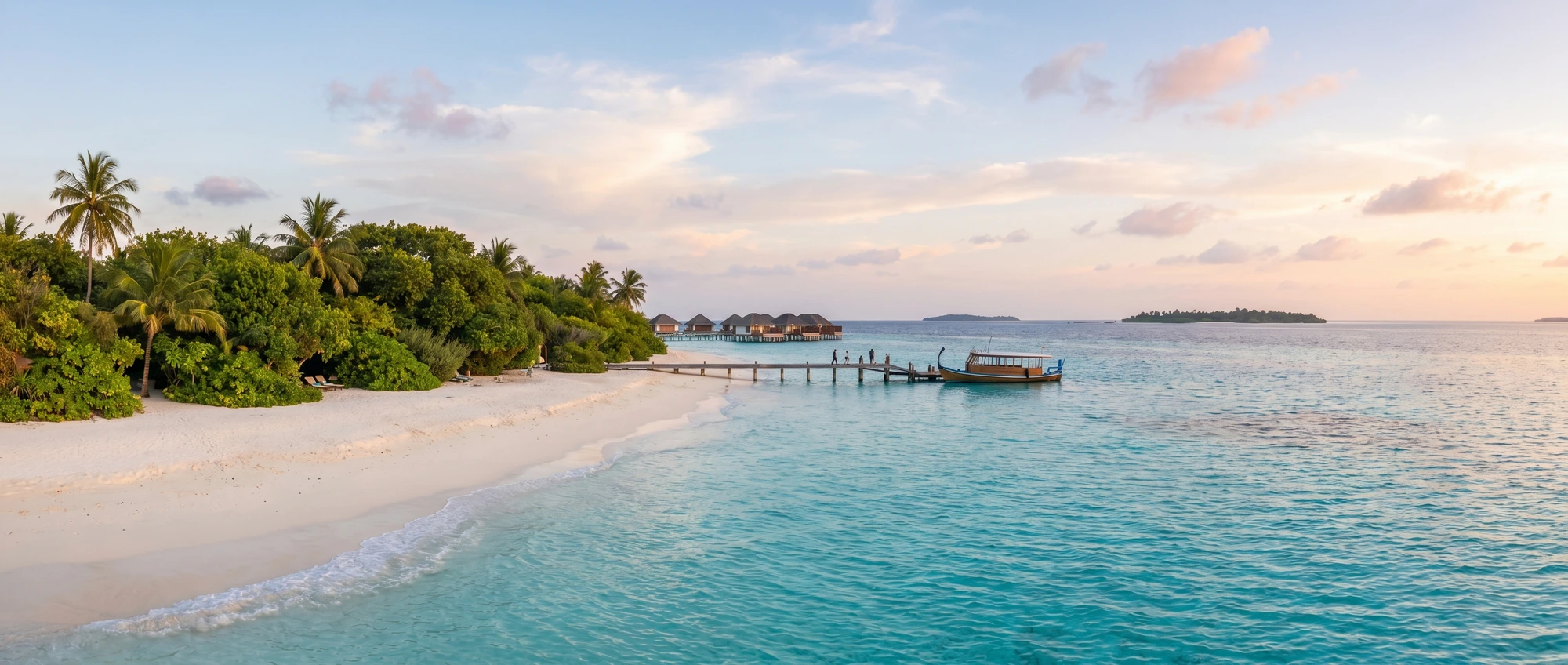
Northern Maldives
Lhaviyani Atoll
An honest UK guide to Lhaviyani Atoll: a northern seaplane-only resort atoll built around strong house reefs, the Kuredu nurse-shark dive and Hurawalhi's undersea restaurant — and why you commit to one island here.
In short
Lhaviyani Atoll at a glance
Lhaviyani Atoll is a northern Maldivian resort atoll about 120km from Malé, reached only by a roughly 40-minute seaplane — there is no speedboat option, so your arrival flight has to land before mid-afternoon or you overnight near the airport. It's a divers' and snorkellers' atoll first: most of the half-dozen resorts sit on islands with genuinely good house reefs, and the headline dives — the Kuredu Express channel and Kuredu Caves, both reliable for nurse sharks — are among the best house-reef-accessible sites in the country. You commit to one island for the whole stay; the real choice is which resort suits your budget, from the big, value-focused Kuredu to the adults-only Hurawalhi with its underwater restaurant.
Lhaviyani is the atoll people pick when the reef matters more than the brand. Sitting about 120km north of Malé, it’s reached only by a 40-minute floatplane — there’s no speedboat shortcut this far out — and most of its handful of resort islands earn their keep with house reefs you can snorkel straight off the sand, which is rarer in the Maldives than the photographs let on. The names that draw divers are Kuredu Express and Kuredu Caves, two channel sites reliable enough for nurse sharks and turtles that they alone justify the trip for anyone who dives.
What first-timers get wrong is treating it like a destination you can sample. You don’t island-hop here: you commit to one resort for the whole stay, because every move is another seaplane bill. So the real work is choosing the right island — the big, family-friendly value of Kuredu, the adults-only intimacy of Komandoo, the underwater-restaurant polish of Hurawalhi, or the upscale calm of Kanuhura — and then timing your flights. The seaplane flies in daylight only, so a UK arrival that lands after mid-afternoon can cost you an unplanned night at an airport hotel before you ever reach the water.
The route
There is no touring route in Lhaviyani — you fly to one island and stay there, because every move means another paid seaplane. The planning is front-loaded: pick the resort and meal plan, confirm the seaplane is included or priced, and time your UK flight to land in the morning. This is a 7-night skeleton for a single-resort stay on one of the atoll's islands.
-
Day 1
Land at Malé, seaplane to your island
Your resort's greeter meets you at Velana International and walks you to the seaplane lounge. The floatplane to Lhaviyani is around 40 minutes and flies in daylight only, so a morning UK arrival matters — land after about 3pm and you may overnight at a Hulhumalé airport hotel before flying on the next morning. Plan nothing else for this day.
-
Days 2–3
Learn the house reef
Lhaviyani's selling point is the reef off your own beach. Pick up fins and a mask, learn the resort's flag and current system, and snorkel the house-reef drop-off at slack tide — on islands like Kuredu and Komandoo it's genuinely good. Don't book paid excursions yet; many guests find the best snorkelling is the free swim off the sand.
-
Days 4–5
Dive or snorkel the Kuredu Express
This is why divers come: the Kuredu Express channel and Kuredu Caves reliably deliver nurse sharks, grey reef sharks and turtles, and the dive centres run boat trips out from every island (roughly $60–90 per dive, gear extra). Non-divers can take a guided snorkel safari or a manta/whale-shark trip when seasonal. Skip the overpriced in-resort photographer packages.
-
Days 6–7
Slow down, then seaplane back
Bank a do-nothing beach day — the point of the trip — and book the 5.8 Undersea Restaurant at Hurawalhi or a sunset cruise if your resort offers it. On departure, build in a buffer: the seaplane back to catch an evening flight may leave hours early. Settle your room bill in US dollars the night before and keep a few dollars for staff tips.
Where to base yourself
Pick one or two bases rather than moving every night.
Kuredu Island Resort
££ mid-rangeThe atoll's biggest, most established island and its best value — a large resort with multiple restaurants, a PADI dive school, a golf course and a long reef on two sides. Family-friendly and busier than the others, with bungalows from the mid-range up rather than pure luxury.
Best for: Value, families, divers who want choice
Komandoo & Hurawalhi (adults-only)
£££ premiumTwo adults-only sister islands: Komandoo is the smaller, intimate, all-wood option, while Hurawalhi is the polished five-star with overwater villas and the 5.8 Undersea Restaurant. Both share a strong house reef and the same management as Kuredu, so dive logistics are slick.
Best for: Couples, honeymoons, the undersea-restaurant splurge
Kanuhura
£££ premiumThe atoll's upscale, design-led resort on a long island with its own deserted sandbank picnic islands offshore. Quieter and more polished than Kuredu, with a price to match — book it for the occasion rather than the snorkelling alone.
Best for: Upscale stays and milestone trips
Getting around Lhaviyani Atoll
You don't get around Lhaviyani — you fly to one island and stay put, because every move is another paid seaplane. The transfer is the single make-or-break logistics decision: the only route from Malé is a roughly 40-minute floatplane, costing around £350–£550 per adult return, and it flies in daylight only. That means your UK arrival flight has to land before about 3pm; land later and the resort will put you in a Hulhumalé airport hotel overnight and fly you out the next morning. There is no speedboat alternative to Lhaviyani — it's too far north (about 120km). The resort arranges and bills the seaplane, so confirm whether it's included in your package or charged on top before you book the room, and time your flights around the daylight rule. Once you're on the island, getting around means walking, the resort's bicycles or a buggy, and reaching dive sites means the resort's own dhoni boats.
Book the essentials
Where to stay
Tours & tickets
Airport transfers
Car hire
Stay connected
Lhaviyani Atoll FAQs
How do you get to Lhaviyani Atoll from the UK?
Is Lhaviyani good for diving and snorkelling?
Which Lhaviyani resort should I choose?
Ready to book?
Compare car hire