Northern Mauritius
Pamplemousses
Plan the SSR Botanical Garden and nearby sugar museum: non-resident admission, visiting hours and separate guided-visit arrangements.
In short
Pamplemousses at a glance
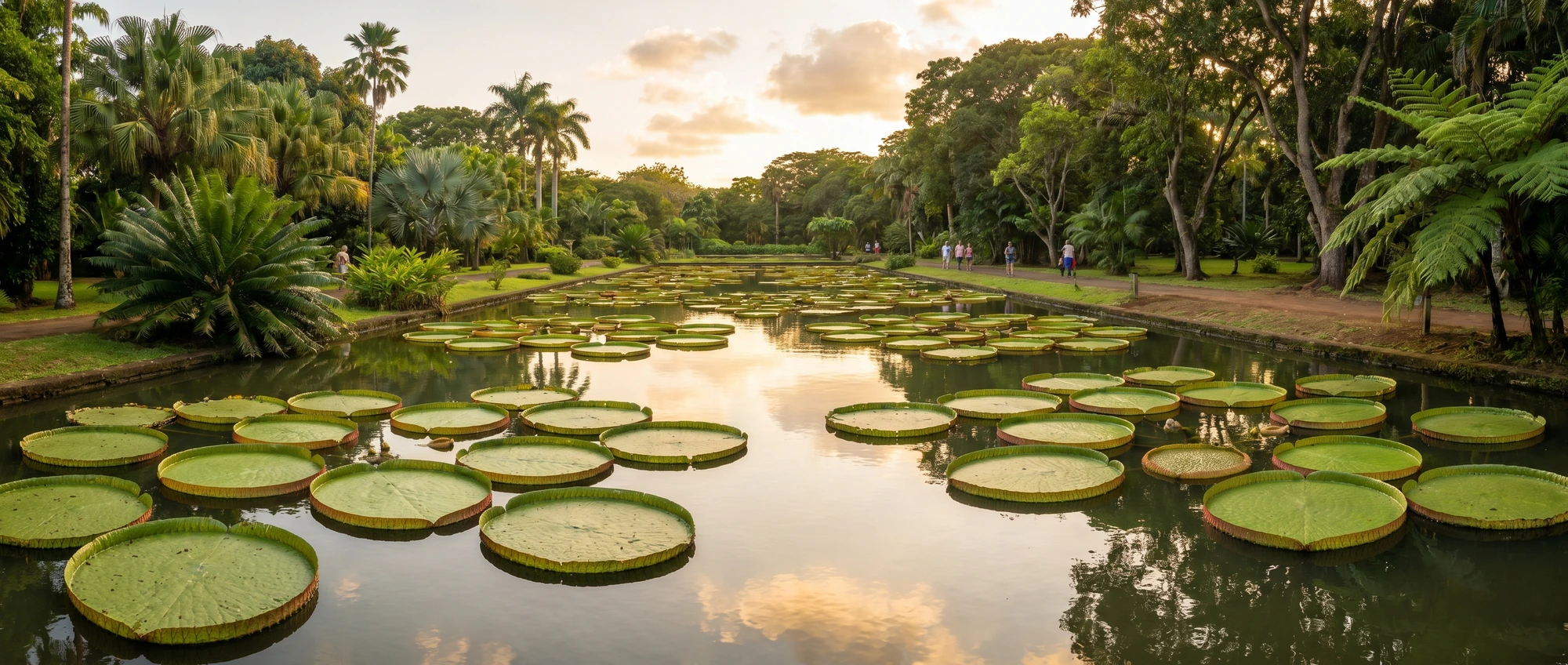
Pamplemousses is the village north of Port Louis built around the Sir Seewoosagur Ramgoolam (SSR) Botanical Garden — the oldest botanical garden in the southern hemisphere, laid out by the French administrator Pierre Poivre in 1770. It's a half-day stop, not a destination you base yourself in: most UK visitors come over from Grand Baie or Trou aux Biches, about 25 minutes' drive, or from a Port Louis morning, roughly 20 minutes north. The headline sights are the pond of giant Victoria amazonica water lilies — leaves over a metre across, strong enough to hold a small child — and the long avenue of royal palms, plus a giant-tortoise enclosure and dozens of labelled spice and palm species that trace back to Poivre's smuggled cuttings. Non-Mauritian visitors aged 5+ without a residence permit pay MUR300; under 5s are free. Arrange and agree any separate guide fee directly rather than treating an old estimate as a tariff. Next door, the L'Aventure du Sucre sugar museum in a converted mill rounds the area into a proper half-day.
Pamplemousses is the village north of Port Louis that everyone visits for one thing: the Sir Seewoosagur Ramgoolam Botanical Garden, the oldest in the southern hemisphere. The French administrator Pierre Poivre laid it out in 1770 to acclimatise the spices — nutmeg, clove, cinnamon — he was smuggling out of the Dutch East Indies, and a fair number of the trees you walk past still descend from those cuttings. The set-piece is the pond of Victoria amazonica water lilies, whose leaves grow over a metre wide and rim up at the edges like green baking tins; alongside them are the long avenue of royal palms, a pen of giant tortoises, and the talipot palm that flowers spectacularly just once before it dies. The government visitor table lists MUR300 for non-Mauritian visitors aged 5+ without a residence permit, free under 5, with different resident/citizen tariffs. Arrange and agree any separate guide fee directly.
Treat it as a half-day rather than a destination. Most UK visitors come over from Grand Baie or Trou aux Biches, about 25 minutes down the coast road, or from a Port Louis morning some 20 minutes south; either way, 1.5 to 2 hours sees the garden and you’ll want to be back on the beach by lunch. The trick that turns the drive into a proper outing is pairing the garden with L’Aventure du Sucre, the sugar museum in the old Beau Plan mill five minutes away, which tells the island’s colonial sugar story and finishes with a tasting of unrefined sugars and rum. Go early — the resort tour coaches arrive mid-morning, and the tropical midday heat under the palms is no joke — and confirm payment arrangements directly rather than relying on a cash-only claim.
The garden opens 08:30–17:30 daily, including public holidays, subject to announced closures. Sunday/public-holiday free entry is for Mauritians only. L’Aventure du Sucre separately lists public adult admission MUR1,200, with youth/student categories and resident concessions. It opens Monday–Saturday 10:00–16:00, recommends arrival by 15:00 and closes ticket sales at 15:15. It closes Sundays, 24–26 December and 31 December–2 January. Confirm guided-session days directly: its homepage and practical-information page disagree.
Towns & places in Pamplemousses

The route
Pamplemousses isn't somewhere you stay — it's a half-day excursion you slot into a north-coast beach week or a Port Louis morning. The three plans below cover the quick garden visit from Grand Baie, the garden-plus-sugar-museum half-day, and a fuller north day that ties in the capital. Road times are estimates, not timetables. Any retained GBP conversions and private-transfer allowances use the inherited June 2026 planning assumptions; obtain current quotes.
-
Half-day
Garden run from Grand Baie
Visit the garden in the morning and allow around two hours. The published non-Mauritian tariff is MUR300 from age 5 for visitors without a residence permit, free under 5. Hours are 08:30–17:30 daily, subject to announced closures. Confirm payment and any optional guide arrangement rather than relying on the old MUR200 or cash-only claims.
-
Half-day
Garden plus the sugar museum
L’Aventure du Sucre is a separately ticketed museum at Beau Plan: public adult MUR1,200, with MUR600 youth/student categories and free under-6 entry; qualifying resident prices differ. It opens Monday–Saturday 10:00–16:00, recommends the last visit at 15:00 and closes ticket sales at 15:15. Closed Sundays, 24–26 December and 31 December–2 January. Confirm a guided session directly because the operator’s homepage and practical-information page show different session days.
-
Full day
North-coast day with Port Louis
Build a wider day around it. Start with the Pamplemousses garden first thing before the tour coaches arrive, drive ~20 minutes south into Port Louis for the Central Market and the Caudan waterfront, then loop back up the coast to Cap Malheureux's red-roofed church and the Grand Baie beaches for the late afternoon. A hire car makes this easy; by taxi, agree the full-day fare (~₨3,000–5,000 / ~£47–78) before setting off, as fares aren't metered.
Where to base yourself
Pick one or two bases rather than moving every night.
Grand Baie (north coast)
££ mid-rangeThe obvious base, ~25 minutes north of Pamplemousses: the liveliest stretch of the island for bars, restaurants, shopping and boat trips, on the most sheltered coast from the winter trade winds. You day-trip to the garden from here rather than staying near it — there's far more to do in the evening on the coast than in the village.
Best for: Most visitors — dining, boat trips and reliable weather
Trou aux Biches (north coast)
££ mid-rangeQuieter than Grand Baie and just south of it, with one of the island's calmest, clearest swimming lagoons and a strip of family-friendly resorts. Same easy ~25-minute run to Pamplemousses, but a more relaxed beach base if you don't want the Grand Baie nightlife.
Best for: Families and calm-lagoon swimming
Port Louis (the capital)
£ valueStay in the capital only if you're combining the garden with city sightseeing rather than a beach week — Port Louis is a working port city, not a resort, with the Central Market, Caudan waterfront and Aapravasi Ghat UNESCO site. Pamplemousses is ~20 minutes north up the M2. Most leisure travellers base on the coast and visit the capital on a day trip instead.
Best for: City-and-culture trips over a beach holiday
Getting around Pamplemousses
Pamplemousses is a short, flat village you explore on foot once you're there — the garden, the sugar museum and the church are all within a few minutes of each other — so the real question is how you get to it. From the northern beaches a hire car is easiest: it's ~25 minutes from Grand Baie down the coast road, you drive on the left as in the UK, and there's free parking at the garden gate. If you'd rather not drive, taxis work on agreed fixed fares (never metered) — settle the price before you set off, budgeting roughly ₨1,200–1,800 (~£19–28) return from Grand Baie with a wait, or ₨3,000–5,000 (~£47–78) for a full-day driver who also takes in Port Louis. The public bus is cheap (a fare depending on distance and service type) and there's a direct service from the Immigration Square terminal in Port Louis to Pamplemousses, but it's slow and needs a checked return timetable, so it suits budget travellers more than day-trippers on a schedule. Half-day garden-and-sugar-museum tours sold from the north-coast hotels are the no-driving alternative if you'd rather have it all arranged. Any retained hire-car, taxi, private-tour prices and GBP conversions here are planning estimates inherited from June 2026, not current offers; request an itemised quote for your date, vehicle, luggage and waiting time.
Book the essentials
Where to stay
Tours & tickets
Airport transfers
Car hire
Stay connected
Pamplemousses FAQs
How long do you need at Pamplemousses Botanical Garden?
How much is entry, and is a guide worth it?
How do I get to Pamplemousses from Grand Baie?
What's the best time of day to visit?
Ready to book?
Compare car hire