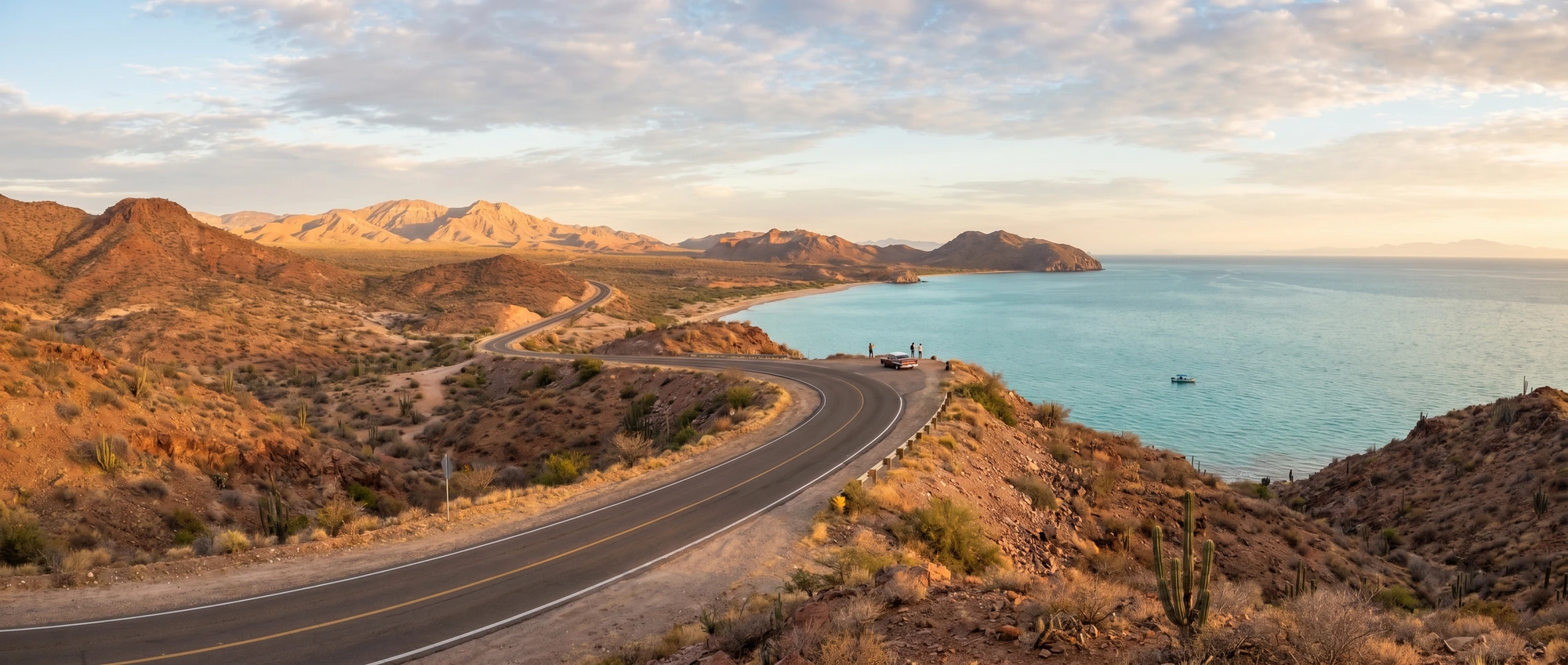
Baja California, Mexico
Baja California Sur
The whole of Baja's southern tip for UK travellers, not just the resorts: the calm Sea of Cortez side at La Paz and Loreto, the surf-and-art coast at Todos Santos, the whale lagoons, and how to string them together when there are no direct flights.
In short
Baja California Sur at a glance
Baja California Sur is the long, thin southern half of Mexico's Baja peninsula, and most UK visitors only ever see one corner of it — the Los Cabos resorts at the very tip. Drive an hour or two north and it changes character completely: La Paz is a relaxed Sea of Cortez town where you can snorkel with sea lions at Isla Espíritu Santo and swim from genuinely calm beaches; Todos Santos is a Pacific surf-and-art village an hour from Cabo; and on the far Pacific coast the lagoons around Guerrero Negro and Magdalena Bay host the grey-whale breeding season every winter. There are no direct flights from the UK, so you'll connect through a US hub or Mexico City into either Los Cabos (SJD) or La Paz; with a week you can comfortably pair the tip with La Paz, and ten days lets you add Loreto or a whale lagoon.
Almost every UK trip to this state begins and ends at the resorts on the southern tip, and that’s the mistake — Los Cabos is the least representative corner of Baja California Sur. Drive a couple of hours up Highway 1 and the desert opens onto the Sea of Cortez at La Paz, a low-key waterfront town where the beaches are actually calm enough to swim, the boats run out to a sea-lion colony at Isla Espíritu Santo, and prices drop by a third. Between the two ends sit Todos Santos, a Pacific surf-and-gallery village an hour from Cabo, and beyond La Paz the long road north to Loreto and the winter whale lagoons. The tip is the easy bookend; the state is the trip.
The thing first-timers get wrong is treating it as a single beach base when it’s really a peninsula you move through. The east, Sea of Cortez side is the one for swimming and wildlife — Balandra, Tecolote, the sea lions — while much of the Pacific coast carries surf you shouldn’t wade into. Distances are genuinely long (Cabo to La Paz is two hours, La Paz to Loreto nearly five), and there are no direct flights from the UK, so you’ll lose a day each way connecting through a US hub or Mexico City. Plan a base per region, hire a car or take the cheap inter-city coaches, and the wilder, better half of Baja opens up.
The route
A week-plus loop that gets you past the resorts and onto the calm Sea of Cortez side, where the swimming and the wildlife actually are. Drive times are for Highway 1 (the Transpeninsular); a hire car gives the most freedom, but the Aguila/Ruta del Desierto buses link the towns cheaply if you'd rather not drive.
-
Days 1–2
Land at the tip (Los Cabos)
Fly into San José del Cabo (SJD) — you'll connect through a US hub on the way — and ease in with a couple of nights near the corridor while you shake off the long travel day. See El Arco by boat from Cabo San Lucas marina and swim at the calm Médano Beach, then pick up a hire car for the drive north.
-
Day 3
Todos Santos, then up to La Paz
Take the Pacific road and stop in Todos Santos (about 1 hour from Cabo San Lucas) — a Pueblo Mágico of galleries, surf breaks and the original Hotel California — for lunch and a wander, then continue to La Paz (another 1h15). This west-side route is far prettier than the inland highway.
-
Days 4–5
La Paz and Isla Espíritu Santo
Base in La Paz for the best of the Sea of Cortez. Book a day boat to Isla Espíritu Santo (around £75–£110pp) to snorkel with the sea-lion colony — the single best thing in the whole state — and spend the other day at Playa Balandra and Tecolote, the calm, shallow, genuinely swimmable beaches a 30-minute drive from town. La Paz's malecón is a relaxed evening contrast to Cabo's bars.
-
Days 6–7
Loreto or a whale lagoon, then home
With more time, drive north to Loreto (about 4½ hours from La Paz) for the mission town and the national marine park, or in January–March detour to a Pacific whale lagoon (Magdalena Bay is the closest, ~3 hours from La Paz) to get near grey whales and their calves. Otherwise loop back to SJD, allowing a full day for the connecting flights home.
Where to base yourself
Pick one or two bases rather than moving every night.
La Paz
££ mid-rangeThe relaxed state capital on the Sea of Cortez and the best non-resort base: a walkable waterfront malecón, calm swimmable beaches (Balandra, Tecolote) nearby, and the boats to Isla Espíritu Santo. Far cheaper and more local than the tip, with hotels and guesthouses rather than mega all-inclusives.
Best for: Wildlife, calm swimming and a real Mexican town pace
Todos Santos
££ mid-rangeA Pacific surf-and-art village an hour from Cabo San Lucas, full of galleries, good food and boutique hotels — a Pueblo Mágico that makes an easy day trip or a quieter alternative base. The town beaches have strong surf and aren't for casual swimming, so it's about atmosphere and the breaks, not lazing in the sea.
Best for: Surfers, art, food and a low-key bolthole
Los Cabos corridor
£££ premiumThe resort strip at the very tip (Cabo San Lucas, San José del Cabo and the all-inclusives between them) — the easy first or last stop where the airport and most flights land. Convenient and polished, but it's the resort bubble; treat it as bookends to the wilder peninsula rather than the whole trip.
Best for: An easy resort base at the start or end of the trip
Getting around Baja California Sur
The peninsula is long and there's no rail, so you move by hire car or inter-city bus on Highway 1 (the Transpeninsular). A hire car (from ~£25–£40 a day out of Los Cabos or La Paz) is the most flexible way to link the towns and reach beaches like Balandra, but the Aguila and Ruta del Desierto coaches are a cheap, comfortable alternative — Cabo to La Paz is about 2½ hours and roughly 600–800 pesos (~£26–£34). Within La Paz and the resort towns, taxis are unmetered and aimed at tourists, so agree the fare first or pre-book transfers; the Los Cabos airport (SJD) run to a corridor resort is a fixed-price private transfer of about £55–£75. Distances and fuel add up — Cabo to La Paz is about 2 hours' driving, La Paz to Loreto about 4½ — so plan one base per region rather than darting back and forth, and fill the tank in towns as petrol stations thin out between them.
Book the essentials
Where to stay
Tours & tickets
Airport transfers
Car hire
Stay connected
Baja California Sur FAQs
Is Baja California Sur just Los Cabos?
Where can you actually swim in Baja California Sur?
When is the best time to visit Baja California Sur?
Ready to book?
Compare car hire