Jalisco (Pacific Coast)
Whale watching in Banderas Bay
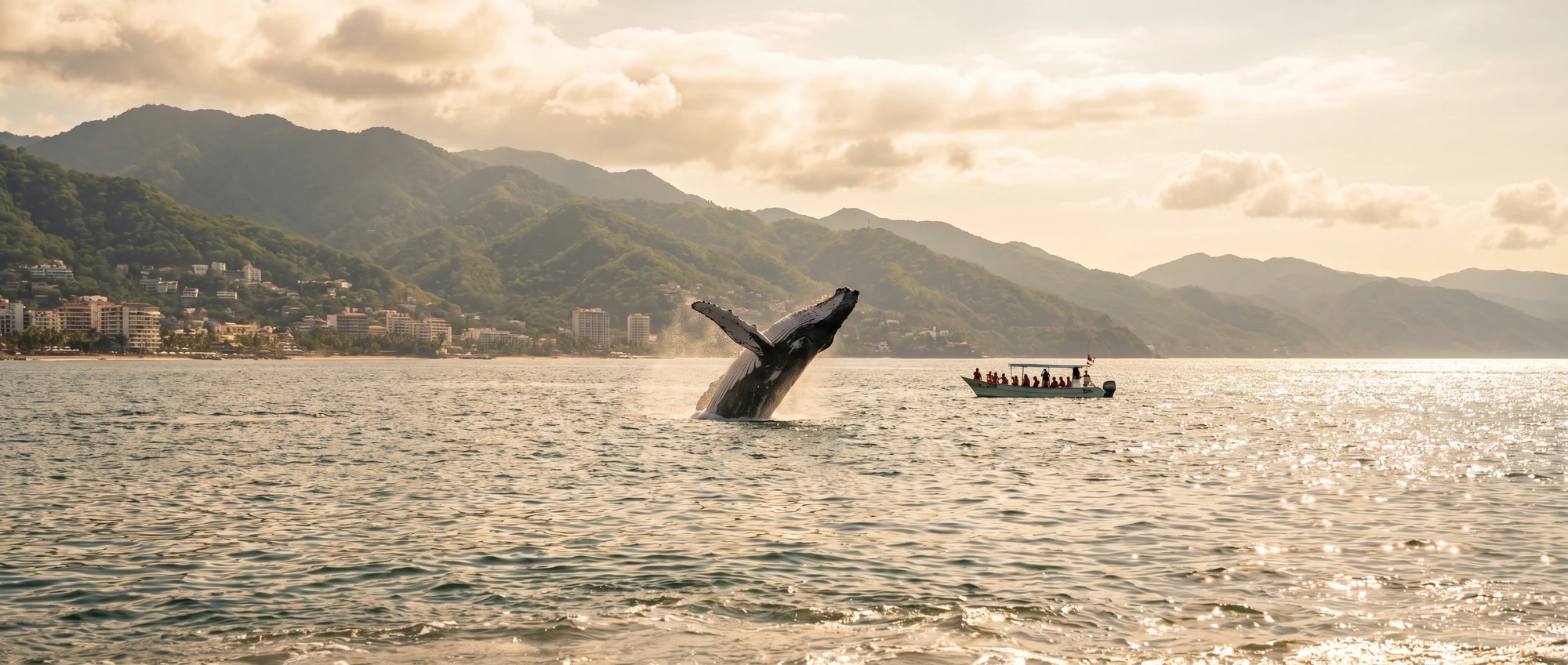
Humpbacks breed in Banderas Bay through the winter, roughly December to late March. Morning trips are calmer and best for breaches — and a legally capped season makes this a winter-only reason to come.
Where
Puerto Vallarta, Mexico
Opening hours
Trips run only during the official whale-watching season, roughly 8 December to 23 March, with departures most days through that window; morning and afternoon slots are typical. Departure times and the exact season dates vary by year and operator, so confirm current hours and prices on the official site.
Tickets
A shared whale-watching trip typically costs from about £45–60 per person with a licensed operator; smaller or private boats cost more. Prices and availability swing with the short season, so book ahead and confirm current hours and prices on the official site.
Time needed
Around three to four hours for a typical trip, including time on the water searching for and watching the whales.
In short
Visiting Whale watching in Banderas Bay
Humpback whales migrate into Banderas Bay to breed and calve each winter, and a boat trip out to see them is one of Puerto Vallarta's standout experiences. The season is legally capped — roughly 8 December to 23 March — so it is a winter-only reason to visit. Morning trips tend to be calmer and better for breaches. Expect to pay from about £45–60 per person with a licensed operator.
A winter-only spectacle
Each winter, humpback whales migrate down the Pacific into the warm, sheltered water of Banderas Bay to breed and calve, and getting out among them on a boat is one of Puerto Vallarta’s genuine highlights. You’ll be watching for the tell-tale blow, then the slow roll of a back, and — with luck — a full breach or a tail slap, often with mothers and calves close inshore.
The crucial thing to plan around is the season. It is legally capped to protect the animals, running roughly 8 December to 23 March, with the exact dates set each year. Outside that window there are simply no trips. So if whales are your main reason to come, this is a winter-only trip — there’s no point booking for an August holiday and hoping.
Choosing a trip, and is it worth it
Aim for a morning departure. The bay is usually calmer early, which means a smoother ride and better odds of seeing breaches before the afternoon wind ruffles the surface. A typical shared trip runs about three to four hours and costs from around £45–60 per person; smaller or private boats cost more but feel less crowded and get you closer to the action.
Book with a licensed operator that respects the official distance rules — responsible boats keep their engines down and hold back, which is better for the whales and, frankly, for the experience. Sightings are never guaranteed, but in peak season the bay is busy with animals and most trips do well. The verdict: in winter it is well worth a morning; in summer, save your money and enjoy the beaches instead.
Planning the rest of your trip? See the Puerto Vallarta city guide.
More to see in Puerto Vallarta

Book the essentials
Tours & tickets
Whale watching in Banderas Bay FAQs
When can you see whales in Banderas Bay?
What time of day is best for whale watching?
How do I choose a responsible operator?
Ready to book?
Check tickets & tours