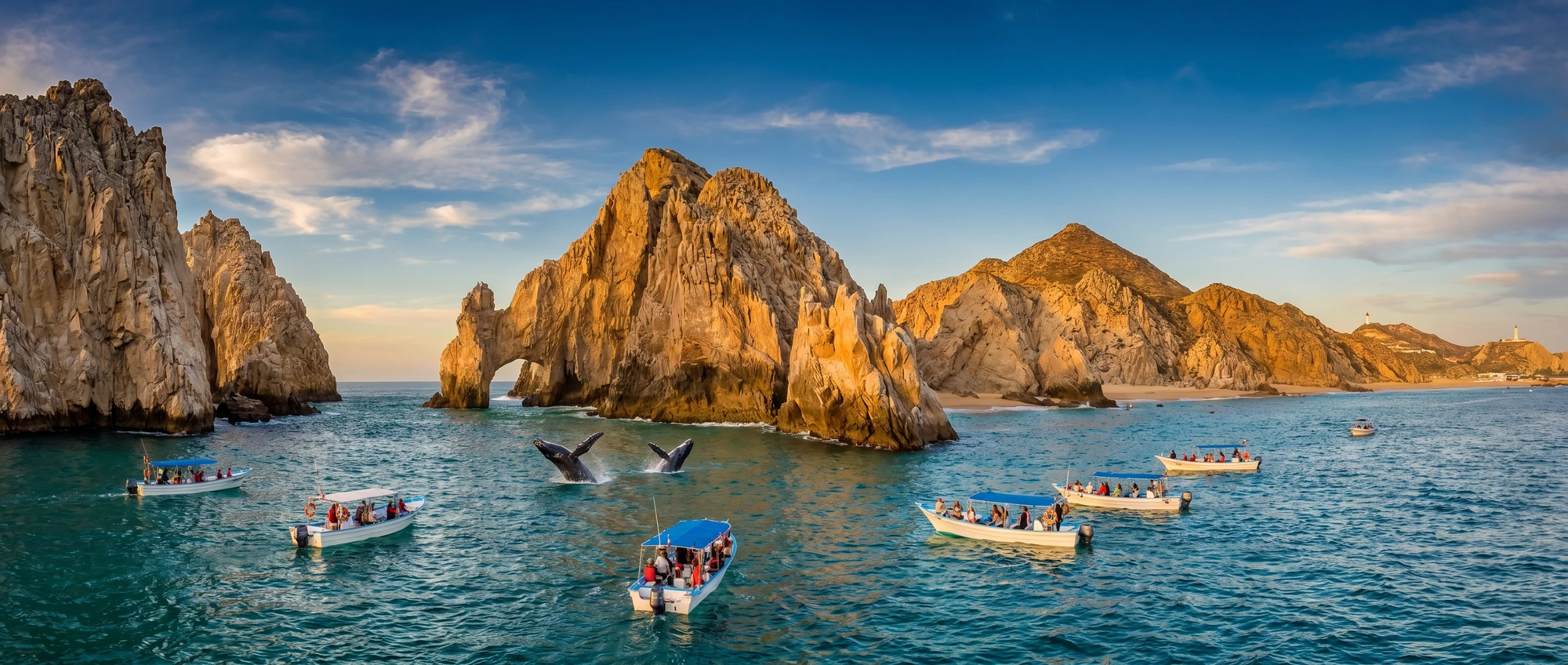
Baja California Sur (Los Cabos)
Whale watching
From December to mid-April humpbacks and greys migrate past the tip of Baja. February is the peak — book a marine-biologist-led boat from the Cabo San Lucas marina.
Where
Cabo San Lucas, Mexico
Opening hours
Whale-watching season runs roughly December to mid-April, peaking in February; there are no migrating whales outside this window. Tours typically depart morning and early afternoon from the marina, weather permitting. Confirm current hours and prices on the official site.
Tickets
From about £40–95 per person (roughly US$50–120), depending on the boat: cheap open pangas at the lower end, small marine-biologist-led naturalist trips at the higher end. Confirm current prices on the official site.
Time needed
Around 2.5 to 3.5 hours for a typical trip, including time out to the whales and back; allow extra for marina check-in.
In short
Visiting Whale watching
From December to mid-April, humpbacks and grey whales migrate past the tip of Baja, breaching close to Cabo San Lucas; February is the peak. Trips leave the marina, from cheap pangas to small marine-biologist-led boats. Pay a bit more for the naturalist trip — the pangas see whales too but tell you nothing. Outside the season there are none.
Season first, then the boat
The first rule of whale watching in Cabo San Lucas is that it’s seasonal. From roughly December to mid-April, humpbacks and grey whales migrate down the Pacific and round the tip of Baja into the warmer Sea of Cortez, breaching and tail-slapping close enough to shore that you’ll sometimes spot them from the beach. February is the peak — the best odds of a good show. Outside that window there are essentially no migrating whales, so a summer trip will be a boat ride with no whales; check the calendar before you book anything.
Within the season, the choice is the boat. Trips leave from the Cabo San Lucas marina, and they range from cheap open pangas to small marine-biologist-led naturalist boats. Prices run from about £40 to £95 per person (roughly US$50–120), the pangas at the lower end. My honest steer: pay the bit extra for a licensed naturalist trip. The pangas do find the whales, but a trained guide explains the behaviour you’re watching, the groups are smaller, and the boat is set up for viewing rather than just getting you out there.
What the day is like, and the caveats
A typical trip runs 2.5 to 3.5 hours including the run out past the famous El Arco rock and back, usually morning or early afternoon. Bring sun protection, a layer for the wind on the water, and motion-sickness tablets if you’re prone — the swell off the point can be lively.
Is it worth it? In season, genuinely yes: seeing a humpback breach a few hundred metres from the boat is the kind of thing you remember, and February rarely disappoints. The caveats are real, though — wildlife is never guaranteed, rough days can be cancelled, and the cheapest pangas can feel cramped and uninformative. Book a reputable, licensed operator, go for a morning slot when the sea is calmest, and treat February as the month to aim for.
Planning the rest of your trip? See the Cabo San Lucas city guide.
More to see in Cabo San Lucas

Book the essentials
Tours & tickets
Whale watching FAQs
When can you see whales in Cabo San Lucas?
Which boat should I book?
How much does whale watching cost?
Ready to book?
Check tickets & tours