Central Montenegro
Cetinje Monastery
The spiritual heart of old Montenegro: Cetinje Monastery holds the relics of St Peter of Cetinje and, by tradition, the right hand of St John the Baptist — an active monastery, so dress modestly.
Where
Cetinje, Montenegro
Opening hours
Open most days outside services; closed or restricted to worshippers during liturgies. The treasury and relic rooms have shorter hours and may be guide-led. Confirm current opening times locally before you visit.
Tickets
Free to enter; a small donation is expected, and the treasury may charge a modest fee. Modest dress is required.
Time needed
Around 45 minutes to an hour to see the church, courtyard and, if open, the treasury and relic room.
In short
Visiting Cetinje Monastery
Cetinje Monastery is the spiritual heart of old Montenegro, holding the relics of St Peter of Cetinje and, by tradition, the relic believed to be the right hand of St John the Baptist. It's a working Orthodox monastery, so dress modestly, keep quiet and skip it during services. Entry is free, though a small donation is expected.
Why it matters and what you see
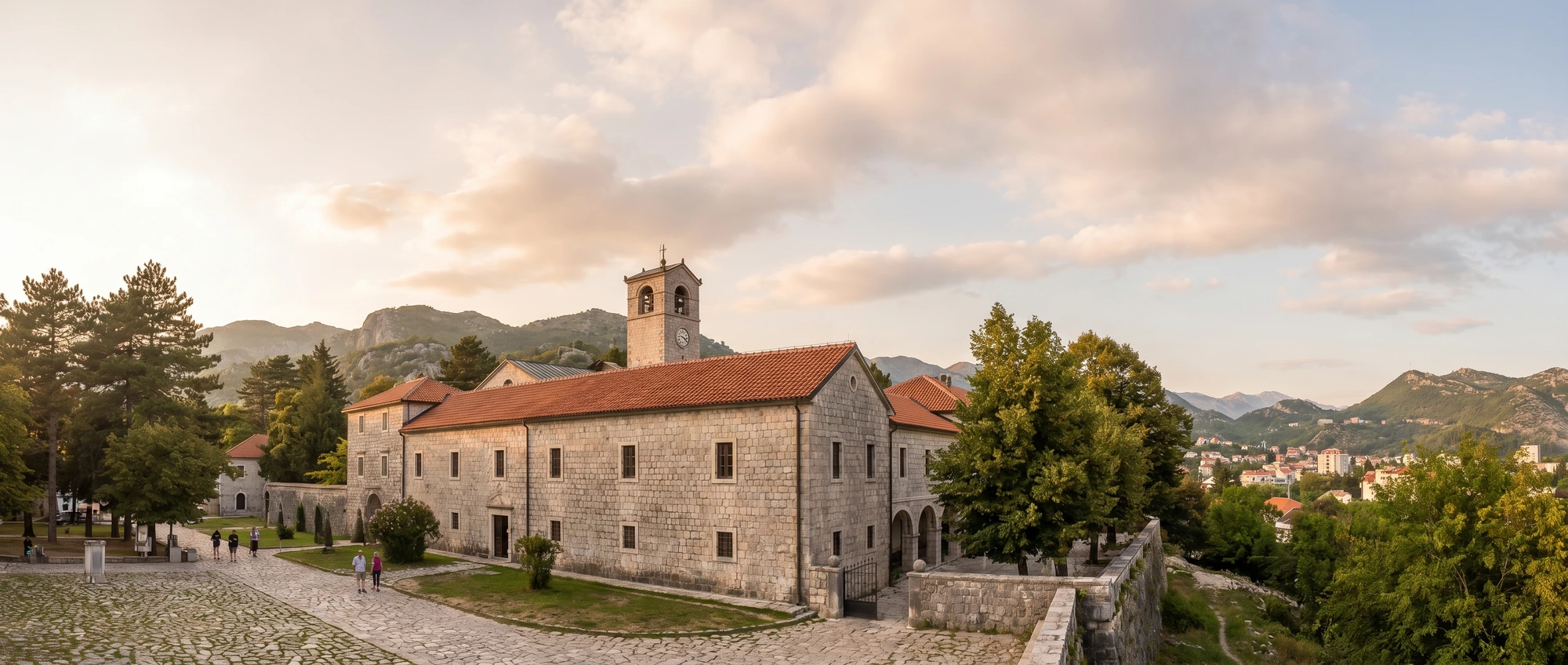
Cetinje Monastery is the spiritual heart of old Montenegro, sitting at the foot of the old royal capital. For centuries it was the seat of the prince-bishops who ruled the country, and that history is what gives a fairly modest set of buildings such weight. Inside it holds genuinely revered relics: the remains of St Peter of Cetinje (Petar I Petrovic-Njegos), the relic venerated by tradition as the right hand of St John the Baptist, and a fragment held to be of the True Cross. The church, courtyard and — when open — the treasury and relic room make up the visit, and viewing the relics is often quiet and guide-led.
Entry is free, though a small donation is expected and the treasury may ask a modest fee. Hours shift and the monastery closes to casual visitors during services, so check locally before you turn up.
How to visit respectfully
This is a working Orthodox monastery, not a museum, and the visit asks something of you. Dress modestly — shoulders and knees covered, no shorts or vest tops; women may be asked to cover their heads. Keep your voice low, follow any no-photography signs, and step aside if worshippers are praying. The single biggest mistake is arriving during a liturgy, when you’ll either be turned away or feel intrusive, so time your visit between services.
Is it worth it? Yes, with the right expectations. It isn’t large or visually overwhelming, and if you’re chasing grand architecture you may find it understated. But its place at the centre of Montenegrin faith and statehood makes it quietly moving, and it sits naturally alongside the rest of the old capital. Allow 45 minutes to an hour, then pair it with King Nikola’s Palace a short walk away to round out a morning in Cetinje.
Planning the rest of your trip? See the Cetinje city guide.