Azores
Azores
A first trip to the Azores for UK travellers: base on São Miguel, hire a car for the crater lakes and hot springs, and decide whether to island-hop to Pico or Faial.
In short
Azores at a glance
The Azores are nine volcanic islands roughly 900 miles off Portugal in the mid-Atlantic, and for a first trip you want São Miguel, the biggest. Fly into Ponta Delgada, hire a car, and you can reach the Sete Cidades crater lakes, Lagoa do Fogo and the geothermal valley at Furnas without booking a single tour. A week splits neatly into São Miguel plus one second island — Pico for the volcano and wine, or Faial for the harbour and whale-watching — reached by a 30–40-minute SATA hop. This is hiking-boots-and-waterproofs travel, not a beach holiday: the weather turns on a sixpence and the swimming is in hot springs and lakes, not the sea.
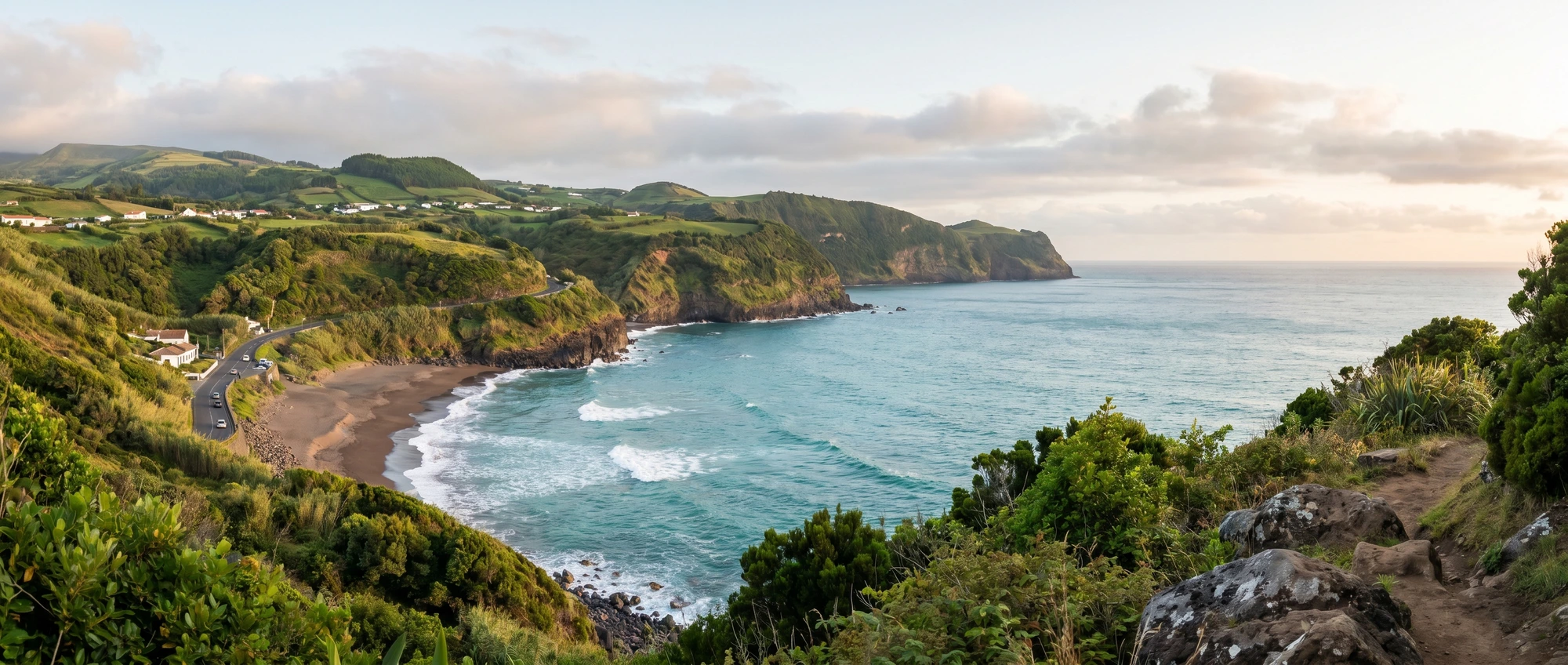
The Azores are nine volcanic islands sitting on their own in the mid-Atlantic, about 900 miles west of Lisbon and a four-hour flight from London. They’re part of Portugal, so for UK travellers the entry rules, the euro and the GHIC all work exactly as they do on the mainland — but the landscape doesn’t: this is crater lakes, steaming fumaroles, hydrangea-lined roads and waterfalls, closer in feel to Iceland or Hawaii than to the Algarve. For a first trip, you want São Miguel, the largest island, where Ryanair flies direct from Stansted and you can reach the headline sights — the Sete Cidades twin lakes, Lagoa do Fogo and the geothermal valley at Furnas — with a hire car and no booked tours at all.
The thing to be honest about is the weather and the swimming. The Azores are wet and changeable; a grey, drizzly morning often burns off into a clear afternoon, and the famous crater views vanish the moment cloud settles in the caldera, so you keep your Sete Cidades day flexible and pounce when the forecast is good. And the “swimming” is mostly in hot springs and lakes, not the sea — the Atlantic here is cool and the beaches are black sand and pebbles. Come for the hiking boots and the geothermal pools, not the sunlounger.
If you have a full week, add one second island by a short SATA Air Açores hop. Pico gives you Portugal’s highest peak, the UNESCO vineyard walls and the black-stone wine cellars; Faial gives you Horta’s yacht-filled marina, the harbour wall painted by passing sailors and the 1957 Capelinhos volcano. Either pairs well with São Miguel without doubling up on what you’ve already seen.
The route
A week that gives São Miguel the time it needs, then adds one contrasting second island. Days on São Miguel are organised by geography — west, centre, east — so you're not crossing the island twice. Keep the clear-sky day flexible: swap days around if the forecast for Sete Cidades looks grim.
-
Days 1–2
São Miguel west: Sete Cidades & Ponta Delgada
Pick up the hire car at the airport and settle into Ponta Delgada. Spend a clear morning at the Sete Cidades twin lakes — Vista do Rei and the Boca do Inferno viewpoint give the classic blue-and-green caldera shot, but only on a clear day, so check the forecast and go early before the cloud builds. Walk the old town and the harbour in the afternoon.
-
Day 3
Lagoa do Fogo & Caldeira Velha
Lagoa do Fogo sits in the centre of the island with no road or building on its shores — the prettiest lake here, reachable only on foot from the ridge car park. On the way back, soak at Caldeira Velha, a warm waterfall pool in the forest (€10 entry, book a time slot online as numbers are capped).
-
Day 4
Furnas: hot springs & cozido
Drive east to Furnas, the geothermal valley. The fumaroles by the lake cook cozido — a stew buried in the ground for hours by volcanic heat, served in the village restaurants from about 1pm if you order ahead. Spend the afternoon in the warm iron-rich pool at Terra Nostra Park (around €10–17 entry) and the bathing pools in the village.
-
Day 5
Whale-watching & east coast
Take a half-day whale and dolphin tour from Ponta Delgada or Vila Franca do Campo (around €50–65); sperm whales are resident year-round and the spring migration brings blue and fin whales. Otherwise drive the green Nordeste coast and the Gorreana tea plantation, the only tea grown in Europe, with free tastings.
-
Days 6–7
Second island: Pico or Faial
Take a 30–40-minute SATA Air Açores hop. Pico is the volcano — Portugal's highest peak — plus UNESCO vineyard walls and black-stone wine cellars. Faial is the yachting island: paint your mark on Horta's harbour wall, climb the Capelinhos volcano that erupted in 1957, and look across the channel at Pico from the black-sand beach.
Where to base yourself
Pick one or two bases rather than moving every night.
Ponta Delgada (São Miguel)
££ mid-rangeThe capital and only real town: the harbour, the restaurants, the car-hire desks and the airport 10 minutes away. The most central, most convenient base for touring the island — stay here unless you specifically want to be out east near Furnas.
Best for: First base, restaurants, car touring
Furnas (São Miguel)
££ mid-rangeThe geothermal village in the east, surrounded by fumaroles, the lake and Terra Nostra Park. A quieter, more atmospheric second base if you want to bathe in the hot pools morning and night — but it's a 45-minute drive from Ponta Delgada, so don't make it your only base.
Best for: Hot springs, slowing down, a night or two
Horta (Faial)
££ mid-rangeThe sailors' town and the marina where Atlantic yachts stop to paint their crews' names on the harbour wall. Peter Café Sport is the legendary bar; the views across to Pico are the best in the archipelago. The base for the second island if you choose Faial over Pico.
Best for: Second island, marina atmosphere, Pico views
Getting around Azores
Hire a car on each island you visit — public buses don't reach the crater lakes, Lagoa do Fogo or the inland viewpoints, and the islands are small enough to drive end to end in a day. On São Miguel, reckon on roughly €40–60 (about £35–50) a day for a small car in summer, much less in shoulder season; book early because the fleet is finite. Between islands, fly SATA Air Açores (30–40 minutes, around €60–120 one way) rather than relying on the ferries, which mostly run summer-only and are weather-dependent. There's no bridge or tunnel between any of the nine islands.
Book the essentials
Where to stay
Tours & tickets
Airport transfers
Car hire
Stay connected
Azores FAQs
Which Azores island should I visit first?
Do you need a car in the Azores?
What is the best time to visit the Azores?
Are the Azores a beach holiday?
Ready to book?
Compare car hire