Norte
Douro Valley
A first trip to Portugal's Douro Valley for UK travellers: should you drive, train or cruise in from Porto, which town to base in (Pinhão or Régua), what a quinta tasting actually costs in pounds, and when to come.
In short
Douro Valley at a glance
The Douro is the terraced river valley inland from Porto where port is grown — vines stacked up impossibly steep schist hillsides above a green-brown river, dotted with wine estates (quintas) you can tour and taste at. It's a day trip from Porto if you're tight on time, but it rewards an overnight: base in Pinhão for vineyard views on your doorstep or Peso da Régua for the easiest train and services. You don't strictly need a car — the Porto–Pinhão railway is one of Europe's prettiest and several quintas are walkable from Pinhão — but a car (or a driver) unlocks the N222 and the high viewpoints. Two nights is the sweet spot.
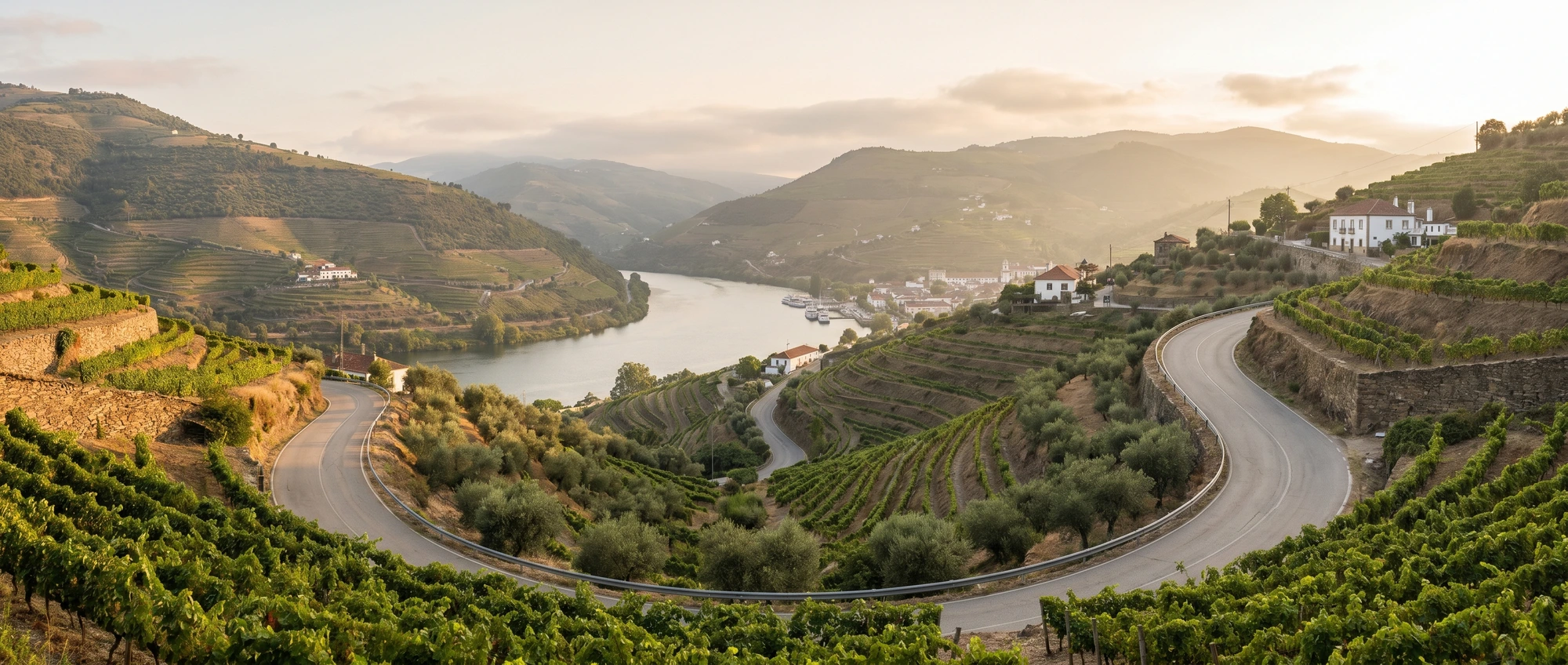
The Douro is where port comes from — a deep, terraced river valley a couple of hours inland from Porto, with vineyards stacked up schist hillsides so steep they look hand-built (they were). The estates that grow the grapes, the quintas, open their doors for tours and tastings, and the river itself carries Rabelo-boat cruises past the slopes. It’s a UNESCO landscape and one of the oldest demarcated wine regions in the world, and the appeal is simple: drink very good port and wine in the place it’s actually made, looking at the vines it came from.
The first decision is how to get there and whether to stay. You can do it as a long day trip from Porto, but the valley unwinds better over a night or two. The scenic Linha do Douro train from São Bento spends its final hour pinned to the riverbank — about £13 and worth the seat on the right — though it only reaches the riverside towns, not the hilltop estates. A car unlocks the N222, the bend-stacked road between Peso da Régua and Pinhão that the Avis index once crowned the world’s best drive, plus viewpoints like São Leonardo de Galafura. The catch is obvious: you can’t taste if you’re driving. For most first-timers the honest answer is to train in, or hire a driver or join a small-group tour, so nobody has to stay sober.
As for a base, it comes down to scenery versus convenience. Pinhão is the prettier stop — a tiny village ringed by famous port names, with several wineries walkable from its tiled station and cruise boats at the quay. Peso da Régua is the workaday hub: more frequent trains, more restaurants, an actual pharmacy. Come in May or June for warm, quiet vineyards, or mid-September into October for the harvest, when the valley hums and the estates fill up — book ahead either way, and give August inland a miss when the heat sits in the mid-30s.
The route
A relaxed two-night Douro built around one travel day in, a full day of quintas and a cruise, and an easy morning out. Distances are short but the roads are slow and twisty, so don't over-pack the days — three or four quintas is plenty.
-
Day 1
Porto to the valley
Travel in by mid-afternoon. The scenic option is the CP train from Porto São Bento to Pinhão (about 2h20, ~£13); the river-hugging final hour from Régua is the highlight, so sit on the right. Driving takes around 1h30 but means a designated non-drinker. Settle in, walk the Pinhão waterfront and its azulejo-tiled station, and do a first tasting at a walkable estate.
-
Day 2
Quintas and a river cruise
The full Douro day: tour two or three quintas (book a guided tasting at Quinta do Bomfim or Quinta do Tedo, around £18–£25), break for a long lunch with a river view, and take a Rabelo-boat cruise from Pinhão — the 1-hour Pinhão–Romaneira loop is about €12.50 (~£11), the 2-hour Pinhão–Tua run with a glass of port about €25 (~£22). If you have a car or driver, drive the N222 to Régua and stop at the São Leonardo de Galafura viewpoint.
-
Day 3
Lamego or a slow morning home
Either a final estate tasting, or detour to Lamego (about 25 minutes from Régua) for the baroque Nossa Senhora dos Remédios sanctuary and its monumental stairway. Then train or drive back to Porto. If you've a late flight from Porto Airport (OPO), allow the full 1h30+ for the road back plus the airport run.
Where to base yourself
Pick one or two bases rather than moving every night.
Pinhão
£££ premiumThe most scenic base and the one most worth the extra train time: a tiny village wrapped in terraced vineyards, with famous port names (Graham's, Dow's, Sandeman) on the hills around it and several quintas walkable or a short taxi from the station. Cruises leave from the quay. Limited shops and restaurants, so it's about the setting, not the buzz.
Best for: Vineyard views, walkable wineries, no-car stays
Peso da Régua
££ mid-rangeThe practical hub of the lower Douro: the best train connections to Porto (more frequent than Pinhão), plus restaurants, shops, a pharmacy and the Museu do Douro. The scenery is a touch less dramatic than Pinhão but it's the easier first base if you're car-free and want services on the doorstep.
Best for: Easy logistics, car-free trips, services
A quinta estate stay
£££ premiumSleeping at a working wine estate is the quintessential Douro splurge — terrace tastings, estate dinners and pools looking down the valley, at places like Quinta da Pacheca (near Régua) or Quinta de la Rosa (near Pinhão). Expect roughly €120–€260 (~£105–£225) a night. You'll want a car or transfers, as most sit out on the vineyard roads.
Best for: A vineyard splurge, tastings on site, couples
Getting around Douro Valley
Three ways in and around. The CP train from Porto São Bento runs the Linha do Douro to Régua and Pinhão — cheap (~£12–£15 each way), no parking stress, and genuinely scenic for the river-hugging final stretch, but it only links the riverside towns, not the hilltop quintas. A car gives you the N222 (the 21km Régua–Pinhão stretch rated one of the world's best driving roads, with 93 bends) and the high viewpoints, but the roads are slow and you can't taste if you're driving. The relaxed answer for most first-timers is a small-group day tour or a private driver from Porto, so everyone can drink. Within Pinhão you can walk between a few wineries and the cruise quay; everywhere else needs wheels or a taxi.
Book the essentials
Where to stay
Tours & tickets
Airport transfers
Car hire
Stay connected
Douro Valley FAQs
Is the Douro Valley a day trip from Porto or do you need to stay over?
Should I base in Pinhão or Peso da Régua?
Do you need a car in the Douro Valley?
When is the best time to visit the Douro Valley?
Ready to book?
Compare car hire