Norte
Guimaraes
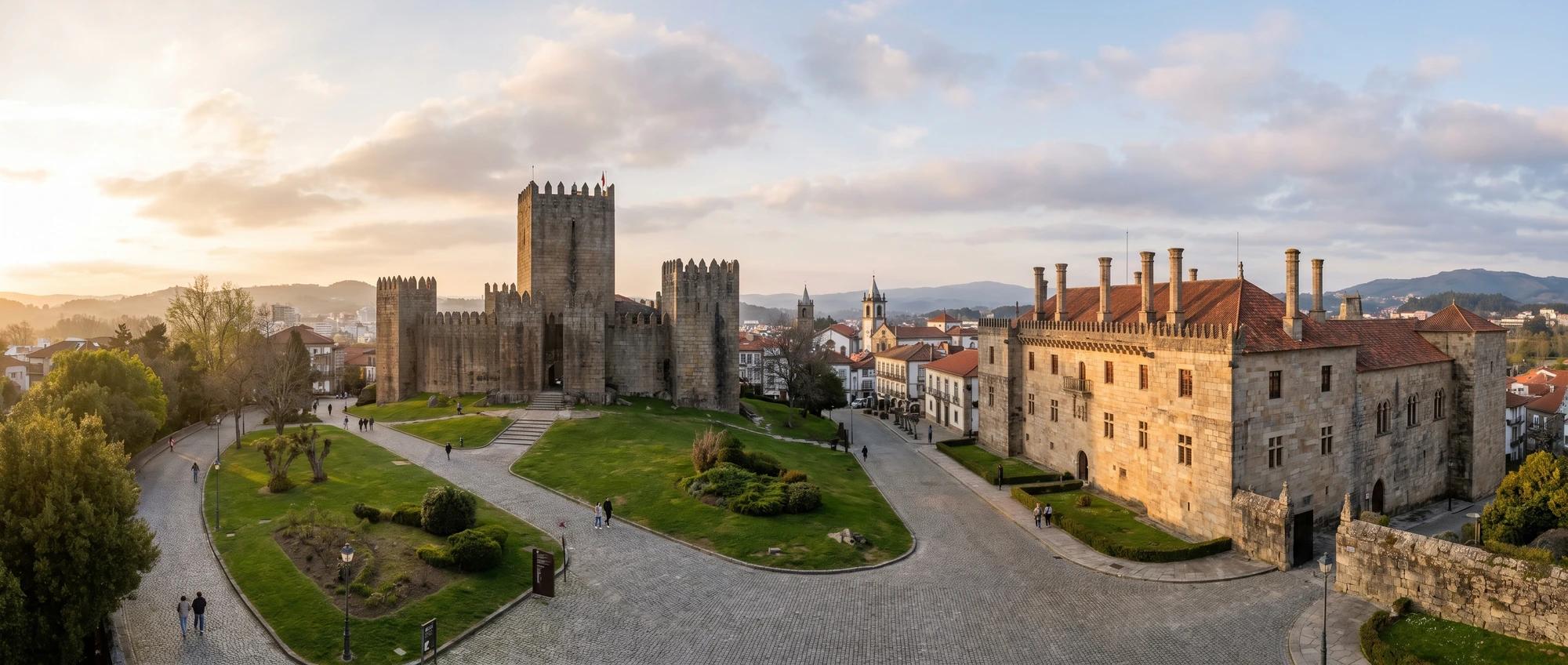
The birthplace of Portugal works as a half-day from Porto: take the hourly CP train from Campanha, walk the castle, palace and old town, and decide on the day whether the Pousada is worth a night.
Best length
Half day to one full day; overnight optional
Getting there
Hourly CP train from Porto Campanha, ~54 min
Train fare
About €3.60 single, plus €0.50 Siga card first time
Headline ticket
Castle + Paco dos Duques combo about €8 at the palace
In short
Guimaraes at a glance
Guimaraes is the small medieval city where Portugal's first king was born, and it works best as a half- to full-day add-on from Porto rather than a base. Take the hourly CP train from Campanha, do the castle, the Paco dos Duques and the UNESCO old town on foot, ride the Penha cable car if the weather is clear, and decide on the day whether the Pousada monastery is worth an overnight.
The short version
- Treat Guimaraes as a day trip from Porto: the train from Campanha takes about 54 minutes and the whole compact centre is walkable.
- Buy the combined castle and Paco dos Duques ticket at the palace ticket office (about €8) rather than separate online tickets, and note entry is free on Sunday mornings.
- The castle itself is small and quick; the medieval streets around Largo da Oliveira and Rua de Santa Maria are the real reason to come.
- Ride the Teleferico da Penha up the wooded hill only when the sky is clear, otherwise you pay €10 return for cloud.
- Stay over only if you want the Pousada monastery on Penha or you are pairing Guimaraes with Braga; one night is plenty.
Guimaraes trades on a single line of marketing — “Aqui nasceu Portugal”, here Portugal was born — and the 10th-century castle that gives the claim its weight is, honestly, small. You can walk its battlements in half an hour. The real reward is the UNESCO old town below it: a tight, lived-in grid of granite arcades, cobbled lanes and shaded squares where the cafe tables on Largo da Oliveira fill with locals before they fill with day-trippers. Come for the streets, treat the castle as a quick tick, and you will leave happy.
The smart way to do it is from Porto. The CP train from Campanha runs roughly hourly and takes about 54 minutes, dropping you a ten-minute walk from the centre, so this is a half-day to full-day add-on rather than somewhere you need to base yourself. Buy the castle-and-palace combined ticket at the Paco dos Duques desk (around €8, and free on Sunday mornings) rather than pricier separate online tickets, and do the palace — the more substantial of the two — before the castle, since the castle ticket is sold only at the palace office.
If the sky is clear, ride the Teleferico da Penha, Portugal’s first cable car, up the wooded hill for granite boulders, a hilltop sanctuary and views back over the red roofs; in low cloud, save your €10. Staying over is optional and only really pays off for two reasons: the Pousada in a 12th-century monastery on the Penha side, or pairing Guimaraes with Braga the next morning. Otherwise, catch the late-afternoon train back to Porto once the streets quieten — that evening lull, after the coaches leave, is when the old town is at its best. The structured planning below — sights, where to stay, getting in and a realistic budget in pounds — picks up from here.
Keep a first trip focused: book the big timed sights, then leave room for neighbourhoods and food.
Top things to do in Guimaraes
Castelo de Guimaraes
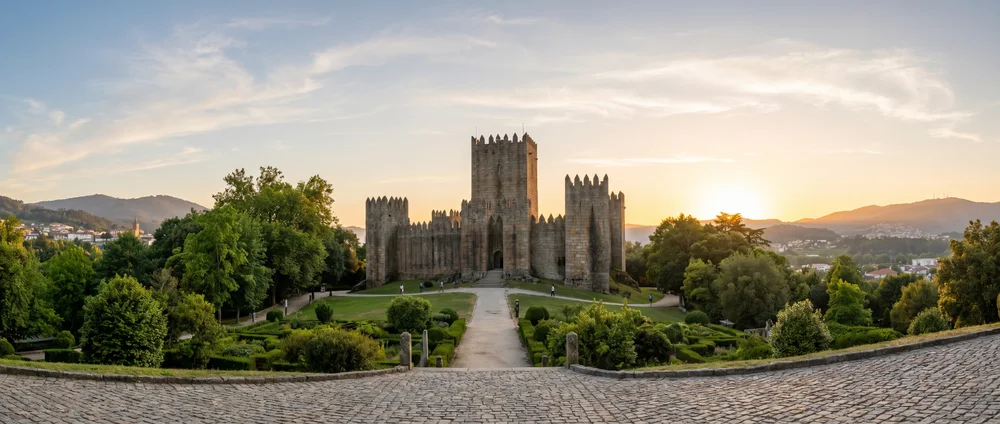
The 10th-century Castelo de Guimaraes is billed as the cradle of Portugal — this is where the first king was associated and the nation took shape. It's genuinely small, so don't over-plan it: 30–40 minutes on the battlements is enough. Entry is around €2, or about €8 combined with the ducal palace, and the castle ticket is sold only at the Paco dos Duques office, so do the palace first.
Guimarães Castle
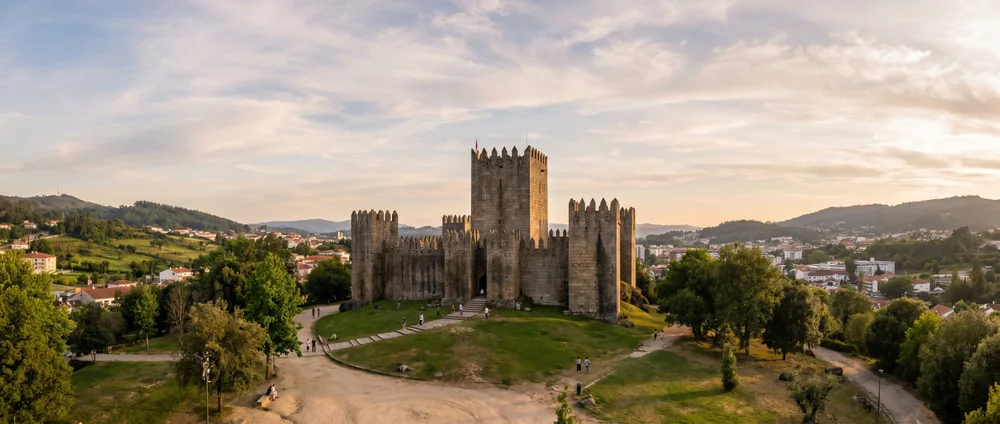
Don't buy the castle on its own — at €5 it's only €3 less than the €8 combined ticket, which adds the far richer Palace of the Dukes 200 metres downhill, and the castle alone is a 30-minute walk-round. Come for the story rather than the rooms: this squat granite fortress is where Afonso Henriques, the first King of Portugal, was born around 1109, and the little Church of São Miguel beside it (free) is where he is said to have been baptised. Note the keep (Torre de Menagem) and wall walk have been closed for safety works with no firm reopening date, so the rampart views are off the table for now.
Where to stay first
The areas that make a first visit easier — not an exhaustive directory.
Centro Historico (UNESCO old town)
££ mid-rangeThe walled medieval core around Largo da Oliveira, Rua de Santa Maria and Largo do Toural. If you are staying over at all, this is where you want to be: everything is on foot and the squares come alive in the evening once the day-trippers have caught their train back.
Best for: Overnighters, walkers, atmosphere
Penha hillside
£££ premiumThe wooded ridge above the city, home to the Pousada monastery and quiet pine-and-granite walks. A calmer, greener base with views, but you trade the buzz of the old town for a cable-car or taxi hop down to dinner.
Best for: Couples, quiet, the monastery stay
Zona de Couros
£ valueThe former tanneries district just outside the UNESCO boundary, now a student-and-cafe quarter around the old water tanks. Cheaper and more local than the core, good for a coffee and a wander, but it is a side trip rather than a sightseeing base.
Best for: Budget eats, a quieter stroll
Airport to city centre
| Option | Time | Cost | Book ahead? |
|---|---|---|---|
| Train Porto Campanha to Guimaraes (CP) | ~54 min direct, hourly | about €3.60 single (+€0.50 Siga card) | Buy at the station; no need to book ahead |
| Train via Porto Sao Bento | ~70-75 min (change implied, Campanha is faster) | about €3.60 single | Use Campanha for the direct, quicker service |
| Driving from Porto | ~45-55 min via A3/A7 | tolls plus parking on the centre's edge | Only worth it if combining with Braga |
| Walk from Guimaraes station to the old town | ~10-12 min | free | Flat, signposted route into the centre |
When to go
Sweet spot: April to June and September to early October are the sweet spot: mild walking weather for the cobbles and Penha, clear enough skies for the cable-car view, and far fewer coach groups than high summer. Spring afternoons are ideal for a glass of vinho verde on Largo da Oliveira.
High summer is warm and busy, with the Festas Gualterianas filling the streets on the first weekend of August. Late November brings the student-led Festas Nicolinas. Winter is quiet, cheap and often wet in the green north, fine for the indoor palace but poor for the cloud-prone Penha view. Guimaraes is European Green Capital for 2026, so expect extra events and some street works.
What it costs
There are no flights to Guimaraes; you fly into Porto (OPO). UK return fares to Porto are often £40-£110 outside school holidays when booked ahead, with summer and late bookings pushing higher.
Daily budget per person
The cheapest mistake is buying separate online 'skip-the-line' palace and castle tickets when the combined ticket at the Paco dos Duques desk is cheaper, and free entry runs on Sunday mornings if your dates line up.
Book the essentials
Where to stay
Tours & tickets
Airport transfers
Stay connected
Trains & rail passes
Also in Portugal
Guimaraes FAQs
Is Guimaraes worth a day trip from Porto?
How much does the castle and Paco dos Duques cost in Guimaraes?
Do you need a car to visit Guimaraes?
Ready to book?
Find hotels in Guimaraes