Western Cape
Cape Point
How to do Cape Point and the Cape of Good Hope: the reserve gate fee, whether the Flying Dutchman funicular is worth it, and how to fold it into a full peninsula day.
Where
Cape Town, South Africa
Opening hours
SANParks Cape Point gate table: October–March 06:00–18:00; April–September 07:00–17:00. Be out by the posted closing time and confirm the actual date. The separate Flying Dutchman funicular lists October–March 09:00–17:30 and April–September 09:00–17:00; park entry does not establish the funicular’s operation. https://capepoint.co.za/visitus/
Tickets
International standard conservation fee per day, checked 25 October 2026: R515 adult (12+) / R250 child (2–11), valid through 31 October 2026; R592 / R288 from 1 November 2026–31 October 2027. South African/resident and SADC categories differ and need proof. Activities and transport are separate. Published tariff sheets: https://www.sanparks.org/travel/book/useful-information/rates-fees. The Flying Dutchman funicular has its own ticket; check https://capepoint.co.za/ before adding it.
Time needed
2-3 hours inside the reserve for both Cape Point and the Cape of Good Hope sign; a full day if you drive the whole peninsula loop with Boulders Beach.
In short
Visiting Cape Point
Cape Point is the headland tip of the Cape of Good Hope nature reserve, about a 60-90 minute drive south of central Cape Town, and the entry is a national-park gate fee rather than a timed online ticket. Buy the conservation fee at the gate or pre-book online to skip the kiosk queue, and treat it as the climax of a full self-drive peninsula day rather than a quick stop. Go in the morning before the wind and tour-bus crowds build, and decide on the day whether to walk up to the old lighthouse or take the Flying Dutchman funicular.
How to do it without rushing
Cape Point isn’t a single ticketed building — it’s the southern tip of the Cape of Good Hope nature reserve, and what you pay is a national-park conservation fee at the gate (R515 per international adult through 31 October 2026, then R592 from 1 November 2026–31 October 2027). There’s no timed slot to book, but on a busy summer morning the kiosk queue is real, so pre-book the entry online or carry a SANParks Wild Card but expect gate checks and possible queues, or take a guided peninsula tour that bundles the fee with the transport. The classic mistake is treating it as a quick photo of the Cape of Good Hope sign and leaving — the reserve rewards a couple of hours of walking the cliff paths and the two headlands.
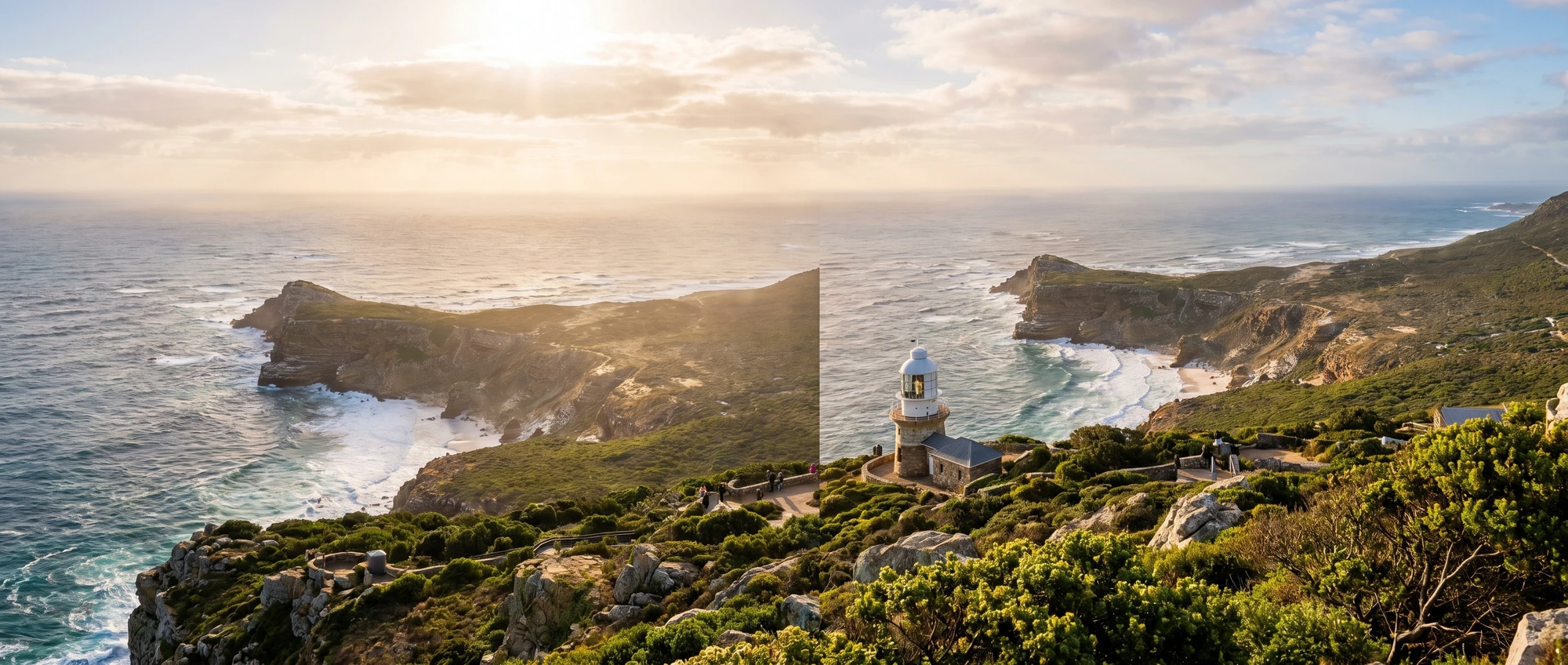
From the car park, the old upper lighthouse is a steepish ten-to-fifteen-minute climb on a paved path with the best views, or you can ride the Flying Dutchman funicular (about R110/£5 return) if the wind is fierce or the heat and the gradient aren’t for you. Lock the car and leave nothing visible — the resident baboons will raid an open window or a bag on the seat in seconds, and they’re bold.
A quick stop, or the whole peninsula loop?
Go in the morning: the southeaster wind and the tour coaches both build through the day, and an early start means you reach the gate (open from around 06:00 in summer, 07:00 in winter, confirm the dated final-entry cutoff and allow time to leave before the posted closing time) ahead of the crowds with time to spare. Allow two to three hours in the reserve itself, but the real answer is to fold it into a full self-drive peninsula day — Chapman’s Peak Drive on the way down, the Boulders Beach penguin colony at Simon’s Town, then Cape Point as the climax.
As a standalone two-hour dash it’s a fine viewpoint and not much more. As the turning point of the peninsula loop — clifftop drama, the lighthouse walk, penguins and one of the great coastal drives in a single day — it’s one of the best days out from Cape Town and worth the gate fee several times over. Drive it yourself if you’re comfortable on the left like home, or take a tour so nobody’s tired at the wheel on the way back.
Conservation fees above were checked on 25 October 2026 against the SANParks dated tariff sheets. Adult means age 12+, child age 2–11; nationality/residency concessions need the specified proof. Separate activities, transport and reservation charges may apply.
Planning the rest of your trip? See the Cape Town city guide.
More to see in Cape Town



Book the essentials
Tours & tickets
Cape Point FAQs
Do you need to book Cape Point tickets in advance?
Is Cape Point worth it?
Should you take the funicular or walk up?
Ready to book?
Check tickets & tours