Gauteng
Union Buildings
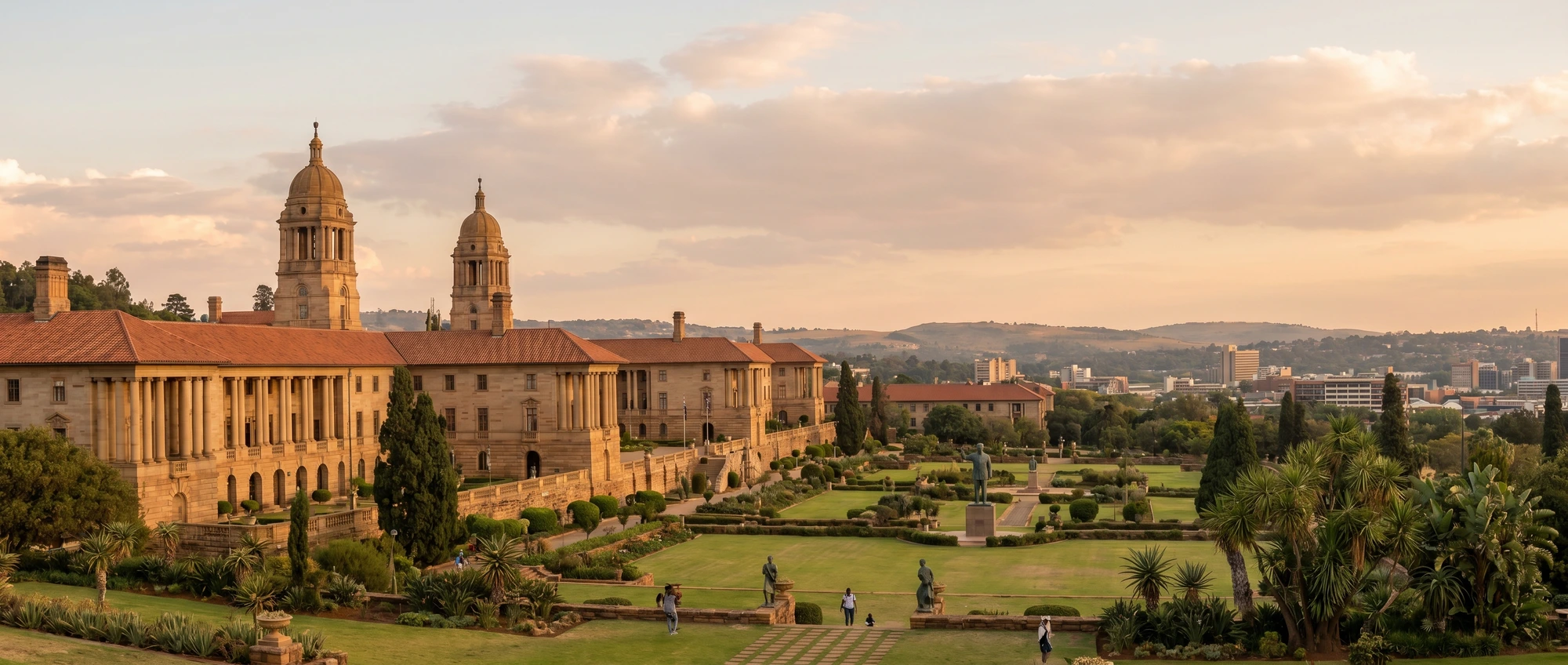
Pretoria's signature sight: Herbert Baker's sandstone seat of government above tiered gardens, with a 9-metre Nelson Mandela statue at the top — you can't go inside, but the gardens and the city views are free.
Where
Pretoria, South Africa
Opening hours
Check current government or municipal access notices before visiting the gardens; the working government building is not a general visitor interior. Plan for daylight and retain current local security advice.
Tickets
Free — no ticket needed to walk the gardens, photograph the building from outside or visit the Nelson Mandela statue. The building interior is not open to the public, so there is nothing to buy.
Time needed
About 30 to 45 minutes to climb the terraced gardens, take in the Mandela statue and enjoy the views over Pretoria, longer if you picnic on the lawns.
In short
Visiting Union Buildings
The Union Buildings are Pretoria's signature sight and the seat of South Africa's government: Herbert Baker's curving sandstone terraces above tiered formal gardens, topped by a 9-metre statue of Nelson Mandela with arms outstretched. You can't go inside, but the gardens and the views back over the city are free and open. Allow 30 to 45 minutes, ideally in the softer morning light.
The building and the gardens
The Union Buildings are the image of Pretoria: a long, curving sweep of honey-coloured sandstone designed by Herbert Baker, rising in twin wings above the city on Meintjieskop hill. This is the working seat of South Africa’s government, including the president’s offices, which means the headline practical fact is simple — you cannot go inside. What you can do, freely, is walk the tiered formal gardens that fall away below the facade and admire the architecture from the lawns.
That sounds like a limitation, but it works. The gardens are well kept, the climb up the terraces is gentle, and from the top the building frames neatly against the sky while the views back over Pretoria open out behind you. At the top of the gardens stands the 9-metre statue of Nelson Mandela, arms spread wide — a deliberately welcoming gesture on the steps of power, and the photograph most people come for.
How long, and when
Be realistic about the visit: with no interior to tour, this is a 30 to 45 minute stop, not a half-day. Go in the morning, when the light is soft on the sandstone and the lawns are quiet and pleasant — locals come to picnic and take wedding photos. It is all free and open, with nothing to buy.
Keep to daytime hours, keep phones and valuables tucked away as you would anywhere in a big city, and you’ll have an easy, rewarding stop. Because it is short, it slots naturally into a wider Pretoria itinerary — combine it with the Voortrekker Monument and Freedom Park across the city for a fuller day. Check current GOV.UK travel advice for South Africa before you travel, as area-specific guidance can change.
Planning the rest of your trip? See the Pretoria city guide.