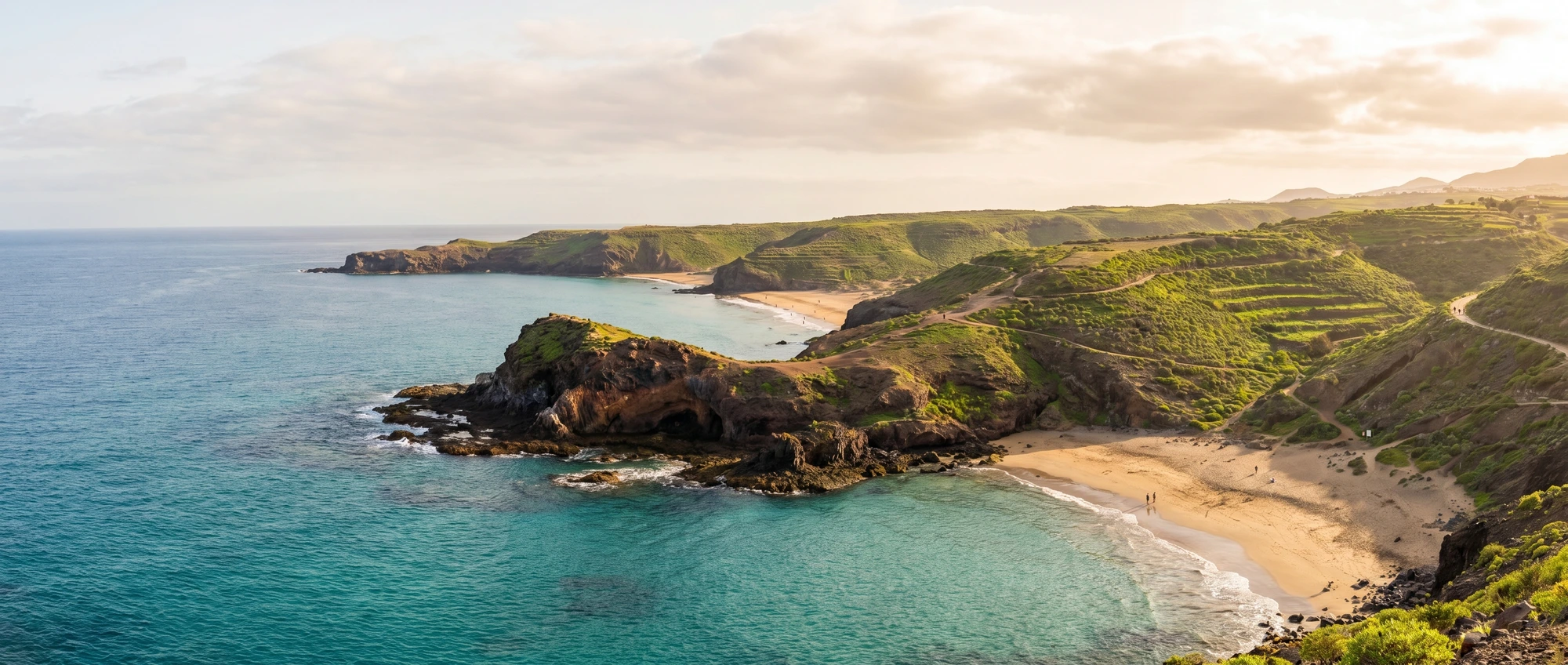
Canary Islands
Gran Canaria
A UK winter-sun guide to Gran Canaria: which south-coast resort actually suits you, real airport-transfer costs, what to do beyond the sunlounger, and whether you need a hire car.
In short
Gran Canaria at a glance
Gran Canaria is the UK's reliable winter-sun island: 20–21°C and six hours of sun in January, a four-hour flight from most UK airports, and a south coast built almost entirely for package holidays. The trick is picking the right resort, because they're very different — lively Playa del Inglés, upmarket Meloneras, the pretty canals of Puerto de Mogán, or the real city of Las Palmas in the north. Most people fly into LPA, transfer 30–40 minutes south, and barely move; the island rewards you far more if you rent a car for a day or two and head into the mountains.
Gran Canaria is the island most UK travellers reach for when the clocks go back. It delivers what it promises — around 20°C and six hours of sun on the south coast in January, four hours’ flying from almost any UK airport — and the south is built, end to end, for package holidays. That makes it easy. It also makes the one decision that matters easy to get wrong: which resort. They are not interchangeable. Playa del Inglés is loud, cheap and made for nightlife; Meloneras, next door on the same dunes, is quiet and smart; Puerto de Mogán in the south-west is a flower-filled fishing village; Puerto Rico is a family machine of calm man-made beaches and boat trips.
What unites them is the south-facing geography. The resorts cluster there because that coast is 2–3°C warmer and drier than the north, sheltered from the trade winds — so the package map is really a weather map. Las Palmas, the actual Canarian capital up north, is cooler, occasionally cloudier and barely on the tourist radar, which is exactly why a day in its colonial Vegueta quarter feels like a different island.
The honest advice is not to treat Gran Canaria as only a beach. Skip the pricey private transfer — the Global No. 66 bus is €3.50 to Maspalomas — and put the saving towards a day’s car hire into the interior. Roque Nublo, the 80-metre volcanic monolith that is the island’s emblem, sits at 1,800 metres up a mountain road no bus will take you along, and a plate of food in a highland village bochinche costs half the seafront price. One or two days inland is what separates a fortnight on a sunlounger from actually seeing the island.
The route
A week most UK visitors will recognise: settle into a south-coast base, do the beach properly, then break it up with the dunes, a city day in Las Palmas and one trip into the volcanic interior. Drive times are from the Maspalomas area.
-
Days 1–2
Settle into the south
Land at LPA, take the No. 66 bus (€3.50, ~40 min) or a taxi (~€40) to your resort, and do nothing of note. Walk the Maspalomas dunes at sunset — they're a protected reserve, so stick to the marked trails — and find the lighthouse and La Charca lagoon at the western end.
-
Day 3
Puerto de Mogán & Amadores
Head west along the coast to Puerto de Mogán, the fishing village with canals nicknamed Little Venice — best on a Friday for the market. Stop at Playa de Amadores, a sheltered Blue-Flag bay near Puerto Rico that's calm enough for small children.
-
Day 4
Las Palmas city day
The Global No. 30 runs up to the capital in about an hour. Spend it in Vegueta, the colonial old town — the Cathedral of Santa Ana, Casa de Colón, the Sunday-morning streets — then the city beach, Playa de las Canteras. This is the side of Gran Canaria most package tourists never see.
-
Day 5
The mountains & Roque Nublo
This is the day to hire a car. Drive up to the central highlands for Roque Nublo, the 80-metre volcanic monolith that's the island's emblem — the walk from the GC-600 is a 1.3km each-way path, free but needing a daytime permit (9:00–17:00). Lunch in a mountain village bochinche costs half what the seafront does.
-
Days 6–7
Beach and slow days
Back to the coast for the last stretch — a boat trip from Puerto Rico, a final morning on the sand, and the easy transfer back to LPA. Build in buffer if you're driving: returning the hire car and clearing the airport eats more time than you'd think.
Where to base yourself
Pick one or two bases rather than moving every night.
Playa del Inglés
£ valueThe big, brash original resort: a 3km beach, every kind of bar and restaurant, mini-golf and serious nightlife on your doorstep. Great if you want energy and choice; avoid it if you came for quiet. Cheaper, older apartment blocks here are good value but vary wildly — read recent reviews.
Best for: Nightlife, value, first-timers, groups
Meloneras
£££ premiumThe upmarket end next to the Maspalomas dunes: newer four- and five-star hotels, a smart seafront promenade and a calmer, more grown-up feel. You pay more than Playa del Inglés but get the same beach with far less noise. The best base for couples who want comfort.
Best for: Couples, smart hotels, quiet, the dunes
Puerto de Mogán
££ mid-rangeA small fishing village with flower-draped canals and a sheltered beach in the south-west — the prettiest base on the island and the slowest-paced. Limited nightlife and fewer big hotels, so it suits couples and families over party groups. Friday is market day and gets busy.
Best for: Couples, families, charm, slow pace
Puerto Rico / Amadores
££ mid-rangeA purpose-built family resort with two sheltered, man-made Blue-Flag beaches linked by a promenade. The bays are calm and shallow — ideal for small children — and it's the hub for boat trips. It's a steep, built-up amphitheatre of apartments rather than anywhere pretty, but it's practical.
Best for: Families with young kids, boat trips, calm water
Las Palmas (north)
££ mid-rangeThe real city: a working Spanish capital with the colonial Vegueta quarter, proper tapas and the long city beach of Las Canteras. Cooler and occasionally cloudier than the south, and not a package-resort base — choose it if you want urban life and culture over a sunlounger.
Best for: City breaks, culture, surfers, off-season
Getting around Gran Canaria
The Global bus network (the green 'guaguas') covers the whole island cheaply: the No. 66 links the airport to Maspalomas for €3.50, and the No. 30 runs the south coast up to Las Palmas in about an hour. For beach-and-resort holidays that's all you need. Hire a car only for the interior — Roque Nublo, the Tejeda valley and the mountain roads aren't realistic by bus — and you'll find day rates from around £18–£30 out of season, much cheaper than keeping one parked all week. Driving is on the right, and the GC-1 motorway down the east coast is fast and easy.
Book the essentials
Where to stay
Tours & tickets
Airport transfers
Car hire
Stay connected
Gran Canaria FAQs
Which is the best resort in Gran Canaria?
How do you get from Gran Canaria airport to the resorts?
Do you need a car in Gran Canaria?
When is the best time to visit Gran Canaria?
Ready to book?
Compare car hire