Mallorca (Balearic Islands)
Palma
Treat Mallorca's capital as a year-round city break, not a beach afterthought: stay clear of the cruise-day crush and give the cathedral and old town real time.
Best length
2-3 nights
Airport
Palma de Mallorca (PMI), ~8km east of the centre
Airport to centre
A1 bus ~25 min to Plaça d'Espanya; taxi ~15 min
Best base
Old Town for first-timers; Santa Catalina for food
In short
Palma at a glance
Palma works as a 2- or 3-night city break in its own right, not just an airport you pass through on the way to a resort: stay in the Old Town or Santa Catalina, book La Seu cathedral, walk the Passeig del Born and Paseo Maritimo, and take the €5 A1 bus rather than a taxi from PMI. Because it is a real working capital, it stays open and pleasant well outside the July-August beach rush.
The short version
- Stay in the Old Town (Casco Antiguo) for first trips, Santa Catalina for food and a livelier evening, or Portixol for a calmer seafront base a short ride out.
- Book La Seu (Palma Cathedral) ahead in summer; pair it with the free Parc de la Mar reflection pool just below it for the classic view.
- Bellver Castle is the city's best-value sight at about €4, and free on Sunday afternoons, with the widest views over the bay.
- Take the A1 airport bus (about €5, ~25 min) to Plaça d'Espanya rather than a €25-€35 taxi unless you have heavy luggage or land late.
- Two full days covers the Old Town, cathedral, a castle and a long seafront walk; three nights lets you add a day trip on the Sóller train.
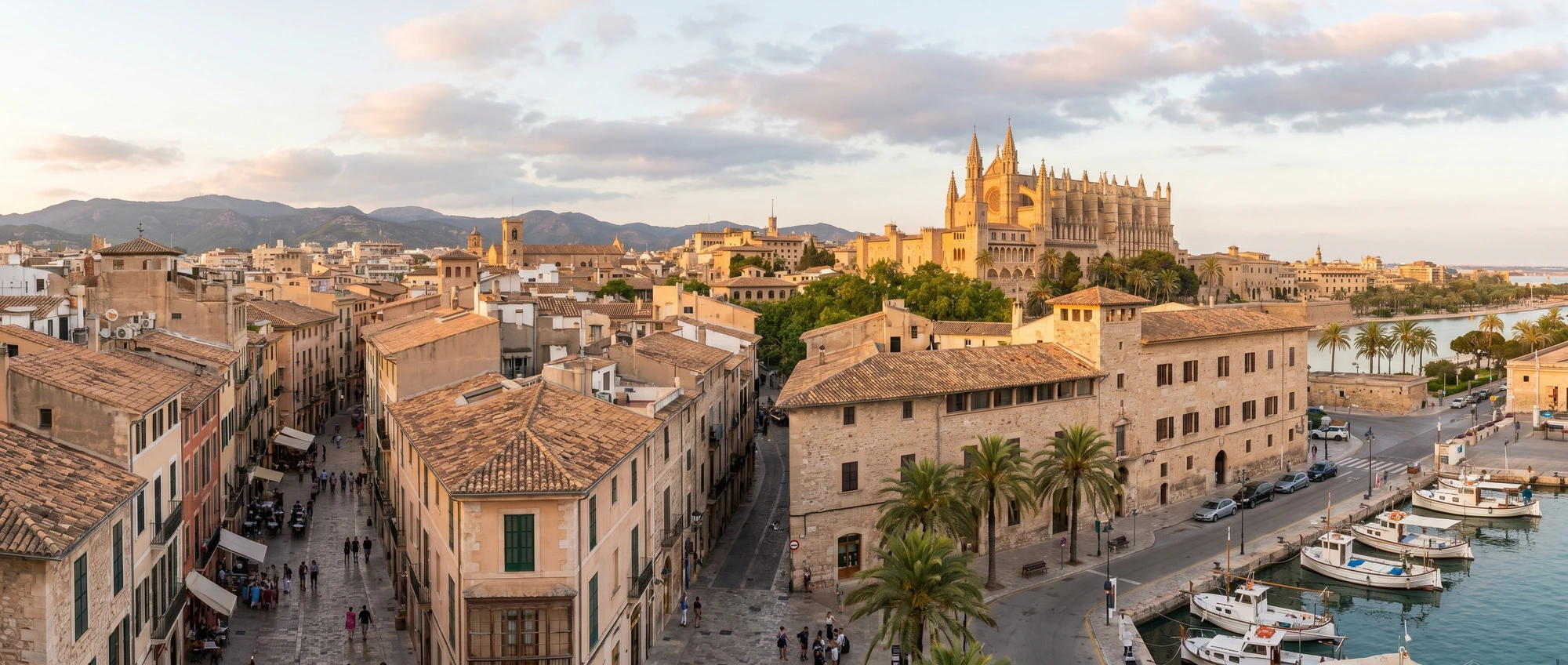
Most UK travellers meet Palma as the airport they rush through on the way to a resort, which sells the place short. Mallorca’s capital is a genuine Mediterranean city: a vast sandstone cathedral rising straight off the water, a tangle of Old Town courtyards, a Gothic merchants’ exchange, and a food scene in Santa Catalina that has nothing to do with the all-inclusive coast. Treated as a 2- or 3-night break in its own right, it holds up against any mainland Spanish city — and because it is a working capital rather than a seasonal resort, it stays open and walkable long after the beach crowds have gone home.
The shape of a good first trip is simple. Base yourself in the Old Town if you want to wander out of the hotel into the sights, or Santa Catalina if dinners and bars matter more, and skip the marina-front hotels unless you specifically want the view. Two full days covers the cathedral, Bellver Castle, the Almudaina and a long seafront walk along the Paseo Maritimo to Portixol; a third night buys you a day trip on the vintage Sóller train into the Tramuntana.
Get in from PMI on the €5 A1 bus rather than a taxi, save a hire car for the one day you head into the mountains, and aim for spring or autumn when the city is warm but free of the July-August crush. The structured planning below — where to stay, what to book, airport transfers and a realistic budget in pounds — picks up from here.
Plan your Palma trip
Keep a first trip focused: book the big timed sights, then leave room for neighbourhoods and food.
Top things to do in Palma
La Seu (Palma Cathedral)
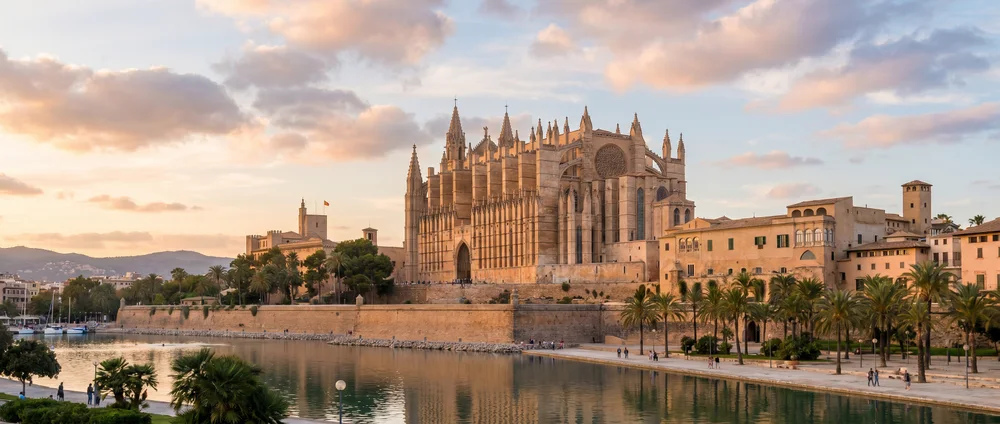
La Seu, Palma's seafront Gothic cathedral, is the one ticket worth booking ahead in high season. Inside, the enormous rose window throws coloured light across the nave, and Antoni Gaudi's altar canopy and Miquel Barcelo's ceramic chapel are unexpected modern interventions. Step down to Parc de la Mar afterwards for the classic reflection in the pool. It is closed to tourist visits on Sundays.
Palma Cathedral (La Seu)
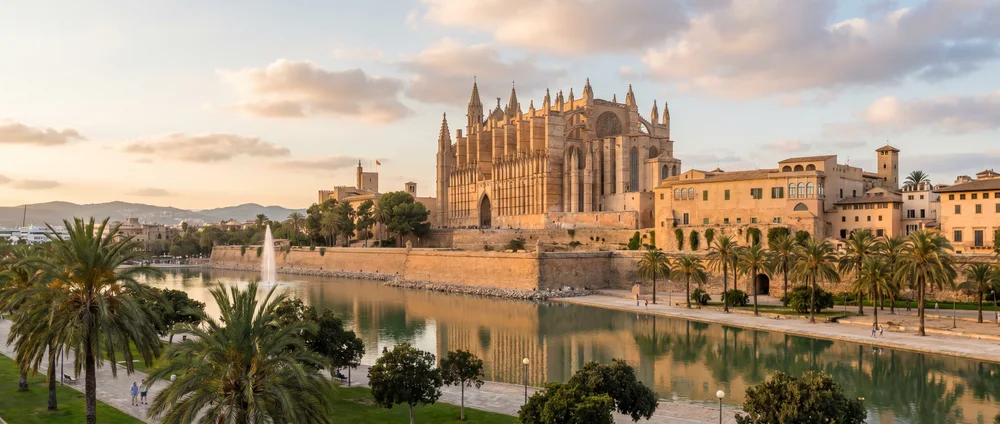
Buy the standard €14 ticket (which also covers the cathedral museum) and go on a weekday morning — La Seu is closed to tourist visits on Sundays and shuts mid-afternoon, not at dusk. The draw is the inside: a Gaudí-reworked interior, the suspended baldachin canopy he later reused at the Sagrada Família, and one of Europe's biggest Gothic rose windows. Allow about an hour. If your dates land on 2 February or 11 November, get there for 08:00 to see the rose window throw a second, mirrored rosette onto the wall opposite.
Where to stay first
The areas that make a first visit easier — not an exhaustive directory.
Old Town (Casco Antiguo)
££ mid-rangeThe classic first-timer base: cobbled lanes, the cathedral, Almudaina and the best hotel courtyards, all walkable. You pay a small premium for the location, but you save a transfer every day and the evenings stay atmospheric without being rowdy.
Best for: First-timers, couples, sightseeing-led trips
Santa Catalina
££ mid-rangePalma's food-and-bars neighbourhood around the old Mercat de Santa Catalina, a 15-minute walk west of the cathedral. Best for dinners, brunch and a livelier night out; slightly less postcard-pretty than the Old Town but better value for eating.
Best for: Food-led trips, repeat visitors, nightlife
Portixol / Es Molinar
£££ premiumA former fishing quarter turned seafront strip about 20 minutes' walk or a short bus ride east, with a promenade, swimming spots and relaxed cafes. Choose it if you want sea air and a softer pace and don't mind a short hop into the centre.
Best for: Calmer seafront stays, couples, longer breaks
Paseo Maritimo
£££ premiumThe marina-front strip running west from the centre, lined with bigger hotels and late bars. Useful for sunset walks and harbour views, but it is a road-and-traffic stretch rather than a charming base; pick it for a view, not for atmosphere.
Best for: Marina views, bigger hotels
Airport to city centre
| Option | Time | Cost | Book ahead? |
|---|---|---|---|
| A1 airport bus (EMT) to Plaça d'Espanya | ~25 min | about €5 single (cheaper by card) | Best value; runs every 12-17 min |
| Taxi to the centre | ~15 min | usually €25-€35 | Good for late arrivals or heavy bags |
| Pre-booked private transfer | ~15-20 min | from about £25-£35 | Worth it for groups or families |
| Hire car from the terminal | ~15-20 min to centre | fuel and parking on top of hire | Only if touring the island, not for the city |
When to go
Sweet spot: May, June, September and early October are the sweet spot: warm enough for the seafront and a swim at Portixol, comfortable for Old Town walking, and well clear of the July-15-to-August-31 crowd-and-price peak. March, April and November are quieter still and good for a pure city break, though some resort-area services wind down.
High summer is hot, busy and dear, with cruise-ship day crowds in the Old Town; winter is mild, cheap and good for sightseeing but not a beach trip, and a few flight routes pause. Book spring and autumn weekends early because Palma is a popular short break from the UK.
What it costs
UK return flights to Palma (PMI) are often £40-£120 in spring and autumn when booked a couple of months ahead; July-August and last-minute summer fares climb steeply, and winter flights thin out as the resort routes pause.
Daily budget per person
Palma feels expensive fastest on the cathedral-front and marina terraces, where a coffee carries a view premium. Walk five minutes into Santa Catalina or the back lanes of the Old Town and a menu del dia lunch is far better value.
Book the essentials
Where to stay
Tours & tickets
Airport transfers
Stay connected
Trains & rail passes
Also in Spain



Palma FAQs
Is Palma worth visiting as a city break, or just for the beaches?
Where should first-timers stay in Palma?
How do you get from Palma airport to the city centre?
Do you need a car in Palma?
Ready to book?
Find hotels in Palma