Central Province
Temple of the Sacred Tooth Relic
How to visit Kandy's Temple of the Sacred Tooth Relic: the Rs 2,000 foreigner ticket, why you time it for the 6.30pm evening puja, and the socks that stop the marble burning your feet.
Where
Kandy, Sri Lanka
Opening hours
Daily 05:30–20:00. Official service windows: 05:30–07:00, 09:30–11:00 and 18:30–20:00. Ceremony access and visitor queues can differ; checked 25 October 2026: https://sridaladamaligawa.lk/faq/.
Tickets
For UK and other visitors outside the listed SAARC/Thailand/Myanmar categories, the official tariff is LKR 3,000, checked 25 October 2026. It covers the temple, Dalada Museum, World Buddhist Museum, Tusker Museum and Royal Elephant Stable. Use the temple ticket machines; tickets issued by outside individuals/institutions are not valid: https://sridaladamaligawa.lk/faq/.
Time needed
An hour to an hour and a half: 20-30 minutes for the relic-chamber queue during a puja, plus the shrine halls and the museums. Add the lakeside walk outside if you've come for the 6.30pm puja and want to be there ahead of it.
In short
Visiting Temple of the Sacred Tooth Relic
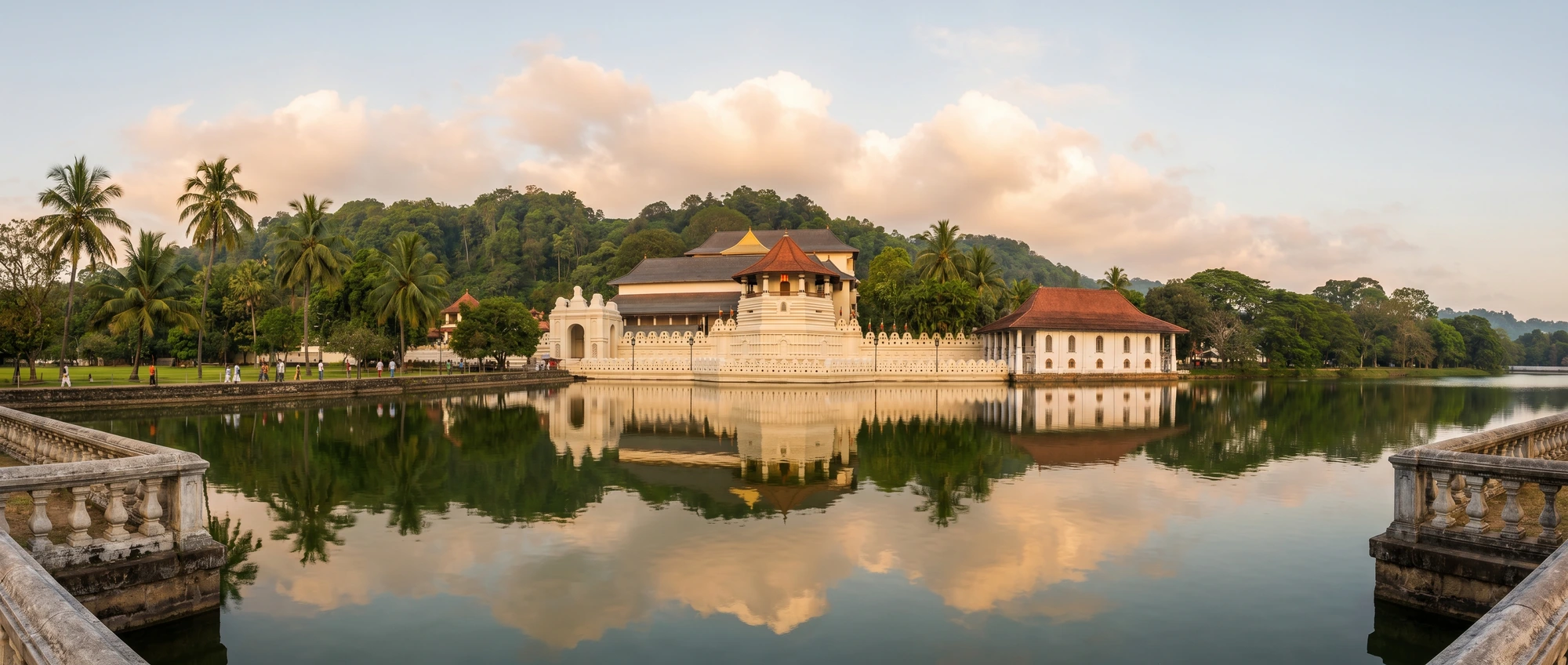
The Sri Dalada Maligawa — the Temple of the Sacred Tooth Relic — is Sri Lanka's holiest Buddhist site and a UNESCO World Heritage shrine on the edge of Kandy Lake, built to house a tooth of the Buddha. The LKR 3,000 UK-visitor ticket (temple tariff checked 25 October 2026) covers the complex and listed museums/stable, but the visit is really about timing: the relic chamber on the upper floor only opens during one of the three daily puja (offering) ceremonies, announced by Kandyan drumming, and the 6.30pm evening puja is the atmospheric one. Allow an hour to an hour and a half, cover your shoulders and knees, and carry a pair of socks — you cross the marble barefoot and it scorches in the afternoon.
What the temple ticket gets you — and why timing beats it
The LKR 3,000 ticket for UK visitors (official tariff checked 25 October 2026) covers the temple and the museums/stable listed in the temple FAQ, but the thing to grasp before you go is that the visit lives or dies on when you turn up. The Buddha’s tooth relic sits behind a small golden door on the upper floor of the inner shrine, and that door only opens during one of the three daily puja (offering) ceremonies — roughly 05:30, 09:30 and 18:30. Outside those windows you can walk the gilded-roofed halls, the painted tunnel and the museums, but the relic chamber stays shut and the place feels more like a monument than a living shrine. Use the temple’s ticket machines: outside sellers’ tickets are not valid. Everyone passes through security.
Aim for the 6.30pm evening puja. The drummers and oboe players strike up, the crowd presses up the staircase, and the queue shuffles past the open chamber a few worshippers at a time. Get there 30-40 minutes early — by the time the drums start the line has already backed up, and you want to be on the stairs, not at the back of the courtyard. A small, honest caveat that catches people out: you don’t see the tooth itself, only the jewelled casket that contains it. The experience is the ceremony, not the relic.
Dress code, socks and the photo that gets people arrested
This is Sri Lanka’s holiest Buddhist site, and the dress code is enforced at the door, not suggested. Cover your shoulders and knees, take off your shoes and hat, and don’t assume a sarong thrown over shorts will get you in. Carry a pair of socks: you cross the temple’s marble courtyards barefoot and the stone is genuinely scorching by midday — locals do the same.
One rule worth taking seriously: never pose for a photo with your back to a Buddha image, whether the shrine statues or the figures in the museums. GOV.UK is blunt that immodest dress at Buddhist temples causes offence, and that mistreating Buddhist images — including turning your back on one for a selfie — is treated as a serious offence in Sri Lanka, with tourists arrested and deported for it. Photography of the relic chamber itself is also restricted during the puja, so keep the phone down once the drums begin.
Pairing it with the lake, and getting there
The temple sits on the north shore of Kandy Lake, a few minutes’ walk from the centre, which makes the obvious move an easy one: come for the late afternoon, walk the lake loop (about 3.5km, free, and best at dusk) while you wait, then go in for the 6.30pm puja as the light drops. From a hillside guesthouse above the lake it’s a 5-10 minute tuk-tuk down — use the PickMe app for a metered fare rather than haggling, and reckon on Rs 300-500 (about £0.70-1.10) for the hop. A guide isn’t essential, but the carvings, the tunnel paintings and the history of the relic make more sense with one, which is the main thing a paid Kandy city tour adds here.
Is it worth it?
Yes — it’s effectively the reason Kandy is on the map. Check the current admission fee, and time the visit for a puja if you want to see the ceremony. The 6.30pm ceremony — drumming echoing off the stone, the queue inching past the gold-doored chamber — is the kind of thing you remember from a Sri Lanka trip, in a way the midday shuffle through a closed shrine simply isn’t. Manage one expectation (you see the casket, not the tooth) and one piece of kit (socks), pair it with the lake at dusk, and an hour or so here is the standout evening in Kandy rather than another fort or temple you’ve half-forgotten by the time you’re on the Ella train.
Planning the rest of your trip? See the Kandy city guide.
More to see in Kandy

Book the essentials
Tours & tickets
Temple of the Sacred Tooth Relic FAQs
How much is the Temple of the Sacred Tooth Relic entrance fee?
What are the puja times at the Temple of the Tooth?
What is the dress code for the Temple of the Sacred Tooth?
Is the Temple of the Sacred Tooth worth visiting?
Ready to book?
Check tickets & tours