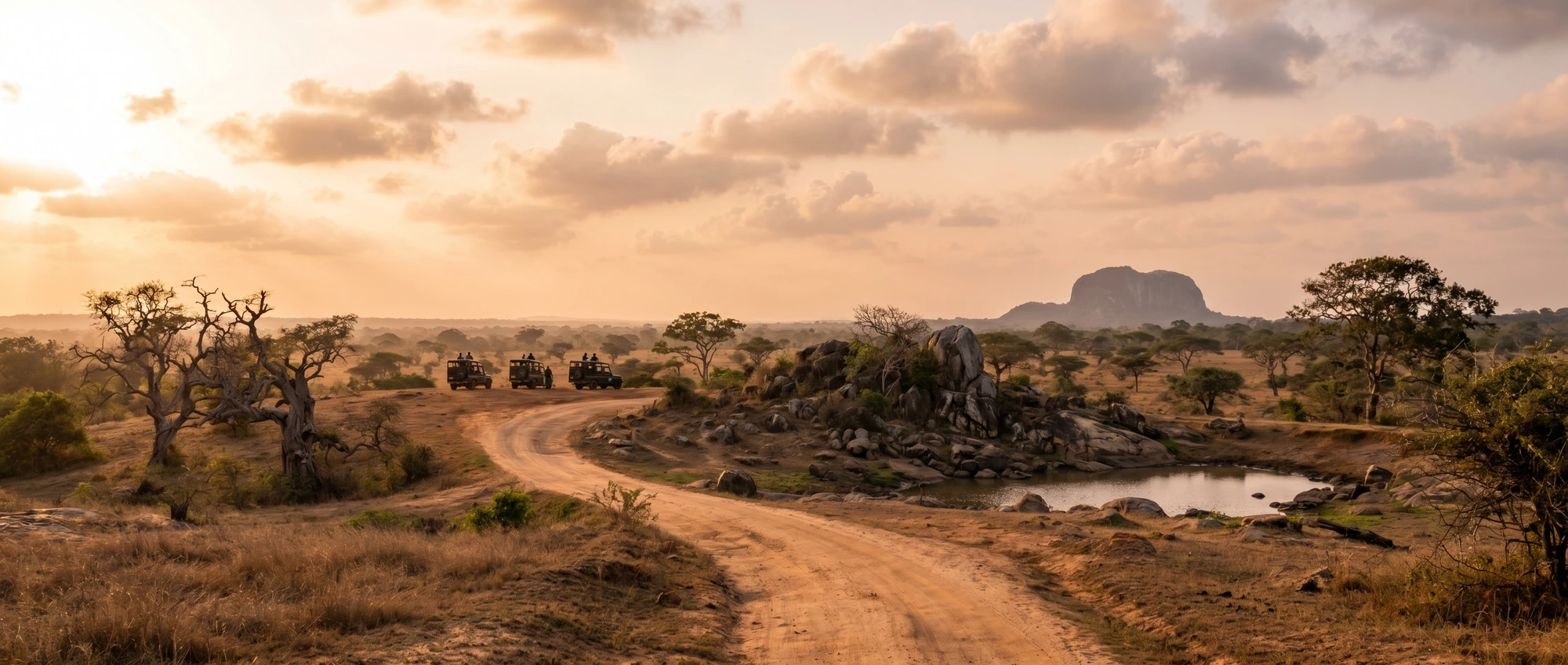
Southern & Uva provinces, south-east Sri Lanka
Yala National Park
How to plan a Yala leopard safari from the UK: which gate and block to book, why the morning drive and the February–July dry months beat everything else, and the foreigner park fee nobody warns you about.
In short
Yala National Park at a glance
Yala is where you go in Sri Lanka if seeing a wild leopard matters more than anything else: Block 1, the south-western corner reached through the Palatupana gate, has one of the highest leopard densities recorded anywhere, alongside elephants, sloth bears, crocodiles and clouds of peacocks. The honest trade-off is that everyone knows this, so a morning in Block 1 can mean twenty jeeps stacked around a single leopard sighting. The way to enjoy it is to book the dawn drive rather than the afternoon one, go in the dry months of roughly February to July when shrinking waterholes pull animals into the open, and base yourself in the small town of Tissamaharama (locals say 'Tissa'), about 25km and half an hour from the gate. The part UK visitors rarely budget for is the cost: foreigners pay a park entrance fee of around US$25 plus taxes and a separate jeep hire on top, so a shared half-day safari lands near £30–45 a head before tips. Block 1 also closes each year, usually from around 1 September into mid-October, so check your dates before you book a lodge built around it.
Yala sells itself on one thing — Block 1, the south-western corner through the Palatupana gate, has one of the densest leopard populations recorded anywhere — and that reputation is also its problem. Everyone has read the same line, so in peak season a single leopard up a tree can pull a ring of twenty jeeps around it, engines idling, drivers radioing each other. The fix is unglamorous and works: take the morning drive, not the afternoon one. Be at the gate when it opens around 06:00, spend the first cool two hours when the cats are actually moving, and you get the leopard in good light before the convoys form. Pair that with the dry months — roughly February to July, when the shrinking waterholes herd elephants, crocodiles and leopards into the open — and Yala delivers on the hype.
Two practical things trip up UK visitors. The first is the money: foreigners pay a park entrance fee of around US$25 plus taxes per adult, and the jeep is a separate charge on top, so the cheap quote you were given almost certainly leaves the fee out — always ask. Base yourself in Tissamaharama, the small lake town 25km and half an hour from the gate, arrange the jeep and fee through your guesthouse, and a shared half-day drive lands near £30–45 a head. The second is the calendar: Block 1 closes most years for about six weeks from roughly 1 September into mid-October, so if your trip falls then, book a lodge that runs the adjacent Lunugamvehera block or head to the far quieter Kumana side instead of turning up to a locked gate. Treat Yala as a one-night road stop on the south-coast loop — 2.5 to 3 hours from the Mirissa beaches — with a driver-guide rather than a self-drive car, and it slots in neatly.
The route
Yala is a one-to-two-night stop slotted into the south-coast leg of a Sri Lanka loop, not a destination you fly to. The pattern that works is a beach base around Mirissa or Galle, a drive east to Tissamaharama in the afternoon, a single pre-dawn game drive the next morning, and on out — ideally with the option of a quieter second block if you want more than one drive without queueing behind the Block 1 jeeps.
-
Day 1
Drive in from the south coast and stay in Tissa
Leave the Mirissa/Weligama beach belt after lunch and drive the ~2.5–3 hours east to Tissamaharama; from Galle it's a similar run on the coastal road and the Southern Expressway. Check into a lodge near the Palatupana gate, sort your park fee and jeep for the morning with the hotel rather than a tout, and have an early night — the alarm is brutal.
-
Day 2
Pre-dawn Block 1 game drive
Your jeep collects you around 05:00 to be first through the Palatupana gate when it opens at about 06:00. Block 1's south-western scrub and waterholes hold the leopards; the first two hours give the best light and the most active cats before the heat and the jeep convoys build. A half-day drive runs roughly four to five hours. Tip your driver-tracker — a good one reading fresh pugmarks is the difference between a leopard and a peacock.
-
Day 2 (optional add-on)
A quieter second block or Kataragama
If one Block 1 scrum is enough, swap the afternoon for the adjacent Lunugamvehera block or the far-quieter Kumana side, where you trade leopard odds for space and birdlife. Alternatively, visit the pilgrimage town of Kataragama, 20km north of Tissa, before driving on. Don't try to cram a second Block 1 drive into the busy afternoon slot — the light is poor and the crowds peak.
-
Day 3
On to Ella or the hill country
From Tissamaharama it's about a 2.5-hour climb north-west to Ella and the start of the hill country, or you loop back west to the beaches. Hire a car with a driver-guide for this leg — GOV.UK flags Sri Lankan driving as erratic and accident-prone, so self-drive is not the move.
Where to base yourself
Pick one or two bases rather than moving every night.
Tissamaharama ('Tissa') town
£ valueThe practical safari base, a small lake town about 25km and half an hour from the Palatupana gate, with guesthouses, mid-range hotels and a strip of jeep operators. The cheapest, most flexible option — book a guesthouse, arrange the park fee and jeep through it, and you're 20 minutes from the gate at dawn. Expect roughly £15–40 a night for a double.
Best for: Value, an early start and arranging jeeps
Palatupana / Kirinda (near the gate)
££ mid-rangeA cluster of safari lodges and tented camps strung along the road to the gate and the coast at Kirinda — closer to Block 1 and quieter than Tissa town, with on-site jeeps and packaged drives. Mid-range rates, with a couple of premium tented camps; handy if you want the safari arranged end-to-end without driving into town.
Best for: Being closest to the gate and packaged safaris
Luxury tented camps on the park edge
£££ premiumAll-inclusive tented camps and high-end lodges on the boundary that fold the park fee, jeep, ranger and meals into one nightly rate and run their own drives into Block 1 and the quieter blocks. Roughly £200–500+ per person per night; you pay for being handed the whole safari rather than haggling for a jeep in Tissa.
Best for: A done-for-you, off-grid safari splurge
Getting around Yala National Park
You don't drive yourself in Yala — the park is jeep-only and you go in a hired safari vehicle with a driver who doubles as a tracker. Book the jeep through your guesthouse or lodge rather than a gate tout, and confirm whether the quoted price includes the foreigner park entrance fee (around US$25 plus taxes per adult) or not, because the cheap-sounding ones usually don't. To reach Yala in the first place, treat it as a road stop on the south-coast loop: it's about 2.5–3 hours by car from the Mirissa/Weligama beaches, a similar run from Galle on the coastal road and the Southern Expressway, and a long ~5 hours from Colombo or Bandaranaike airport. There's no useful train to Tissamaharama, so hire a car with a driver-guide for the inland and cross-country legs — GOV.UK describes Sri Lankan driving as erratic and accident-prone, with night driving, buses and motorbikes the worst hazards, which is why a local driver beats a self-drive hire car here.
Book the essentials
Where to stay
Tours & tickets
Airport transfers
Car hire
Stay connected
Trains & rail passes
Yala National Park FAQs
What is the best time to visit Yala for leopards?
How much does a Yala safari cost for UK visitors?
How do I get to Yala National Park?
Is Yala too crowded to enjoy?
Do I need malaria tablets or jabs for Yala?
Ready to book?
Compare car hire