Northern Thailand
Chiang Mai
Give Thailand's walled northern temple town three or four nights inside the moat, book a no-riding elephant sanctuary over the camps, and never come in March, when crop-burning smoke chokes the valley.
Best length
3-4 nights
Airport
Chiang Mai (CNX), ~4km from the Old City
Airport to centre
Grab ~10-15 min, about £3-£4.50; metered taxi about £4.50-£6
Best base
Old City moat for first-timers; Nimman for cafes and a younger scene
In short
Chiang Mai at a glance
Chiang Mai is the slow, cultural counterweight to Thailand's beaches and Bangkok's heat: a walled old town packed with temples, an easy cafe-and-coworking scene in Nimman, and the country's best base for cooking classes and genuinely ethical elephant visits. Give it three or four nights, stay inside or just outside the moat, get up to Doi Suthep early, and book a no-riding, no-bathing elephant sanctuary rather than the camps that still offer rides. The one rule that overrides everything: do not come in March (and be wary of late February and early April), when crop-burning smoke turns the valley into one of the most polluted places on earth.
The short version
- Give Chiang Mai three or four nights — enough for the Old City temples, Doi Suthep, a cooking class and one full day at an elephant sanctuary without rushing.
- Stay inside the Old City moat for your first trip (walkable temples, easy tour pickups) or in Nimman just west for cafes, coworking and a younger evening scene.
- Pick an elephant camp that is observation-only — no riding, no bathing, no chains — like Elephant Nature Park; treat any 'sanctuary' still offering rides as a hard no.
- Get up Doi Suthep by shared red songthaew from near the zoo (about £1-£1.40 each way) and go early before the haze and coach crowds build.
- There are no direct flights from the UK — you connect in Bangkok, then it's a 70-minute, roughly £26-£50 domestic hop to CNX, which sits just 10-15 minutes from the Old City.
- Avoid March entirely (burning season), and be cautious in late February and early April; November to February is the cool, clear, best window.
Chiang Mai is the slow north — the cultural counterweight to Bangkok’s heat and the southern beaches. Inside the old square moat sits a grid of more than thirty temples you can walk in a morning, from the earthquake-cracked ruin of Wat Chedi Luang to the revered Wat Phra Singh. Just west, around the university, Nimman has become the city’s coffee-and-coworking quarter; along the Ping River to the east, colonial-style resorts trade the temple bustle for pool decks and birdsong. Most first-timers should base inside the moat, where the temples, tour pickups and weekend walking streets are all on the doorstep, and give the city three or four nights.
Two planning calls matter more than the rest. The first is the elephants. Chiang Mai is the best place in Thailand to see rescued elephants done ethically — Elephant Nature Park is the benchmark, observation-only, with no riding, no bathing and no chains — but plenty of camps still sell rides and call themselves sanctuaries. The rule is simple: if it offers a ride or a scrub-the-elephant photo, walk away, and book a no-touch park direct and ahead. The second is the calendar. Skip March completely, and be wary of late February and early April: that’s crop-burning season, when smoke fills the valley and Chiang Mai routinely ranks among the most polluted cities on earth. November to February is the cool, clear, lantern-festival sweet spot.
The rest is refreshingly easy and cheap. There are no direct flights from the UK, so you connect in Bangkok and take a 70-minute hop to CNX, which sits ten minutes from the Old City — a Grab into town is about £3-£4.50. Get up Doi Suthep early by shared red songthaew before the haze and coaches arrive, do a half-day cooking class for £16-£23, and eat at the Sunday and Saturday walking streets rather than the tourist-priced Night Bazaar. Below, the structured planning — where to stay, what to book, the airport transfers and a realistic daily budget in pounds — picks up from here. Entry, health and safety facts for your trip are covered on the Thailand country guide, which is anchored to the latest GOV.UK travel advice.
Plan your Chiang Mai trip
Keep a first trip focused: book the big timed sights, then leave room for neighbourhoods and food.
Top things to do in Chiang Mai

Wat Phra That Doi Suthep
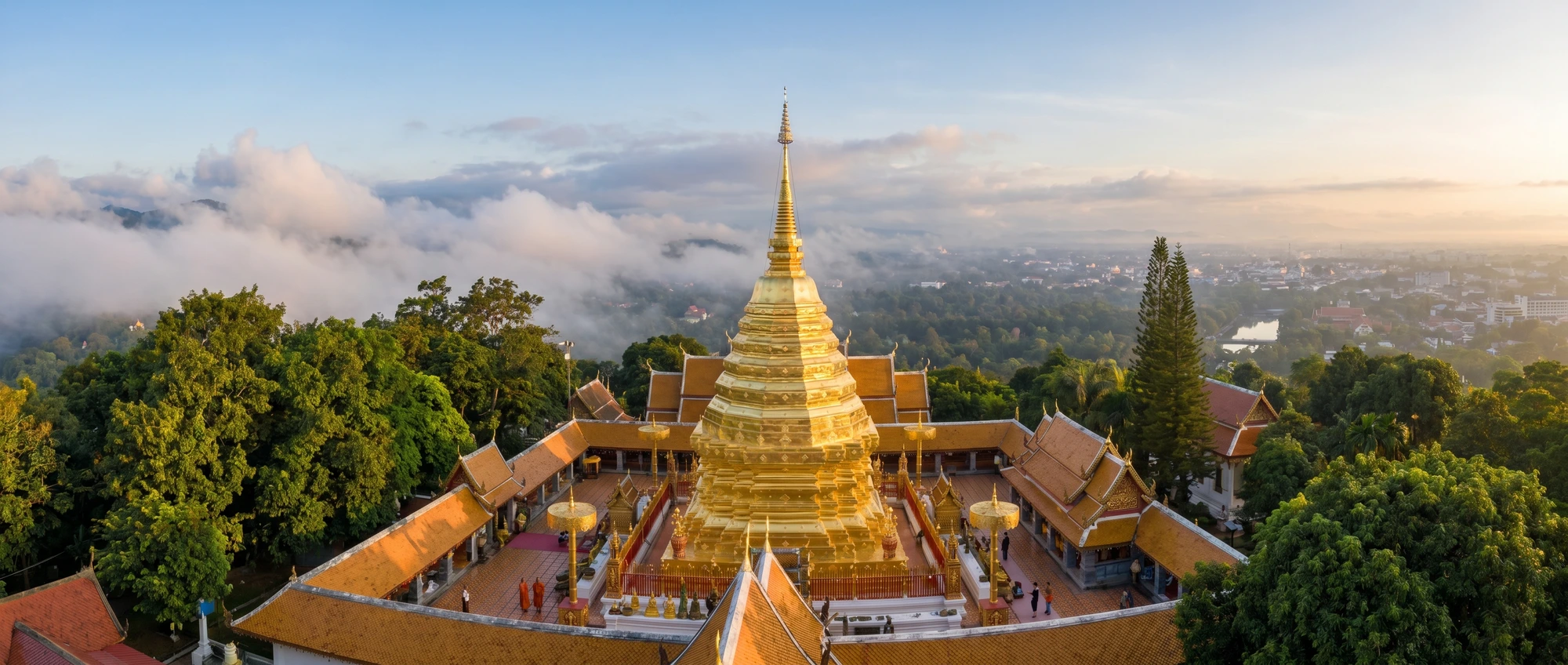
The decision that shapes a Doi Suthep visit isn't the ticket — entry is a trivial ฿30 (about £0.70) at the gate — it's how you get up the 15 km of switchbacks. A half-day group tour (roughly ฿600–900 / £14–20) bundles the transport, a guide and usually a second stop such as Bhubing Palace; a shared red songthaew from near Chiang Mai Zoo is the cheap DIY option at about ฿40–60 each way but only leaves once full. From the car park you climb the 306-step Naga staircase or pay the ฿50 foreigner funicular fare to the terrace. Cover shoulders and knees, take your shoes off on the upper platform, and aim for the 06:00 opening or the last hour of daylight to beat the coach groups and the spring haze that hides the city view.
Old City temples (Wat Chedi Luang, Wat Phra Singh, Wat Chiang Man)
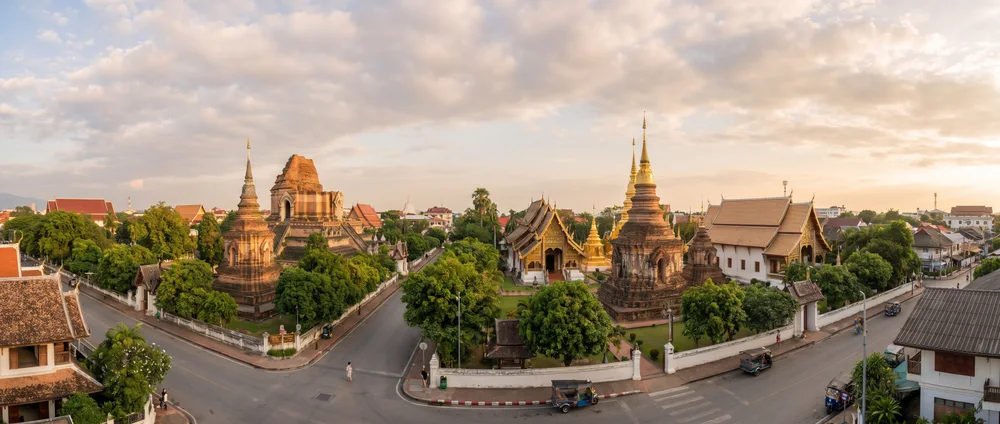
Chiang Mai's walled old town holds more than thirty temples in a grid you can walk in a single morning. Wat Chedi Luang's earthquake-cracked brick ruin is the standout, Wat Phra Singh the most revered and Wat Chiang Man the oldest. Most are free or charge a token amount, and modest dress is expected at all of them.
Where to stay first
The areas that make a first visit easier — not an exhaustive directory.
Old City (inside the moat)
££ mid-rangeThe square, moat-ringed historic core and the easiest first-timer base: most temples are within a 15-minute walk, tour vans pick up here, and the weekend walking streets run through it. Rooms range from cheap guesthouses to teak boutique hotels. The trade-off is that it's the busiest and most touristy part of town, and Sunday nights get packed.
Best for: First-timers, temple-walkers, no-car stays
Nimmanhaemin (Nimman)
££ mid-rangeThe stylish strip just west of the moat near the university: speciality coffee, coworking spaces, rooftop bars and the city's strongest cafe-and-nomad scene. More modern and a touch pricier than the Old City, and a 10-minute Grab from the temples, but the better pick if you want a younger evening and fast wifi over Lanna atmosphere.
Best for: Digital nomads, cafe culture, younger travellers
Riverside (Ping River, east)
£££ premiumColonial-style resorts, riverside restaurants and pool hotels along the Ping, noticeably quieter than the Old City. The family and slow-travel pick — you wake to birdsong rather than motorbikes — but you'll rely on Grab to reach the temples and markets, so it's not ideal if you want to walk everywhere.
Best for: Families, couples, quieter stays with a pool
Santitham
£ valueA workaday local neighbourhood north of the Old City: cheaper rooms, local food stalls and far fewer tourists than Nimman, which it sits right beside. The value pick for longer or repeat stays if you don't mind a less polished base and a short ride or walk to the sights.
Best for: Value, longer stays, a local feel
Airport to city centre
| Option | Time | Cost | Book ahead? |
|---|---|---|---|
| Grab to the Old City or Nimman | ~10-15 min | about £3-£4.50 (฿120-฿200) | Easiest and cheapest; air-conditioned, 24/7, no haggling |
| Metered airport taxi | ~10-15 min | about £4.50-£6 (฿200-฿250, incl. ฿50 airport surcharge) | Cash only; fine if Grab is surging |
| Hotel transfer / private pickup | ~10-15 min | usually £8-£15 | Worth it after a long-haul night arrival with luggage |
When to go
Sweet spot: November to February is the clear winner: dry, comfortable 20-30°C days, cool evenings and the cleanest air of the year, plus the Yi Peng and Loi Krathong lantern festivals around November. It's also the busiest and priciest stretch, so book ahead. October and early-to-mid April are the decent shoulders either side.
The defining season is the burning (smoke) season, roughly late February through April, when farmers across the north and neighbouring countries burn crop stubble and the valley traps the haze. March is consistently the worst — Chiang Mai routinely ranks among the most polluted cities on earth, with PM2.5 readings that make outdoor days genuinely unhealthy, so avoid it outright; late February and early April are risky too. Air usually clears after the mid-April Songkran water festival. The June-October rainy season brings short heavy downpours but lush green hills, lower prices and good air — a fair trade if you don't mind an afternoon shower.
What it costs
There are no direct flights from the UK to Chiang Mai. You fly to Bangkok (roughly £600-£900 return in economy from London, more in peak), then take a 70-minute domestic hop on Thai AirAsia, Thai Vietjet or Thai Lion Air to CNX for about £26-£50 each way. Build the connection into your plans and you can often add Chiang Mai to a Bangkok-and-beaches trip for the price of two short internal flights.
Daily budget per person
| Street-food plate | ~£0.70-£1.60 (฿30-฿70) |
|---|---|
| Grab across town | ~£2-£4 |
| Songthaew short hop, per person | ~£0.70 (฿30) |
| Half-day cooking class | ~£16-£23 (฿700-฿1,000) |
| Elephant sanctuary, full day | ~£80 (฿3,500) |
| Hostel dorm bed, per night | ~£4-£7 |
All baht figures use £1 ≈ ฿44 (June 2026). Chiang Mai is one of the best-value cities in Thailand: street food runs about £0.70-£1.60 a plate, a beer is £1-£2, and dorm beds start around £4-£7 a night. Carry some cash for markets, songthaews and temples, but Grab and many cafes take cards.
Book the essentials
Where to stay
Tours & tickets
Airport transfers
Stay connected
Trains & rail passes
Also in Thailand




Chiang Mai FAQs
How many days do you need in Chiang Mai?
How do I choose an ethical elephant sanctuary in Chiang Mai?
When should I avoid Chiang Mai?
How do you get up to Doi Suthep?
Do you need a car in Chiang Mai?
Ready to book?
Find hotels in Chiang Mai