Jerid (Tozeur Governorate)
Chott el Jerid salt lake
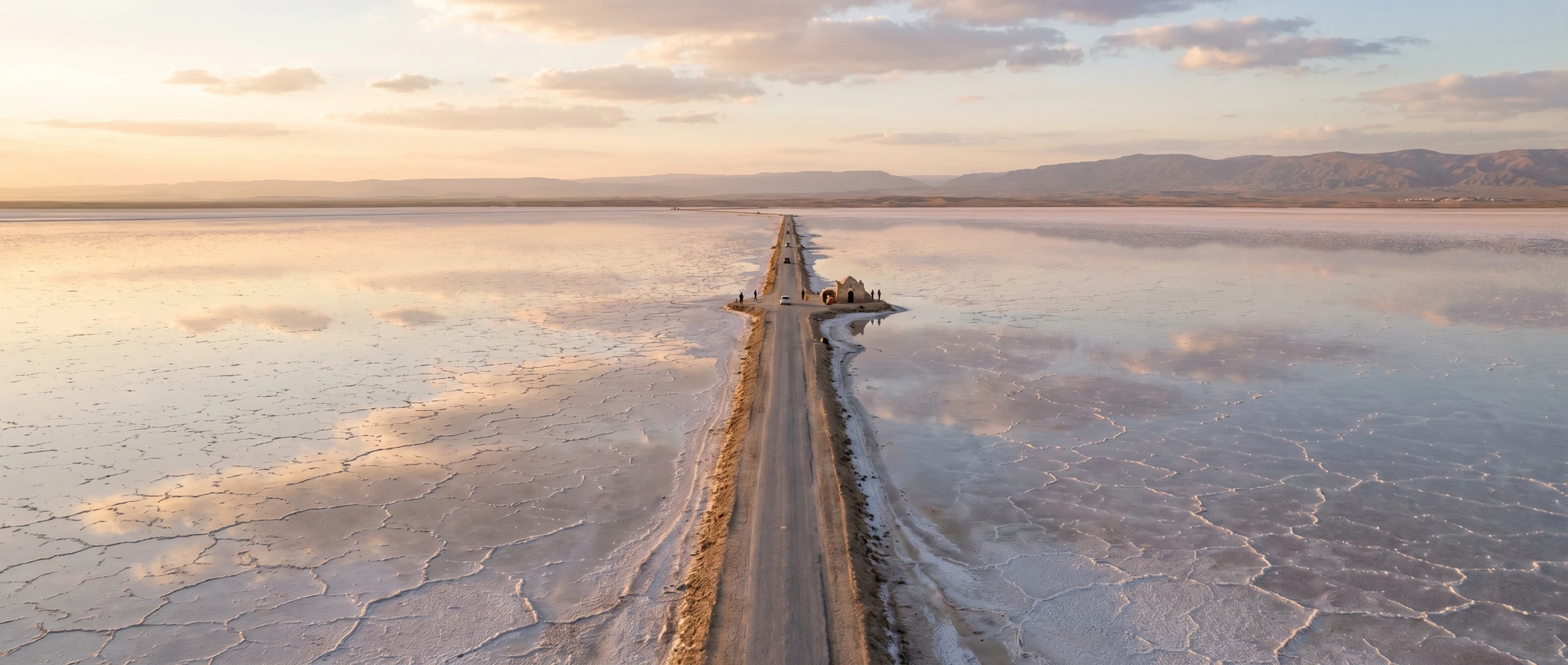
A vast salt pan you cross on a single causeway near Tozeur — go at first light for the mirage and the rainbow-tinted crusts.
Where
Tozeur, Tunisia
Opening hours
Open landscape with no opening hours; the causeway road is generally passable year-round, best at sunrise. Surface conditions can change after rain. Confirm current hours and prices on the official site.
Tickets
Free to cross — there's no ticket for the causeway, and it's included on most Tozeur tours and transfers. Only the optional sand-roses and trinkets at the roadside stalls cost anything.
Time needed
About 30–60 minutes for the crossing and a photo stop, longer if you carry on across the full lake towards Kebili.
In short
Visiting Chott el Jerid salt lake
An enormous salt pan — well over 5,000 square kilometres — that you cross on a single raised causeway between Tozeur and Kebili. Go at first light for the shimmering mirage and the rainbow-tinted salt crusts at the edges. The roadside stalls selling 'rose des sables' sand-rose crystals are a long-running tourist staple rather than the main event.
Crossing the salt pan
Chott el Jerid is the largest salt lake in the Sahara, a blinding white expanse of well over 5,000 square kilometres that you cross on a single raised causeway running between Tozeur and Kebili. For most of the year it is dry, a crust of salt over mud that throws up a shimmering mirage as the day heats up; after winter rain, thin sheets of water can mirror the sky. The crossing is free — it is simply a public road, and it features on most Tozeur tours and onward transfers anyway, so you may well cross it without thinking of it as a sight in its own right.
That would be a mistake. Pull over at the causeway edge and the scale lands properly: the salt crunches underfoot, and at the margins the crusts take on pink, ochre and faintly rainbow tints. The ‘rose des sables’ stalls clustered at the stopping points are a long-running tourist fixture rather than the highlight — buy a sand-rose crystal if you like one, haggle, but don’t feel you have to.
Catching it at its best
Go at first light. At sunrise the low sun draws the mirage off the surface, the tinted edges glow, and the air hasn’t yet collapsed into midday haze, which bleaches the whole thing flat white. Sunset works too, but the morning crossing is the one people remember, and it fits neatly with an early start towards the desert or the mountain oases.
There are no opening hours and nothing to book — it is open landscape. The causeway is normally passable year-round, though the surface can change after rain, so don’t venture off the made road onto the crust yourself. Half an hour is enough for the crossing and a photo stop; give it longer only if you’re continuing across the full width of the lake. Check current road conditions locally or via the official site before relying on it as part of your route.
Planning the rest of your trip? See the Tozeur city guide.